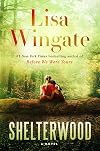
Shelterwood
by Lisa Wingate
On This Page
Description
"Oklahoma 1909. Eleven-year-old Olive Augusta Radley knows that her stepfather doesn't have good intentions toward the two Choctaw girls boarded in their home as wards. When the older girl disappears, Ollie flees to the woods, taking six-year-old Nessa with her. Together they begin a perilous journey to the rugged Winding Stair Mountains, the notorious territory of outlaws, treasure hunters, and desperate men. Along the way, Ollie and Nessa form an unlikely band with others like themselves, show more struggling to stay one step ahead of those who seek to exploit them... or worse. Oklahoma 1990. Law Enforcement Ranger Valerie Boren O'dell arrives at Horsethief Trail National Park seeking a quiet place to balance a career and single parenthood. But no sooner has Valerie reported for duty than she's faced with local controversy over the park's opening, a teenage hiker gone missing from one of the trails, and the long-hidden burial site of three children deep in a cave. Val's quest to uncover the truth wins an ally among the neighboring Choctaw Tribal Police, but soon collides with old secrets and the tragic and deadly history of the land itself. In this emotional and enveloping novel, Lisa Wingate traces the story of children abandoned by the law, and the battle to see justice done. Amid times of deep conflict over who owns the land and its riches, Ollie and Val traverse the wild and beautiful terrain, each leaving behind one life in search of another"-- show lessTags
Recommendations
















Member Reviews
Meticulously researched and immersive Shelterwood by Lisa Wingate is a heart-wrenching and immensely thought-provoking read.
Set in and around the Winding Stairs Mountains region, the story is rooted in the history of Oklahoma and the division of natural resource-rich Native American lands into allotment parcels assigned to individual members in the late 1800s. Orphaned Indigenous children were exploited and cheated of their rights, abandoned and forced to fend for themselves by “guardians” who were responsible for their welfare. The story also sheds light on the efforts of women pioneers who fought for the rights of these children - namely the Oklahoma Federation of Women’s Clubs and Kate Barnard, the first woman to be elected as show more a state official in Oklahoma.
The narrative is presented in dual timelines in alternating chapters. In 1909, Pushmataha County, Oklahoma, we meet eleven-year-old Olive “Ollie” Augusta Peele, who flees from her abusive stepfather. With her is Nessa, a Choctaw child whom her deceased father had sheltered in their home along with Nessa's older sister Hazel. Olive is sure that her stepfather was responsible for Hazel’s disappearance and running is the only way she believes she can protect them both from meeting the same fate. Along her way to her family’s old home in the mountains, she meets other runaways and orphans who inhabit the woods and form their own community – a community she names “Shelterwood”. The narrative follows Ollie, Nessa and their friends as they fight for survival amid much adversity.
The current timeline (Talihina, Oklahoma, 1990) is presented from the perspective of Valerie Boren-Odell, the new park law enforcement Ranger at Horsethief Trail National Park who has only recently moved to the area with her young son. On her first day on the job, she is informed of the recent discovery of the remains of three children in a cave. However, before Valerie can pursue her investigation, her superiors see to it that the bones are removed and the crime scene is closed off. Valerie is also approached by twelve-year-old Sydney for help locating her missing older brother Braden and her ailing grandmother, former state representative Budgie Blackwell. Sydney often frustrates Valerie, withholding information and manipulating the truth, but Valerie can’t deny that there is more to the disappearances than meets the eye.
As the narrative progresses, we follow Valerie’s investigation, which takes into the dark history of the area a story of exploitation, greed and corruption that is far from over.
Both timelines are well-developed and the narrative flows well. The pacing is slightly uneven, but I liked how the author brings all the threads of the story together. Ollie is a memorable character and I admired her courage and resourcefulness. The rich historical context, vivid settings and well-thought-out characters render this novel a compelling read.
Please read the informative Author’s Note where she discusses the history, people and events that inspired this novel.
Many thanks to Random House Publishing Group - Ballantine for the digital review copy via NetGalley. All opinions expressed in this review are my own. show less
Set in and around the Winding Stairs Mountains region, the story is rooted in the history of Oklahoma and the division of natural resource-rich Native American lands into allotment parcels assigned to individual members in the late 1800s. Orphaned Indigenous children were exploited and cheated of their rights, abandoned and forced to fend for themselves by “guardians” who were responsible for their welfare. The story also sheds light on the efforts of women pioneers who fought for the rights of these children - namely the Oklahoma Federation of Women’s Clubs and Kate Barnard, the first woman to be elected as show more a state official in Oklahoma.
The narrative is presented in dual timelines in alternating chapters. In 1909, Pushmataha County, Oklahoma, we meet eleven-year-old Olive “Ollie” Augusta Peele, who flees from her abusive stepfather. With her is Nessa, a Choctaw child whom her deceased father had sheltered in their home along with Nessa's older sister Hazel. Olive is sure that her stepfather was responsible for Hazel’s disappearance and running is the only way she believes she can protect them both from meeting the same fate. Along her way to her family’s old home in the mountains, she meets other runaways and orphans who inhabit the woods and form their own community – a community she names “Shelterwood”. The narrative follows Ollie, Nessa and their friends as they fight for survival amid much adversity.
The current timeline (Talihina, Oklahoma, 1990) is presented from the perspective of Valerie Boren-Odell, the new park law enforcement Ranger at Horsethief Trail National Park who has only recently moved to the area with her young son. On her first day on the job, she is informed of the recent discovery of the remains of three children in a cave. However, before Valerie can pursue her investigation, her superiors see to it that the bones are removed and the crime scene is closed off. Valerie is also approached by twelve-year-old Sydney for help locating her missing older brother Braden and her ailing grandmother, former state representative Budgie Blackwell. Sydney often frustrates Valerie, withholding information and manipulating the truth, but Valerie can’t deny that there is more to the disappearances than meets the eye.
As the narrative progresses, we follow Valerie’s investigation, which takes into the dark history of the area a story of exploitation, greed and corruption that is far from over.
Both timelines are well-developed and the narrative flows well. The pacing is slightly uneven, but I liked how the author brings all the threads of the story together. Ollie is a memorable character and I admired her courage and resourcefulness. The rich historical context, vivid settings and well-thought-out characters render this novel a compelling read.
Please read the informative Author’s Note where she discusses the history, people and events that inspired this novel.
Many thanks to Random House Publishing Group - Ballantine for the digital review copy via NetGalley. All opinions expressed in this review are my own. show less
This story is told in two time frames. In 1909, Ollie, age 11, is a runaway, trying to save herself and her adopted sister Nessa. They acquire other children in their travels, all longing for better, safer life, even if they have to do it for themselves. In 1990, Val is a park ranger, a widow supporting herself and her young son. For most of the book, the two time periods are separate stories. They are both compelling in their own way. Ollie is young yet resourceful. She is escaping a distressing home situation, one that has become unsafe. Val is facing difficult problems at work. In doing her job, she has alienated some people in the community, and does not always have the support of her superiors. This book is well written and show more extensively researched. The author brings in the difficulty women had at the turn of the century to have their voices heard politically. They were trying save children who were homeless and hungry as well as those who worked long hours in dangerous circumstances. She also illustrates that women in today’s workplace still experience problems in their jobs. The novel is enlightening, and characters are well developed. show less
I have a penchant, for finding books about children being misused, mistreated and left to their own devices to figure out how to survive. Often these books are set in an earlier time in less than friendly environments, sometimes woods, sometimes mountains, but always challenging places. Wingate’s characters run from smart and brash to evil and cunning. Told in dual timelines I defy you not to be amazed by Olive Augusta Peele and her rock hard logic and quick to take action personality as she tries to survive her troubled home life in 1909. Sydney is her equal in the 1990 current timeline. As I was reading the 1990 timeline I kept wondering what was happening back in 1909 - the transitions were mostly well done. The parallels of the show more personalities and the plot are well defined. The ending was a sharp intake of breath - well done.
If you have read “Killers of the Flower Moon” you will recognize much of the history referred to in Shelterwood. If you have missed this and the subsequent movie you may have no idea or knowledge of the grafters , specifically in Oklahoma, who stole the land of the American Native. The Author’s Note offers an abridged version of just how shameless the treatment was of the Indian tribes, the elf children and Kate Barnard, a woman history has tried to forget.
Many thanks to Ballantine Books and NetGalley for a copy. show less
If you have read “Killers of the Flower Moon” you will recognize much of the history referred to in Shelterwood. If you have missed this and the subsequent movie you may have no idea or knowledge of the grafters , specifically in Oklahoma, who stole the land of the American Native. The Author’s Note offers an abridged version of just how shameless the treatment was of the Indian tribes, the elf children and Kate Barnard, a woman history has tried to forget.
Many thanks to Ballantine Books and NetGalley for a copy. show less
I wish I could tell you more about this book that seamlessly dovetails two times lines together Into a single cohesive narrative without spoiling this read, but the writing lies in artfully joining everything together and not adding more than the story can resolve. There is mystery, adventure, suspense, and joy here in story of two individual women who live almost a century apart and yet share the same physical space. This is a book about fighting for you own life and helping others fight for theirs as well.
I will admit that I had my doubts that Olive, an 11-year old child in 1909, could equally share a novel with Valerie, a widowed single mother and Law Enforcement Officer /NPS Ranger in 1990. See, I bet you are wondering about this show more too, but trust me it does. There is a lot that a reader is presented with in this book. There are aspects that ask you to look at history and see it as Life - as Life always is no matter where or when it is lived - as the fight to help Good prevail in the face of Wrong and the true power of Love and Family, real and found, to stand in the face of that darkness and say No! But most of all, it reminded me that there is power in a single voice, no matter how young, intimidated, scared, and lonely to find another voice to join that is another small beacon of light, and in the act of that joining there is an increase in the power for Good, for Right, and for Justice to show that Right grows not by adding one and one and one to make three but by one to tenth power and then amplify that again by the next power of ten. In this book the fictional Ollie is aided by many in acts small & unseen while others are large & public here a young mother becomes newspaper reporter, the historical figure of Kate Bernard elected to Oklahoma Public Office before women could even vote, and all the Club women who fought for Native American and familyless children, etc..
This was an inspiring book that reminded me of the power of voice and presence and the Good that people can do for others when they just See People as People! show less
I will admit that I had my doubts that Olive, an 11-year old child in 1909, could equally share a novel with Valerie, a widowed single mother and Law Enforcement Officer /NPS Ranger in 1990. See, I bet you are wondering about this show more too, but trust me it does. There is a lot that a reader is presented with in this book. There are aspects that ask you to look at history and see it as Life - as Life always is no matter where or when it is lived - as the fight to help Good prevail in the face of Wrong and the true power of Love and Family, real and found, to stand in the face of that darkness and say No! But most of all, it reminded me that there is power in a single voice, no matter how young, intimidated, scared, and lonely to find another voice to join that is another small beacon of light, and in the act of that joining there is an increase in the power for Good, for Right, and for Justice to show that Right grows not by adding one and one and one to make three but by one to tenth power and then amplify that again by the next power of ten. In this book the fictional Ollie is aided by many in acts small & unseen while others are large & public here a young mother becomes newspaper reporter, the historical figure of Kate Bernard elected to Oklahoma Public Office before women could even vote, and all the Club women who fought for Native American and familyless children, etc..
This was an inspiring book that reminded me of the power of voice and presence and the Good that people can do for others when they just See People as People! show less
Two stories, two narrators, and two timelines, with origins in United States government policies surrounding the treatment of indigenous people and their lands. While I'm generally a fan of this bestselling author, I was disappointed by this book. Awarded three stars on Goodreads, making me a real outlier since the book currently has an average rating of more than 4 stars.
Up front let me acknowledge that I am not a big fan of novels that move back and forth in time, where a connection is not revealed until the very end of the book. With few exceptions, I too often feel the author is simply employing an over-used literary device that keeps both stories intentionally obscure and harder to follow, because just as I get involved in one show more storyline, it’s dropped to pick up the second. And then back again.
SHELTERWOOD’s two storylines take place in Oklahoma about 80 years apart:
1909 - the story of two young runaways who meet up with other children living on their own — in a time before there were social service agencies or child labor laws to keep unscrupulous adults from taking advantage of children. This story is narrated by 12-year-old Olive Augusta Radley, the older of the two runaways.
1990 - Newly widowed Valerie Boren O'dell (narrator) and her very inquisitive seven-year-old son Charlie have just relocated to Oklahoma to make a fresh start. Valerie is one of the first women rangers assigned to a national park and eager to prove herself to her sexist male colleagues. Almost immediately she gets involved in missing persons.
In telling both stories, author Lisa Wingate weaves in a variety of historical and contemporary elements. Skeletal remains, accidental death, and murder. Lucrative oil leases. Wealthy locals wielding power through their connections. Fledgling groups trying to organize women to effect political action. Kate Barnard, the first woman elected to statewide office in Oklahoma (who served before women even had the right to vote), and took an interest in helping the many abandoned children living on their own. And, of course, endlessly fascinating, the inner workings of dysfunctional families.
So, with all this drama, why did I award only three stars? Overall, I simply did not enjoy reading this novel. The pace seemed slow, not picking up until nearly three-quarters in. It felt long (368 pages) and picking it up felt too much like a task. And I admit I did not find this subject matter all that compelling. I think I would have liked it more if it was more focused on indigenous people rather than White ones. There were a lot of characters to track, made more difficult by continuing moving back and forth between stories. And I found that back and forth kept me at a distance, limiting my ability to become emotionally involved.
In my mind, a three star rating is a gift, awarded chiefly because I truly believe readers less annoyed by dual timeline stories and more interested in this subject matter and time period will enjoy the book much more than I did. show less
Up front let me acknowledge that I am not a big fan of novels that move back and forth in time, where a connection is not revealed until the very end of the book. With few exceptions, I too often feel the author is simply employing an over-used literary device that keeps both stories intentionally obscure and harder to follow, because just as I get involved in one show more storyline, it’s dropped to pick up the second. And then back again.
SHELTERWOOD’s two storylines take place in Oklahoma about 80 years apart:
1909 - the story of two young runaways who meet up with other children living on their own — in a time before there were social service agencies or child labor laws to keep unscrupulous adults from taking advantage of children. This story is narrated by 12-year-old Olive Augusta Radley, the older of the two runaways.
1990 - Newly widowed Valerie Boren O'dell (narrator) and her very inquisitive seven-year-old son Charlie have just relocated to Oklahoma to make a fresh start. Valerie is one of the first women rangers assigned to a national park and eager to prove herself to her sexist male colleagues. Almost immediately she gets involved in missing persons.
In telling both stories, author Lisa Wingate weaves in a variety of historical and contemporary elements. Skeletal remains, accidental death, and murder. Lucrative oil leases. Wealthy locals wielding power through their connections. Fledgling groups trying to organize women to effect political action. Kate Barnard, the first woman elected to statewide office in Oklahoma (who served before women even had the right to vote), and took an interest in helping the many abandoned children living on their own. And, of course, endlessly fascinating, the inner workings of dysfunctional families.
So, with all this drama, why did I award only three stars? Overall, I simply did not enjoy reading this novel. The pace seemed slow, not picking up until nearly three-quarters in. It felt long (368 pages) and picking it up felt too much like a task. And I admit I did not find this subject matter all that compelling. I think I would have liked it more if it was more focused on indigenous people rather than White ones. There were a lot of characters to track, made more difficult by continuing moving back and forth between stories. And I found that back and forth kept me at a distance, limiting my ability to become emotionally involved.
In my mind, a three star rating is a gift, awarded chiefly because I truly believe readers less annoyed by dual timeline stories and more interested in this subject matter and time period will enjoy the book much more than I did. show less
Two stories, two narrators, and two timelines, with origins in United States government policies surrounding the treatment of indigenous people and their lands. While I'm generally a fan of this bestselling author, I was disappointed by this book. Awarded three stars on Goodreads, making me a real outlier since the book currently has an average rating of more than 4 stars.
Up front let me acknowledge that I am not a big fan of novels that move back and forth in time, where a connection is not revealed until the very end of the book. With few exceptions, I too often feel the author is simply employing an over-used literary device that keeps both stories intentionally obscure and harder to follow, because just as I get involved in one show more storyline, it’s dropped to pick up the second. And then back again.
SHELTERWOOD’s two storylines take place in Oklahoma about 80 years apart:
1909 - the story of two young runaways who meet up with other children living on their own — in a time before there were social service agencies or child labor laws to keep unscrupulous adults from taking advantage of children. This story is narrated by 12-year-old Olive Augusta Radley, the older of the two runaways.
1990 - Newly widowed Valerie Boren O'dell (narrator) and her very inquisitive seven-year-old son Charlie have just relocated to Oklahoma to make a fresh start. Valerie is one of the first women rangers assigned to a national park and eager to prove herself to her sexist male colleagues. Almost immediately she gets involved in missing persons.
In telling both stories, author Lisa Wingate weaves in a variety of historical and contemporary elements. Skeletal remains, accidental death, and murder. Lucrative oil leases. Wealthy locals wielding power through their connections. Fledgling groups trying to organize women to effect political action. Kate Barnard, the first woman elected to statewide office in Oklahoma (who served before women even had the right to vote), and took an interest in helping the many abandoned children living on their own. And, of course, endlessly fascinating, the inner workings of dysfunctional families.
So, with all this drama, why did I award only three stars? Overall, I simply did not enjoy reading this novel. The pace seemed slow, not picking up until nearly three-quarters in. It felt long (368 pages) and picking it up felt too much like a task. And I admit I did not find this subject matter all that compelling. I think I would have liked it more if it was more focused on indigenous people rather than White ones. There were a lot of characters to track, made more difficult by continuing moving back and forth between stories. And I found that back and forth kept me at a distance, limiting my ability to become emotionally involved.
In my mind, a three star rating is a gift, awarded chiefly because I truly believe readers less annoyed by dual timeline stories and more interested in this subject matter and time period will enjoy the book much more than I did. show less
Up front let me acknowledge that I am not a big fan of novels that move back and forth in time, where a connection is not revealed until the very end of the book. With few exceptions, I too often feel the author is simply employing an over-used literary device that keeps both stories intentionally obscure and harder to follow, because just as I get involved in one show more storyline, it’s dropped to pick up the second. And then back again.
SHELTERWOOD’s two storylines take place in Oklahoma about 80 years apart:
1909 - the story of two young runaways who meet up with other children living on their own — in a time before there were social service agencies or child labor laws to keep unscrupulous adults from taking advantage of children. This story is narrated by 12-year-old Olive Augusta Radley, the older of the two runaways.
1990 - Newly widowed Valerie Boren O'dell (narrator) and her very inquisitive seven-year-old son Charlie have just relocated to Oklahoma to make a fresh start. Valerie is one of the first women rangers assigned to a national park and eager to prove herself to her sexist male colleagues. Almost immediately she gets involved in missing persons.
In telling both stories, author Lisa Wingate weaves in a variety of historical and contemporary elements. Skeletal remains, accidental death, and murder. Lucrative oil leases. Wealthy locals wielding power through their connections. Fledgling groups trying to organize women to effect political action. Kate Barnard, the first woman elected to statewide office in Oklahoma (who served before women even had the right to vote), and took an interest in helping the many abandoned children living on their own. And, of course, endlessly fascinating, the inner workings of dysfunctional families.
So, with all this drama, why did I award only three stars? Overall, I simply did not enjoy reading this novel. The pace seemed slow, not picking up until nearly three-quarters in. It felt long (368 pages) and picking it up felt too much like a task. And I admit I did not find this subject matter all that compelling. I think I would have liked it more if it was more focused on indigenous people rather than White ones. There were a lot of characters to track, made more difficult by continuing moving back and forth between stories. And I found that back and forth kept me at a distance, limiting my ability to become emotionally involved.
In my mind, a three star rating is a gift, awarded chiefly because I truly believe readers less annoyed by dual timeline stories and more interested in this subject matter and time period will enjoy the book much more than I did. show less
This novel is based on a true history, and it illustrates the terrible duplicity of some powerful men as they swindled Native Americans out of their rightful lifestyle and future. Although there is a well-known, shameful part of our history known as the Trail of Tears, this book is about a little-known story that unfolds in 1909 and 1990. It is told from two perspectives.
One story is told by a young pre-teen about the children who ran from unscrupulous parents, politicians, lawyers and judges who preyed upon them in order to enrich themselves. The Indian land was rich in oil, and when it was discovered, the greedy land barons descended. Unable to protect themselves, abandoned children often fled to avoid capture, being sent away to show more schools, or being forced to work in menial jobs. Often, they were sexually and physically abused. They fled into the woods where they eventually created a community called Shelterwood, and with the help of a few people, eventually found some safety.
The second story is told from the point of view of a forest ranger. When the bones of what looks like three small children are discovered in a cave, the author begins an investigation to find out why and how they got there. This search for information connects both stories. The author’s research uncovered an unsung female heroine, Kate Barnard. Kate worked tirelessly to help to protect young indigenous children and their families when she discovered their plight, and was the first woman to be elected as a state official in Oklahoma, before women even had the right to vote. She was eventually maligned by the men who deceived and bankrupted these Indians using their financial and political power. She was forced out of office.
This novel reveals how many of the land barons became rich on the backs of innocent Native Americans. It is the story of a shameful history that has still not been fully corrected nor have the perpetrators repented or redeemed themselves. It is a hidden part of our past that few seem to want to uncover or dwell upon. Those more powerful took advantage of the Native Americans, taking their property through elicit means, using unethical behavior spurred on by their greed. Many of the children that came from abusive families, or from the abuse that was coming from the more powerful who made the rules, tried to survive on their own. They ran away from their homes and the authorities. They formed a sort of community, living in the trees in the woods, trying to escape from those stealing their property and forcibly putting them into schools or to work for pennies in deplorable conditions. They subsisted on what they found in nature or stole from others in order to survive; the young took care of the even younger children. The children quickly discovered there was strength in numbers, and so they formed small gangs of wanderers taking care of each other, to a large extent, if they weren’t preying on each other in order to survive.
When the skeletal remains of what appears to be three small children are discovered in a cave in a remote area of Oklahoma, by some random hikers, an investigation ensues into how and why these bones came to be there. Valerie is the park ranger in charge of the investigation. Since she had only recently moved to Oklahoma to recover from the grief caused by the death of her husband, she is unfamiliar with the history. Soon, she hears about all sorts of stories and rumors concerning missing children living in the woods and about elves and spirits that haunt these woods. As she and her child are adjusting to their new life, she must solve the mystery of some newly discovered bodies and the mystery of the newly discovered older bones.
Olive is a child that of the early 1900’s, around the same time that the children were disappearing. As we learn her story, we learn about the terrible conditions the Choctaw Indians were subjected to by unscrupulous land barons that swindled them. The children were often removed forcibly from the home and put to work like indentured servants with no resources to call upon for help. Often, they were never seen again. Olive is from a broken home; her step-father is abusive. Two Choctaw Indian siblings, orphans, live with them, but Olive’s mother and grandmother have disappeared and her step-dad doesn’t seem to want to take care of them. After Hazel, one of the orphans disappears, Olive decides to rescue Nessa from the same fate. few are motivated to help them, preferring to use them to get rich. Many of these unscrupulous citizens went on to become powerful politicians, lawyers, judges and patriarchs of society and the financial world.
This book offers a window into another tragic part of the history of Native Americans. show less
One story is told by a young pre-teen about the children who ran from unscrupulous parents, politicians, lawyers and judges who preyed upon them in order to enrich themselves. The Indian land was rich in oil, and when it was discovered, the greedy land barons descended. Unable to protect themselves, abandoned children often fled to avoid capture, being sent away to show more schools, or being forced to work in menial jobs. Often, they were sexually and physically abused. They fled into the woods where they eventually created a community called Shelterwood, and with the help of a few people, eventually found some safety.
The second story is told from the point of view of a forest ranger. When the bones of what looks like three small children are discovered in a cave, the author begins an investigation to find out why and how they got there. This search for information connects both stories. The author’s research uncovered an unsung female heroine, Kate Barnard. Kate worked tirelessly to help to protect young indigenous children and their families when she discovered their plight, and was the first woman to be elected as a state official in Oklahoma, before women even had the right to vote. She was eventually maligned by the men who deceived and bankrupted these Indians using their financial and political power. She was forced out of office.
This novel reveals how many of the land barons became rich on the backs of innocent Native Americans. It is the story of a shameful history that has still not been fully corrected nor have the perpetrators repented or redeemed themselves. It is a hidden part of our past that few seem to want to uncover or dwell upon. Those more powerful took advantage of the Native Americans, taking their property through elicit means, using unethical behavior spurred on by their greed. Many of the children that came from abusive families, or from the abuse that was coming from the more powerful who made the rules, tried to survive on their own. They ran away from their homes and the authorities. They formed a sort of community, living in the trees in the woods, trying to escape from those stealing their property and forcibly putting them into schools or to work for pennies in deplorable conditions. They subsisted on what they found in nature or stole from others in order to survive; the young took care of the even younger children. The children quickly discovered there was strength in numbers, and so they formed small gangs of wanderers taking care of each other, to a large extent, if they weren’t preying on each other in order to survive.
When the skeletal remains of what appears to be three small children are discovered in a cave in a remote area of Oklahoma, by some random hikers, an investigation ensues into how and why these bones came to be there. Valerie is the park ranger in charge of the investigation. Since she had only recently moved to Oklahoma to recover from the grief caused by the death of her husband, she is unfamiliar with the history. Soon, she hears about all sorts of stories and rumors concerning missing children living in the woods and about elves and spirits that haunt these woods. As she and her child are adjusting to their new life, she must solve the mystery of some newly discovered bodies and the mystery of the newly discovered older bones.
Olive is a child that of the early 1900’s, around the same time that the children were disappearing. As we learn her story, we learn about the terrible conditions the Choctaw Indians were subjected to by unscrupulous land barons that swindled them. The children were often removed forcibly from the home and put to work like indentured servants with no resources to call upon for help. Often, they were never seen again. Olive is from a broken home; her step-father is abusive. Two Choctaw Indian siblings, orphans, live with them, but Olive’s mother and grandmother have disappeared and her step-dad doesn’t seem to want to take care of them. After Hazel, one of the orphans disappears, Olive decides to rescue Nessa from the same fate. few are motivated to help them, preferring to use them to get rich. Many of these unscrupulous citizens went on to become powerful politicians, lawyers, judges and patriarchs of society and the financial world.
This book offers a window into another tragic part of the history of Native Americans. show less
Members
- Recently Added By
Lists

LoanStars | Adult List: June 2024
10 works; 1 member

Book of the Month Selections 2016 to Present
130 works; 5 members

Books Read in 2025
4,128 works; 98 members
Author Information

49+ Works 15,070 Members
Lisa Wingate is an award-winning journalist, magazine columnist, popular inspirational speaker and a national bestselling author. Recently, Lisa's Blue Sky Hill Series received national attention with back-to-back nominations for American Christian Fiction Writers Book of the Year Award for A Month of Summer (2009) and The Summer Kitchen (2010). show more In 2011, Lisa's Novel, Never Say Never, won the American Christian Fiction Writers Book of the Year Award. Lisa is also the author of The Tending Roses, Daily Texas, Moses Lake, and the Texas Hill Country Series. (Bowker Author Biography) show less
Some Editions
Awards and Honors
Awards
Distinctions
Notable Lists
Common Knowledge
- Canonical title
- Shelterwood
- Original publication date
- 2024
- People/Characters
- *Olive Augusta Radley aka Olive Augusta Peele; Nessa Bessie Rusk; Valerie Boren-Odell; Charlie Joel Odell; Sydney Potter; Braden Lacey (show all 27); Myrna Wambles; Hazel Rusk; Keyes Radley; Sadie Jane Radley; Alva Grube; Mr. Grube; Tesco Peele; Joanie; Curtis Enhoe; *Budgie Blackwell; Rachel; Jade Potter; Tula; Coi; Pinti; Dewey Mullins; Amos; Alton Parker; Chief Ranger Arrington; Roy; Edwin Wilson
- Important places
- Talihina, Oklahoma, USA; Pushmataka County, Oklahoma, USA; Horsethief Trail National Park; Winding Stair Mountains
- Epigraph
- I have been compelled to see orphans robbed, starved, and burned for money. I decided long ago that . . .no citizen . . cared whether or not an orphan is robbed or starved or killed—because his dead claim is easier to hand... (show all)le than if he were alive.
—-KATE BARNARD,
Oklahoma state commissioner
of charities and corrections, 1907–1915. - Dedication
- For Kate Barnard and Gertrude Bonnin
For all the women who came early to the battle
And the “little ones” they fought to save.
For Angie Debo,
Who told the story
Before it could fade from history.
For all the scandalous women
Who blazed the trail before us
And refused to take no for an answer. - First words
- Possibly the old man made up the stories he told as he sat on the bench outside the Dairy Queen in Ada, Oklahoma. He'd spin whoppers while carving twigs with his pocketknife, a bone-handle Barlow with the blade almost worn th... (show all)rough. Whittle and talk, and so people called him Whittles. -Prologue, Oklahoma, 1990
Dear Val,
Why mince words? Dreams are wonderful things, but a single mother needs to be practical. Please tell me it isn't too late for you to return to your job at the Arch in St. Louis?
Capter 1, Valerie Boren-Ofell, ... (show all)Talihina, Oklahoma, 1990 - Quotations
- Bones don't talk, yet they speak.
Hate is a thief that will steal everything and return nothing if you let it.
“Stories turn into memories. You just have to tell them enough.” - Last words
- (Click to show. Warning: May contain spoilers.)“Of course you do.” Laughing, I push off the car, and together we pass from the shadows into the light.
- Blurbers
- Scottoline, Lisa; Trigiani, Adriana; Krueger, William Kent; Kelly, Martha Hall; Benedict, Marie; Miller, Vanessa (show all 8); Henry, Patti Callahan; Johnson, Sadeqa
- Canonical DDC/MDS
- 813.54
- Canonical LCC
- PS3573.I53165
Classifications
- Genres
- Fiction and Literature, Historical Fiction, General Fiction, Mystery
- DDC/MDS
- 813.54 — Literature & rhetoric American literature in English American fiction in English 1900-1999 1945-1999
- LCC
- PS3573 .I53165 — Language and Literature American literature American literature Individual authors 1961-
- BISAC
Statistics
- Members
- 477
- Popularity
- 63,841
- Reviews
- 30
- Rating
- (3.85)
- Languages
- English, Spanish
- Media
- Paper, Audiobook, Ebook
- ISBNs
- 9
- ASINs
- 2