On This Page
Description
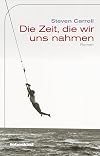
"That exotic tribe was us. And the time we have taken, our moment. One summer morning in 1970, Peter van Rijn, proprietor of the television and wireless shop, pronounces his Melbourne suburb one hundred years old. That same morning, Rita is awakened by a dream of her husband's snores, yet it is years since Vic moved north. Their son, Michael, has left for the city, and is entering the awkward terrain of first love. As the suburb prepares to celebrate progress, Michael's friend Mulligan is show more commissioned to paint a mural of the areas history. But what vision of the past will his painting reveal? Meanwhile, Rita's sometime friend Mrs Webster confronts the mystery of her husband's death. And Michael discovers that innocence can only be sustained for so long. The Time We Have Taken is both a meditation on the rhythms of suburban life and a luminous exploration of public and private reckoning during a time of radical change."--Provided by publisher. show lessTags
Recommendations










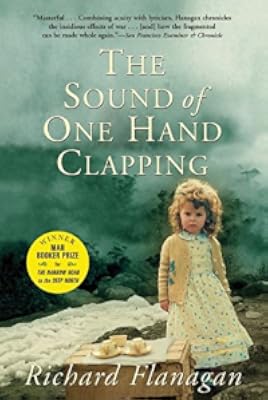

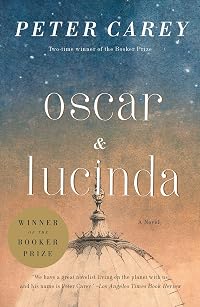


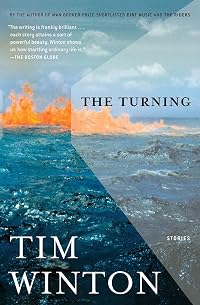
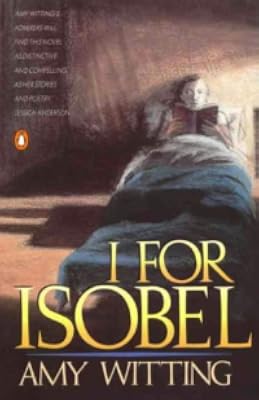





Member Recommendations

Breath by Tim Winton
by tandah
Member Reviews
The third story in a trilogy, Steven Carroll's The Time We Have Taken describes the events in an unnamed Melbourne suburb during its centenary celebrations in 1970.
In addition to its Miles Franklin Literary Award nomination, this book won the 2008 Commonwealth Writers Prize for Best Book in the South-East Asia and South Pacific Region.
Carroll writes the kind of still prose that invites the reader into a contemplative space. The irony is that his subject matter is restless.
He details the life of a suburb nine miles north of Melbourne, from the late '50s to the early '70s. It is, as Carroll notes, an age enthralled by progress and, even more, by speed. But he insists on telling the story slowly. The result is a deeply satisfying encounter show more with the empty spaces that the suburb failed to fill both between people and inside them.
While Carroll’s work is not overtly political, memory and the mythologising of the past are central themes, and he subtly but surely undermines the simplistic pre-lapsarian dream of the culture warriors while at the same time drawing his characters and their desires for escape or transcendence with humour, affection and empathy – and without a hint of condescension.
Although this is the third book in the series, it works just as well as a stand alone read. I haven't read the other two, but I am off to the bookshop to get them right now! show less
In addition to its Miles Franklin Literary Award nomination, this book won the 2008 Commonwealth Writers Prize for Best Book in the South-East Asia and South Pacific Region.
Carroll writes the kind of still prose that invites the reader into a contemplative space. The irony is that his subject matter is restless.
He details the life of a suburb nine miles north of Melbourne, from the late '50s to the early '70s. It is, as Carroll notes, an age enthralled by progress and, even more, by speed. But he insists on telling the story slowly. The result is a deeply satisfying encounter show more with the empty spaces that the suburb failed to fill both between people and inside them.
While Carroll’s work is not overtly political, memory and the mythologising of the past are central themes, and he subtly but surely undermines the simplistic pre-lapsarian dream of the culture warriors while at the same time drawing his characters and their desires for escape or transcendence with humour, affection and empathy – and without a hint of condescension.
Although this is the third book in the series, it works just as well as a stand alone read. I haven't read the other two, but I am off to the bookshop to get them right now! show less
A beautifully written and crafted novel, although not exactly fast paced.
It is the early 1970s, change is in the air, and this is an elegaic farewell for a certain era of Australian suburbia.
I've never lived in suburbia, I've never wanted to live in suburbia, so I found it a rather fascinating insight into something that most people have experienced. And, at the end of the book, I was rather sad to see this time passing, even though it wasn't the most beautiful of times: the lack of privacy, unhappy families, ennui. Now, that is good writing, to make me miss something that I never even wanted in the first place.
Every phrase is beautifully crafted to give the impression of emotions, moods, feelings. It's like Carroll has painted a show more portrait, rather than written a book. The lack of dialogue and of many events heighten this feeling.
Of course, the downside of this is that it's a rather slow read, and several times I was regretting the lack of plot. Not that there wasn't plot, but so much happened behind the scenes, and we were just left with the characters' impressions and emotional states.
I was a bit puzzled by the references back to train driving and speed, given his previous well regarded novels are The Gift of Speed and The Art of the Engine Driver: I was wondering if he maybe just wrote the same stuff over and over again. However, it turns out this is the third book in a trilogy. I don't think it matters reading them out of order (I definitely didn't feel as if I missed out on any vital back story), and I am curious to find and read the first two books. show less
It is the early 1970s, change is in the air, and this is an elegaic farewell for a certain era of Australian suburbia.
I've never lived in suburbia, I've never wanted to live in suburbia, so I found it a rather fascinating insight into something that most people have experienced. And, at the end of the book, I was rather sad to see this time passing, even though it wasn't the most beautiful of times: the lack of privacy, unhappy families, ennui. Now, that is good writing, to make me miss something that I never even wanted in the first place.
Every phrase is beautifully crafted to give the impression of emotions, moods, feelings. It's like Carroll has painted a show more portrait, rather than written a book. The lack of dialogue and of many events heighten this feeling.
Of course, the downside of this is that it's a rather slow read, and several times I was regretting the lack of plot. Not that there wasn't plot, but so much happened behind the scenes, and we were just left with the characters' impressions and emotional states.
I was a bit puzzled by the references back to train driving and speed, given his previous well regarded novels are The Gift of Speed and The Art of the Engine Driver: I was wondering if he maybe just wrote the same stuff over and over again. However, it turns out this is the third book in a trilogy. I don't think it matters reading them out of order (I definitely didn't feel as if I missed out on any vital back story), and I am curious to find and read the first two books. show less
This book, and indeed the trilogy it forms part of, has a whiff of pretentiousness about it. It's almost as though Carroll is consciously trying to write the great Australian novel; a book which makes profound statements about the nature of suburban society. I suppose (almost) all authors have visions of their own grandeur, but it doesn't always come across so obviously. Almost the entire book is written from the point of view of an external observer and the total amount of direct dialog would probably occupy less than one page. It's as though the narrator is teaching us a lesson on the social history of Australian post-war suburbia, rather than making the reader a part of that society. That's not necessarily bad, and indeed there's show more lots of good aspects of this approach. The story is worth telling and I did enjoy reading it. The characters are definitely realistic and as a suburban baby-boom Australian I felt very much that this was my society. I just think a more subtle approach would in the end be more effective. show less
(8.5)
A pleasant read and I could relate to the time period it was set in and indeed some of the observations on life from a mature perspective. A little surprised it won the Miles Franklin, though.
A pleasant read and I could relate to the time period it was set in and indeed some of the observations on life from a mature perspective. A little surprised it won the Miles Franklin, though.
The blurb claims it is 'a meditation on the rhythms of suburban life'. Alas I find said suburban life quite dull. I also found it surprisingly lacking in local flavour ... Felt like the characters could have been anywhere really, which was odd for a work built around the idea of a suburb's centenary. Most poignant aspect the one-sided love of Michael for Madeleine, but not remarkable enough to warrant another star.
Third book of the trilogy so the characters and the suburb were familiar. Events progress slowly with lengthy decriptions of the main characters thoughts and the author's voice of what happens in the future (this is a bit disconcerting for the reader).
Suburban Melbourne, 1970. I was there, had forgotten much about it until reading this beautiful reminder
Members
- Recently Added By
Author Information
16 Works 673 Members
Steven Carroll was born in 1949 in Melbourne, Victoria. He studied at La Trobe University. He has taught English at secondary school level, and drama at RMIT. He has been Drama Critic for The Sunday Age newspaper in Melbourne. Steven Carroll is now a full-time writer living in Melbourne. He will be speaking at the inaugural History Writers' show more Festival April 2015 in Melbourne. His title's include Remember Me, Jimmy james, The Lovers' Room, The Love Song Song of Lucy McBride and A World of Other People. He will be featured at the Mudgee Readers' Festival 2015. He made the finalist for the Melbourne Prize for Literature 2015. He also made the Victorian Premier¿s Literary Awards 2016 shortlist in the Fiction category. (Bowker Author Biography) show less
Awards and Honors
Awards
Series

Common Knowledge
- Important places
- Australia; Melbourne, Victoria, Australia; Victoria, Australia
- Important events
- Whitlam Era
Classifications
Statistics
- Members
- 163
- Popularity
- 201,757
- Reviews
- 9
- Rating
- (3.46)
- Languages
- English, French, German
- Media
- Paper, Audiobook
- ISBNs
- 9
- ASINs
- 1