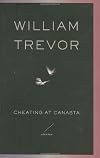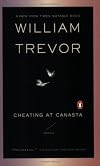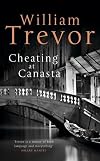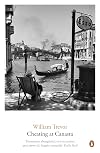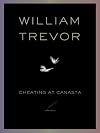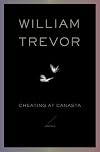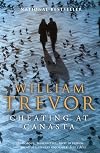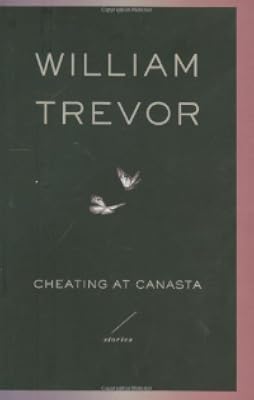
Cheating at Canasta: Stories
by William Trevor
On This Page
Description
The publication of a new book by William Trevor is a true literary event. One of our finest chroniclers of the human condition, Trevor?s precise and unflinching insights into the lives of ordinary people are evidenced once again in this stunning collection of twelve stories. Subtle yet powerful, these exquisitely nuanced tales of regret, deception, adultery, aging, and forgiveness are a rare pleasure, and they confirm Trevor's reputation as a master of the form. From a chance encounter show more between two childhood friends to memories of a newly widowed man to a family grappling with the sale of ancestral land, Trevor examines with grace and skill the tenuous bonds of our relationships, the strengths that hold us together, and the truths that threaten to separate us. show lessTags
Recommendations





Member Reviews
Trevor is always a joy to read; his ability to plumb the depths of disparate characters astonishes me every time. This is a late collection for the author; he was nearly 80 when this was published. What interests him here are the life partnerships we choose (or which are thrust upon us) and the way those relationships define us. There are married couples here, but also others. One story is of a priest and the sister who "saved" him from an engagement, and when he took orders, wrapped her life around his like kudzu and made his path hers. (This story, though brilliantly crafted, was actually my least favorite to read. It was undramatically sad throughout, but I thought it was a fascinating type of relationship, siblings who become sort show more of married old couples, that few of us ever think much about.) The last is a story about a man whose childhood friend, really a brother of choice, disappears for years, is presumed dead, and then reappears after everyone has aged or passed, with every one of their lives and their interpersonal relationships radically changed by their perceived loss. There are two stories of men with younger women, one of whom blows up his family and then returns willingly to his former unhappiness and another who is left by his lover, whom he met when she was his student, because she is still evolving and growing with a universe of possibility before her, and he is an old man content in his love and settledness. I loved most of these stories, but a couple were good rather than great (including that final story I mentioned, and the title story.) This man is a treasure! show less
As was to be expected, all the Trevor trademarks are still thriving and in excellent use - terrific lines, acute and insightful observations of human nature and that ever present bleak realism. Every story is a gem, and most were previously published in The New Yorker, but the last one, "Folie a Deux," really hit a nerve. It’s about a summer friendship of two boys of the age of nine, and a horrible event that happens because of their foolishness that they never recover from, even into adulthood. I don’t know how he sustains such a high level of writing, and avoids becoming formulaic after hundreds of stories over the years, but I don’t think the guy is capable of writing an insipid short story.
Twelve unrelated short stories, most of which were first published in the New Yorker Magazine, were put together for this collection in 2007. Despite the general excellence of Trevor's writing the stories didn't always please me. Partly I think this was because the topics bounced around. Still, very much worth the read and a reminder to me to read more by this author.
I should mention that these are all sad melancholic stories mostly about people with unhappy lives or parts of life. So there is a theme of sorts. The first story in the book was my favorite and set the tone for the book. It has been a while since I have read William Trevor but I think I prefer his stories written earlier in life.
I should mention that these are all sad melancholic stories mostly about people with unhappy lives or parts of life. So there is a theme of sorts. The first story in the book was my favorite and set the tone for the book. It has been a while since I have read William Trevor but I think I prefer his stories written earlier in life.
I noticed that two people tagged this book "read now" and read right now" and that's exactly what I did after buying it, despite having a large stack of unread books. Having anticipated reading Trevor's stories in the New Yorker over the last few years to the point where I check the contributors page first for his name, I welcomed this collection. These are stories that you don't soon forget. The writing is subtle and insightful and depicts some of the wonderful, and sometimes not wonderful, things that we do to ourselves and each other. Reading some for the second time is even better.
While I did not appreciate this collection quite as much as I have others by Trevor, his usual skill in storytelling and style prevail. The twelve stories here are, if not exactly sad, wistful or regretful. Nearly all involve characters who have experienced the death of a loved one, the death of a relationship, or some other form of longing or loss, and the thin Irish melancholy pervades them all. I do agree with the LT reviewer who feels that Trevor is best writing about the 1960s and '70s, and that the contemporary stories seem a bit lacking in truth. But, as always, Trevor is well worth the time.
The narrative is simple and un-intrusive. The stories are reflective, and typically a character’s secrets are revealed in the course of the tale. They have a slow, deliberate and relaxed air. These brief episodes encapsulate very real drama, pain and regret. The stories are neither depressing nor uplifting, just plain interesting.
As short stories go, these are pretty good. The characters are well enough developed that the reader can have some understanding of what makes them tick - more so than in some novels I've read. As I've said before, Trevor is very good at creating a mood, a feeling. This tells you a lot about the situation that he's describing. The stories are largely about Ireland and Irish society, and, while I don't have any first hand experience, I reckon he's done a pretty good job of picturing the society for us.
Notwithstanding these positive comments, I do still prefer a full length novel to a short story....I sometimes felt Trevor was rushing the plot a little.
Notwithstanding these positive comments, I do still prefer a full length novel to a short story....I sometimes felt Trevor was rushing the plot a little.
Members
- Recently Added By
Lists

Books Read in 2016
4,666 works; 199 members

2008-2012 Notable Books for Adults
127 works; 10 members
Author Information

120+ Works 13,506 Members
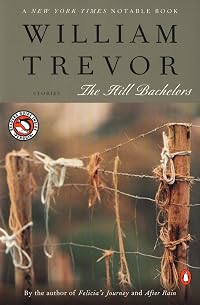
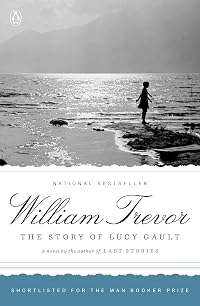
William Trevor Cox was born in Mitchelstown, County Cork, Ireland on May 24, 1928. He received a degree in history from Trinity College in 1950. Before becoming a full-time author in 1965, he worked as a sculptor, a teacher, and a copywriter at an advertising agency. He exhibited his sculptures in Dublin and England and was joint winner of the show more International Year of the Political Prisoner art competition in 1952. His first novel, A Standard of Behaviour, was published in 1958. His other novels include Other People's Worlds, Nights at the Alexandra, The Silence in the Garden, The Story of Lucy Gault, My House in Umbria, and Love and Summer. He won the Hawthornden Prize in 1964 for The Old Boys, the Whitbread Award in 1976 for The Children of Dynmouth, the Whitbread Award in 1983 for Fools of Fortune, and the Whitbread Award in 1994 for Felicia's Journey. His short story collections include The Day We Got Drunk on Cake and Other Stories, The Ballroom of Romance and Other Stories, Beyond the Pale, A Bit on the Side, Cheating at Canasta, and The Mark-2 Wife. The Hill Bachelors received the 2001 Irish Times Irish Literature Prize for Fiction and the PEN/Macmillan Silver Pen Award for Short Stories. He received the Allied Irish Banks' Prize in 1976, The Sunday Times Award for Literary Excellence in 1992, the David Cohen British Literature Prize in 1999, and the Bob Hughes Lifetime Achievement Award in Irish Literature in 2008. In 1977, he was awarded an honorary CBE in recognition of his services to literature. He died on November 20, 2016 at the age of 88. (Bowker Author Biography) show less
Awards and Honors
Work Relationships
Contains
Common Knowledge
- Canonical title*
- Una relación perfecta
- Original title
- Cheating at Canasta
- Original publication date
- 2007
- Important places
- Ireland
- First words
- Cahal sprayed WD-40 on to the only bolt his spanner wouldn't shift.
- Last words
- (Click to show. Warning: May contain spoilers.)And yet this morning he likes himself less than his friend.
- Disambiguation notice
- Contains 12 short stories: "The Dressmaker's Child", "The Room", "Men of Ireland", "Cheating at Canasta", "Bravado", "An Afternoon", "At Olivehill", "A Perfect Relationship", "The Children", "Old Flame", "Faith" and "Folie à... (show all) Deux".
*Some information comes from Common Knowledge in other languages. Click "Edit" for more information.
Classifications
Statistics
- Members
- 516
- Popularity
- 58,386
- Reviews
- 13
- Rating
- (3.81)
- Languages
- English, Italian, Norwegian (Bokmål), Spanish
- Media
- Paper, Audiobook, Ebook
- ISBNs
- 23
- ASINs
- 7