
On This Page
Description
Deep into the twenty-first century, the line between man and machine has been inexorably blurred as humans rely on the enhancement of mechanical implants and robots are upgraded with human tissue. In this rapidly converging landscape, cyborg superagent Major Motoko Kusanagi is charged to track down the craftiest and most dangerous terrorists and cybercriminals, including ghost hackers who are capable of exploiting the human/machine interface and reprogramming humans to become puppets to show more carry out the hackers criminal ends."--Amazon.com. show lessTags
Recommendations













Member Recommendations
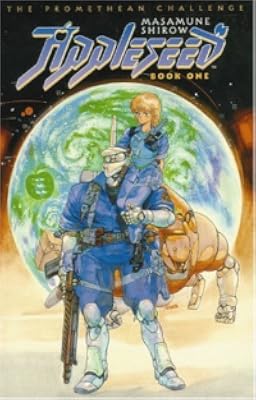
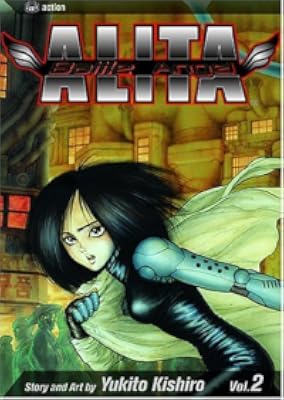
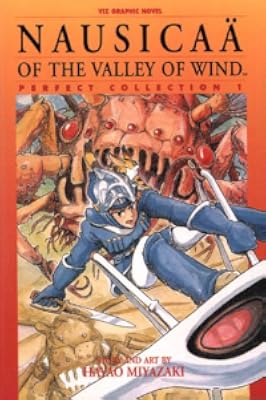
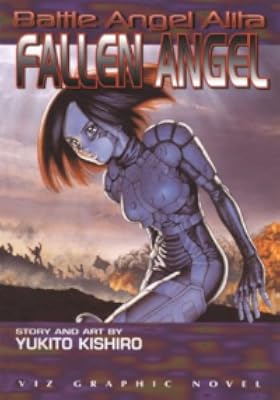
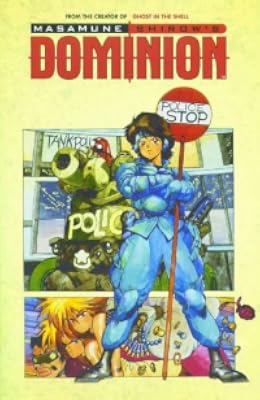
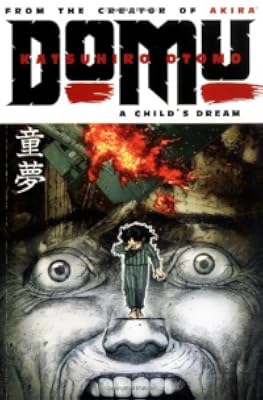
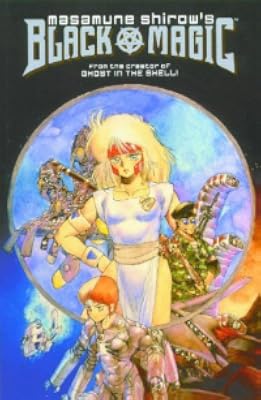
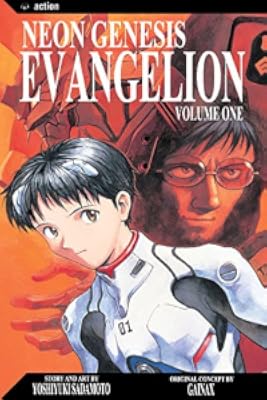
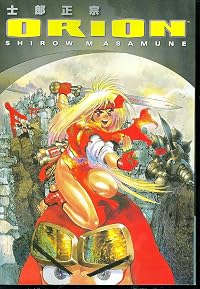
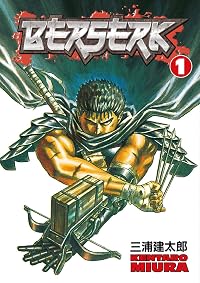
Project2501 Shares similar themes such as the ghost dive, cyborgs, artificial intelligence, etc.
20
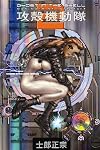
Project2501 Carries over themes from the original, with mostly color printouts and great use of CG on beautiful glossy pages
20
Member Reviews
THRESHOLDS OF HUMANNESS
Somewhere around the age of fourteen, I saw The Matrix for the first time. I grew up in a household informed by the spiritual teachings of Gurdjieff and J. G. Bennett, so the core themes around consciousness and awakening were both familiar and intriguing.
A few years later my cousin-in-law was getting rid of some of his old anime VHS tapes, and I learned about The Ghost in the Shell-one of the primary influences for The Matrix. During this era I saw the anime film. Only this year did my friend lend me her copy of the original manga.
A FUTURE RECEEDING
The first thing that I'm struck by in reading The Ghost in the Shell in 2020, more than thirty years after it was written, it feels as the the biotech future it show more describes in the year 2029 is further away than it was in 1989 (maybe this can be said of science fiction in general). Sure, knee replacements work pretty well these days, as do dental implants. And massive amounts of funding are poured into biotech research each year (but more for the sake of solid Return-on-Investment for pharmaceutical intellectual property than for the sake of pushing the envelope in the medical field). And there's certainly a dedicated biohacker subculture. Maybe we're a century away from cyborgs, but not a decade.
SCIENCE FICTION VERSUS SOCIAL FICTION
As I've commented before, I find it discouraging that so much of our fiction invests so much effort into exploring the technological potential of the future-in a way that implicitly assumes that social realities will calcify rather than evolve. Back when The Ghost in the Shell was authored we might have written off the sexism of young, mostly-naked female cyborgs surrounded by fully-clothed ugly old men holding all the power to be the daydreams of an adolescent manga artist (Masamune Shirow was still in his twenties when The Ghost in the Shell came out). But in the era of #MeToo, we can no longer be so dismissive. Female cyborgs like the Major, with large breasts constantly on display, are the image of some adolescent male fantasies, while male cyborgs are black cubes. What does this say about Masamune Shirow's subconscious understanding of the importance of the physical and aesthetic form of the masculine versus the feminine?
THE THRESHOLDS OF HUMANNESS
Science fiction writer Liu Cixin in his Three-Body Problem series notably concludes that the human organism, once fully severed from earth, is no longer human.
The earth is part of our body, part of what makes us human.
This question of humanity and its boundaries is an eternal question of human cultures. We confront it in politics today around abortion rights (when does human life begin?) and gender non-binary rights (how does gender relate to our humanness?). Ancient myths such as Gilgamesh also explore the boundaries of where humanness begins and ends, with Enkidu's domestication by Shamhat.
It is a rich inquiry in its dynamism and non-determinism. How a civilization answer these questions speaks much to its worldview. Masamune Shirow's distillation of his (and my) culture's answers speak volumes.
I've recently been reflecting on the somatic lens into reality. Cyborgs, without a human body, are excluded from this realm of intelligence entirely. Masamune Shirow assumes that our humanity rests in our brain and our spinal cord. Aside from technical questions of survival (it is scientifically unclear whether a human could remain "alive" in any meaningful sense of the world without the rest of their organism), such a worldview clearly elevates "intellectual" knowing far above emotional and physical knowing.
And yet, maybe Masamune Shirow has doubts about such extremes as well. The series is titled The Ghost in the Shell. Are human bodies really just shells, or are they something of more foundational importance? As the expression, "he's a ghost of his former self," belies, without souls and spirits, we're just ghosts. In other words, to have a ghost and a shell doesn't bring an organism up to the lower threshold of personhood. A body and a spirit or soul are required for such status.
That said, I find The Ghost in the Shell much less chilling the Ex Machina. A robot with a human brain and spinal cord somehow feel much less haunting to me than an AI impersonating a human (an android, as Masamune Shirow refers to it as). I wonder what this says about this threshold between human and machine.
I would be remiss not to mention Gurdjieff's striving to free humans from their mechanicalness. His thesis was that, in our unconscious lives, humans are far more machine than human. Maybe our science fiction is reflective of the fact that, from a behavioral perspective, much of us do tend to exhibit behaviors more akin to machines than humans.
A MONTE CARLO APPROXIMATION OF MEANING
As Masamune Shirow admits in one of his numerous footnotes, he has managed to pull a lot of science and action into his epic, and yet at the same time, it is reminiscent of a Monte Carlo approximation of a story. Although there's clearly a thread about some kind of hierarchy of intelligence and consciousness, it is never fully articulated. It reminds me of the way that, in New York 2140, Kim Stanley Robinson's plot hinges upon principles that enable financial hackers to undermine capitalism-but he fails to express what these principles are! Or how in The Three-Body Problem, Liu Cixin's story revolves around an alien race, which he never actually describes!
That said, maybe it is the role of fiction to ask questions rather than provide answers. show less
Somewhere around the age of fourteen, I saw The Matrix for the first time. I grew up in a household informed by the spiritual teachings of Gurdjieff and J. G. Bennett, so the core themes around consciousness and awakening were both familiar and intriguing.
A few years later my cousin-in-law was getting rid of some of his old anime VHS tapes, and I learned about The Ghost in the Shell-one of the primary influences for The Matrix. During this era I saw the anime film. Only this year did my friend lend me her copy of the original manga.
A FUTURE RECEEDING
The first thing that I'm struck by in reading The Ghost in the Shell in 2020, more than thirty years after it was written, it feels as the the biotech future it show more describes in the year 2029 is further away than it was in 1989 (maybe this can be said of science fiction in general). Sure, knee replacements work pretty well these days, as do dental implants. And massive amounts of funding are poured into biotech research each year (but more for the sake of solid Return-on-Investment for pharmaceutical intellectual property than for the sake of pushing the envelope in the medical field). And there's certainly a dedicated biohacker subculture. Maybe we're a century away from cyborgs, but not a decade.
SCIENCE FICTION VERSUS SOCIAL FICTION
As I've commented before, I find it discouraging that so much of our fiction invests so much effort into exploring the technological potential of the future-in a way that implicitly assumes that social realities will calcify rather than evolve. Back when The Ghost in the Shell was authored we might have written off the sexism of young, mostly-naked female cyborgs surrounded by fully-clothed ugly old men holding all the power to be the daydreams of an adolescent manga artist (Masamune Shirow was still in his twenties when The Ghost in the Shell came out). But in the era of #MeToo, we can no longer be so dismissive. Female cyborgs like the Major, with large breasts constantly on display, are the image of some adolescent male fantasies, while male cyborgs are black cubes. What does this say about Masamune Shirow's subconscious understanding of the importance of the physical and aesthetic form of the masculine versus the feminine?
THE THRESHOLDS OF HUMANNESS
Science fiction writer Liu Cixin in his Three-Body Problem series notably concludes that the human organism, once fully severed from earth, is no longer human.
The earth is part of our body, part of what makes us human.
This question of humanity and its boundaries is an eternal question of human cultures. We confront it in politics today around abortion rights (when does human life begin?) and gender non-binary rights (how does gender relate to our humanness?). Ancient myths such as Gilgamesh also explore the boundaries of where humanness begins and ends, with Enkidu's domestication by Shamhat.
It is a rich inquiry in its dynamism and non-determinism. How a civilization answer these questions speaks much to its worldview. Masamune Shirow's distillation of his (and my) culture's answers speak volumes.
I've recently been reflecting on the somatic lens into reality. Cyborgs, without a human body, are excluded from this realm of intelligence entirely. Masamune Shirow assumes that our humanity rests in our brain and our spinal cord. Aside from technical questions of survival (it is scientifically unclear whether a human could remain "alive" in any meaningful sense of the world without the rest of their organism), such a worldview clearly elevates "intellectual" knowing far above emotional and physical knowing.
And yet, maybe Masamune Shirow has doubts about such extremes as well. The series is titled The Ghost in the Shell. Are human bodies really just shells, or are they something of more foundational importance? As the expression, "he's a ghost of his former self," belies, without souls and spirits, we're just ghosts. In other words, to have a ghost and a shell doesn't bring an organism up to the lower threshold of personhood. A body and a spirit or soul are required for such status.
That said, I find The Ghost in the Shell much less chilling the Ex Machina. A robot with a human brain and spinal cord somehow feel much less haunting to me than an AI impersonating a human (an android, as Masamune Shirow refers to it as). I wonder what this says about this threshold between human and machine.
I would be remiss not to mention Gurdjieff's striving to free humans from their mechanicalness. His thesis was that, in our unconscious lives, humans are far more machine than human. Maybe our science fiction is reflective of the fact that, from a behavioral perspective, much of us do tend to exhibit behaviors more akin to machines than humans.
A MONTE CARLO APPROXIMATION OF MEANING
As Masamune Shirow admits in one of his numerous footnotes, he has managed to pull a lot of science and action into his epic, and yet at the same time, it is reminiscent of a Monte Carlo approximation of a story. Although there's clearly a thread about some kind of hierarchy of intelligence and consciousness, it is never fully articulated. It reminds me of the way that, in New York 2140, Kim Stanley Robinson's plot hinges upon principles that enable financial hackers to undermine capitalism-but he fails to express what these principles are! Or how in The Three-Body Problem, Liu Cixin's story revolves around an alien race, which he never actually describes!
That said, maybe it is the role of fiction to ask questions rather than provide answers. show less
2.5
This was an interesting read. Inconsistent in many ways, it failed to maintain a particular tone, often jumping between humorous and serious scenarios. The art changes a lot as it progresses, as do the characters - none of which helps. The most inconsistent thing of all is Major Kusanagi's breasts which seem to vary in size by the page.
The plot is very episodic, making it hard to invest in. A concept is introduced at the beginning of the book, and then referred back to every now and again throughout mostly unrelated political escapades before finally getting wrapped up in the last chapter.
Some of it I found enjoyable, particularly towards the end, as it focuses more on the puppet master and its motivations. Shirow clearly knows his show more stuff, and the book is filled with interesting ideas that are often communicated intriguingly through the art. However, for the most part, it's quite boring. It's difficult to care about the characters or half the situations they're in, and the simple stand-alone adventures they pursue are often made unnecessarily complicated and difficult to follow.
As one can only expect (I suppose), there's quite a bit of unnecessary nudity, and a few smutty scenes here and there; often displayed in full colour at the beginning of chapters as opposed to where the rest of the story is in traditional black and white. It's a bit tasteless to be honest but it seems to be a Japanese standard.
The greatest credit that can really be given to the Ghost in the Shell manga is that it has spawned an excellent adaptation. Mamoru Oshii improves on this work tenfold, taking concepts, characters and the better story elements and forming it into a masterpiece of science fiction animation.
In all honesty, if you've already seen the film then I don't think there's a lot to gain from reading the manga. show less
This was an interesting read. Inconsistent in many ways, it failed to maintain a particular tone, often jumping between humorous and serious scenarios. The art changes a lot as it progresses, as do the characters - none of which helps. The most inconsistent thing of all is Major Kusanagi's breasts which seem to vary in size by the page.
The plot is very episodic, making it hard to invest in. A concept is introduced at the beginning of the book, and then referred back to every now and again throughout mostly unrelated political escapades before finally getting wrapped up in the last chapter.
Some of it I found enjoyable, particularly towards the end, as it focuses more on the puppet master and its motivations. Shirow clearly knows his show more stuff, and the book is filled with interesting ideas that are often communicated intriguingly through the art. However, for the most part, it's quite boring. It's difficult to care about the characters or half the situations they're in, and the simple stand-alone adventures they pursue are often made unnecessarily complicated and difficult to follow.
As one can only expect (I suppose), there's quite a bit of unnecessary nudity, and a few smutty scenes here and there; often displayed in full colour at the beginning of chapters as opposed to where the rest of the story is in traditional black and white. It's a bit tasteless to be honest but it seems to be a Japanese standard.
The greatest credit that can really be given to the Ghost in the Shell manga is that it has spawned an excellent adaptation. Mamoru Oshii improves on this work tenfold, taking concepts, characters and the better story elements and forming it into a masterpiece of science fiction animation.
In all honesty, if you've already seen the film then I don't think there's a lot to gain from reading the manga. show less
Major Kusanagi is a cyborg made of robotic body parts (a “shell”, big breast included taken from word Bombshell) but here shell meaning is that body of Robot and a human mind (a “ghost”, you get it) a combination which can delete there past memories create a thick line between human and robotic. Her sidekick, Batou, is also a cyborg, of the hulk sort with beefed up body. The evil Puppeteer too is a sentient artificial hacker emerged from the “sea of information”. Considering that this was written in the 80s, in many ways Masamune Shirow was something of a visionary.
.
In the rapidly converging landscape of the 21st century things are changing fast enough and human depends on robot as an enhancement of there body little did show more they know they are losing the power of questioning. Things go haywire when Hacker told Major what is going on and how to stop that, Major took a long time to understand but finally did and she informed her team and now they are finding a way to solve the crisis in hand and villian is in between them, a biggest threat to them show less
.
In the rapidly converging landscape of the 21st century things are changing fast enough and human depends on robot as an enhancement of there body little did show more they know they are losing the power of questioning. Things go haywire when Hacker told Major what is going on and how to stop that, Major took a long time to understand but finally did and she informed her team and now they are finding a way to solve the crisis in hand and villian is in between them, a biggest threat to them show less
"Security Force Kokaku", begins as a police force (Section 9) mostly against computer crimes, in a future society where humans have many cyborg implants. The main character "Major" only has a human brain, and is skilled in fighting. She questions how much of her humanness is necessary to make her sentient, and ends the novel/series by fusing with a possibly sentient computer brain. The author relates many of the questions about what the soul is to not only technology, but Japanese religion too. There is much female nudity throughout.
In 2029, Major Motoko Kusanagi is a cyborg operative (whose few remaining organic parts fit in a suitcase) working for Section 9, a Japanese anti-terror unit, who has to deal with high-tech threats ranging from brain piracy to emergent intelligence. Shirow has done a lot of work preparing the background for the world, which shows up in everything from footnotes crammed between panels to the author’s notes in the back. Like his work on Appleseed, there are some interesting reflections on humanity. The stories have plenty of action, not much character development or large-scale plot arcs.
No me terminaron de convencer las ilustraciones. Un poco más de contenido a color hubiera ayudado bastante. La trama tiene momentos en los que describe elementos profundos y complejos. Si hubiera tenido una traducción mejor posiblemente le daba cinco estrellas. Mala mía.
Por lo demás, excelente.
Por lo demás, excelente.
A cyberpunk classic. Urban. Cybernetics are widespread. Artificial Intelligence is already manifest. Politically degraded and ruthless officials exhibit a cynical attitude to life. Section 9 is a team of elite operatives,at least some of whom are all or part cyborg. They deal with domestic cyber-tinged crime in a near-future Japan. Its opponents are corporate and governmental bad actors from home and abroad. The Section 9 agents are hard-boiled and efficient and the closest thing to 'the good guys' in this cynical materialistic world.
Members
- Recently Added By
Lists

Best Science Fiction Comics and Graphic Novels
144 works; 11 members

Recommended Comics / Graphic Novels
595 works; 122 members

Classic Manga
31 works; 4 members

Best Science Fiction Novels
816 works; 430 members

Best Science Fiction Originally Published in a Language Other Than English
449 works; 34 members
Survey of Classic Science Fiction
171 works; 48 members
Author Information

243 Works 5,249 Members
Some Editions
Awards and Honors
Series

Belongs to Publisher Series
Work Relationships
Is contained in
Contains
Common Knowledge
- Canonical title
- Ghost in the Shell
- Original title
- 攻殻機動隊
- Alternate titles
- Ghost in the Shell, Vol. 1
- Original publication date
- 1991-10
- People/Characters
- Motoko Kusanagi; Aramaki; Togusa Ishikawa; Batou; Puppeteer; Toru Soma (show all 7); Chev Modouma
- Related movies
- Kôkaku kidôtai (1995 | IMDb); Kôkaku kidôtai: Stand Alone Complex (2002 | IMDb); Innocence (2004/I | IMDb); Kôkaku kidôtai: Stand Alone Complex Solid State Society (2006 | IMDb); Kôkaku kidôtai 2.0 (2008 | IMDb); Kôkaku Kidôtai (2015 | IMDb) (show all 7); Ghost in the Shell (2017 | IMDb)
- First words
- It is the near future.
- Last words
- (Click to show. Warning: May contain spoilers.)AHH... THE NET IS VAST...
- Original language
- Japanese
Classifications
Statistics
- Members
- 1,577
- Popularity
- 14,532
- Reviews
- 24
- Rating
- (3.93)
- Languages
- 8 — Danish, English, French, German, Italian, Japanese, Portuguese, Spanish
- Media
- Paper, Ebook
- ISBNs
- 27
- ASINs
- 2