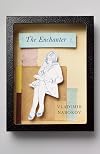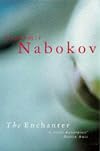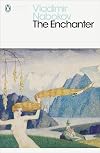
The Enchanter
by Vladimir Nabokov
On This Page
Description
The Enchanter is the Ur-Lolita, the precursor to Nabokov's classic novel. At once hilarious and chilling, it tells the story of an outwardly respectable man and his fatal obsession with certain pubescent girls, whose coltish grace and subconscious coquetry reveal, to his mind, a special bud on the verge of bloom.Tags
Recommendations







Member Reviews
64. The Enchanter by Vladimir Nabokov]
translation: from Russian by Dmitri Nabokov, 1985
published: written 1939, found in the 1980’s
format: 113-page paperback
acquired: October
read: Dec 30
time reading: 2 hr 53 min, 1.5 min/page
rating: 4
locations: Paris and French Riviera
about the author: 1899 – 1977. Russia born, educated at Trinity College in Cambridge, 1922. Lived in Berlin (1922-1937), Paris, the US (1941-1961) and Montreux, Switzerland (1961-1977).
My latest Nabokov and his last Russian language effort in long fiction. This is a kind of precursor to [Lolita] (which I haven't read). It's also a pedophile story, written in 1939 in France (as WWII kicked off) in perfect Russian prose, apparently shared around a little, but it wasn't show more published and all copies and versions were lost. A single manuscript was rediscovered in the early 1980's, and was translated in 1985 by Vladimir Nabokov's son, Dmitri. It runs 77 pages in this paperback.
It's a terrific little story, funny on the surface, obviously pretty dark underneath. There is a lot of play in the way the story works out. The unnamed pedophile is crafty but doesn't really seem to think anything through. He tries to reason with himself, using the phrase "providential sophistry" brilliantly. (I had to look up both words). Then he stumbles upon what he sees as a golden opportunity - a beautiful pre-teen girl whose mother is a terrible mother, widowed and dying. He explores a bit, and then marries the dying mother, intending to inherit his victim. As the book works it out, he almost accidentally becomes a good person, supporting the lonely dying mother. He always stays decent outward, while entirely an animal on the hunt inside. He gets very frustrated and bitter with each piece of good news, as the mother stays well for a bit. Alas, things start to work out except that this story can only end it disaster.
Nabokov has many tricks here. I liked that the man first sort of plays god, manipulating everyone, but then suffers as he become subject to fickle fate. Things go his way and then they undermine him in humorous patterns, seriously messing with his patience and, well, his sense. It's such a playful touch, you almost forget all the harm he intends. The end feels a little rushed and convenient, but who knows which draft this was. An entertaining novella to end the year.
2020
https://www.librarything.com/topic/322920#7364291 show less
translation: from Russian by Dmitri Nabokov, 1985
published: written 1939, found in the 1980’s
format: 113-page paperback
acquired: October
read: Dec 30
time reading: 2 hr 53 min, 1.5 min/page
rating: 4
locations: Paris and French Riviera
about the author: 1899 – 1977. Russia born, educated at Trinity College in Cambridge, 1922. Lived in Berlin (1922-1937), Paris, the US (1941-1961) and Montreux, Switzerland (1961-1977).
My latest Nabokov and his last Russian language effort in long fiction. This is a kind of precursor to [Lolita] (which I haven't read). It's also a pedophile story, written in 1939 in France (as WWII kicked off) in perfect Russian prose, apparently shared around a little, but it wasn't show more published and all copies and versions were lost. A single manuscript was rediscovered in the early 1980's, and was translated in 1985 by Vladimir Nabokov's son, Dmitri. It runs 77 pages in this paperback.
It's a terrific little story, funny on the surface, obviously pretty dark underneath. There is a lot of play in the way the story works out. The unnamed pedophile is crafty but doesn't really seem to think anything through. He tries to reason with himself, using the phrase "providential sophistry" brilliantly. (I had to look up both words). Then he stumbles upon what he sees as a golden opportunity - a beautiful pre-teen girl whose mother is a terrible mother, widowed and dying. He explores a bit, and then marries the dying mother, intending to inherit his victim. As the book works it out, he almost accidentally becomes a good person, supporting the lonely dying mother. He always stays decent outward, while entirely an animal on the hunt inside. He gets very frustrated and bitter with each piece of good news, as the mother stays well for a bit. Alas, things start to work out except that this story can only end it disaster.
Nabokov has many tricks here. I liked that the man first sort of plays god, manipulating everyone, but then suffers as he become subject to fickle fate. Things go his way and then they undermine him in humorous patterns, seriously messing with his patience and, well, his sense. It's such a playful touch, you almost forget all the harm he intends. The end feels a little rushed and convenient, but who knows which draft this was. An entertaining novella to end the year.
2020
https://www.librarything.com/topic/322920#7364291 show less
Non riesco a votarlo.
È scritto talmente bene e in modo talmente elegante che il torbido sfuma tra le parole ma il tema è così fastidioso che certe descrizioni(bellissime) possono creare disagio.
Gran bel racconto.
È scritto talmente bene e in modo talmente elegante che il torbido sfuma tra le parole ma il tema è così fastidioso che certe descrizioni(bellissime) possono creare disagio.
Gran bel racconto.
The story that eventually led to Nabokov's classic tale about one Dolores Haze aka Lolita. Perverse, passionate, funny, and extremely well-written-- not to mention some of the most crude things said in the most delicate language-- it has all the markings of a Nabokov.
I don't often add notes to goodreads but if you, like me, are browsing your library shelves for some Russian authors and you innocently pick up The Enchanter you might also be taken completely by surprise in that it's about an old guy who likes little girls. Gah! It totally gave me the heeby jeebies (technical term that) but the writing is amazing. I'm happy to be done with this one but I'll be immediately on to some more Nabokov...hoping fervently for no creepy old guys (and dutifully avoiding Lolita).
The ur-Lolita is a very very stark and startling departure from what Lolita is like. The structure is the same -- the narrator, the maternal marriage and death, the access to the girl (the word nymphet does not appear but you know that's what i mean) and the narrator's death. But this short, little novella has none of the infamous wordplay of Lolita, instead goes straight to the point. girls like her start their period early (so he only has a little bit of time before she's no longer his central point of focus) and mentions the shocks of lust that course through his body like the high of cocaine. There is no mind bending rationalizations for his actions, and the seething self loathing is apparent from the first page. I still need a show more couple of re-reads to really figure out how I am feeling about it, and at slim 50pages I can easily re-read it as often as I need to. show less
Racconto scritto nel 1939 in russo, è un primo esperimento di Nabokov nell'avvicinarsi al tema poi trattato in Lolita (1955). Ma le differenze sono molte, soprattutto nel modo in cui lo sguardo di chi narra si posa sul protagonista, nei confronti del quale la riprovazione morale - vestita di ironia e di una scrittura splendidamente ellittica ed elusiva - si dirige nettamente fin dalla prima pagina.
This was, evidently, a prelude to Lolita. The novella is simply written and the language has fluidity, but there are no characters named and it seems to be a study of the perversion of the main character. However, the ending is a surprising one but holds an almost deus ex machina. It was never published in Nabokov's lifetime. What is worth noting is the analysis, at the end of the short tale, of the novella by his son: Dmitri Nabokov- who tries to enter the world of comprehension revolving around his father.
3 stars.
3 stars.
Members
- Recently Added By
Lists

Shaking a Leg
111 works; 3 members

2015 Reading challenge
18 works; 1 member
Author Information

432+ Works 96,223 Members
Vladimir Vladimirovich Nobokov was born April 22, 1899 in St. Petersburg, Russia to a wealthy family. He attended Trinity College, Cambridge. When he left Russia, he moved to Paris and eventually to the United States in 1940. He taught at Wellesley College and Cornell University. Nobokov is revered as one of the great American novelists of the show more 20th Century. Before he moved to the United States, he wrote under the pseudonym Vladimir Serin. Among those titles, were Mashenka, his first novel and Invitation to a Beheading. The first book he wrote in English was The Real Life of Sebastian Knight. He is best know for his work Lolita which was made into a movie in 1962. In addition to novels, he also wrote poetry and short stories. He was a finalist for the National Book Award for Fiction seven times, but never won it. Nabokov died July 2, 1977. show less
Some Editions
Awards and Honors
Notable Lists
Series
Belongs to Publisher Series
Volk und Welt Spektrum (257)
Work Relationships
Is contained in
Has as a commentary on the text
Common Knowledge
- Canonical title*
- De tovenaar
- Original title
- Волшебник
- Alternate titles*
- The Enchater
- Original publication date
- 1986
- Dedication
- To Vera
- First words
- "How can I come to terms with myself?" he thought, when he did any thinking at all.
- Last words
- (Click to show. Warning: May contain spoilers.)It would be a serious mistake to roll away, on that protonymphet's skates, into a garden of parallel primrose paths.
- Original language
- Russian
*Some information comes from Common Knowledge in other languages. Click "Edit" for more information.
Classifications
- Genres
- General Fiction, Fiction and Literature
- DDC/MDS
- 891.7342 — Literature & rhetoric Literatures of other languages East Indo-European and Celtic literatures Russian and East Slavic languages Russian fiction USSR 1917–1991 Early 20th century 1917–1945
- LCC
- PG3476 .N3 .V5513 — Language and Literature Slavic languages and literatures. Baltic languages. Albanian language Slavic. Baltic. Albanian Russian literature Individual authors and works 1917-1960
- BISAC
Statistics
- Members
- 819
- Popularity
- 33,760
- Reviews
- 22
- Rating
- (3.65)
- Languages
- 15 — Catalan, Danish, Dutch, English, Finnish, French, German, Italian, Norwegian (Bokmål), Polish, Portuguese (Portugal), Russian, Croatian, Spanish, Swedish
- Media
- Paper, Audiobook, Ebook
- ISBNs
- 46
- ASINs
- 11