On This Page
Description
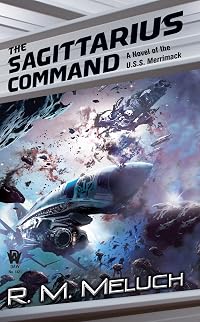
As former enemies Earth and Palatine join forces to battle the Hive, an alien life-form that is wreaking deadly havoc, Captain John Farragut searches for the one man who may be able to stop the Hive and ensure humanity's surivival.Tags
Recommendations





Member Reviews
Third in the USS Merrimack series. The year is 2445 CE, and Earth and the Palatine Empire (a neo-Roman group that broke away from Earth control a few generations ago) have declared a temporary truce in order to combat the Hive. The Hive cannot be reasoned with, cannot be stopped for long, and they will never, ever stop coming. Because they are hungry. And all life is food.
I read these as really excellent Star Trek:TOS fanfic, with Captain Farragut as a smarter, kinder version of James T Kirk and Augustus as a creepier version of Spock. I have an unfortunately huge crush on Augustus, who is filled to the brim with rage and controlled by an intellect the size of a planet and a loyalty stronger than death. He gets his kicks show more psychologically torturing his cohorts--Farragut is the only person he has ever met who can deal with his mind games. In fact, Farragut misses Augustus's attempts to rip apart his psyche once he's gone. OTP! I have less interest in the other relationship in the books: between Steele and one of his marines, the sexually free, physically aggressive Kerry Blue. They are both complete numbskulls, and I wish they'd just get together and stop bothering me with Steele's constant "oh how I love her soft femininity" rumblings.
It took me a few chapters to get into this book--Meluch's style sounds like a particularly terse cowboy--but once I got past the sentence fragments and back into the adventure, I was hooked. I read it in a single sitting, unable to put it down to eat. show less
I read these as really excellent Star Trek:TOS fanfic, with Captain Farragut as a smarter, kinder version of James T Kirk and Augustus as a creepier version of Spock. I have an unfortunately huge crush on Augustus, who is filled to the brim with rage and controlled by an intellect the size of a planet and a loyalty stronger than death. He gets his kicks show more psychologically torturing his cohorts--Farragut is the only person he has ever met who can deal with his mind games. In fact, Farragut misses Augustus's attempts to rip apart his psyche once he's gone. OTP! I have less interest in the other relationship in the books: between Steele and one of his marines, the sexually free, physically aggressive Kerry Blue. They are both complete numbskulls, and I wish they'd just get together and stop bothering me with Steele's constant "oh how I love her soft femininity" rumblings.
It took me a few chapters to get into this book--Meluch's style sounds like a particularly terse cowboy--but once I got past the sentence fragments and back into the adventure, I was hooked. I read it in a single sitting, unable to put it down to eat. show less
One of the things I enjoy about some women SciFi authors is the interesting blend of science, SciFi, Space Opera/Odyssey, tough fighting marines, opposing factions, spies, enemies and the interpersonal relationships between all characters that all tend to evolve when people work and live together for long periods of time. Not to be sexist, but sometimes you don't get quite the blend I'm looking for with a male writer. I know some men write the type of stories I love to read - and then again there are some times when I enjoy a more "male" perspective. I certainly do not look for or enjoy when a SciFi or horror novel goes all gooey and lovestruck - overwhelming the story. I'm referring to the novels that tend to end up being a strong show more romance novel with some fantasy, SciFi, horror or U.F. just lightly blended into the book. To me, they tend to read as if the genre came second to the love story. Which is fine, if that's what you're looking for. It's just not what I'm looking for.
With the U.S.S. Merrimack series, the blending of SciFi, humor, horror and personal relationships have just the right touch. An overall theme in this series is the war between the Romans (who have left Earth to claim as much space and as many worlds as they can, while re-building the Roman Empire) and the United States government along with the horror aspects of the hive like behaviour of the Gorgons. The gorgons travel through space, seemingly impervious to any repeated attacks as they literally eat their way through space ships, planets and galaxies - eating anything organic. And they are attracted by same resonance that the space-going ships and planets use to send messages to each other. Not a good thing.
At the end of book two, Rome had surrendered to the United States - or rather, to John Farragut, the captain of the U.S.S. Merrimack. He took their surrender and now both sides are supposed to be cooperating or at least working together to find the home planet of the gorgons and destroy them. Farragut, a very interesting, almost absurdedly charismatic man is made Commodore of a five ship fleet. He's in charge of the whole operation. The Romans don't particularly want to work with him. His own crew seems to be intensely loyal to him because of his way with people and soldiers. He not only remembers small details of his crews, but when he talks to a crew member, they feel like they are the only person he's paying attention to at the moment. Even some of the men who hate him, his enemies can't help begrudginly respecting and liking him. He almost seems to good to be true - and could be considered the male version of a Mary Sue, except that the story is so fun to read, the dialog so engaging, and Farragut is not completely perfect. But he's a fun character to read with his almost superhero ways.
The fleet comes into quite a few scrapes, where it seems like all is lost, but they manage to pull through - and this would be kind of unbelievable, except that this is SciFi and the narration and dialogue is so fun, that I just enjoyed the scenes and the impossible saves.
In fact, I enjoyed this novel just as much - possibly a bit more than the first two novels. The only thing that kept this from being a Six on my scale was that there were a few instances where the characters began to speak philosophy a bit more than I enjoy reading. I'm not really into too much of that "thinking man's" dialogue. However, I am impressed that Meluch stayed away from massive infodumps - SciFi reading can sometimes be a little overwhelming to the unscientifically geared mind when introducing a scientific theory. There was a bit of information being passed along in the guise of dialogue - but thankfully this wasn't an overwhelming experience.
On the whole, loved reading The Sagittarius Command, enjoyed the fighting, the action, dialogue and characters. I'm blissfully going to grab that fourth novel in the series that's waiting over there on the shelf.... show less
With the U.S.S. Merrimack series, the blending of SciFi, humor, horror and personal relationships have just the right touch. An overall theme in this series is the war between the Romans (who have left Earth to claim as much space and as many worlds as they can, while re-building the Roman Empire) and the United States government along with the horror aspects of the hive like behaviour of the Gorgons. The gorgons travel through space, seemingly impervious to any repeated attacks as they literally eat their way through space ships, planets and galaxies - eating anything organic. And they are attracted by same resonance that the space-going ships and planets use to send messages to each other. Not a good thing.
At the end of book two, Rome had surrendered to the United States - or rather, to John Farragut, the captain of the U.S.S. Merrimack. He took their surrender and now both sides are supposed to be cooperating or at least working together to find the home planet of the gorgons and destroy them. Farragut, a very interesting, almost absurdedly charismatic man is made Commodore of a five ship fleet. He's in charge of the whole operation. The Romans don't particularly want to work with him. His own crew seems to be intensely loyal to him because of his way with people and soldiers. He not only remembers small details of his crews, but when he talks to a crew member, they feel like they are the only person he's paying attention to at the moment. Even some of the men who hate him, his enemies can't help begrudginly respecting and liking him. He almost seems to good to be true - and could be considered the male version of a Mary Sue, except that the story is so fun to read, the dialog so engaging, and Farragut is not completely perfect. But he's a fun character to read with his almost superhero ways.
The fleet comes into quite a few scrapes, where it seems like all is lost, but they manage to pull through - and this would be kind of unbelievable, except that this is SciFi and the narration and dialogue is so fun, that I just enjoyed the scenes and the impossible saves.
In fact, I enjoyed this novel just as much - possibly a bit more than the first two novels. The only thing that kept this from being a Six on my scale was that there were a few instances where the characters began to speak philosophy a bit more than I enjoy reading. I'm not really into too much of that "thinking man's" dialogue. However, I am impressed that Meluch stayed away from massive infodumps - SciFi reading can sometimes be a little overwhelming to the unscientifically geared mind when introducing a scientific theory. There was a bit of information being passed along in the guise of dialogue - but thankfully this wasn't an overwhelming experience.
On the whole, loved reading The Sagittarius Command, enjoyed the fighting, the action, dialogue and characters. I'm blissfully going to grab that fourth novel in the series that's waiting over there on the shelf.... show less
Jumping in at the middle of a series is never that clever an idea, but doesn't work too badly in this case.
The action is all centered around the battleship of the american space fleet the Merrimack, and it's crew of marines and specialists. It becomes quickly apparent that they and a European/Catholic presance taking the form of a re-emerged roman empire are the two main human spacefaring nations, and that they have run (presumably in the earlier books) into difficulties with each other, and an alien presance. The alien is some kind of Hive jellyfish idea individually of little harm but very dangerous in large numbers. The US forces have been encountering these beings far out in the galaxy, but when an internal roman colony comes under show more attack the romans are unprepared, and it falls upon the good 'ole US marines to bail out these 'enemies' once again. Leading to yet more resentment between the supposedly allied forces.
The bombastic US military attitude quickly starts to grate, as if space is little more than the old Wild West to be shot and subdued, but the presance of the commander John Farragut who has just about the only personallity in the book, manages to temper this a bit, although one is still left rooting for the romans.
The writing is actually quite restrained for military SF, there is no blood or guts, surprisingly and for no good reason no swearing, and while there is plenty of inuendo, there is also no sex. There are no prolonged fighting scenes or graphic descriptions of the action. however there is also no character development, and even the cleverist of the marines is little more than a trigger finger. However some of the interactions obviously continuing from the previous books sometimes manages to capture the attention. The plot roles along at some speed, but it's still all fairly simplistic, even without the previous books in the series. The alien worlds are also pretty thin.
Readable especially if you like military SF, but nothing special.
.............................................
After re-read as a continuation of the series: That's very harsh. Obviously this does work much better once you've read the preceeding works. The continuation of the character interactions especially Kerry Blue with Steele works much better with a grasp of the character's history together. Augustus remains superb as ever. That said this isn't as brilliant as the previous book. The arch meglomanic as an enemy plot is a bit predictable and never properly explained how he came to be in such a position. The supporting captains of the grand fleet do little, and theri isn't time to explore may of the characters that could have blossomed. It doesn't frag at any point though.
Still fun and a worthy continuation of the series, I'm expecting some excellent politics in the next (and final?) book in the series as the fleets resolve their differences. show less
The action is all centered around the battleship of the american space fleet the Merrimack, and it's crew of marines and specialists. It becomes quickly apparent that they and a European/Catholic presance taking the form of a re-emerged roman empire are the two main human spacefaring nations, and that they have run (presumably in the earlier books) into difficulties with each other, and an alien presance. The alien is some kind of Hive jellyfish idea individually of little harm but very dangerous in large numbers. The US forces have been encountering these beings far out in the galaxy, but when an internal roman colony comes under show more attack the romans are unprepared, and it falls upon the good 'ole US marines to bail out these 'enemies' once again. Leading to yet more resentment between the supposedly allied forces.
The bombastic US military attitude quickly starts to grate, as if space is little more than the old Wild West to be shot and subdued, but the presance of the commander John Farragut who has just about the only personallity in the book, manages to temper this a bit, although one is still left rooting for the romans.
The writing is actually quite restrained for military SF, there is no blood or guts, surprisingly and for no good reason no swearing, and while there is plenty of inuendo, there is also no sex. There are no prolonged fighting scenes or graphic descriptions of the action. however there is also no character development, and even the cleverist of the marines is little more than a trigger finger. However some of the interactions obviously continuing from the previous books sometimes manages to capture the attention. The plot roles along at some speed, but it's still all fairly simplistic, even without the previous books in the series. The alien worlds are also pretty thin.
Readable especially if you like military SF, but nothing special.
.............................................
After re-read as a continuation of the series: That's very harsh. Obviously this does work much better once you've read the preceeding works. The continuation of the character interactions especially Kerry Blue with Steele works much better with a grasp of the character's history together. Augustus remains superb as ever. That said this isn't as brilliant as the previous book. The arch meglomanic as an enemy plot is a bit predictable and never properly explained how he came to be in such a position. The supporting captains of the grand fleet do little, and theri isn't time to explore may of the characters that could have blossomed. It doesn't frag at any point though.
Still fun and a worthy continuation of the series, I'm expecting some excellent politics in the next (and final?) book in the series as the fleets resolve their differences. show less
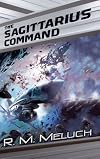
The Sagittarius Command (Tour of the Merrimack) by R.M. Meluch (2008)
Ratings
Members
- Recently Added By
Author Information

20+ Works 1,570 Members
Series

Belongs to Publisher Series
DAW Book Collectors (1421)
Work Relationships
Is contained in
Common Knowledge
- Canonical title
- The Sagittarius Command
- Original publication date
- 2007
- People/Characters
- John Farragut; Kerry Blue; Herius Asinius; Augustus; Marcander Vincent; Cole Darby (show all 9); T. R. Steele; Callista Carmel; Numa Pompeii
- Important places
- Thaleia
- First words
- The harsh whie sun and the softer yellow day star shone directly overhead
- Last words
- (Click to show. Warning: May contain spoilers.)"You have the respect of the dead"
Classifications
Statistics
- Members
- 174
- Popularity
- 188,992
- Reviews
- 5
- Rating
- (3.62)
- Languages
- English
- Media
- Paper, Ebook
- ISBNs
- 5
- ASINs
- 4