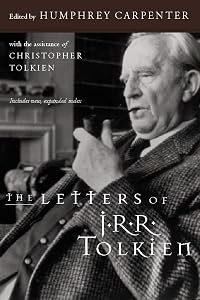
The Letters of J. R. R. Tolkien
by J. R. R. Tolkien
On This Page
Description
This collection will entertain all who appreciate the art of masterful letter writing. The Letters of J.R.R Tolkien sheds much light on Tolkien's creative genius and grand design for the creation of a whole new world: Middle-earth. Featuring a radically expanded index, this volume provides a valuable research tool for all fans wishing to trace the evolution of THE HOBBIT and THE LORD OF THE RINGS..
Tags
Recommendations

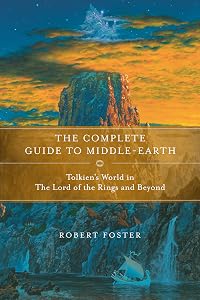
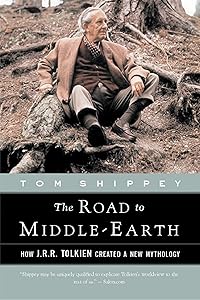

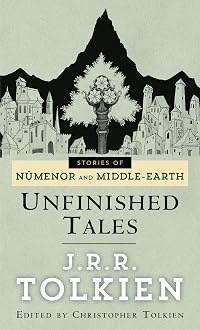
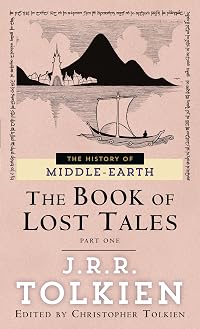
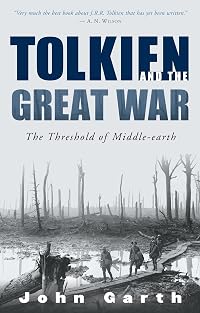
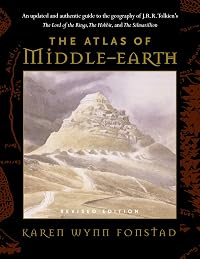
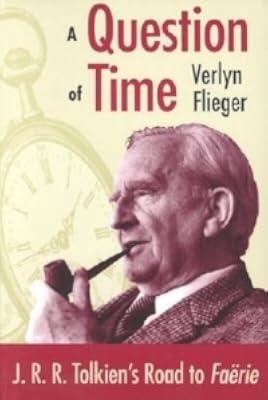





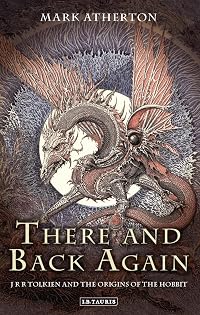

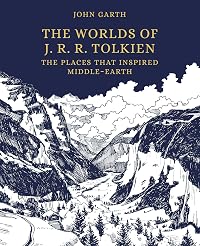
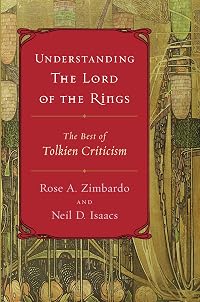


Member Recommendations


Member Reviews
https://fromtheheartofeurope.eu/the-letters-of-j-r-r-tolkien-revised-and-expande...
I’m a bit of a Tolkien obsessive, as you may perhaps have noticed, and this is the primary source for a lot of the stories about his life that I have known and loved for decades. I read all of the History of Middle Earth volumes a few years ago, but even so, it’s quite a delight to read about his writing in his own words. I knew that the process of writing The Lord of the Rings was painful and difficult; I had not realised that it was literally painful, given the extent of his and Edith’s ill health at the point that he was struggling to complete the book; perhaps there is a selection effect in that people in those days instinctively wrote openly to show more business partners about their medical problems?
He also complains bitterly about the costs of tax and housing – he and Edith moved several times to smaller and smaller places, and only at the end did Merton College provide him with free lodging and partial board, for which he was duly grateful.
His relationship with children and grandchildren seems to have been genuinely warm and loving. There are no letters to his daughter here, but that is presumably accidental, as she is mentioned in passing in other correspondence. He lived long enough to see his grandchildren starting on their careers, which obviously gave him much pleasure.
There are still some surprises. At the end of May 1945, writing to his sone Christopher about the coming end of WW2 in Asia, he says, “as I know nothing about British or American imperialism in the Far East that does not fill me with regret and disgust, I am afraid I am not even supported by a glimmer of patriotism in this remaining war.” There is also some poorly articulated but deep anger at the racist policies of the government of South Africa, where he was born. One of those cases where an icon slightly exceeds one’s hopes.
And there’s his lovely reminiscence of his first encounter with Finnish, in a 1955 letter to W.H. Auden:
"It was like discovering a complete wine-cellar filled with bottles of an amazing wine of a kind and flavour never tasted before. It quite intoxicated me."
And I love this namedropping story from a January 1965 letter to his son Michael:
"An amusing incident occurred in November, when I went as a courtesy to hear the last lecture of this series of his given by the Professor of Poetry: Robert Graves. (A remarkable creature, entertaining, likeable, odd, bonnet full of wild bees, half-German, half-Irish, very tall, must have looked like Siegfried/Sigurd in his youth, but an Ass.) It was the most ludicrously bad lecture I have ever heard. After it he introduced me to a pleasant young woman who had attended it: well but quietly dressed, easy and agreeable, and we got on quite well. But Graves started to laugh; and he said: it is obvious neither of you has ever heard of the other before’. Quite true. And I had not supposed that the lady would ever have heard of me. Her name was Ava Gardner, but it still meant nothing, till people more aware of the world informed me that she was a film-star of some magnitude, and that the press of pressmen and storm of flash-bulbs on the steps of the Schools were not directed at Graves (and cert. not at me) but at her…."
I wouldn’t recommend this to anyone who is not a Tolkien completist; but there are a lot of us around. show less
I’m a bit of a Tolkien obsessive, as you may perhaps have noticed, and this is the primary source for a lot of the stories about his life that I have known and loved for decades. I read all of the History of Middle Earth volumes a few years ago, but even so, it’s quite a delight to read about his writing in his own words. I knew that the process of writing The Lord of the Rings was painful and difficult; I had not realised that it was literally painful, given the extent of his and Edith’s ill health at the point that he was struggling to complete the book; perhaps there is a selection effect in that people in those days instinctively wrote openly to show more business partners about their medical problems?
He also complains bitterly about the costs of tax and housing – he and Edith moved several times to smaller and smaller places, and only at the end did Merton College provide him with free lodging and partial board, for which he was duly grateful.
His relationship with children and grandchildren seems to have been genuinely warm and loving. There are no letters to his daughter here, but that is presumably accidental, as she is mentioned in passing in other correspondence. He lived long enough to see his grandchildren starting on their careers, which obviously gave him much pleasure.
There are still some surprises. At the end of May 1945, writing to his sone Christopher about the coming end of WW2 in Asia, he says, “as I know nothing about British or American imperialism in the Far East that does not fill me with regret and disgust, I am afraid I am not even supported by a glimmer of patriotism in this remaining war.” There is also some poorly articulated but deep anger at the racist policies of the government of South Africa, where he was born. One of those cases where an icon slightly exceeds one’s hopes.
And there’s his lovely reminiscence of his first encounter with Finnish, in a 1955 letter to W.H. Auden:
"It was like discovering a complete wine-cellar filled with bottles of an amazing wine of a kind and flavour never tasted before. It quite intoxicated me."
And I love this namedropping story from a January 1965 letter to his son Michael:
"An amusing incident occurred in November, when I went as a courtesy to hear the last lecture of this series of his given by the Professor of Poetry: Robert Graves. (A remarkable creature, entertaining, likeable, odd, bonnet full of wild bees, half-German, half-Irish, very tall, must have looked like Siegfried/Sigurd in his youth, but an Ass.) It was the most ludicrously bad lecture I have ever heard. After it he introduced me to a pleasant young woman who had attended it: well but quietly dressed, easy and agreeable, and we got on quite well. But Graves started to laugh; and he said: it is obvious neither of you has ever heard of the other before’. Quite true. And I had not supposed that the lady would ever have heard of me. Her name was Ava Gardner, but it still meant nothing, till people more aware of the world informed me that she was a film-star of some magnitude, and that the press of pressmen and storm of flash-bulbs on the steps of the Schools were not directed at Graves (and cert. not at me) but at her…."
I wouldn’t recommend this to anyone who is not a Tolkien completist; but there are a lot of us around. show less
What a treasure trove this is. The collection begins with a handful of letters Tolkien wrote to his wife during his training for the army just before leaving for France in WWI and carries on through 354 letters ending with one he wrote his daughter a few days before his death in 1973. Along the way are letters to family members, friends, and colleagues; to his publisher (outlining nicely parts of the process of getting The Hobbit, The Lord of the Rings, and a number of his shorter works ready for print); and to readers who asked questions about his works. The letters are full of glimpses into Tolkien's life, his religious views, the background of his works, and the workings of the languages he invented. I found the entire collection show more thoroughly engaging and at times very effecting. The last twenty or so letters made me particularly verklempt. These cover the last two years of his life and include a heart-wrenching letter to one of his sons in which Tolkien describes his despair at the loss of his wife. The very last letter, written just days before Tolkien died, almost undid me. He writes to his daughter of plans for his week away with friends and tells her how he spent his afternoon, wandering about town and getting a haircut. Just living his life, writing his letters, with no notion he was living his last few days. Gah.
Recommended whole-heartedly to Tolkien enthusiasts. show less
Recommended whole-heartedly to Tolkien enthusiasts. show less
Well, an author like any other artist, is best experienced through the art they produce. Too close an acquaintance, as some of these letters reveal, may be disillusioning. One should not rely too heavily on one's mental picture of JRRT as the kind and loving father to anyone other than Christopher Tolkien. I was surprised to discover that he had other children, and his wife did not die sometime in the 1930's but was his lifelong companion. Perhaps the wife and other children didn't wish to expose any more of their lives to the gawping public, and that certainly is their right. But it does add a little depth to the figure presented by this selection of the letters.
Dear Unwin,
the Hobbit will be ready tomorrow, honest.
Yours faithfully,
Tolkien.
Dear Unwin,
I've been swamped by illness, work, exams, more work, more exams, lectures, more work and more exams. I can't possibly get it ready this decade.
Yours faithfully,
Tolkien.
Dear Unwin,
did you like it?
Yours faithfully,
Tolkien.
Dear Unwin,
glad you liked it. The illustrations will be ready tomorrow.
Yours faithfully,
Tolkien.
...this decade, etc.
Dear Unwin,
I may have no taste but the American cover art is appalling and did they even read the book?
Yours faithfully,
Tolkien.
[Repeat all of the above w.r.t LoTR]
Dear [Inkling]
the other Inklings' work is mostly rubbish but I like it in parts and even though they are annoying I like them really.
Yours,
Tolkers.
[repeat show more with every other Inkling]
Dear [somebody acquainted with me]
that critic is impertinent and did he even read the book?
Yours, annoyed,
JRRT
Dear Christopher,
you are the only one who understands me! I love you! Sob!
Your
Father.
[Above written in Anglo-Saxon.]
Dear Nazi scum,
you, Apartheid supporters, Colonialists and other racist groups are all intellectually and morally defective. The Jews are a fine people and I would be proud to have Jewish ancestry but as far as I know I don't.
Yours with no respect at all.
Tolkien.
Dear [any translator of LoTR]
your translation is rubbish; why do you translate names that are not in English? Your translations are unnecessary and show a poor grasp of [your native language]. [Demonstrates a superior knowledge of the translator's language.] Here's a book I wrote about how to translate my book.
Yours faithfully,
Tolkien.
Dear {Member of public]
thank you for your interesting questions. Enclosed is a set of answers in obsessive detail that I worked out prior to my 5th birthday. It includes philological details unintelligible to any person lay in the subject.
Yours faithfully,
Tolkien.
Dear {Critic I like]
thank you for your encouraging, perceptive review.
Yours faithfully,
Tolkien.
Dear [prospective interviewer]
leave me alone.
Yours faithfully,
Tolkien.
Dear [Reader who said something stupid]
as any one with a modicum of understanding of [Old Ancient High Low North Western Indo-European Obscure Language], which is surely everybody, knows, you are completely wrong. Enclosed is a detailed explanation, incomprehensible to anyone lay in philology. And anyway it says you're wrong in the Appendices.
Yours faithfully,
Tolkien.
Dear Christopher,
the Roman Catholic Church is axiomatically right about everything even though most of its priests are idiotic, uneducated, corrupt, morally defective, politcally-minded perverts.
Your
Father.
----------------------------------------
That, if repeated many times over, is this book. It's interesting in parts and dull (because repetitive) in others. It shows a man jealously protective of his work, easily irritated (although by things that would probably wind up many an author) in search of an unmechanised rural idyll that never existed in the same way as [a:Thomas Hardy|15905|Thomas Hardy|http://d.gr-assets.com/authors/1189902685p2/15905.jpg]. Enormously erudite, he struggled to understand why other people might find Anglo-Saxon difficult - a common problem with people of enormous talent in any intellectual discipline being the inability to conceive of it being anything but simple to grasp.
Worthwhile for anybody who wants to know more of what Tolkien the person was like. show less
the Hobbit will be ready tomorrow, honest.
Yours faithfully,
Tolkien.
Dear Unwin,
I've been swamped by illness, work, exams, more work, more exams, lectures, more work and more exams. I can't possibly get it ready this decade.
Yours faithfully,
Tolkien.
Dear Unwin,
did you like it?
Yours faithfully,
Tolkien.
Dear Unwin,
glad you liked it. The illustrations will be ready tomorrow.
Yours faithfully,
Tolkien.
...this decade, etc.
Dear Unwin,
I may have no taste but the American cover art is appalling and did they even read the book?
Yours faithfully,
Tolkien.
[Repeat all of the above w.r.t LoTR]
Dear [Inkling]
the other Inklings' work is mostly rubbish but I like it in parts and even though they are annoying I like them really.
Yours,
Tolkers.
[repeat show more with every other Inkling]
Dear [somebody acquainted with me]
that critic is impertinent and did he even read the book?
Yours, annoyed,
JRRT
Dear Christopher,
you are the only one who understands me! I love you! Sob!
Your
Father.
[Above written in Anglo-Saxon.]
Dear Nazi scum,
you, Apartheid supporters, Colonialists and other racist groups are all intellectually and morally defective. The Jews are a fine people and I would be proud to have Jewish ancestry but as far as I know I don't.
Yours with no respect at all.
Tolkien.
Dear [any translator of LoTR]
your translation is rubbish; why do you translate names that are not in English? Your translations are unnecessary and show a poor grasp of [your native language]. [Demonstrates a superior knowledge of the translator's language.] Here's a book I wrote about how to translate my book.
Yours faithfully,
Tolkien.
Dear {Member of public]
thank you for your interesting questions. Enclosed is a set of answers in obsessive detail that I worked out prior to my 5th birthday. It includes philological details unintelligible to any person lay in the subject.
Yours faithfully,
Tolkien.
Dear {Critic I like]
thank you for your encouraging, perceptive review.
Yours faithfully,
Tolkien.
Dear [prospective interviewer]
leave me alone.
Yours faithfully,
Tolkien.
Dear [Reader who said something stupid]
as any one with a modicum of understanding of [Old Ancient High Low North Western Indo-European Obscure Language], which is surely everybody, knows, you are completely wrong. Enclosed is a detailed explanation, incomprehensible to anyone lay in philology. And anyway it says you're wrong in the Appendices.
Yours faithfully,
Tolkien.
Dear Christopher,
the Roman Catholic Church is axiomatically right about everything even though most of its priests are idiotic, uneducated, corrupt, morally defective, politcally-minded perverts.
Your
Father.
----------------------------------------
That, if repeated many times over, is this book. It's interesting in parts and dull (because repetitive) in others. It shows a man jealously protective of his work, easily irritated (although by things that would probably wind up many an author) in search of an unmechanised rural idyll that never existed in the same way as [a:Thomas Hardy|15905|Thomas Hardy|http://d.gr-assets.com/authors/1189902685p2/15905.jpg]. Enormously erudite, he struggled to understand why other people might find Anglo-Saxon difficult - a common problem with people of enormous talent in any intellectual discipline being the inability to conceive of it being anything but simple to grasp.
Worthwhile for anybody who wants to know more of what Tolkien the person was like. show less
An interesting collection. I most enjoyed his ranty and snarky responses to bad adaptations of his work (particularly his comments on the cartoon of The Hobbit and the Swedish translation of LOTR). On the other hand, I found some of his most sermonising letters on Catholicism, love and war uncomfortable reading in places.
Its good to read some of this now and again to remind oneself what an old coot the professor was. It should be required for "fans" who make bizarre assumptions about JRRT based on nothing except the fan's own views and preferences; e.g. that Tolkien meant Frodo and Sam to be gay, or that since Elves are "natural" they must perforce practice free love.
I have about seventy-five pages that I need to go back and copy out quotes. Not only are there some amazing insights into Middle Earth and Tolkien himself here, but there is a treasure-trove of wisdom to be had from his many letters.
Members
- Recently Added By
Published Reviews
ThingScore 100
Tolkien's letters are really the best source for what the author thought about the world he devised and the characters he created to populate it.
added by Shortride
Lists

BEST BOOKS TO UNDERSTAND TOLKIEN
14 works; 5 members

Epistolary Non-Fiction (Letters and Correspondence)
99 works; 5 members
Author Information

603+ Works 517,249 Members
A writer of fantasies, Tolkien, a professor of language and literature at Oxford University, was always intrigued by early English and the imaginative use of language. In his greatest story, the trilogy The Lord of the Rings (1954--56), Tolkien invented a language with vocabulary, grammar, syntax, even poetry of its own. Though readers have show more created various possible allegorical interpretations, Tolkien has said: "It is not about anything but itself. (Certainly it has no allegorical intentions, general, particular or topical, moral, religious or political.)" In The Adventures of Tom Bombadil (1962), Tolkien tells the story of the "master of wood, water, and hill," a jolly teller of tales and singer of songs, one of the multitude of characters in his romance, saga, epic, or fairy tales about his country of the Hobbits. Tolkien was also a formidable medieval scholar, as evidenced by his work, Beowulf: The Monster and the Critics (1936) and his edition of Anciene Wisse: English Text of the Anciene Riwle. Among his works published posthumously, are The Legend of Sigurd and Gudrún and The Fall of Arthur, which was edited by his son, Christopher. In 2013, his title, TheHobbit (Movie Tie-In) made The New York Times Best Seller List. (Bowker Author Biography) show less
All Editions
Some Editions
Work Relationships
Common Knowledge
- Canonical title
- The Letters of J. R. R. Tolkien
- Original title
- The Letters of J. R. R. Tolkien
- Original publication date
- 1981
- People/Characters
- J. R. R. Tolkien; Edith Tolkien; W. H. Auden; C. A. Furth; C. S. Lewis; Christopher Tolkien (show all 10); Michael Tolkien; Rayner Unwin; Stanley Unwin; Charles Williams
- Important places
- King Edward's School, Birmingham, England, UK; Magdalen College, University of Oxford, Oxford, Oxfordshire, England, UK
- First words
- Towards the end of his life, J. R. R. Tolkien was deprived for a few weeks of his right arm. He told his publisher: 'I found not being able to use a pen or pencil as defeating as the loss of her beak would be to a hen.' [Intr... (show all)oduction by Humphrey Carpenter]
My Edith darling: Yes I was rather surprised by your card of Sat. morning and rather sorry because I knew my letter would have to wander after you. [Letter no. 1] - Last words
- (Click to show. Warning: May contain spoilers.)It is stuffy, sticky, and rainy here at present — but forecasts are more favourable.
- Original language
- English
Classifications
- Genres
- Biography & Memoir, Literature Studies and Criticism, Fantasy
- DDC/MDS
- 828.91209 — Literature & rhetoric English & Old English literatures English miscellaneous writings English miscellaneous writings 1900- English miscellaneous writings 1900-1999 English miscellaneous writings 1900-1945 Individual authors not limited to or chiefly identified with one specific form.
- LCC
- PR6039 .O32 .Z48 — Language and Literature English English Literature 1900-1960
- BISAC
Statistics
- Members
- 3,042
- Popularity
- 5,821
- Reviews
- 20
- Rating
- (4.17)
- Languages
- 11 — Dutch, English, Finnish, French, German, Italian, Polish, Portuguese, Russian, Spanish, Swedish
- Media
- Paper, Audiobook, Ebook
- ISBNs
- 35
- UPCs
- 2
- ASINs
- 12