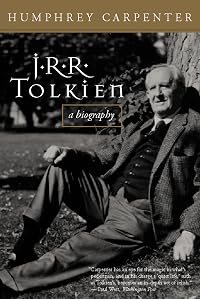
Tolkien: A Biography
by Humphrey Carpenter
On This Page
Description
The authorized biography of the creator of Middle-earth. In the decades since his death in September 1973, millions have read THE HOBBIT, THE LORD OF THE RINGS, and THE SILMARILLION and become fascinated about the very private man behind the books. Born in South Africa in January 1892, John Ronald Reuel Tolkien was orphaned in childhood and brought up in near-poverty. He served in the first World War, surviving the Battle of the Somme, where he lost many of the closest friends he'd ever had. show more After the war he returned to the academic life, achieving high repute as a scholar and university teacher, eventually becoming Merton Professor of English at Oxford where he was a close friend of C.S. Lewis and the other writers known as The Inklings. Then suddenly his life changed dramatically. One day while grading essay papers he found himself writing 'In a hole in the ground there lived a hobbit' -- and worldwide renown awaited him. Humphrey Carpenter was given unrestricted access to all Tolkien's papers, and interviewed his friends and family. From these sources he follows the long and painful process of creation that produced THE LORD OF THE RINGS and THE SILMARILLION and offers a wealth of information about the life and work of the twentieth century's most cherished author. show lessTags
Recommendations








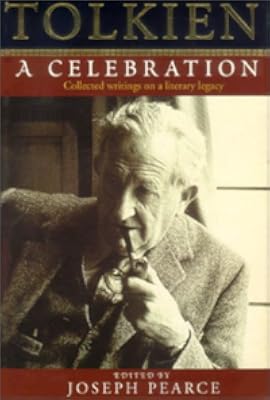
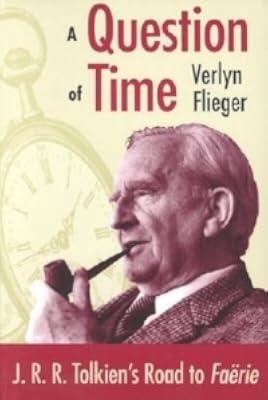
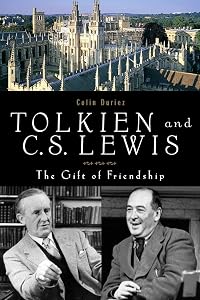




Member Recommendations


MissBrangwen Contains a chapter on Tolkien's connection to Bournemouth!
11

by anonymous user
Member Reviews
Until I read this, I didn't know that biographies could be so engaging. Carpenter paints a vivid picture of Tolkien's life, skillfully balancing discussion of his day-to-day life with those elements that might tell us more about how his great works came to be. The writing style is immensely enjoyable, that even the mundanities of Tolkien's daily commutes seem like activity bursting with vitality.
I fell in love with The Lord of the Rings when I was in high school. Nevertheless, this biography has remained unread on my shelves for over fifteen years. Why? Some authors are an absolute disappointment to read about. I guess I didn’t want to know if the Professor was one of them.
He’s not.
If you had to write a fictional biography for Tolkien it would look much like this.
Orphaned at an early age, he fell In love with a girl, also orphaned and living in the same boarding house.
His fascination with languages, learning ancient languages and even developing his own secret languages based on strict linguistical rules, showed themselves at an early age.
The only disappointment to me was that his fascinating circle of friends didn’t show more include women. He was a complete product of his time, attending boys’ prep schools and colleges. Only in the very later years is a female graduate student mentioned. This is often reflected in his books, where usually (but not always) women have secondary roles, leaving the adventuring and hero-ing to men.
Highly recommended. show less
He’s not.
If you had to write a fictional biography for Tolkien it would look much like this.
Orphaned at an early age, he fell In love with a girl, also orphaned and living in the same boarding house.
His fascination with languages, learning ancient languages and even developing his own secret languages based on strict linguistical rules, showed themselves at an early age.
The only disappointment to me was that his fascinating circle of friends didn’t show more include women. He was a complete product of his time, attending boys’ prep schools and colleges. Only in the very later years is a female graduate student mentioned. This is often reflected in his books, where usually (but not always) women have secondary roles, leaving the adventuring and hero-ing to men.
Highly recommended. show less
Humphrey Carpenter's authorized biography of Tolkien is a surprisingly balanced picture of the man. Carpenter clearly admires Tolkien's talent without being blind to his faults. Carpenter simply adores the man for who he was, faults and all, and does not try to paint some mythic portrait of Tolkien. Although Tolkien possessed an extraordinary mind, he was quite - in many aspects - an ordinary man, duty bound to professional obligations and family life. Tolkien preferred the 'quiet life' you see and was in many ways, a Hobbit from the Baggin's side of the tracks in temperament and lifestyle. Yet his mind (I suspect) possessed the longings of a Took...
J.R.R. Tolkien: A Biography is immensely readable, and paints a wonderful portrait of a show more man who in my opinion, is the most important literary figure of the 20th century. show less
J.R.R. Tolkien: A Biography is immensely readable, and paints a wonderful portrait of a show more man who in my opinion, is the most important literary figure of the 20th century. show less
Summary: The biography of the author of The Hobbit and The Lord of the Rings, describing his early life, participation in The Inklings, and his habits of work, scholarship, and how his most famous works came to be written.
Humphrey Carpenter wrote what, as far as I can ascertain, the first biography of J. R. R. Tolkien, published in 1977, four years after the death of the author of The Hobbit, The Lord of the Rings, and the unfinished Silmarillion. He opens this book by recounting his first meeting with Tolkien, in 1967. He writes:
"His eyes fix on some distant object, and he seems to have forgotten that I am there as he clutches his pipe and speaks through its stem. It occurs to me that in all externals he represents the archetypal show more Oxford don, at times even the stage caricature of a don. But that is exactly what he is not. It is rather as if some strange spirit had taken on the guise of an elderly professor. The body may be pacing this shabby little suburban room, but the mind is far away, roaming the plains and mountains of Middle-earth."
Central to Carpenter's narrative of Tolkien's life is his preoccupation with the mythology most fully expressed in his posthumous Silmarillion but also in his earlier "elvish" poetry, The Hobbit, and in the work for which he was most know, The Lord of the Rings. Carpenter sketches the backdrop to this mythology in a life that included the loss of both parents at an early age, the influence of Father Francis, the formation of T.C.B.S. (Tea Club, Barrovian Society, the pre-cursor to the Inklings), his romance and eventual marriage to Edith, his war experiences, his scholarly life as a philologist at Oxford, and his involvement with the Inklings and relationship with C. S. Lewis.
I was surprised that Carpenter did not make more of the influence Tolkien's war experience on his writing, as some recent writers including Joseph Loconte and Colin Duriez have done. [See my reviews of A Hobbit, A Wardrobe, and a Great War and Bedeviled]. I wonder if for Carpenter, he would have traced more of the influence in Tolkien's books to the mythologies of Iceland, Beowulf, to Arthurian legend, and Sir Gawain and the Green Knight.
We learn of some of the childhood places, reminiscent of his descriptions of The Shire. We see his love of fairy stories and eventually Icelandic myths. And during his convalescence from the war, we see his first musings on a mythology that would occupy his life. Carpenter describes the beginnings of The Hobbit in stories told to his children, unconnected at first to the rest of the developing mythology, and the important role his publisher's son had in persuading him to publish this story. Then there is the pressure for "more Hobbit stories" that leads to the beginning of the writing of The Lord of the Rings, which would occupy twelve years. We learn that Tolkien really hadn't connected it to his larger mythology until Frodo and the Ring arrive at Rivendell. Carpenter recounts the back and forth with his publisher over publishing The Silmarillion concurrently, and the endless revising and development of backgrounds, history, and language that would occupy Tolkien for the rest of his life.
Carpenter presents us a very human figure, yet always sympathetically. He portrays a perfectionist, who is held up from publishing so much more by his endless revising. We learn of the tensions this creates with C. S. Lewis, who in short order (by comparison) dashes off the Narnia stories, which Tolkien thought too allegorical. He resented Lewis's popularity as an apologist, considering it not quite fitting for an Oxford don, although the two remained fast friends until Lewis's death. We see a scholar caught up in the very male atmosphere of Oxford scholarship, including the circle of the Inklings, something his wife never felt at home with. Only in her latter years, when they lived at Bournemouth, did she find a circle of friends that she was at home with. We observe a marriage characterized by abiding love, and yet with the accommodations made by many people in these times who lived in two different worlds defined along gender lines. On their headstones, he is "Beren" and she "Luthien."
I think this is an essential biography for an Inklings fan, arising out of acquaintance with Tolkien, friendship with his family, and a sympathetic appreciation of the genius that created Middle-earth and the flat sides that come with such genius. He portrays a man who lived in hobbit-like modesty enjoying the pleasures of home and a good pipe, yet caught up in a truly great story in which he played a most significant part. show less
Humphrey Carpenter wrote what, as far as I can ascertain, the first biography of J. R. R. Tolkien, published in 1977, four years after the death of the author of The Hobbit, The Lord of the Rings, and the unfinished Silmarillion. He opens this book by recounting his first meeting with Tolkien, in 1967. He writes:
"His eyes fix on some distant object, and he seems to have forgotten that I am there as he clutches his pipe and speaks through its stem. It occurs to me that in all externals he represents the archetypal show more Oxford don, at times even the stage caricature of a don. But that is exactly what he is not. It is rather as if some strange spirit had taken on the guise of an elderly professor. The body may be pacing this shabby little suburban room, but the mind is far away, roaming the plains and mountains of Middle-earth."
Central to Carpenter's narrative of Tolkien's life is his preoccupation with the mythology most fully expressed in his posthumous Silmarillion but also in his earlier "elvish" poetry, The Hobbit, and in the work for which he was most know, The Lord of the Rings. Carpenter sketches the backdrop to this mythology in a life that included the loss of both parents at an early age, the influence of Father Francis, the formation of T.C.B.S. (Tea Club, Barrovian Society, the pre-cursor to the Inklings), his romance and eventual marriage to Edith, his war experiences, his scholarly life as a philologist at Oxford, and his involvement with the Inklings and relationship with C. S. Lewis.
I was surprised that Carpenter did not make more of the influence Tolkien's war experience on his writing, as some recent writers including Joseph Loconte and Colin Duriez have done. [See my reviews of A Hobbit, A Wardrobe, and a Great War and Bedeviled]. I wonder if for Carpenter, he would have traced more of the influence in Tolkien's books to the mythologies of Iceland, Beowulf, to Arthurian legend, and Sir Gawain and the Green Knight.
We learn of some of the childhood places, reminiscent of his descriptions of The Shire. We see his love of fairy stories and eventually Icelandic myths. And during his convalescence from the war, we see his first musings on a mythology that would occupy his life. Carpenter describes the beginnings of The Hobbit in stories told to his children, unconnected at first to the rest of the developing mythology, and the important role his publisher's son had in persuading him to publish this story. Then there is the pressure for "more Hobbit stories" that leads to the beginning of the writing of The Lord of the Rings, which would occupy twelve years. We learn that Tolkien really hadn't connected it to his larger mythology until Frodo and the Ring arrive at Rivendell. Carpenter recounts the back and forth with his publisher over publishing The Silmarillion concurrently, and the endless revising and development of backgrounds, history, and language that would occupy Tolkien for the rest of his life.
Carpenter presents us a very human figure, yet always sympathetically. He portrays a perfectionist, who is held up from publishing so much more by his endless revising. We learn of the tensions this creates with C. S. Lewis, who in short order (by comparison) dashes off the Narnia stories, which Tolkien thought too allegorical. He resented Lewis's popularity as an apologist, considering it not quite fitting for an Oxford don, although the two remained fast friends until Lewis's death. We see a scholar caught up in the very male atmosphere of Oxford scholarship, including the circle of the Inklings, something his wife never felt at home with. Only in her latter years, when they lived at Bournemouth, did she find a circle of friends that she was at home with. We observe a marriage characterized by abiding love, and yet with the accommodations made by many people in these times who lived in two different worlds defined along gender lines. On their headstones, he is "Beren" and she "Luthien."
I think this is an essential biography for an Inklings fan, arising out of acquaintance with Tolkien, friendship with his family, and a sympathetic appreciation of the genius that created Middle-earth and the flat sides that come with such genius. He portrays a man who lived in hobbit-like modesty enjoying the pleasures of home and a good pipe, yet caught up in a truly great story in which he played a most significant part. show less
This book was an embarrasingly long time unread on my shelf. My most common excuse for why I haven't read it yet was that I "knew alot about his life anyway" or so I thought. While a basic outline of his life was known to me, Humphrey Carpenter painted a intimate picture of an extraordinarily ordinary man. Carpenter managed to find a good balance between talking about Tolkien's literary creations and Tolkien himself. The account on Tolkien's last years, in particular, were moving. I cannot help, but appreciate Tolkien as the person behind the myth, with his struggle to complete projects in time, his tendency to get lost in details, his complicated, but always deeply loving, relationship with his wife Edith, more than ever before. This show more will be a book I'll re-read again and again in the years to come. show less
J.R.R. Tolkien is most well-known to the public as the author of the famous trilogy Lord of the Rings, surely one of the best works of art ever written in the English language. This work by Carpenter serves as his authorized biography. Tolkien’s professorial and academic life as an Oxford don dominates most of the narrative, but always lingering behind lies his unique love of language (philology) – particularly “sub-creating” worlds with language.
Carpenter achieves a balanced job of handling Tolkien’s life. He avoids hagiography while also avoiding smears. Tolkien comes off as a curious professor of Anglo-Saxon literature in an era before technology consumed modern life and before post-graduate research overtook leading show more universities. His eventual fame due to the famous trilogy comes off as unexpected and unplanned.
Women do not play a major role in this narrative. At the time, Oxford was a mostly male-run institution. Edith, Tolkien’s wife, only played a supporting role for most of his life. His daughter Priscilla did not play a leading role in Carpenter’s narrative either. One could aptly use the word “patriarchal” to describe the arrangement of Tolkien’s life. Indeed, similar words were sometimes used to describe his trilogy. This seems a fair criticism even if it aligned with the sense of his times.
Fans of Lord of the Rings will find Tolkien’s style of working especially interesting. Many are curious about the origins of this tale, and I’m not sure this book provides a definitive answer. It simply sprung from Tolkien’s imagination and life, not from any singular event. Certainly, his experiences in both World Wars played monumental roles as did his male friendships and lifelong experiences creating languages.
This work chronicles the life of this humble yet imaginative professor well and serves his continued cadre of fans. It also provides a historical record of mid-twentieth-century Oxford before it became such a dominant research university and before women played significant roles in its leadership. Carpenter’s work dates from the 1970s (44 years prior to my writing), yet it has aged quite well. I am left with a sense that Tolkien was a man of great curiosity, creativity, and imagination; much like Carpenter admits in his epilogue, I remain mystified, even befuddled, by the transcendent nature of the Lord of the Rings. show less
Carpenter achieves a balanced job of handling Tolkien’s life. He avoids hagiography while also avoiding smears. Tolkien comes off as a curious professor of Anglo-Saxon literature in an era before technology consumed modern life and before post-graduate research overtook leading show more universities. His eventual fame due to the famous trilogy comes off as unexpected and unplanned.
Women do not play a major role in this narrative. At the time, Oxford was a mostly male-run institution. Edith, Tolkien’s wife, only played a supporting role for most of his life. His daughter Priscilla did not play a leading role in Carpenter’s narrative either. One could aptly use the word “patriarchal” to describe the arrangement of Tolkien’s life. Indeed, similar words were sometimes used to describe his trilogy. This seems a fair criticism even if it aligned with the sense of his times.
Fans of Lord of the Rings will find Tolkien’s style of working especially interesting. Many are curious about the origins of this tale, and I’m not sure this book provides a definitive answer. It simply sprung from Tolkien’s imagination and life, not from any singular event. Certainly, his experiences in both World Wars played monumental roles as did his male friendships and lifelong experiences creating languages.
This work chronicles the life of this humble yet imaginative professor well and serves his continued cadre of fans. It also provides a historical record of mid-twentieth-century Oxford before it became such a dominant research university and before women played significant roles in its leadership. Carpenter’s work dates from the 1970s (44 years prior to my writing), yet it has aged quite well. I am left with a sense that Tolkien was a man of great curiosity, creativity, and imagination; much like Carpenter admits in his epilogue, I remain mystified, even befuddled, by the transcendent nature of the Lord of the Rings. show less
What Carpenter brings to the world of Tolkien, while not as enchanting as Tolkien’s works themselves, is a resource for the reader who wishes to find details to build a foundation for understanding how Tolkien came to be. That is, what makes someone become a dedicated worldmaker or an enthusiastic academic? As Carpenter describes him from the introduction, “not as an author who has made a slight error that must now be corrected or explained away, but as a historian who must cast light on an obscurity in a historical document”. Likewise, we are fortunate enough to hear directly from Tolkien memories that he found significant, such as his encounter at seven years old of the philological difference between a “green great dragon” show more and a “great green dragon”.
To understand Tolkien’s upbringing, Carpenter brings an important piece: context. After all, The LOTR was not written in a vacuum, nor did Tolkien decide to walk his path in a vacuum. That is, how did the people around him shape Tolkien? Whether it was the passing of Mabel, or his cousins sharing their made-up language with him, these are pieces that we could argue as Carpenter suggests as important influences on shaping his personality. This proved to be of aid to my personal interest in Tolkien’s language making and cryptography. From something as humble as making up language as a child to the serious duty of serving in WWI, one is impressed at the range of experiences in Tolkien’s life. Although I do have to remark, I wish Carpenter used more direct quotes from Tolkien. I wanted to be able to hear more from Tolkien himself. I think that would have helped this biography serve as a source for academic study and as preservation of history.
For the readers that are inclined to go deeper into Tolkien’s life, whether using this book or other resources, I would like to give a piece of advice: have a goal in mind. Think about what specifically you want to uncover or debate about Tolkien’s life or the background of his writing. That would help engage your focus, as there are definitely a lot of details presented! Carpenter organizes the biography into six chronological sections, and while my personal opinion is that biographical stories are compelling when told outside of a strict chronological order, this does make Tolkien’s life easier to follow.
In closing, you may be asking yourself if it would be worth checking this out for a read? While my opinion is that you can best understand Tolkien through his works, having a sort of historical context can help connect the mind that was bound with fantasy with the person who was connected to a changing and sometimes cruel world around him. If this is something you are ready to dive into, I would say go for it. show less
To understand Tolkien’s upbringing, Carpenter brings an important piece: context. After all, The LOTR was not written in a vacuum, nor did Tolkien decide to walk his path in a vacuum. That is, how did the people around him shape Tolkien? Whether it was the passing of Mabel, or his cousins sharing their made-up language with him, these are pieces that we could argue as Carpenter suggests as important influences on shaping his personality. This proved to be of aid to my personal interest in Tolkien’s language making and cryptography. From something as humble as making up language as a child to the serious duty of serving in WWI, one is impressed at the range of experiences in Tolkien’s life. Although I do have to remark, I wish Carpenter used more direct quotes from Tolkien. I wanted to be able to hear more from Tolkien himself. I think that would have helped this biography serve as a source for academic study and as preservation of history.
For the readers that are inclined to go deeper into Tolkien’s life, whether using this book or other resources, I would like to give a piece of advice: have a goal in mind. Think about what specifically you want to uncover or debate about Tolkien’s life or the background of his writing. That would help engage your focus, as there are definitely a lot of details presented! Carpenter organizes the biography into six chronological sections, and while my personal opinion is that biographical stories are compelling when told outside of a strict chronological order, this does make Tolkien’s life easier to follow.
In closing, you may be asking yourself if it would be worth checking this out for a read? While my opinion is that you can best understand Tolkien through his works, having a sort of historical context can help connect the mind that was bound with fantasy with the person who was connected to a changing and sometimes cruel world around him. If this is something you are ready to dive into, I would say go for it. show less
Members
- Recently Added By
Lists

BEST BOOKS TO UNDERSTAND TOLKIEN
14 works; 5 members

Best Biographies
216 works; 26 members

Tolkien Studies
9 works; 1 member

Fake Top 100 Nonfiction
79 works; 3 members

Para comprar
5 works; 1 member
Author Information

61+ Works 7,092 Members
Humphrey Carpenter is the award-winning author of biographies of Dennis Potter, J.R.R. Tolkien, W.H. Auden, and Ezra Pound. He broadcasts regularly on BBC radio. Carpenter is married with two children and lives in Oxford, England
Some Editions
Awards and Honors
Notable Lists
Series
Belongs to Publisher Series
Common Knowledge
- Canonical title
- Tolkien: A Biography
- Original title
- Tolkien: A Biography
- Alternate titles
- Tolkien: The Authorized Biography
- Original publication date
- 1977
- People/Characters
- J. R. R. Tolkien; Lascelles Abercrombie; Lady Agnew; Hans Christian Andersen; Ludovico Ariosto; W. H. Auden (show all 178); Bilbo Baggins; Frodo Baggins; Balin; E.A. Barber; Bard; Owen Barfield; J. M. Barrie; Pauline Bayes; Beren; Basil Blackwell (Sir); Tom Bombadil; Boromir; Henry Bradley (philologist); Edith Bratt; Frances Bratt; Brendan the Navigator; George Brewerton; John Bryson; John Buchan, 1st Baron Tweedsmuir; Alistair Campbell; Charlie Carr; David Cecil (Lord); G. K. Chesterton; J.R. Clark Hall; Coalbiters; Nevil Coghill; Phoebe Coles; William Collins (Sir); Naomi Collyer; W.A. Craigie; Collin Cullis; Susan Dagnall; Glyn Daniel; Simonne d'Ardenne; Joy Davidman; Lena Davis; Norman Davis; R.M. Dawkins; Wilfred Doran (Monseigneur); Lord Dunsany; Hugo Dyson; Eärendil (Earendel); Eldamar; William Elven; Eriol; Faramir; L.R. Farnell; Charles Furth; Galadriel; Hamfast Gamgee (Gaffer Gamgee); Samwise Gamgee (Sam Gamgee); Gandalf; Gildor; R.C. Gilson; R.Q. Gilson; Goldberry; William Golding; Gollum; E. V. Gordon; George Gordon; Ida Gordon; Peter Green; Roger Lancelyn Green; Elaine Griffiths; Jennie Grove; Colin Hardie; Piet Harding; R.E. Havard; Joy Hill; Adolf Hitler; Richard Hughes; The Inklings; Phyllis Jenkinson; Gwyn Jones; Clyde Kilby; J.W. Lambert; Andrew Lang; Tangye Lean; Edward Lear; Bernard Levin; C. S. Lewis; Sinclair Lewis; W.H. Lewis; Elisabeth Lumsden; R.B. McCallum; George Macdonald; John Masefield; Gervase Mathew (Rev.); Allen Mawer; John Metcalf; Stella Mills; John Milton; Naomi Mitchison; Father Francis Xavier Morgan; Morgoth; William Morris (1834-1896); Edwin Muir; James Murray (Sir); Robert Murray (Rev.); Rosfirth Murray; Mythopoetic Society; A.S. Napier; Edwin Neave; Jane Neave; The Necromancer; John Henry Newman; David Nicol Smith; Old Man Willow; C.T. Onions; Dick Plotz; Beatrix Potter; Arthur Rackham; Sir Walter Raleigh; Father Vincent Reade; William Ready; Ring-wraiths (Black Riders); Michael Sadler (Sir); J. D. Salinger; Mary Salu; Saruman the White; Sauron; George Sayer; Shadowfax; William Shakespeare; Shelob; Kenneth Sisam; Smaug; Geoffrey Bache Smith; J.I.M. Stewart; Aragorn II (as Strider); Beatrice Suffield; Mabel Suffield; Donald Swann; The T.C.B.S.; Francis Thompson; Thorin Oakenshield; Thrór; Timothy Titus; Denis Tolhurst; Jocelyn Tolhurst; Adam Tolkien; Arthur Tolkien; Baille Tolkien; Christopher Tolkien; Edith Tolkien; Faith Tolkien; Hilary Tolkien; Joan Anne Tolkien; John Benjamin Tolkien; John Tolkien; Mabel Tolkien; Michael Tolkien; Priscilla Tolkien; Rachel Tolkien; Simon Tolkien; Treebeard; Trotter; Rayner Unwin; Stanley Unwin (Sir); Richard Wagner; Milton Waldman; Joseph Wells; Charles Williams; Dick Williamson; F.P. Wilson; Christopher Wiseman; Agnes Wrenn; Charles Wrenn; E.M. Wright (Lizzie); Joseph Wright; J.A. Wyke-Smith; H.C. Wyld
- Important places
- Bloemfontein, Free State, South Africa; Birmingham, England, UK; Sarehole, Warwickshire, England, UK
- Important events
- World War I; Battle of the Somme; Publication of "The Hobbit"; Publication of "The Lord of the Rings"
- Dedication
- Dedicated to the memory of 'The T.C.B.S.'
- First words
- It is mid-morning on a spring day in 1967.
- Quotations
- Tolkien had not really wanted to write any more stories like The Hobbit; he had wanted to get on with the serious business of his mythology.
[regarding The Lord of the Rings:] Tolkien himself did not think it was flawless. But he told Stanley Unwin: 'It is written in my life-blood, such as that is, thick or thin, and I can no other.' - Last words
- (Click to show. Warning: May contain spoilers.)'It's a gift!' he said.
- Original language
- English
Classifications
- Genres
- Biography & Memoir, Literature Studies and Criticism, Fantasy
- DDC/MDS
- 828.912 — Literature & rhetoric English & Old English literatures English miscellaneous writings English miscellaneous writings 1900- English miscellaneous writings 1900-1999 English miscellaneous writings 1900-1945
- LCC
- PR6039 .O32 .Z62 — Language and Literature English English Literature 1900-1960
- BISAC
Statistics
- Members
- 3,154
- Popularity
- 5,543
- Reviews
- 24
- Rating
- (4.01)
- Languages
- 16 — Czech, Dutch, English, Estonian, Finnish, French, German, Hebrew, Italian, Norwegian (Bokmål), Norwegian, Polish, Portuguese, Spanish, Swedish, Turkish
- Media
- Paper, Audiobook, Ebook
- ISBNs
- 60
- UPCs
- 1
- ASINs
- 23