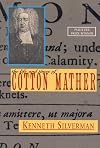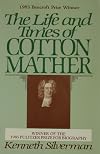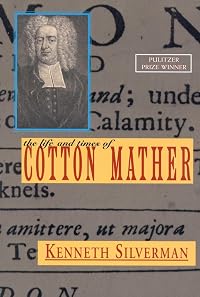
The Life and Times of Cotton Mather
by Kenneth Silverman
On This Page
Description
The early American Congregational minister and author Cotton Mather (1663-1728), remembered mainly for his participation in the Salem witch trials, is perhaps the greatest and most misunderstood figure in pre-revolutionary American history. Mather believed his main purpose in life was to do good and he devoted his life to praying, preaching, and writing, eventually publishing more than 400 works.Tags
Recommendations

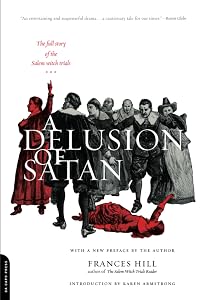
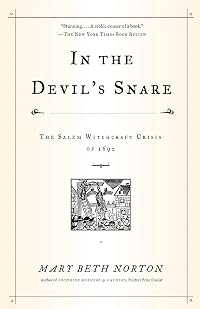











Member Reviews
I am surprised that this very worthy book, published all the way back in 1984, has never been reviewed on LT, so I offer my undoubtedly unworthy review of it because I think it is deserving of praise from someone.
Cotton Mather - considered at one point to be the most famous man living in the American colonies - lived to be 65 years old - (1663-1728) which was a goodly lifespan in those times. He was married three times and was father to fifteen children, of whom only two lived past young adulthood.
Cotton was the youngest student ever admitted to Harvard; he was eleven and a half years old (his father, Increase - the previous record holder - had been 12 when he entered). Cotton came from a long line of ministers - on both sides of his show more family - so it was a done deal that he was destined for the pulpit as well. There was nothing little Cotton loved more than studying.
This was not my first shot at this Pulitzer Prize winning biography; the first (and previous) time reading it I stalled out somewhere in the pages concerning the infamous Salem Witch Trials era. This is probably how Mather is best known - as a proponent of rounding up Salem’s witches and putting an end to them. Permanently. As it turns out Mather was not exactly involved in the actual tracking down and getting rid of the men and women who were killed one way and another. True - Mather was very much against witches and demons of all kinds, but - to the good - he never did anything to make it happen in Salem. Then again - to the bad - he was becoming a well-known preacher in Boston and the people paid attention to him (even though he was a relatively young man). And it seems as if history has misjudged him, ever so slightly, on the matter of witches; he believed that there were degrees of culpability and that not every witch deserved death. (He was also against killing Quakers.)
Weirdly, Mather was a man of science - or what passed for science in the late 17th/early 18th centuries. He passionately wanted to be admitted to the Royal Society of London and submitted many articles and sent specimens of various New England items to the Society in hopes of getting in for years. I think he must have been a victim of being born when he was - just a short 26 years after the Age of Enlightenment had begun - and most of the world still believed in real life witches, demons, angels (good and bad) and devils. Cotton believed all of those spooky things, but he also believed in inoculation against smallpox. (In his day the smallpox vaccine was railed against as the covid vaccine has been in ours. Some of his children were inoculated, but Increase, advised Cotton to keep it a secret.) I wonder what kind of man he might have been if he had been born a few decades later. He seems to have been born right on the line between Medieval times (a time when his belief in an Invisible World - a world peopled by spirits and demons - seemed plausible) and the Age of Reason (where science was beginning to come into its own).
Silverman calls Mather “a highly sexual man” and I believe it. And, apparently, he was also considered quite the catch. He began receiving letters from interested women relatively quickly after the deaths of his first two wives. He did not marry in haste though. And he did not always marry well. Wife number three, it seemed, was a bad choice.
There is a lot more to be said about Mather, New England, Puritanism, government (both secular and religious), but I will stop here. I found his story to be very interesting and I regret having misjudged him for so many years. He was flawed - as are we all - but truly fascinating. I am very glad I did not ditch this book after failing so miserably the first time around. I found it well worth the amount of time I spent on it.
Gave this one 5 stars. Silverman did a really good job with a really difficult subject.
It is most definitely a keeper and I do recommend it - especially to anyone interested in late 17th and early 18th century New England. show less
Cotton Mather - considered at one point to be the most famous man living in the American colonies - lived to be 65 years old - (1663-1728) which was a goodly lifespan in those times. He was married three times and was father to fifteen children, of whom only two lived past young adulthood.
Cotton was the youngest student ever admitted to Harvard; he was eleven and a half years old (his father, Increase - the previous record holder - had been 12 when he entered). Cotton came from a long line of ministers - on both sides of his show more family - so it was a done deal that he was destined for the pulpit as well. There was nothing little Cotton loved more than studying.
This was not my first shot at this Pulitzer Prize winning biography; the first (and previous) time reading it I stalled out somewhere in the pages concerning the infamous Salem Witch Trials era. This is probably how Mather is best known - as a proponent of rounding up Salem’s witches and putting an end to them. Permanently. As it turns out Mather was not exactly involved in the actual tracking down and getting rid of the men and women who were killed one way and another. True - Mather was very much against witches and demons of all kinds, but - to the good - he never did anything to make it happen in Salem. Then again - to the bad - he was becoming a well-known preacher in Boston and the people paid attention to him (even though he was a relatively young man). And it seems as if history has misjudged him, ever so slightly, on the matter of witches; he believed that there were degrees of culpability and that not every witch deserved death. (He was also against killing Quakers.)
Weirdly, Mather was a man of science - or what passed for science in the late 17th/early 18th centuries. He passionately wanted to be admitted to the Royal Society of London and submitted many articles and sent specimens of various New England items to the Society in hopes of getting in for years. I think he must have been a victim of being born when he was - just a short 26 years after the Age of Enlightenment had begun - and most of the world still believed in real life witches, demons, angels (good and bad) and devils. Cotton believed all of those spooky things, but he also believed in inoculation against smallpox. (In his day the smallpox vaccine was railed against as the covid vaccine has been in ours. Some of his children were inoculated, but Increase, advised Cotton to keep it a secret.) I wonder what kind of man he might have been if he had been born a few decades later. He seems to have been born right on the line between Medieval times (a time when his belief in an Invisible World - a world peopled by spirits and demons - seemed plausible) and the Age of Reason (where science was beginning to come into its own).
Silverman calls Mather “a highly sexual man” and I believe it. And, apparently, he was also considered quite the catch. He began receiving letters from interested women relatively quickly after the deaths of his first two wives. He did not marry in haste though. And he did not always marry well. Wife number three, it seemed, was a bad choice.
There is a lot more to be said about Mather, New England, Puritanism, government (both secular and religious), but I will stop here. I found his story to be very interesting and I regret having misjudged him for so many years. He was flawed - as are we all - but truly fascinating. I am very glad I did not ditch this book after failing so miserably the first time around. I found it well worth the amount of time I spent on it.
Gave this one 5 stars. Silverman did a really good job with a really difficult subject.
It is most definitely a keeper and I do recommend it - especially to anyone interested in late 17th and early 18th century New England. show less
Ratings
Members
- Recently Added By
Author Information

10+ Works 1,120 Members
Awards and Honors
Awards
Common Knowledge
- Original publication date
- 1984
- People/Characters
- Cotton Mather
- Dedication
- For my teacher and friend Lewis Leary and for my brother, Alex
Classifications
- Genres
- Nonfiction, Biography & Memoir, History, Religion & Spirituality, Home & Garden, General Nonfiction, Philosophy
- DDC/MDS
- 285.8 — Religion Christian denominations Presbyterian churches, Reformed churches centered in America, Congregational churches, Puritanism Congregational
- LCC
- F67 .M43 .S57 — Local History of the United States, Canada and Latin America United States local history Massachusetts
- BISAC
Statistics
- Members
- 155
- Popularity
- 210,760
- Reviews
- 1
- Rating
- (4.00)
- Languages
- English
- Media
- Paper
- ISBNs
- 3
- ASINs
- 4