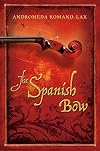
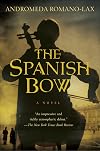
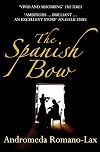
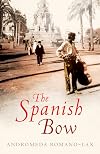
The Spanish Bow
by Andromeda Romano-Lax
On This Page
Description
Chronicles the lifelong friendship and rivalry between Feliu Delargo, a Catalan cellist, and eccentric piano prodigy Justo Al-Cerraz, a relationship that is dramatically transformed by the arrival in their lives of Aviva, an Italian violinist with a haunted past.Tags
Recommendations






Member Reviews
The novel follows the fictitious cellist Feliu Delargo from his birth in a Catalan village in 1892 to the concert halls of Spain, France and Germany in the early 20th century and finally to the train depot in a small French port city in October 1940.
Romano-Lax has included a number of historical figures from the worlds of art, culture and politics – Kurt Weill, Pablo Picasso, and Adolf Hitler to name just three. The author was inspired by the life of Pablo Casals, but the book is NOT a fictionalized biography of Casals. The novel explores issues of personal responsibility and what history demands of the individual, in particular those individuals in the public eye; should they use their art and celebrity to advance a particular show more cause, to warn the populace, or to numb the masses. This is a large topic to tackle and the book covers a significant time frame where wars, disease and economic depressions taxed even the strongest and wealthiest. Romano-Lax manages this very well.
If I have any complaint it is that Feliu seemed too distant from what was going on around him. He was a leaf blown on the winds of change for most of the book. Even when he took a stand in one area of his life, he still drifted along in other areas. In contrast, pianist Justo Al-Cerraz (and Delargo’s friend) is portrayed as a larger-than-life, charming and eccentric bon vivant. Justo tries to get Feliu to wake up to life and participate, but it is an uphill battle.
All told, the story pulled me in and kept me turning pages. The author includes just enough humorous scenes to relieve the tension and avoid sounding “preachy.” When I got to the end, I found myself wishing the book were longer. show less
Romano-Lax has included a number of historical figures from the worlds of art, culture and politics – Kurt Weill, Pablo Picasso, and Adolf Hitler to name just three. The author was inspired by the life of Pablo Casals, but the book is NOT a fictionalized biography of Casals. The novel explores issues of personal responsibility and what history demands of the individual, in particular those individuals in the public eye; should they use their art and celebrity to advance a particular show more cause, to warn the populace, or to numb the masses. This is a large topic to tackle and the book covers a significant time frame where wars, disease and economic depressions taxed even the strongest and wealthiest. Romano-Lax manages this very well.
If I have any complaint it is that Feliu seemed too distant from what was going on around him. He was a leaf blown on the winds of change for most of the book. Even when he took a stand in one area of his life, he still drifted along in other areas. In contrast, pianist Justo Al-Cerraz (and Delargo’s friend) is portrayed as a larger-than-life, charming and eccentric bon vivant. Justo tries to get Feliu to wake up to life and participate, but it is an uphill battle.
All told, the story pulled me in and kept me turning pages. The author includes just enough humorous scenes to relieve the tension and avoid sounding “preachy.” When I got to the end, I found myself wishing the book were longer. show less
Stop what you are doing and read this book.
I could easily make that sentence my review, as I can't think of a better way to express my feelings about it. There aren't many books that make me feel this way. I suppose I could put it like this: Stop what you are doing and read this book. Now.
Anna Suknov of FSB Associates was kind enough to send me The Spanish Bow this past August to review. I finished it the end of September. Why did it take me so long? Not because it was almost 600 pages (and I wasn't able to start it until the end of August), not because it was a chore to get through, but because it was so delicious I wanted to savor it. I looked forward to the evenings after work when I could take the book out and settle in with some show more of the most interesting, well-drawn characters within a unique and fascinating plot that I've had the pleasure to read in a very long time.
The Spanish Bow follows the life of a boy named Feliu Delargo, born in the small Catalan village of Campo Seco, Spain in the late 19th century. He lives with his mother, three brothers, his sister and their "Tia" (aunt). Feliu's father is working in Puerto Rico when he is killed by an explosion. Feliu and his mother go to the train station to pick up what they think are his remains, only to open the box and discover gifts he had been collecting for his family. Feliu, after looking at the various items, selects an odd piece - a wooden unstrung bow. He was uncertain as to the type of bow it was, as it seemed too large for a violin. Still, he keeps it.
Feliu begins to take violin lessons from a man who is trying to court his mother. He enjoys the violin, but has no passion for it. It isn't until his mother takes him to hear a concert in town given by a trio of musicians that he discovers what his passion is. It is the cello. Here is how Romano-Lax describes Feliu's revelation:
"If the concert had ended there, it would have stayed in my memory forever. But something more astounding happened when the violinist and the cellist joined the pianist. I looked to the violin first, because it was familiar; I knew I'd learn by watching, and was hoping to see El Nene's violinist put my own teacher to shame. The cello, played by a man named Emil Duarte, didn't interest me because it seemed like nothing more than an oversized violin. But then Duarte pulled his bow against the larger instrument's strings, and my face turned to follow the sound. I was thankful that El Nene had played solo first, because once the cello started up, I never looked at the violin or piano again.
Duarte's cello was a glossy caramel color, and the sound it produced was as warm and rich as the instrument looked. It sounded like a human voice. Not the high warble of an opera singer or anyone singing for the stage, but rather the soothing voice of a fisherman singing as he mended his nets, or of a mother singing lullabies to her sleepy children.
When the cellist reached a crescendo on one of the lower strings, I felt a strange sensation, both pleasurable and disturbing. It reminded me of holding a cat, feeling its purrs resonate with me. Listening, I felt the sensation strengthen, as if the cello's quivering vibrato were actually boring into me, opening a small hole in my chest, creating a physical pain as real as any wound. I was afraid of what might fall outof that hole, and yet I didn't want it to close, either.
As Duarte climbed to higher notes, I followed him. I watched the way he bent over his instrument to reach the most precarious pitches, like a seated potter wrapping his arms around unshaped clay, stripping away its first layers, revealing rather than creating. El Nene had seemed like an actor, a showman - and a talented one at that, able to accept a role and play to his audience's expectations. But Duarte seemed like a craftsman - the kind of craftsman I had been raised to respect.
As I listened, my nose began to itch, a warning sign that tears were imminent. Horrified that Enrique would see me cry, I blinked hard, without luck. I wrapped my fingers around the edge of my chair's wooden seat, hoping to inflict myself with splinters that would require sudden, pained attention. When that didn't work, I played a mental game, trying to taste Duarte's strings as he played them. The lowest and fattest string, C: bitter chocolate. The G, next to it: something animal. Warm goat cheese. The D: ripe tomato. The high, thin A: tart lemon, to be handled with care. The highest notes, played near the bridge, could sting, but Duarte tempered that sting with a sweet vibrato.
The cello contained everything I knew - a natural world of tastes and sensations - and much more that I did not. After watching El Nene, I wanted to see him play again. But after hearing Duarte, I wanted to be him." (pgs. 33-34)
We then follow along with Feliu as he is tutored on the cello in Barcelona with Alberto (recommended by El Nene whose real name is Justo Al-Cerraz), learns street music with Rolland, moves to Madrid to be a courtier to Queen Ena (where he gets more than a taste of the political upheaval that is happening in Spain), then takes up with Al-Cerraz in a musical partnership. This partnership is a love-hate relationship that will be on-again and off-again for decades. Feliu prides himself in his relentless pursuit of perfection in music as well as his postponement and self-denial of gratification. As he does so, he becomes world famous. But in the background is the ever-roiling political unrest, which touches Feliu more than he wishes. It begins to color his music and his motives in ways he would not think possible. All of these factors come to a head at the end of the 1930's with the regimes of Franco and Hitler to test Feliu's passions and loyalties.
Romano-Lax's characters are fascinating. Feliu and Al-Cerraz are both passionate musicians, but Feliu's passion is narrow and focused, where Al-Cerraz is an alter-ego whose passions are wide-spread and all-encompassing. Aviva, the Jewish-Italian violinist who makes a trio with Feliu and Al-Cerraz while becoming the object of affection for both, enters the story fairly late in the book. Yet her characterization so well defined that she very quickly becomes an integral part of the story and seems as familiar as those present from the early pages of the book.
The Spanish Bow is about love, passion, perseverance, and loyalty set in the historical context that was the turmoil of Spain in the first half of the 20th century. It's beauty, passion, wonderful prose and life-like characters will stay with me for a very long time.
Did I mention that you should read this book? show less
I could easily make that sentence my review, as I can't think of a better way to express my feelings about it. There aren't many books that make me feel this way. I suppose I could put it like this: Stop what you are doing and read this book. Now.
Anna Suknov of FSB Associates was kind enough to send me The Spanish Bow this past August to review. I finished it the end of September. Why did it take me so long? Not because it was almost 600 pages (and I wasn't able to start it until the end of August), not because it was a chore to get through, but because it was so delicious I wanted to savor it. I looked forward to the evenings after work when I could take the book out and settle in with some show more of the most interesting, well-drawn characters within a unique and fascinating plot that I've had the pleasure to read in a very long time.
The Spanish Bow follows the life of a boy named Feliu Delargo, born in the small Catalan village of Campo Seco, Spain in the late 19th century. He lives with his mother, three brothers, his sister and their "Tia" (aunt). Feliu's father is working in Puerto Rico when he is killed by an explosion. Feliu and his mother go to the train station to pick up what they think are his remains, only to open the box and discover gifts he had been collecting for his family. Feliu, after looking at the various items, selects an odd piece - a wooden unstrung bow. He was uncertain as to the type of bow it was, as it seemed too large for a violin. Still, he keeps it.
Feliu begins to take violin lessons from a man who is trying to court his mother. He enjoys the violin, but has no passion for it. It isn't until his mother takes him to hear a concert in town given by a trio of musicians that he discovers what his passion is. It is the cello. Here is how Romano-Lax describes Feliu's revelation:
"If the concert had ended there, it would have stayed in my memory forever. But something more astounding happened when the violinist and the cellist joined the pianist. I looked to the violin first, because it was familiar; I knew I'd learn by watching, and was hoping to see El Nene's violinist put my own teacher to shame. The cello, played by a man named Emil Duarte, didn't interest me because it seemed like nothing more than an oversized violin. But then Duarte pulled his bow against the larger instrument's strings, and my face turned to follow the sound. I was thankful that El Nene had played solo first, because once the cello started up, I never looked at the violin or piano again.
Duarte's cello was a glossy caramel color, and the sound it produced was as warm and rich as the instrument looked. It sounded like a human voice. Not the high warble of an opera singer or anyone singing for the stage, but rather the soothing voice of a fisherman singing as he mended his nets, or of a mother singing lullabies to her sleepy children.
When the cellist reached a crescendo on one of the lower strings, I felt a strange sensation, both pleasurable and disturbing. It reminded me of holding a cat, feeling its purrs resonate with me. Listening, I felt the sensation strengthen, as if the cello's quivering vibrato were actually boring into me, opening a small hole in my chest, creating a physical pain as real as any wound. I was afraid of what might fall outof that hole, and yet I didn't want it to close, either.
As Duarte climbed to higher notes, I followed him. I watched the way he bent over his instrument to reach the most precarious pitches, like a seated potter wrapping his arms around unshaped clay, stripping away its first layers, revealing rather than creating. El Nene had seemed like an actor, a showman - and a talented one at that, able to accept a role and play to his audience's expectations. But Duarte seemed like a craftsman - the kind of craftsman I had been raised to respect.
As I listened, my nose began to itch, a warning sign that tears were imminent. Horrified that Enrique would see me cry, I blinked hard, without luck. I wrapped my fingers around the edge of my chair's wooden seat, hoping to inflict myself with splinters that would require sudden, pained attention. When that didn't work, I played a mental game, trying to taste Duarte's strings as he played them. The lowest and fattest string, C: bitter chocolate. The G, next to it: something animal. Warm goat cheese. The D: ripe tomato. The high, thin A: tart lemon, to be handled with care. The highest notes, played near the bridge, could sting, but Duarte tempered that sting with a sweet vibrato.
The cello contained everything I knew - a natural world of tastes and sensations - and much more that I did not. After watching El Nene, I wanted to see him play again. But after hearing Duarte, I wanted to be him." (pgs. 33-34)
We then follow along with Feliu as he is tutored on the cello in Barcelona with Alberto (recommended by El Nene whose real name is Justo Al-Cerraz), learns street music with Rolland, moves to Madrid to be a courtier to Queen Ena (where he gets more than a taste of the political upheaval that is happening in Spain), then takes up with Al-Cerraz in a musical partnership. This partnership is a love-hate relationship that will be on-again and off-again for decades. Feliu prides himself in his relentless pursuit of perfection in music as well as his postponement and self-denial of gratification. As he does so, he becomes world famous. But in the background is the ever-roiling political unrest, which touches Feliu more than he wishes. It begins to color his music and his motives in ways he would not think possible. All of these factors come to a head at the end of the 1930's with the regimes of Franco and Hitler to test Feliu's passions and loyalties.
Romano-Lax's characters are fascinating. Feliu and Al-Cerraz are both passionate musicians, but Feliu's passion is narrow and focused, where Al-Cerraz is an alter-ego whose passions are wide-spread and all-encompassing. Aviva, the Jewish-Italian violinist who makes a trio with Feliu and Al-Cerraz while becoming the object of affection for both, enters the story fairly late in the book. Yet her characterization so well defined that she very quickly becomes an integral part of the story and seems as familiar as those present from the early pages of the book.
The Spanish Bow is about love, passion, perseverance, and loyalty set in the historical context that was the turmoil of Spain in the first half of the 20th century. It's beauty, passion, wonderful prose and life-like characters will stay with me for a very long time.
Did I mention that you should read this book? show less
Startlingly good: I've gained a certain appreciation for novels from Spain recently, though they have to be translated into English for me to read them I'm afraid. I enjoyed the Shadow of the Wind, and I'm a big fan of Arturo Perez-Reverte. So when someone handed me this advance copy of this book, I approached it with high expectations. Those expectations were fulfilled: this is a wonderful, intelligent, unusual first novel, with a fascinating cast of characters, a strange plot, and interesting settings.
The main character starts out being misnamed. His mother wanted to call him Feliz, but the notary wound up writing Feliu instead. He grows, and at an early age, when his father dies in Cuba (then a Spanish colony, soon to be liberated show more by the U.S.) the mother receives a box of gifts from the dead father, and distributes them among the children. Feliu winds up with a bow, the thing you draw across the strings of a violin or a cello to make music. When an adolescent, his Catalonian village is visited by a pianist who performs. Justo Al-Cerraz is a child prodigy who's grown up, and still performs around the country. When Justo visits the village, Feliu is playing the violin, trying to learn it, but one of Justo's trio-mates is a cellist, and that puts Feliu into sort of a trance where he feels he must play only that instrument. He winds up going to Barcelona to learn.
From there the novel takes many turns, with Justo and Feliu eventually becoming partners, then meeting up with a third player, a violinist who's an Italian Jew. By now, the plot has worked its way forward to the thirties, and the inevitable confrontation between the Nazis and the main characters comes very much at the end of the book. While the plot's important to the book, and the ending is fascinating, it's the journey that's the most enthralling thing about this book. The author enfolds you in the world of music in the 20s and 30s, and does a wonderful job of recreating what it's like to be a musician, at least from the point of view of the traveling, performing, and working.
I really enjoyed this book. The characters especially are very well-drawn and interesting, and the story is fascinating. I would recommend it to almost anyone interested in the period, in music, or interested in novels about life. show less
The main character starts out being misnamed. His mother wanted to call him Feliz, but the notary wound up writing Feliu instead. He grows, and at an early age, when his father dies in Cuba (then a Spanish colony, soon to be liberated show more by the U.S.) the mother receives a box of gifts from the dead father, and distributes them among the children. Feliu winds up with a bow, the thing you draw across the strings of a violin or a cello to make music. When an adolescent, his Catalonian village is visited by a pianist who performs. Justo Al-Cerraz is a child prodigy who's grown up, and still performs around the country. When Justo visits the village, Feliu is playing the violin, trying to learn it, but one of Justo's trio-mates is a cellist, and that puts Feliu into sort of a trance where he feels he must play only that instrument. He winds up going to Barcelona to learn.
From there the novel takes many turns, with Justo and Feliu eventually becoming partners, then meeting up with a third player, a violinist who's an Italian Jew. By now, the plot has worked its way forward to the thirties, and the inevitable confrontation between the Nazis and the main characters comes very much at the end of the book. While the plot's important to the book, and the ending is fascinating, it's the journey that's the most enthralling thing about this book. The author enfolds you in the world of music in the 20s and 30s, and does a wonderful job of recreating what it's like to be a musician, at least from the point of view of the traveling, performing, and working.
I really enjoyed this book. The characters especially are very well-drawn and interesting, and the story is fascinating. I would recommend it to almost anyone interested in the period, in music, or interested in novels about life. show less
Feliu Delargo suffers two accidents at his birth in a Catalan village in 1892. A traumatic birth burdens him with a hip injury and the notary mistakes his mother’s intention to name him Feliz, or Happy. When he is six years old, his father, soon to die in Cuba, sends a box of gifts to be distributed among his children. Feliu is drawn to a wooden stick that sets him on his life’s course as he learns first to play the violin and then the cello.
Over the course of the 20th century, as Feliu becomes a world-renowned cellist, playing for kings and despots, he develops complex relationships with a volatile Spanish pianist/composer and an Italian Jewish violinist haunted by her past. As history unfolds, Feliu’s story traces his struggle show more to isolate his art from the great political and moral issues of his time, providing unmistakable parallels to the life of the great Spanish cellist Pablo Casals. Historical figures from the Spanish monarchy to Picasso and Hitler play cameo roles and Andromeda Romano-Lax’s prodigious research is used effectively. But it is the central characters and their moral choices that drive this impressive debut novel.
This book has epic sweep, complex characters and enough plot twists to satisfy readers of popular historical fiction. But it is a much more thoughtful, lyrical book than is typical of that genre, one that explores the role of art in political life and the human spirit. show less
Over the course of the 20th century, as Feliu becomes a world-renowned cellist, playing for kings and despots, he develops complex relationships with a volatile Spanish pianist/composer and an Italian Jewish violinist haunted by her past. As history unfolds, Feliu’s story traces his struggle show more to isolate his art from the great political and moral issues of his time, providing unmistakable parallels to the life of the great Spanish cellist Pablo Casals. Historical figures from the Spanish monarchy to Picasso and Hitler play cameo roles and Andromeda Romano-Lax’s prodigious research is used effectively. But it is the central characters and their moral choices that drive this impressive debut novel.
This book has epic sweep, complex characters and enough plot twists to satisfy readers of popular historical fiction. But it is a much more thoughtful, lyrical book than is typical of that genre, one that explores the role of art in political life and the human spirit. show less
 This review was written for LibraryThing Early Reviewers.
"The Spanish Bow" tells the story of Feliu, a cellist whose career spans the first half of the twentieth century. Feliu witnesses the great events of age; the Spanish Civil War, the rise of Franco and the beginning of World War II. He meets many of the great names of the day, both musical and political. Despite all of this, Feliu, himself, remains a cipher, unwilling as he is to take action. The parts of his life where he is most active and involved are skirted quickly, the times he let events and people control him are dealt with in detail. Feliu loves deeply, but never brings himself to declare his feelings. His friends, a pianist and a violinist have exciting tales to tell. In the end, it is Feliu's passivity that keeps the book show more firmly on the ground, failing to soar with the notes made with his beloved cello bow.
This is a worthy book, which gives the reader a glimpse of Spanish history, without burdening him with any of the passion or nuances of the events pictured. Romano-Lax writes well and I look forward to her next outing into historical fiction. show less
This is a worthy book, which gives the reader a glimpse of Spanish history, without burdening him with any of the passion or nuances of the events pictured. Romano-Lax writes well and I look forward to her next outing into historical fiction. show less
This review was written for LibraryThing Early Reviewers.The Spanish Bow starts off like this:
"I was almost born Happy."
Literally, the main character was almost named Feliz, which means happy, but there was an error on his death certificate (!!!!) so he was named Feliu.
The story follows the life of the fictional famous Spanish cellist, Feliu Delargo. Born before the turn of the Twentieth Century, his life's path takes him through World War I, the Spanish Civil War, and World War II. He becomes a cellist in the court of King Alfonso XIII and Queen Ena. His life intersects with famous musicians, artists, and politicians.
A cellist herself, Andromeda Romano-Lax writes the description of music beautifully. As a child Feliu describes notes and sounds as tastes of bitter chocolate and tart lemons. I show more loved that. Her depiction of the historical aspects were amazing too. I loved the interaction between Feliu and his devotion to Queen Ena. I love the odd friendship between Feliu and famous but also fictional pianist Al-Cerraz. And his complicated love with Aviva the violinist.
There is a warning though. This book is quite long at almost 550 pages so don't expect a quick read. And it can be quite serious and sad at times...but that is pretty much why I liked it. This is a story about friendship, music, love, hate, and everything in between. It wasn't a pleasant and easy time period for Spain. But this is not a war story. It's about the decisions we make in our lives. It's about the purpose of our lives. Overall, it is just a touching, moving, beautiful book with it's ups and downs, highs and lows...much like the music she describes. show less
"I was almost born Happy."
Literally, the main character was almost named Feliz, which means happy, but there was an error on his death certificate (!!!!) so he was named Feliu.
The story follows the life of the fictional famous Spanish cellist, Feliu Delargo. Born before the turn of the Twentieth Century, his life's path takes him through World War I, the Spanish Civil War, and World War II. He becomes a cellist in the court of King Alfonso XIII and Queen Ena. His life intersects with famous musicians, artists, and politicians.
A cellist herself, Andromeda Romano-Lax writes the description of music beautifully. As a child Feliu describes notes and sounds as tastes of bitter chocolate and tart lemons. I show more loved that. Her depiction of the historical aspects were amazing too. I loved the interaction between Feliu and his devotion to Queen Ena. I love the odd friendship between Feliu and famous but also fictional pianist Al-Cerraz. And his complicated love with Aviva the violinist.
There is a warning though. This book is quite long at almost 550 pages so don't expect a quick read. And it can be quite serious and sad at times...but that is pretty much why I liked it. This is a story about friendship, music, love, hate, and everything in between. It wasn't a pleasant and easy time period for Spain. But this is not a war story. It's about the decisions we make in our lives. It's about the purpose of our lives. Overall, it is just a touching, moving, beautiful book with it's ups and downs, highs and lows...much like the music she describes. show less
Review of the unabridged Audible audiobook.
The narration on this audiobook was very, very good. The narrator gives unique and believable voices to male and female characters of various ages and even nationalities.
As for the book itself, as historical drama it's a little too heavy on the history and a little too light on the characterization. The concept of following a single character through the tumult that gripped Spain in the 20's and 30's is strong, but the main character, Feliu, is so underdeveloped as to be little more than a bystander as events swirl around him. He relates things that happen to himself and others, but he's too flat and blank to really care about, and since no other characters are very well-developed either, it's show more hard to feel any connection to the people or events in the book. show less
The narration on this audiobook was very, very good. The narrator gives unique and believable voices to male and female characters of various ages and even nationalities.
As for the book itself, as historical drama it's a little too heavy on the history and a little too light on the characterization. The concept of following a single character through the tumult that gripped Spain in the 20's and 30's is strong, but the main character, Feliu, is so underdeveloped as to be little more than a bystander as events swirl around him. He relates things that happen to himself and others, but he's too flat and blank to really care about, and since no other characters are very well-developed either, it's show more hard to feel any connection to the people or events in the book. show less
Members
- Recently Added By
Published Reviews
ThingScore 75
Andromeda Romano-Lax's ambitious debut, The Spanish Bow, a sweeping memoir of a fictional Spanish cellist, Feliu Delargo.
Here, the proliferation of real figures is as overwhelming, close to what Slavoj Zizek calls the 'parallax view' - an impossible shortcut between two levels that can't be spoken about in the same terms.
Here, the proliferation of real figures is as overwhelming, close to what Slavoj Zizek calls the 'parallax view' - an impossible shortcut between two levels that can't be spoken about in the same terms.
added by sneuper
Lists

Top Five Books of 2014
1,064 works; 398 members

Authors from the United States
245 works; 3 members
Author Information

21 Works 1,069 Members
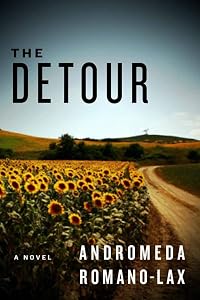
Andromeda Ramona-Lax was born in Chicago in 1970. Her first novel, The Spanish Bow, was translated into eleven languages and was chosen as a New York Times Editors' Choice, BookSense pick, and one of Library Journal's Best Books of the Year. Ramona-Lax is also the author of the novel The Detour and her nonfiction works include a dozen travel and show more natural history guidebooks. (Bowker Author Biography) show less
Some Editions
Series
Belongs to Publisher Series
BvT (0615)
Common Knowledge
- Canonical title
- The Spanish Bow
- Original title
- The Spanish Bow
- Original publication date
- 2007
- People/Characters
- Feliu Delargo; Justo Al-Cerraz; Francisco Franco; Aviva Henze-Pergolesi; Pablo Picasso; Victoria Eugenia, Queen of Spain
- Important places
- Madrid, Spain; Catalonia, Spain; Spain; Berlin, Germany; Paris, France
- Important events
- Spanish Civil War (1936 | 1939); World War II (1939 | 1945)
- Dedication
- A Brian Lax y Elizabeth Sheinkman, con respeto y gratitud.
- First words
- I was almost born Happy.
- Last words
- (Click to show. Warning: May contain spoilers.)"Very happy."
- Original language*
- Amerikanisch
*Some information comes from Common Knowledge in other languages. Click "Edit" for more information.
Classifications
Statistics
- Members
- 375
- Popularity
- 83,595
- Reviews
- 19
- Rating
- (3.73)
- Languages
- 7 — Chinese, Dutch, English, French, German, Serbian, Spanish
- Media
- Paper, Audiobook, Ebook
- ISBNs
- 20
- ASINs
- 4