On This Page
Description
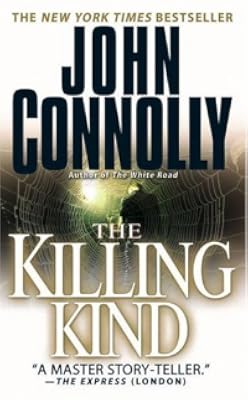
Troubled ex-cop turned private investigator Charlie Parker returns in the latest thriller from #1 internationally bestselling author John Connolly. John Connolly takes battered ex-cop Charlie Parker on his third outing after Every Dead Thing and Dark Hollow. Still struggling with the horrific ghosts of his past, Parker is now a disillusioned private eye hired to investigate the circumstances surrounding the death of Grace Peltier-which neither her father nor a former US Senator believe was show more suicide. The trail leads to a mass grave in northern Maine where a Baptist community disappeared forty years earlier. The deaths of the Baptists and Grace are connected and point in the direction of a shadowy organization known as the Fellowship. With the assistance of some idiosyncratic and murderous acolytes, Parker soon confronts the Fellowship's demonic leader and finds himself caught in a situation more gruesome than even he could ever have imagined. show lessTags
Recommendations

Member Reviews
This is one of those thrillers that treads very close to horror territory, particularly when it comes to the descriptions of murders and deaths. And while I actually really like spiders, some of the scenes here left me jumping at shadows, and if I'd read this when young, I'm pretty sure I'd have grown up with some serious arachnophobia--in fact, this book might be so dark as to make me rethink my feeling that kids should be left to grab up whatever book they happen to want to read, at whatever age, just as I did. (Yes, it's that dark and gruesome. This isn't a book for the faint of heart or, perhaps, for those with a touch too much imagination who'll picture these scenes in quite such detail as I did.)
All that said, Connolly's a show more fantastic writer, and the only flaw here--aside from him making my skin crawl with some of these scenes--is that the book starts off on such a violent, high-emotion note with the prologue, the drop back into the protagonist's present day as the 'story' gets started actually feels incredibly slow. I think without the prologue I wouldn't have given much thought to the start being slow, but the book started off so violently, it was a big adjustment to slip into what would certainly be described by a lot of readers as a slower start that, if anything, might be accused of being over-written.
I do think I'll read more of Connolly's work, but I'm not sure I'd recommend this book to suspense readers who aren't also horror fans. show less
All that said, Connolly's a show more fantastic writer, and the only flaw here--aside from him making my skin crawl with some of these scenes--is that the book starts off on such a violent, high-emotion note with the prologue, the drop back into the protagonist's present day as the 'story' gets started actually feels incredibly slow. I think without the prologue I wouldn't have given much thought to the start being slow, but the book started off so violently, it was a big adjustment to slip into what would certainly be described by a lot of readers as a slower start that, if anything, might be accused of being over-written.
I do think I'll read more of Connolly's work, but I'm not sure I'd recommend this book to suspense readers who aren't also horror fans. show less
Finally Connolly lives up to the promise in The Lovers, book 8 in the Charlie Parker series. It is a mystery series that often borders on horror, a genre I prefer not to linger in, however, something about Connolly's writing is so evocative, so full of humanity that I keep returning to his writing. I think it might almost be the mirror-image of much I enjoy, perhaps because it centers around some of the most basic--but darkest--of emotions.
'There is a dark resource within all of us, a reservoir of hurt and pain and anger upon which we can draw when the need arises. Most of us rarely, if ever, have to delve too deeply into it. That is as it should be, because dipping into it costs, and you lose a little of yourself each time, a small show more part of all that is good and honorable and decent about you."
Charlie Parker is a haunted man. The reader was never quite sure if they are literal haunts in the first two books, but in this book it becomes clear that his visions are meaningful and real. Charlie is bumming around his grandfather's house in Maine, working out, doing white collar investigative work, when he's approached by a wealthy businessman and former senator to investigate the apparent suicide of Grace Peltier, a graduate student researching local cults. At the same time, a mass grave is uncovered in a nearby development, and Parker starts seeing a young boy in broken eyeglasses with a wooden sign hung round his neck. He attempts to meet with the leader of The Fellowship, a splinter religious group, but it seems to consist of an office front and nothing more. As he persists, he attracts the attention of the antagonistic Mr. Pudd and far, far too many spiders. Oh, by the way, this entire book is a trigger for the arachnophobic.
Narrative is thankfully linear, with intermittent interruptions from Grace's thesis as a way of giving the background on the Fellowship. Not a bad technique, mostly because it doesn't read anything like a real thesis--more like a local tale (I imagine those who have actually written a thesis in anthropology/sociology would be snerking and chortling at these sections). It serves to emphasize both the hope of people who follow a devout path, and the unscrupulousness of many of the leaders.
I enjoy Connolly's writing, a balanced combination of world-building, action and both internal/external dialogue. I thought many passages resonant with emotional truths, albeit difficult ones. Again, Connolly doesn't live in the 'happy' side of the human experience, but in the world of loss, pain, and this time, a touch of hope, and the setting reflects this focus.
"I should have felt pain, I thought. I should have felt the old agony. But instead, I experienced only a strange, desperate gratitude for this place, for the two fat old dogs and for the unsullied memories which they had left me. For some things should never be allowed to fade away... a place should be found for them in the present and the future so that they become a precious part of oneself, something to be treasured instead of something to be feared."
Oh yes--and the spiders. Those passages are horrific, and I confess to speed-reading because heaven almighty, I did not need those images seared in my brain. But they are.
Characterization feels full, if somewhat archetypal. Charlie is considering progressing his relationship with Rachel, an arc continued from the last book. There's a number of characters that amble in and out, and I thought they felt solid, even with short visits. The father of the woman, Curtis Peltier; the mobster Al Z, reflecting on a long and storied career; the former roommate, daffy Ali Wynn; and a handful of law enforcement agents; all give a nice flavor to the story and the investigation of the missing woman. Parker's best friends are a pair of killers, Angel and Louis, and the three of them account for 90% of the humorous moments in the story. Parker is notably world-weary, as well as focused on concepts of vengeance and justice, and it gives him a certain cavalier approach when dealing with others. When a client accuses Parker's work of being 'sleazy,' Parker notes:
"Mr. Hoyt had sex in the afternoon with a woman. Neither of them is married. What they did wasn't sleazy... Your company paid me to listen in on them, and that's where the sleaze part came in."
Overall, solid, evocative and nice contrast to some of my more lighthearted reads that still represents a ethos I can appreciate. As it has enough balance to the characters, plot and setting I'll go on to the next. Other reviews recommend reading the two relatively closely together, so I have it waiting at the library. show less
'There is a dark resource within all of us, a reservoir of hurt and pain and anger upon which we can draw when the need arises. Most of us rarely, if ever, have to delve too deeply into it. That is as it should be, because dipping into it costs, and you lose a little of yourself each time, a small show more part of all that is good and honorable and decent about you."
Charlie Parker is a haunted man. The reader was never quite sure if they are literal haunts in the first two books, but in this book it becomes clear that his visions are meaningful and real. Charlie is bumming around his grandfather's house in Maine, working out, doing white collar investigative work, when he's approached by a wealthy businessman and former senator to investigate the apparent suicide of Grace Peltier, a graduate student researching local cults. At the same time, a mass grave is uncovered in a nearby development, and Parker starts seeing a young boy in broken eyeglasses with a wooden sign hung round his neck. He attempts to meet with the leader of The Fellowship, a splinter religious group, but it seems to consist of an office front and nothing more. As he persists, he attracts the attention of the antagonistic Mr. Pudd and far, far too many spiders. Oh, by the way, this entire book is a trigger for the arachnophobic.
Narrative is thankfully linear, with intermittent interruptions from Grace's thesis as a way of giving the background on the Fellowship. Not a bad technique, mostly because it doesn't read anything like a real thesis--more like a local tale (I imagine those who have actually written a thesis in anthropology/sociology would be snerking and chortling at these sections). It serves to emphasize both the hope of people who follow a devout path, and the unscrupulousness of many of the leaders.
I enjoy Connolly's writing, a balanced combination of world-building, action and both internal/external dialogue. I thought many passages resonant with emotional truths, albeit difficult ones. Again, Connolly doesn't live in the 'happy' side of the human experience, but in the world of loss, pain, and this time, a touch of hope, and the setting reflects this focus.
"I should have felt pain, I thought. I should have felt the old agony. But instead, I experienced only a strange, desperate gratitude for this place, for the two fat old dogs and for the unsullied memories which they had left me. For some things should never be allowed to fade away... a place should be found for them in the present and the future so that they become a precious part of oneself, something to be treasured instead of something to be feared."
Oh yes--and the spiders. Those passages are horrific, and I confess to speed-reading because heaven almighty, I did not need those images seared in my brain. But they are.
Characterization feels full, if somewhat archetypal. Charlie is considering progressing his relationship with Rachel, an arc continued from the last book. There's a number of characters that amble in and out, and I thought they felt solid, even with short visits. The father of the woman, Curtis Peltier; the mobster Al Z, reflecting on a long and storied career; the former roommate, daffy Ali Wynn; and a handful of law enforcement agents; all give a nice flavor to the story and the investigation of the missing woman. Parker's best friends are a pair of killers, Angel and Louis, and the three of them account for 90% of the humorous moments in the story. Parker is notably world-weary, as well as focused on concepts of vengeance and justice, and it gives him a certain cavalier approach when dealing with others. When a client accuses Parker's work of being 'sleazy,' Parker notes:
"Mr. Hoyt had sex in the afternoon with a woman. Neither of them is married. What they did wasn't sleazy... Your company paid me to listen in on them, and that's where the sleaze part came in."
Overall, solid, evocative and nice contrast to some of my more lighthearted reads that still represents a ethos I can appreciate. As it has enough balance to the characters, plot and setting I'll go on to the next. Other reviews recommend reading the two relatively closely together, so I have it waiting at the library. show less
These books just keep getting better. Nastiest villain so far. And I do mean naaasty and his hit man is the stuff of nightmares. If you find spiders to be unsettling, you are really in for a treat. I found myself brushing imaginary webs off my arms during this one several times. Parker and his friends Angel and Louis may be over their heads in this one as they go up against a well connected ostensibly religious cult that uses murder as one of its main ways of keeping its power base in line.
I found the historical aspects of this installment to add a whole new level of interest—a fascinating history of religious cults/religious communities is woven into a relentless story line.
Highest recommendation.
And again, I bought the 4th book show more before I finished this one. show less
I found the historical aspects of this installment to add a whole new level of interest—a fascinating history of religious cults/religious communities is woven into a relentless story line.
Highest recommendation.
And again, I bought the 4th book show more before I finished this one. show less
Wow. This was ridiculously good. We have more of the supernatural elements I like. I have to say though this book is hard to get through if you don’t like spiders.
“The Killing Kind” has Charlie taking up a case from an ex Senator. A daughter of a long ago friend ended up dead, but though the police think it’s suicide, no one believes it. When Charlie goes digging he finds a connection between the woman’s death and a Baptist sect that went missing in the 60s. Charlie also meets one of the most relentless killers he has ever gone toe to toe with.
I like how Connolly doesn’t ever let you know if what Charlie sees or feels is real or what. I like to think it is though. Charlie though in this one is pressing his luck. I loved show more having Rachel, Louis, and Angel in this one. All of the parties above are forever changed by the end of this one though.
The writing was lyrical and top notch. I also now hate spiders even more than I thought possible. Some of the descriptions definitely made me reach up and brush imaginary webs off of me. I liked how Connolly went from different POVs to excerpts from the thesis of the missing woman about the Baptists that went missing.
The book ends on a hopeful note but one wonders what is next for Charlie. show less
“The Killing Kind” has Charlie taking up a case from an ex Senator. A daughter of a long ago friend ended up dead, but though the police think it’s suicide, no one believes it. When Charlie goes digging he finds a connection between the woman’s death and a Baptist sect that went missing in the 60s. Charlie also meets one of the most relentless killers he has ever gone toe to toe with.
I like how Connolly doesn’t ever let you know if what Charlie sees or feels is real or what. I like to think it is though. Charlie though in this one is pressing his luck. I loved show more having Rachel, Louis, and Angel in this one. All of the parties above are forever changed by the end of this one though.
The writing was lyrical and top notch. I also now hate spiders even more than I thought possible. Some of the descriptions definitely made me reach up and brush imaginary webs off of me. I liked how Connolly went from different POVs to excerpts from the thesis of the missing woman about the Baptists that went missing.
The book ends on a hopeful note but one wonders what is next for Charlie. show less
Oh yeah, this one had the spiders in it. Lovely. Say what you will, Connolly's villains give his protagonists a good run for their money, and his plots are pleasantly meaty and give Parker lots of opportunities to mull on the past being present in the present and the past being present in the past and the present past the future presently.
STOP SAYING HONEYCOMB WORLD JEFF
STOP SAYING HONEYCOMB WORLD JEFF
Number 3 in the Charlie Parker series. I found this book exciting like all the books in this series. I especially love Charley’s two gay sidekicks, Louis and Angel. Both are crooks who have committed more crimes than they like to talk about. Louis is the dapper, well-dressed and laconic hitman who still occasionally hires himself out for high profile hits. He defends this by saying that the guys he takes out are the worst in the crime world. Angel, his partner, is a highly successful break and enter guy. There is no door or security system that is safe from Angel’s magic fingers. These two guys are Charley’s best friends and have helped him out of more scrapes than he can count. They both come up trumps for him again in this book show more while Charley is tracking a sadistic and vicious family of fiendish religious zealots. The book moves along at a good pace and puts Charley and his pals in grave danger. The final scenes of the book were heart stopping and staged just right with the perfect amount of tension and close calls. I gave the book 3 1/2 stars because of all the insects that become a framework for the way this family wreaks their havoc. Just too much information for me, but the book was still worth the read. show less
Another good thriller featuring Charlie "Bird" Parker, Connolly's former NYPD officer turned private detective.
Forty years after they disappeared, members of a fringe religious cult are discovered, buried in a river bank in back woods Maine. At the same time Parker is hired to investigate the supposed suicide of a graduate student who was investigating the same group. Are these events related? (Of course!)
I'm a sucker for books involving religious cults so I found this one particularly entertaining. I was somewhat disappointed by the villains Connolly created for the story. I had a hard time believing that Parker and his criminal sidekicks Angel and Louis could find them such challenging adversaries.
With each book Connolly has show more increased the paranormal touches that make this series unique. While they do not help Parker in the resolution of his cases, they do seem to provide him with motivation to keep pursuing the cases. I get the sense that the deaths of his wife and daughter in the first book have created in Parker a psychic link with the dead. I like it. show less
Forty years after they disappeared, members of a fringe religious cult are discovered, buried in a river bank in back woods Maine. At the same time Parker is hired to investigate the supposed suicide of a graduate student who was investigating the same group. Are these events related? (Of course!)
I'm a sucker for books involving religious cults so I found this one particularly entertaining. I was somewhat disappointed by the villains Connolly created for the story. I had a hard time believing that Parker and his criminal sidekicks Angel and Louis could find them such challenging adversaries.
With each book Connolly has show more increased the paranormal touches that make this series unique. While they do not help Parker in the resolution of his cases, they do seem to provide him with motivation to keep pursuing the cases. I get the sense that the deaths of his wife and daughter in the first book have created in Parker a psychic link with the dead. I like it. show less
Members
- Recently Added By
Lists

KayStJ's to-read list
1,616 works; 11 members

Books Read in 2002
201 works; 8 members
Author Information

95+ Works 32,329 Members
John Connolly is the author of "Every Dead Thing" which was a bestseller in Britain and Ireland. He is a regular contributor to "The Irish Times," and has traveled extensively in the United States. He lives in Dublin, Ireland. (Publisher Provided) John Connolly was born May 31, 1968 in Dublin. He is an Irish writer who is best known for his series show more of novels starring private detective Charlie Parker. His first novel, Every Dead Thing was nominated for the Bram Stoker Award for Best First Novel and went on to win the 2000 Shamus Award for Best First Private Eye Novel (he is the first author outside of the US to have won the award). Connolly's debut introduced readers to the anti-hero Charlie Parker, a former police officer hunting the killer of his wife and daughter. Connolly has since written a further 5 books in the popular Parker series and a non-Parker thriller, as well as venturing outside of the crime genre with the publication of first, an anthology of ghost stories and later, a novel about a young boy's coming-of-age journey during World War II England. Before becoming a full-time novelist, Connolly worked as a journalist, a barman, and a local government official. After graduating with a B.A. in English from Trinity College, Dublin and a M.A. in Journalism from Dublin City University, he spent five years working as a freelance journalist for The Irish Times newspaper. He quickly became frustrated with the profession, and began to write Every Dead Thing in his spare time. Connolly continues to contribute articles to the paper. His eighth book in the Charlie Parker series, The Reapers, was published in 2008. The tenth Parker novel, titled The Whisperers, was published in 2010. His current bestseller is A Time of Torment, the fourteenth in the Charlie Parker series.. (Bowker Author Biography) show less
Some Editions
Awards and Honors
Awards
Series

Belongs to Publisher Series
Work Relationships
Common Knowledge
- Canonical title*
- Perfil asesino
- Original title
- The Killing Kind
- Original publication date
- 2002
- People/Characters
- Charlie Parker; Alison Beck; Grace Peltier; Jack Mercier; Curtis Peltier; Aaron Faulkner (show all 14); Angel; Louis; Rachel Wolfe; Carter Paragon; Mickey Shine; Lester Bargus; Arthur Franklin; Yossi Epstein
- Important places
- Eagle Lake, Maine, USA; Scarborough, Maine, USA; Augusta, Maine, USA; New York, New York, USA; Lubec, Maine, USA; USA (show all 8); Maine, USA; New York, USA
- Dedication
- A mi madre
- First words
- This is a honeycomb world. It hides a hollow heart.
- Quotations
- There is a dark resource within all of us, a reservoir of hurt and pain and anger upon which we can draw when the need arises. Most of us rarely, if ever, have to delve too deeply into it. That is as it should be because dipp... (show all)ing into it costs, and you lose a little of yourself each time, a small part of all that is good and honorable and decent about you, each time you use it you have to go a little deeper, a little further down into the blackness. Strange creatures move through its depth, illuminated by a burning light from within and fueled only by the desire to survive and to kill. The danger in diving into that pool, in drinking from the dark water, is that one day you may submerge yourself so deeply that you can never find the surface again. Give in to it and you’re lost forever.
There is an interconnectedness to all things, a link between what lies buried and what lives above, a capacity for mutability that allows a good act committed in the present to rectify an imbalance in times gone by. that, in ... (show all)the end, is the nature of justice: not to undo the past but, by acting further down the line of time, to restore some measure of harmony, some possibility of equilibrium, so that lives may continue with their burden eased and the dead may find peace in the world beyond this one.
The nature of humanity, its essence, is to feel another’s pain as one’s own, and to act to take that pain away. There is a nobility in compassion, a beauty in empathy, a grace in forgiveness.
This is a honeycomb world. It hides a hollow heart.
The truth of nature, wrote the philosopher Democritus, lies in deep mines and caves. The stability of what is seen and felt beneath our feet is an illusion, for his l... (show all)ife is not as it seems. Below the surface, there are cracks and fissures and pockets of stale, trapped air; stalagmites and helactites and unmapped dark rivers that flow ever downward. It is a place of caverns and stone waterfalls, a labyrinth of crystal tumors and frozen columns where history becomes future, then becomes now.
For in total blackness, time has no meaning.
The present is imperfectly layered on the past; it does not conform flawlessly at every point. things fall and die and their decay creates new layers, thickening the surface crust and adding another thin membrane to cover what lies beneath, new worlds resting on the remains of the old. Day upon day, year upon year, century upon century, layers are added and the imperfections multiply. The past never truly does. It is there, waiting, just below the surface of the now. We stumble into it occasionally, all of us, through remembrance and recall. We summon to mind former lovers, lost children, departed parents, the wonder of a single day when we captured, however briefly, the ineffable, fleeting beauty of the world. These are our memories. We hold them close and call them ours, and we can find them when we need them.
But sometimes that choice is made for us: a piece of the present simply falls away, and the past is exposed like old bone. Afterward, nothing can ever be the same again, and we are forced to reassess the form of what we believed to be true in the light of new revelations about its substance. The truth is revealed by a misstep and the sudden sense that something beneath our feet rings false. The past bubbles out like molten lava, and lives turn to ash in its path. - Last words
- (Click to show. Warning: May contain spoilers.)Se sumerge en las profundidades de la colmena que es este mundo.
- Original language
- English
- Canonical DDC/MDS
- 823.92
*Some information comes from Common Knowledge in other languages. Click "Edit" for more information.
Classifications
Statistics
- Members
- 1,421
- Popularity
- 16,704
- Reviews
- 30
- Rating
- (4.04)
- Languages
- 10 — Bulgarian, Czech, Dutch, English, French, German, Greek, Italian, Spanish, Swedish
- Media
- Paper, Audiobook, Ebook
- ISBNs
- 45
- ASINs
- 17