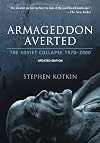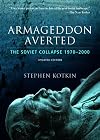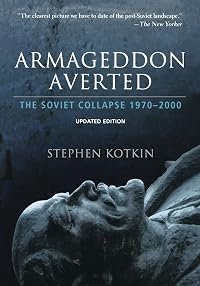
Armageddon Averted: The Soviet Collapse, 1970-2000
by Stephen Kotkin
On This Page
Description
Featuring extensive revisions to the text as well as a new introduction and epilogue-bringing the book completely up to date on the tumultuous politics of the previous decade and the long-term implications of the Soviet collapse-this compact, original, and engaging book offers the definitive account of one of the great historical events of the last fifty years. Combining historical and geopolitical analysis with an absorbing narrative, Kotkin draws upon extensive research, including memoirs show more by dozens of insiders and senior figures, to illuminate the factors that led to the demise of Communism and the USSR. The new edition puts the collapse in the context of the global economic and political changes from the 1970s to the present day. Kotkin creates a compelling profile of post-Soviet Russia and he reminds us, with chilling immediacy, of what could not have been predicted-that the world's largest police state, with several million troops, a doomsday arsenal, and an appalling record of violence, would liquidate itself with barely a whimper. Throughout the book, Kotkin also paints vivid portraits of key personalities. Using recently released archive materials, for example, he offers a fascinating picture of Gorbachev, describing this virtuoso tactician and resolutely committed reformer as "flabbergasted by the fact that his socialist renewal was leading to the system's liquidation"-and more or less going along with it. At once authoritative and provocative, Armageddon Averted illuminates the collapse of the Soviet Union, revealing how "principled restraint and scheming self-interest brought a deadly system to meek dissolution.". show lessTags
Recommendations






Member Reviews
Part history and part polemic. Kotkin makes a powerful case that Gorbachev, a true believing communist, through his attempt to reform the USSR, actually destroyed it. In many ways agreeing with the old communist hardliners like Stalin and Breznevh, but from the opposite direction, Kotkin agrees that "left communism," or "communism with a human face," involving the opening up of civil society, popular political participation, and multiparty elections (glasnost), and the restructuring of the planned economy without full reintroduction of capitalism (perestroika), actually had the effect of destroying communism and the Soviet Union. By doing so, he buries communism as destructive to the enlightenment values that animated it in the first show more place.
However, in the wake of the destruction, rather than a revitalized economy and a new birth of freedom, Kotkin shows the ruthless devouring of the dead corpse of the former soviet state's collectivized industry and resources by its former functionaries and the birth of a new authoritarian cronyism in the 90s. In doing so, he demonstrates that rather than capitalism being best in spite of state intervention, a functional state with an independent civil service and judiciary is actually essential to having capitalism (and also freedom) in the first place. Let's hope all the former soviet states can manage to build those things, and let's all hope that America can maintain her own in the 21st century. show less
However, in the wake of the destruction, rather than a revitalized economy and a new birth of freedom, Kotkin shows the ruthless devouring of the dead corpse of the former soviet state's collectivized industry and resources by its former functionaries and the birth of a new authoritarian cronyism in the 90s. In doing so, he demonstrates that rather than capitalism being best in spite of state intervention, a functional state with an independent civil service and judiciary is actually essential to having capitalism (and also freedom) in the first place. Let's hope all the former soviet states can manage to build those things, and let's all hope that America can maintain her own in the 21st century. show less
Read this because of the author's recent Hoover Institute interview which was interesting.
It's a fairly sensible breakdown of the collapse of the soviet union, with an emphasis on the latter stage developments toward the 90s, with some coverage of the post-breakdown - which only stretches to the year 2000. This causes some headaches when you read it with an additional 20 years of hindsight as his pro-western optimism, including hopeful words about Putin, don't shine too bright anymore. Rather than a total paradigm shift it starts looking more like a hiccup.
However, the analysis of all the things that could have gone wrong is compelling, there are many more moving parts than we tend to think about now, more actors within Russia with show more their own agendas, the shattering of the Union freeing nations that could in turn have caused all kinds of havoc, nuclear arms split across borders and so on. Ultimately the Soviet Union is more a fizzle than a bang, and Kotkin tries to show the almost inadvertent choices that leads to collapse, as the Soviets gradually embrace reforms that open the floodgates for disparate powers looking for wider changes. show less
It's a fairly sensible breakdown of the collapse of the soviet union, with an emphasis on the latter stage developments toward the 90s, with some coverage of the post-breakdown - which only stretches to the year 2000. This causes some headaches when you read it with an additional 20 years of hindsight as his pro-western optimism, including hopeful words about Putin, don't shine too bright anymore. Rather than a total paradigm shift it starts looking more like a hiccup.
However, the analysis of all the things that could have gone wrong is compelling, there are many more moving parts than we tend to think about now, more actors within Russia with show more their own agendas, the shattering of the Union freeing nations that could in turn have caused all kinds of havoc, nuclear arms split across borders and so on. Ultimately the Soviet Union is more a fizzle than a bang, and Kotkin tries to show the almost inadvertent choices that leads to collapse, as the Soviets gradually embrace reforms that open the floodgates for disparate powers looking for wider changes. show less
Kotkin has written a lively monograph about the (in his opinion) continuing-to-collapse Soviet Union. It fills a somewhat weird niche as an accessible academic book; those who know much about Russian history will find the broad thesis unsurprising, and those who don't know much about Russian history may find themselves at sea - Kotkin doesn't condescend to his readers. Personally, his concentrated prose and despairing yet obviously affectionate take on Russia resonated perfectly with me.
The book is really two parts: the factors leading to collapse and apres le deluge, so to speak - but these are just broad thrusts. Kotkin skips through time like Dr Who, pursuing and illustrating his points with a bravura ferocity regardless of show more decade,location or person. You will find yourself leaping from the Kremlin in the eighties, to Stavropol in the sixties, to Georgia in the nineties, all in the space of a paragraph or two.
This whirlwind could be confusing, but Kotkin's prose is lucid, and he does it all in the service of his argument, so it's not too difficult to follow (withstanding the god awful preface, which is just appalling; littered with seemingly infinite commas and begging for some periods).
Broadly, his thesis is that the cause of Soviet collapse was Gorbachev's strange cocktail of idealism and political nous; it really was a miracle it hasn't gone worse, and the collapse is still very much in play as of 2000.
I do wish that we had seen more of Kotkin's perspective of Putin - assuming the presidency just as Kotkin finishes the book - but it's hard to criticise the guy for something that happened after he published.
Additionally, those seeking an insight into life in the Soviet Union may come away disappointed. Kotkin's view is of the general public is a macro-orientated, and he only zooms in on the key actors. Characterisation of everyday Russians is rendered in perspicacious, but broad brush strokes.
But these are quibbles. It's a slim book and Kotkin delivers exactly what he promises to the reader, and he does it with a bitey insight and flair. His voice was one of the strongest aspects of the book. Rich as caviar and just as unique, Armageddon Averted will leave you feeling stuffed, spoiled, and perhaps a little surprised. show less
The book is really two parts: the factors leading to collapse and apres le deluge, so to speak - but these are just broad thrusts. Kotkin skips through time like Dr Who, pursuing and illustrating his points with a bravura ferocity regardless of show more decade,location or person. You will find yourself leaping from the Kremlin in the eighties, to Stavropol in the sixties, to Georgia in the nineties, all in the space of a paragraph or two.
This whirlwind could be confusing, but Kotkin's prose is lucid, and he does it all in the service of his argument, so it's not too difficult to follow (withstanding the god awful preface, which is just appalling; littered with seemingly infinite commas and begging for some periods).
Broadly, his thesis is that the cause of Soviet collapse was Gorbachev's strange cocktail of idealism and political nous; it really was a miracle it hasn't gone worse, and the collapse is still very much in play as of 2000.
I do wish that we had seen more of Kotkin's perspective of Putin - assuming the presidency just as Kotkin finishes the book - but it's hard to criticise the guy for something that happened after he published.
Additionally, those seeking an insight into life in the Soviet Union may come away disappointed. Kotkin's view is of the general public is a macro-orientated, and he only zooms in on the key actors. Characterisation of everyday Russians is rendered in perspicacious, but broad brush strokes.
But these are quibbles. It's a slim book and Kotkin delivers exactly what he promises to the reader, and he does it with a bitey insight and flair. His voice was one of the strongest aspects of the book. Rich as caviar and just as unique, Armageddon Averted will leave you feeling stuffed, spoiled, and perhaps a little surprised. show less
Very readable account that is focused almost entirely on Russia (I had hoped for more on the other republics). Kotkin is perhaps too keen to avoid the idiocies of right (THE EVIL EMPIRE CAN NEVER REFORM AND MUST BE DESTROYED!!!!) and left (AMERICAN ECONOMISTS LED DIRECTLY TO RUSSIAN OLIGARCHY!!!!), and so ends up with the strange position that whenever the USSR ended, it had to lead to massive theft and suffering. You can't blame anyone--not evil Russkies, not evil neoliberals--for what happened. Now, okay, I don't want to blame Milton Friedman for the state of Russia today, but I'm also pretty sure that things could have gone differently.
Speaking of Putin, the epilogue is deeply depressing reading, all about how Putin and Medvedev show more could make everything better, and how magnanimous of was of Putin to give up the presidency. Perhaps time for a new epilogue, or just time to re-issue the book without any epilogue whatsoever. show less
Speaking of Putin, the epilogue is deeply depressing reading, all about how Putin and Medvedev show more could make everything better, and how magnanimous of was of Putin to give up the presidency. Perhaps time for a new epilogue, or just time to re-issue the book without any epilogue whatsoever. show less
http://www.amazon.com/gp/cdp/member-reviews/A37GRFP6VMUXKT/002-6066171-8248848?i...
Kotkin attempts to answer how the Soviet Union and its empire could quickly and quietly implode - a bewildering topic indeed. He posits that Soviet leadership fossilized beginning with the drooling Brezhnev followed by other barely breathing leaders. He does an excellent job explaining how the disunion got started in Gorbachev's reforms, but fails to answer why no Soviet elites stopped him, or later, stopped Yeltsin.
When Gorbachev took over a moribund system, he had a real and abiding commitment to 'socialism with a human face'. He believed the Soviet system could be reformed and set about seriously pursuing reform through perestroika (restructuring) and show more glasnost (openness). As it turned out, Gorbachev was wrong, the system could not be reformed.
The interesting point here is why didn't Gorbachev or, if not him, a reactionary coup leader use the might of the Soviet army and the KGB to put down by force what could not be stopped by reason. It is understandable why Gorbachev let Eastern Europe go; the Russians could not afford the empire any longer, but why let the system fall apart at home without a fight?
Would state violence have worked? Maybe, maybe not, but why wasn't it tried? Kotkin explains why Gorbachev started the process much better than he explains the lack of forceful response by the elites before it was too late. The August 1991 coup led to Yeltsin's ascension and sealed Gorbachev's demise, but again, why did the generals order the troops to return to the barracks without shooting down the forces that were destroying the Soviet empire?
Kotkin does a great job in the first part of the book describing the ossification of the Soviet empire, the late Cold War, and Gorbachev's rise. Kotkin also originally disputes standard Western views of what the economic 'reform' really was and was not. He also does a decent job explaining why 'reform' didn't really work (the same elite who ran the socialist system was also in charge of dismantling it.) His description of the later period leading up to and under Putin is disjointed. All in all, a good book, but Kotkin never really explains why the Empire faded meekly away rather going out in a firestorm of violence. show less
Kotkin attempts to answer how the Soviet Union and its empire could quickly and quietly implode - a bewildering topic indeed. He posits that Soviet leadership fossilized beginning with the drooling Brezhnev followed by other barely breathing leaders. He does an excellent job explaining how the disunion got started in Gorbachev's reforms, but fails to answer why no Soviet elites stopped him, or later, stopped Yeltsin.
When Gorbachev took over a moribund system, he had a real and abiding commitment to 'socialism with a human face'. He believed the Soviet system could be reformed and set about seriously pursuing reform through perestroika (restructuring) and show more glasnost (openness). As it turned out, Gorbachev was wrong, the system could not be reformed.
The interesting point here is why didn't Gorbachev or, if not him, a reactionary coup leader use the might of the Soviet army and the KGB to put down by force what could not be stopped by reason. It is understandable why Gorbachev let Eastern Europe go; the Russians could not afford the empire any longer, but why let the system fall apart at home without a fight?
Would state violence have worked? Maybe, maybe not, but why wasn't it tried? Kotkin explains why Gorbachev started the process much better than he explains the lack of forceful response by the elites before it was too late. The August 1991 coup led to Yeltsin's ascension and sealed Gorbachev's demise, but again, why did the generals order the troops to return to the barracks without shooting down the forces that were destroying the Soviet empire?
Kotkin does a great job in the first part of the book describing the ossification of the Soviet empire, the late Cold War, and Gorbachev's rise. Kotkin also originally disputes standard Western views of what the economic 'reform' really was and was not. He also does a decent job explaining why 'reform' didn't really work (the same elite who ran the socialist system was also in charge of dismantling it.) His description of the later period leading up to and under Putin is disjointed. All in all, a good book, but Kotkin never really explains why the Empire faded meekly away rather going out in a firestorm of violence. show less
This is a quick and easy read focussing more on the collapse of the Soviet Union in the late 80s/early 90s and the progress of Russia thereafter. It doesn't do that much detail and is best viewed as an overview/introduction for someone wanting a to know the basics.
Ratings
Members
- Recently Added By
Author Information

18+ Works 1,995 Members
Stephen Mark Kotkin was born on February 17, 1959. He is a historian, academic and author. Kotkin graduated from the University of Rochester in 1981 with a B.A. in English. He studied Russian and Soviet history under Reginald E. Zelnik and Martin Malia at the University of California, Berkeley, where he earned his M.A. in 1983 and his Ph.D. in show more 1988, both in history. Starting in 1986, Kotkin traveled to the former Soviet Union several times for academic research and fellowships. He was a visiting scholar at the Russian Academy of Sciences (1993, 1995, 1998, 1999, 2012). He joined the faculty at Princeton University in 1989, and was the director of in Russian and Eurasian Studies Program for 13 years (1995-2008). He is currently the John P. Birkelund '52 Professor in History and International Affairs at Princeton. He is also a W. Glenn Campbell and Rita Ricardo-Campbell National Fellow at Stanford University's Hoover Institution. He was a finalist for the 2015 Pulitzer Prize in Biography with his title Stalin - Vol. 1 : Paradoxes of Power, 1878-1928. (Bowker Author Biography) show less
Common Knowledge
- People/Characters
- Mikhail Gorbachev; Boris Yeltsin
- Important places
- USSR; Russia
- Important events
- Cold War
Classifications
- Genres
- History, Nonfiction, General Nonfiction, Politics and Government
- DDC/MDS
- 947.085 — History & geography History of Europe Eastern European Counties and Russia Russian & Slavic History by Period 1855- 1953-1991
- LCC
- DK274 .K635 — History of Europe, Asia, Africa and Oceania Russia. Soviet Union. Former Soviet Republics – Poland History of Russia. Soviet Union. Former Soviet Republics History Soviet regime, 1918-1991
- BISAC
Statistics
- Members
- 422
- Popularity
- 72,733
- Reviews
- 6
- Rating
- (3.88)
- Languages
- English, Italian, Polish
- Media
- Paper, Audiobook, Ebook
- ISBNs
- 15
- ASINs
- 5