
Shah of Shahs
by Ryszard Kapuściński
On This Page
Description
Iran, 1980: the revolutionaries have taken charge. In a deserted Teheran hotel, Ryszard Kapuscinski tries to make journalistic and human sense out of the mass of notes, tapes, and photographs he has accumulated during his extended stay in Iran. Just what happened and how? What did Khomeini have to offer that the Shah, who promised to "create a second America within a generation," did not? Where did the revolution come from, and where is it going? After all this blood has been spilled, what show more has it given its people or the world? "We have given the world poetry, miniatures, carpets," says a rug merchant in Teheran. "We have given the world this miraculous, unique use-lessness." Kapuscinski tells a rich story that combines factual reporting with his own impressions and reflections. Always engrossing and frequently revelatory, it is a unique portrait of the psychological state of a country in revolution. show lessTags
Recommendations










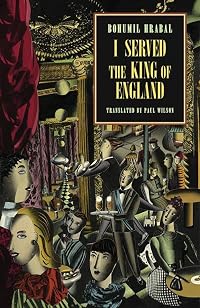

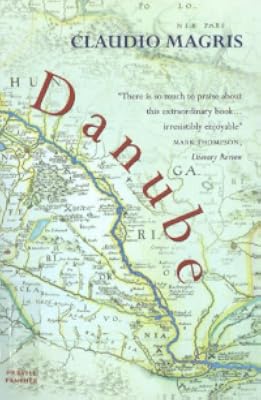
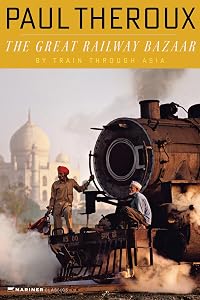
Member Recommendations

Member Reviews
Kapuściński's Shah of Shahs is quite unlike any book I have yet read. There is no plot and no subject other than Iran, Mohammad Reza Pahlavi, and the revolution of 1979. What I most appreciated from this was his imagery, his ability to make the photographs he describes come to life which I found especially enticing as a reader. The final third of the book describes how the revolution occurred and themes he saw from it and its aftermath: the implications of crowds, the lostness felt under a new government, the raw vitality felt by a people revived. His words are thorough, eloquent, and fitting to the foreign world he places his reader in. I certainly recommend this as a supplementary read to anything else on the revolution you might show more scour through. show less
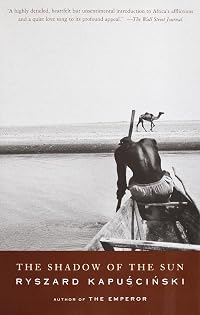
I picked this up at the library, having heard good things about Kapuscinski's The Shadow of the Sun, so the author's name caught my eye. This was a series of essays written in Iran during and soon after Iran's Islamic revolution of 1979. I've skirted around Iran in a few of my literary travels (Persepolis, House of Sand and Fog, and one short story in The Boat), and have a child's memory of the revolution being on the news. But this is the first time I've dipped my toe into non-fiction regarding the revolution.
Kapuscinski writes wonderfully. This is no mere reportage of this-happened-then, but is meditations on human nature, on torture and fear, on privilege and power and greed, and even on the nature of revolution itself. I may still show more be fairly shaky on the what-happened-when of the Islamic revolution, but I feel as I was allowed a glimpse into the insanity of revolution. And I'm far less sympathetic towards the Shah than I was previously. Not that I approve of the revolution, either. It all seems one great big disaster that turned into another great big disaster.
Sorry to quote such a large chunk, but this was something that I'd never considered before and I find Kapuscinksi remarkably plausible:
When thinking about the fall of any dictatorship, one should have no illusions that the whole system comes to an end like a bad dream with that fall. The physical existence of the system does indeed cease. But its psychological and social results live on for years, and even survive in the form of subconsciously continued behavior. A dictatorship that destroys the intelligentsia and culture leaves behind itself an empty, sour field on which the tree of thought won't grow quickly. It is not always the best people who emerge from hiding, from the corners and cracks of that farmed-out field, but often those who have proven themselves strongest, not always those who have proven themselves strongest, not always those who will create new values but rather those whose thick skin and internal resilience have ensured their survival.
It's a chilling summary for any traumatised country, trying to throw off the shackles of tyranny: it's not going to be easy, or short-term. (And so many politicians in these days just want short-term solutions to everything.)
This is highly recommended for anyone interested in the modern history of Iran, or in modern history. show less
Kapuscinski writes wonderfully. This is no mere reportage of this-happened-then, but is meditations on human nature, on torture and fear, on privilege and power and greed, and even on the nature of revolution itself. I may still show more be fairly shaky on the what-happened-when of the Islamic revolution, but I feel as I was allowed a glimpse into the insanity of revolution. And I'm far less sympathetic towards the Shah than I was previously. Not that I approve of the revolution, either. It all seems one great big disaster that turned into another great big disaster.
Sorry to quote such a large chunk, but this was something that I'd never considered before and I find Kapuscinksi remarkably plausible:
When thinking about the fall of any dictatorship, one should have no illusions that the whole system comes to an end like a bad dream with that fall. The physical existence of the system does indeed cease. But its psychological and social results live on for years, and even survive in the form of subconsciously continued behavior. A dictatorship that destroys the intelligentsia and culture leaves behind itself an empty, sour field on which the tree of thought won't grow quickly. It is not always the best people who emerge from hiding, from the corners and cracks of that farmed-out field, but often those who have proven themselves strongest, not always those who have proven themselves strongest, not always those who will create new values but rather those whose thick skin and internal resilience have ensured their survival.
It's a chilling summary for any traumatised country, trying to throw off the shackles of tyranny: it's not going to be easy, or short-term. (And so many politicians in these days just want short-term solutions to everything.)
This is highly recommended for anyone interested in the modern history of Iran, or in modern history. show less
Insightful and damning, yet slightly nuanced. Surprising, given the descriptions of a people brutalized and numb, that it could have been published in 1982 communist Poland.
With “Shah of Shahs” (1985), Polish journalist Ryszard Kapuscinski paint a poignant portrait of Iranian society in the final years of the Shah, Mohammed Reza, and its dictatorial rule. How army, police and especially the secret service Savak act with impunity, how ordinary Iranians increasingly fear potential informers in their own surroundings, or just random arrest. How oil billions are squandered, on ill-thought through attempts to create the Great Civilization whilst it is mostly foreign companies and the corrupt Iranian elite that benefit. How society is ultimately ready to accept, no, to desperately welcome any kind of revolution, including the one of Ayatollah Khomeini in 1979.
Kapuscinski's books are a genre of their own. Here is a compelling marriage of factual reportage and literary sensibility. The results are astounding and deeply felt. I marvel at how he weaves the histories of Iran into the the tense and violent moments leading up to the revolution. I'm in awe, really. Who else wrote or now writes like this? Who???
While nominally about the last shah of Iran and the Iranian Revolution, this book is really about the Iranian people. A brilliant work of journalism and observation.
Compared with other Kapuscinski books, this one is a disappointment. Starts off with an illuminating set of portraits of the Shah's dynasty, but once it gets to the actual revolution then the account moves into a type of philosophical reflection on why and how the spark is lit. This section just comes across as too simplistic and allegorical, ultimately Kapuscinski is no academic studying how social movements form and dissolve. All the same, still has some of his usual great observations from being stuck in a hotel in Tehran in the aftermath, trying to make sense of random notes.
Members
- Recently Added By
Lists

Witness from the front: accounts of war, revolution, and strife
23 works; 5 members

Non-Fiction Worth Reading
1,016 works; 262 members

Julie Parson’s Old Books
52 works; 4 members
Author Information

87+ Works 10,502 Members
Ryszard Kapuscinski was born in Pinsk, a city now in Belarus on March 4, 1932. He received a master's degree in history from the University of Warsaw. He worked for the Communist journal Sztandar Mlodych, The Flag of Youth. He wrote an article describing the misery and despair of steel workers at a new steel plant outside of Krakow that the party show more bosses had extolled as a showpiece of proletarian culture. He was fired and forced into hiding. Later his findings were confirmed by a blue-ribbon task force and he was awarded Poland's Golden Cross of Merit. In 1962, PAP, the Polish news agency, appointed him its only correspondent in the third world. His articles about third world conflicts eventually appeared in a series of books including The Emperor: Downfall of an Autocrat, about the lapsed life of Haile Selassie's imperial court; The Soccer War, which dealt with Latin American conflicts; Another Day of Life, about Angola's civil war; Shah of Shahs, about the rise and fall of Iran's last monarch; and Imperium, an account of his travels through Russia and its neighbors after the collapse of the Soviet Union. He also wrote for The New Yorker, The New York Times Magazine, and Granta. In 1981, the government of General Wojciech Jaruzelski stripped him of his journalistic credentials after he committed himself to the Solidarity trade union movement. He then began working with underground publishers, contributing poems, and supporting the dissident culture. He died January 23, 2007 at the age of 74. (Bowker Author Biography) show less
Some Editions
Awards and Honors
Series
Belongs to Publisher Series
Work Relationships
Is contained in
Common Knowledge
- Canonical title
- Shah of Shahs
- Original title
- Szachinszach
- Original publication date
- 1982
- People/Characters
- Mohammad Reza Shah Pahlavi; Reza Shah; Sayid Ruhullah Musawi Khomeini; Mohammed Mosaddeq; Ryszard Kapuściński
- Important places
- Tehran, Iran; Qom, Iran; Iran
- Important events
- Iranian Revolution (1979)
- First words
- "Everything is in confusion, as though the police have just finished a violent, nervous search."
- Last words
- (Click to show. Warning: May contain spoilers.)"And then you feel whole, you feel eminent, you are near paradise, you are a poet."
- Original language
- Polish
Classifications
Statistics
- Members
- 1,063
- Popularity
- 24,229
- Reviews
- 21
- Rating
- (4.16)
- Languages
- 11 — Czech, Dutch, English, French, German, Hungarian, Italian, Polish, Portuguese, Spanish, Swedish
- Media
- Paper, Ebook
- ISBNs
- 45
- ASINs
- 9