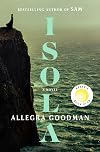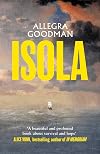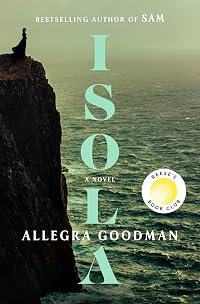
Isola
by Allegra Goodman
On This Page
Description
"France, 1531. Orphaned by the age of five, Marguerite de la Rocque was heir to a chateau with its own village and lands. But her guardian, Jean Francois de la Rocque de Roberval, sells Marguerite's property to embark on an expedition to New France, bringing Marguerite and her maidservant with him. Aboard the ship, the women are limited to the company of the captain, the navigator, Roberval, and his secretary--a man whose musical talent, literary knowledge, and dark eyes intrigue Marguerite. show more It isn't long before the two of them are meeting secretly to declare their love for one another. When Roberval discovers this transgression, he is furious, seeing their affection as betrayal. As punishment, he maroons them on a small island off the coast, condemning them to certain death. Marguerite, the man she considers to be her husband, and her servant create a home for themselves inside a small cave. When the weather turns and the island is blanketed in ice, survival becomes nearly impossible. Marguerite is soon the only one left alive. She despairs, convinced she's been abandoned by God, and that she, too, will succumb to the brutality of the Island. Only then does she realize a strength her guardian could never have fathomed. She teaches herself to hunt and fish, to preserve food, and to scavenge. Months pass, and eventually Marguerite is discovered by a group of Basque fisherman. She persuades them to return her to France, where she tells her story and finally secures her own future, free from her guardian's control"-- show lessTags
Recommendations








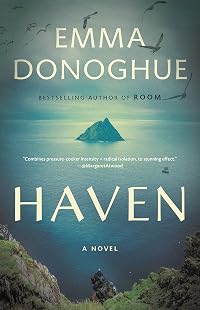

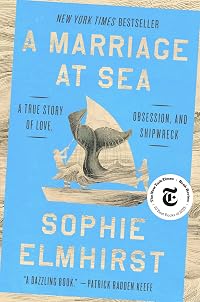

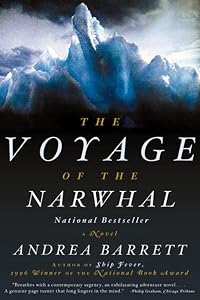


















Member Recommendations

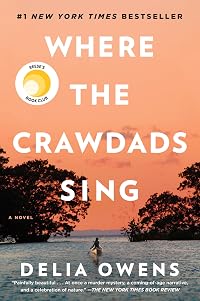
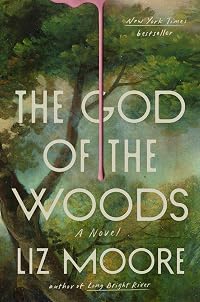
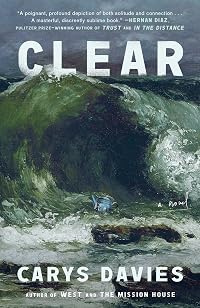
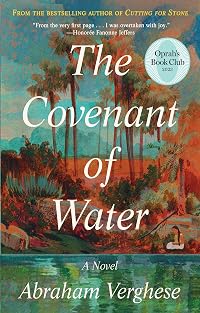
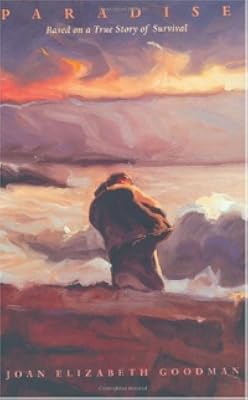
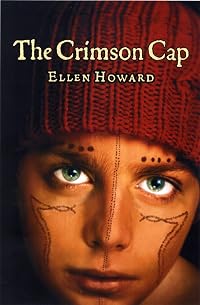
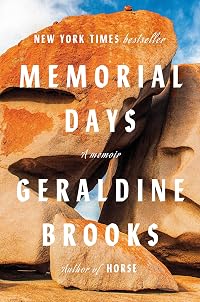
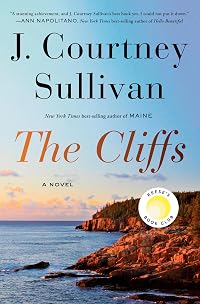
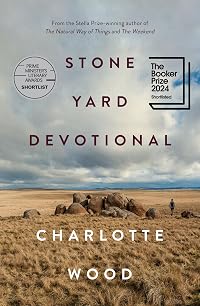
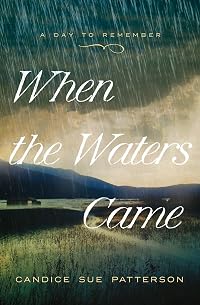
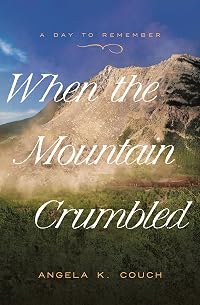
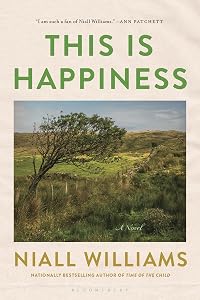
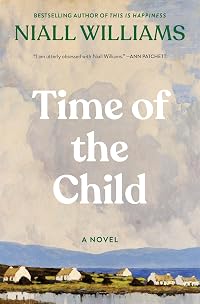
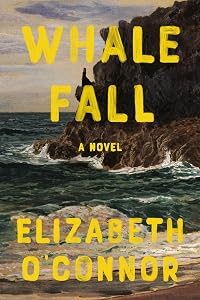
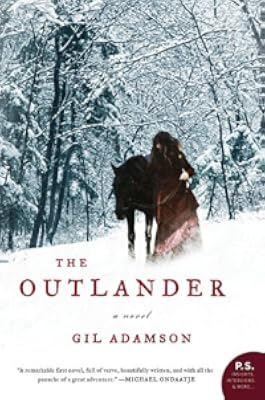
nicole_a_davis Stories of women forced to travel to the “new world” ending up trying to survive in the wilderness on their own.

jscape2000 Both works of fiction based on historical events, about Europeans isolated and fighting for survival in the frozen wilds of colonial Canada.
Member Reviews
Isola is one of those rare novels that feels both mythic and intimate — a story that begins as a historical survival tale and slowly reveals itself to be something deeper, older, and more elemental. Goodman writes with the quiet confidence of someone who trusts the land, the sea, and the human heart to carry the weight of the narrative, and they do.
At its center is Marguerite, a girl who is not fragile but feral — a young woman shaped by wind, water, and a father whose ghost lingers in every choice she makes. Goodman gives her a kind of wild agency that never feels performative. She is not a heroine built for spectacle; she is a survivor built from lineage, instinct, and the memory of a man who taught her to read the world like a show more map.
Goodman draws a quiet but devastating contrast between the ending medieval world — a world of connection between people and the land, of custom and courtesy — and the early modern conqueror, a man who believes power is something you seize, not something you are entrusted with. Marguerite embodies the old code: loyalty, protection, custodianship. Roberval embodies the new: ambition, ego, domination.
Marguerite becomes the battleground between those two worldviews, and the island becomes the crucible where she decides which lineage she will carry forward.
The survival elements are beautifully rendered — tactile, sensory, rooted in the rhythms of tide and hunger and weather — but the emotional survival is what lingers. Goodman understands that exile is not just physical; it is spiritual. It is the stripping away of everything except the self, and then the slow, painful rebuilding of that self in the image of the person you choose to become.
The prose is spare but lyrical, the pacing deliberate, the emotional beats earned. And the book’s moral architecture — the tension between stewardship and possession, between duty and ego, between the old world and the new — gives the story a resonance that extends far beyond its historical setting.
A haunting, atmospheric, quietly powerful novel about lineage, land, and the kind of strength that doesn’t announce itself — it endures. show less
At its center is Marguerite, a girl who is not fragile but feral — a young woman shaped by wind, water, and a father whose ghost lingers in every choice she makes. Goodman gives her a kind of wild agency that never feels performative. She is not a heroine built for spectacle; she is a survivor built from lineage, instinct, and the memory of a man who taught her to read the world like a show more map.
Goodman draws a quiet but devastating contrast between the ending medieval world — a world of connection between people and the land, of custom and courtesy — and the early modern conqueror, a man who believes power is something you seize, not something you are entrusted with. Marguerite embodies the old code: loyalty, protection, custodianship. Roberval embodies the new: ambition, ego, domination.
Marguerite becomes the battleground between those two worldviews, and the island becomes the crucible where she decides which lineage she will carry forward.
The survival elements are beautifully rendered — tactile, sensory, rooted in the rhythms of tide and hunger and weather — but the emotional survival is what lingers. Goodman understands that exile is not just physical; it is spiritual. It is the stripping away of everything except the self, and then the slow, painful rebuilding of that self in the image of the person you choose to become.
The prose is spare but lyrical, the pacing deliberate, the emotional beats earned. And the book’s moral architecture — the tension between stewardship and possession, between duty and ego, between the old world and the new — gives the story a resonance that extends far beyond its historical setting.
A haunting, atmospheric, quietly powerful novel about lineage, land, and the kind of strength that doesn’t announce itself — it endures. show less
Marguerite de la Roque de Roberval is a fascinating historical personage. She was a French noblewoman who owned lands in Périgord and Languedoc. As a young, unmarried woman, she accompanied her relative, Jean-François de La Rocque de Roberval, Lieutenant General of New France, on his voyage to the New World. Angered by her relationship with a man onboard the ship, Roberval maroons them together on an island in the Gulf of St. Lawrence. She survives for more than two years, until she is rescued. Her story would become famous with Queen Marguerite de Navarre, François de Belleforest, and André Thevet all writing contemporaneous accounts.
Allegra Goodman's reimagining of Marguerite's life is influenced by these accounts, as well as show more several works that would have been known to Marguerite: Anne de France's Lessons for My Daughter, Christine de Pizan's Book of the City of Ladies, and Clement Marot's Psalms. These texts set the tone for the life of privilege that Marguerite was born into, the expectations for women of the time, and the austere religious beliefs Roberval followed. Goodman's account seeks to understand how a woman raised in 16th century privilege could have survived such an ordeal, not only physically, but also spiritually. Although we will never know the truth of Marguerite's experiences and thoughts, as she never told her own story, Goodman gives us a plausible version, written in a compelling voice. I thoroughly enjoyed [Isola] and would recommend it to fans of Haven by Emma Donoghue. show less
Allegra Goodman's reimagining of Marguerite's life is influenced by these accounts, as well as show more several works that would have been known to Marguerite: Anne de France's Lessons for My Daughter, Christine de Pizan's Book of the City of Ladies, and Clement Marot's Psalms. These texts set the tone for the life of privilege that Marguerite was born into, the expectations for women of the time, and the austere religious beliefs Roberval followed. Goodman's account seeks to understand how a woman raised in 16th century privilege could have survived such an ordeal, not only physically, but also spiritually. Although we will never know the truth of Marguerite's experiences and thoughts, as she never told her own story, Goodman gives us a plausible version, written in a compelling voice. I thoroughly enjoyed [Isola] and would recommend it to fans of Haven by Emma Donoghue. show less
This excellent novel tells the story of Marguerite, a young noblewoman who, after the death of her parents, is made the ward of Roberval, who squanders her wealth. When he's given the title of Viceroy of New France, he sails there in 1540 with three ships, intending to colonize this newly discovered island. To her horror, Roberval takes Marguerite and her old nurse along with him. In the tight confines of ship life, she becomes involved with Roberval's secretary and, as punishment, he sets Marguerite, her companion and the secretary ashore on a small island just south of Newfoundland.
Isola is based on a real story and it's so well done. Often, characters in historical novels feel more like modern people in fancy dress, but here Goodman show more manages to situate Marguerite within her time and to allow her character to develop over time. As Marguerite's circumstances change, she changes with them, a skill that will allow her to survive in the wilderness and to return to France to live out her life. The history is wild enough on its own, so there's no need to embellish it. That a pampered noblewoman who previously had never dressed herself managed to survive for two years on an island off of Newfoundland, much of that alone, would strain credibility, except it did happen. I thoroughly enjoyed this well-researched and well-written novel, and the way it took the historical record and created an excellent novel out of it. show less
Isola is based on a real story and it's so well done. Often, characters in historical novels feel more like modern people in fancy dress, but here Goodman show more manages to situate Marguerite within her time and to allow her character to develop over time. As Marguerite's circumstances change, she changes with them, a skill that will allow her to survive in the wilderness and to return to France to live out her life. The history is wild enough on its own, so there's no need to embellish it. That a pampered noblewoman who previously had never dressed herself managed to survive for two years on an island off of Newfoundland, much of that alone, would strain credibility, except it did happen. I thoroughly enjoyed this well-researched and well-written novel, and the way it took the historical record and created an excellent novel out of it. show less
“I realize now…How easy my life has been.”
Regretfully, August said, “You have been rich. comfortable, and safe.”
“No, I was never safe.”
from Isola by Allegra Goodman
What a page turner! Incredibly, this story of a 16thc woman born to wealth but whose guardian takes everything from her, finally stranding her on an island in New France, is based on history. Allegra Goodman discovered two contemporary accounts of Marguerite de la Rocque de Roberval’s story.
Goodman imagines Marguerite’s life, recreating a society where women held no power over their wealth and lands, or their freedom and body. Men risked everything in their search to profit from the New World. It was the time of the Protestant reformation with its show more puritanical sects.
Orphaned, her uncle Roberval now her guardian, Marguerite finds solace in a few friends. Her nurse who has served her family for a lifetime. A teacher and her daughter, women of class and education fallen on hard times, employed by the family who has purchased her family estate, the sale benefiting Roberval who plans an expedition to New France.
Robbed of her home, her dowry, her servants, Marguerite is relegated to a cold tower without enough wood to burn or food to eat. She endeavors to obey Roberval’s commands to study and practice the virginal and learn scripture. When she reaches fifteen, her dowey spent, her uncle removes her to town and tells her she will accompany him to the New World.
During the eight weeks aboard ship, Marguerite’s relationship with her uncle’s servant and scribe blossoms into love. Roberval has the couple abandoned on an island with all they could take: tools and food and wine and jewels and linens. Marguerite learns to survive, to battle the elements and the polar bears, to endure devastating losses.
I was transported by this story of adventure and endurance, self discovery, and how life refines faith.
Thanks to the publisher for a free book through NetGalley. show less
Regretfully, August said, “You have been rich. comfortable, and safe.”
“No, I was never safe.”
from Isola by Allegra Goodman
What a page turner! Incredibly, this story of a 16thc woman born to wealth but whose guardian takes everything from her, finally stranding her on an island in New France, is based on history. Allegra Goodman discovered two contemporary accounts of Marguerite de la Rocque de Roberval’s story.
Goodman imagines Marguerite’s life, recreating a society where women held no power over their wealth and lands, or their freedom and body. Men risked everything in their search to profit from the New World. It was the time of the Protestant reformation with its show more puritanical sects.
Orphaned, her uncle Roberval now her guardian, Marguerite finds solace in a few friends. Her nurse who has served her family for a lifetime. A teacher and her daughter, women of class and education fallen on hard times, employed by the family who has purchased her family estate, the sale benefiting Roberval who plans an expedition to New France.
Robbed of her home, her dowry, her servants, Marguerite is relegated to a cold tower without enough wood to burn or food to eat. She endeavors to obey Roberval’s commands to study and practice the virginal and learn scripture. When she reaches fifteen, her dowey spent, her uncle removes her to town and tells her she will accompany him to the New World.
During the eight weeks aboard ship, Marguerite’s relationship with her uncle’s servant and scribe blossoms into love. Roberval has the couple abandoned on an island with all they could take: tools and food and wine and jewels and linens. Marguerite learns to survive, to battle the elements and the polar bears, to endure devastating losses.
I was transported by this story of adventure and endurance, self discovery, and how life refines faith.
Thanks to the publisher for a free book through NetGalley. show less
A truly exciting historical novel and audiobook of exploration, manipulation, and combat with polar bears. In the 1540's, an orphaned young Frenchwoman, Marguerite de la Rocque, is exploited by her cousin and guardian, the very nasty Roberval (sounds like "robber baron"), who sells her estate to fund his voyages to New France (Canada). With no agency, she is subject to his whims, and, with her devoted nurse Damienne, is put aboard ship. When she falls in love with Roberval's secretary, Auguste, the three are abandoned, with minimal provisions, on a small granite island. Their struggles to stay alive under hostile conditions and in the fierce weather, their impressive ingenuity, and their primitive hunting and fishing skills, all come to show more naught when Marguerite becomes the final survivor and is left to fend for herself for almost two years. When Basque fishermen land on the island, she convinces them to take her back to France, where a vengeful Roberval awaits. Their battle of wits, with the Queen as judge and jury, is gripping and the denouement wholly satisfying. show less
This was a fun, engaging read that kept me turning the pages. It takes place in 16th century France, when young, wealthy Marguerite is orphaned. Her guardian, Roberval, uses her inheritance to fund an expedition attempt to New France (basically Canada) to try to colonize the newly discovered land. Marguerite is a young woman when he leaves, and he forces her and her servant, Damienne, to go along. Marguerite is uncertain of Roberval's intentions towards her. On the boat she falls in love with another man. Feeling betrayed, Roberval strands Marguerite, her lover, and Damienne on an island off the coast of the new world. There they spend two years fighting the elements and wildlife. To not give away too much of the plot, I'll just say show more that Marguerite does end up making her way back to France where her connection with Queen will decide her ultimate fate.
I really loved this. It's great escapist writing that sucked me into Marguerite's story. And it's based on a true story, which makes it even more fun. I'm a sucker for this sort of historical fiction writing and this did not disappoint. show less
I really loved this. It's great escapist writing that sucked me into Marguerite's story. And it's based on a true story, which makes it even more fun. I'm a sucker for this sort of historical fiction writing and this did not disappoint. show less
Orphaned as a child, Marguerite de la Rocque was heir to a 16th century French estate. She expected her guardian, Jean Francois Roberval, to find a suitable match for her to marry and raise a family. But that was not to be; instead he sold the estate to pay off his own debt and forced Marguerite to accompany him on a journey to New France, a French colony in present-day Canada. Roberval, self-centered and emotionally abusive, toys with Marguerite and when he learns of her relationship with his secretary Auguste he becomes so angry that he exiles them to a remote and uninhabited island along with Marguerite’s servant and nurse, Damienne. Clearly Roberval expects them to die.
They face incredible obstacles, but this is ultimately a show more story of survival, and it’s based on historical records. Allegra Goodman effectively fills in the gaps, creating a woman with strong faith and survival instincts, aided by one significant event that flipped her situation from tragedy to redemption. show less
They face incredible obstacles, but this is ultimately a show more story of survival, and it’s based on historical records. Allegra Goodman effectively fills in the gaps, creating a woman with strong faith and survival instincts, aided by one significant event that flipped her situation from tragedy to redemption. show less
Members
- Recently Added By
Lists

Robinsonade Novels
55 works; 4 members

Reese Witherspoon Book Club
100 works; 4 members

Reese's Book Club
122 works; 2 members

Best Books I Read in 2025
12 works; 1 member

Books Read in 2025
4,128 works; 98 members

Top Five Books of 2025
954 works; 303 members
Author Information

15+ Works 6,385 Members
Allegra Goodman lives with her family in Cambridge, Massachusetts. (Publisher Provided) Allegra Goodman was born in Brooklyn New York in 1967, but grew up in Honolulu, Hawaii. She received a bachelor's degree from Harvard University in 1989 and a PhD in English literature from Stanford University in 1997. Her first story, Variant Text, was show more accepted by Commentary magazine in 1985. While at Harvard University, she continued to publish short stories in Commentary and her first book, a collection of stories, was published the day she graduated. She wrote her second book, The Family Markowitz, while at Stanford University. Her other works include Intuition, Kaaterskill Falls, Paradise Park, and The Other Side of the Island. She teaches a writing workshop in the graduate program in Creative Writing at Boston University. (Bowker Author Biography) show less
Some Editions
Awards and Honors
Awards
Distinctions
Reese's Book Club (2025-02 – 2025)
Common Knowledge
- Canonical title
- Isola
- Original publication date
- 2025
- People/Characters
- Marguerite de la Roque de Roberval; Damienne; Jean-François de la Rocque de Roberval; Claire D'Artois; Jacqueline D'Artois; Auguste Dupré (show all 17); Mikel; Katherine Montfort; Suzanne Montfort; Ysabeau Montfort; Louise Montfort; Anne Montfort; Jean Alfonse; Marie; Alys; Henri; Queen
- Important places
- France; New France, Canada; Périgord, France; La Rochelle, France
- Dedication
- In memory of Madeleine Joyce Goodman
- First words
- I still dream of birds. (Prologue)
I never knew my mother. She died the night that I as born, and so we passed each other in the dark. - Quotations
- But I had come to fear approval as much as I anger. Gentle or berating, kind or cruel, in all his moods he exercised power over me.
- Last words
- (Click to show. Warning: May contain spoilers.)Because the span was narrow, we crossed single file, and then we joined together on the other side.
- Blurbers
- Picoult, Jodi; Napolitano, Ann; Quinn, Joanna; Winn, Alice
- Original language
- English
Classifications
Statistics
- Members
- 936
- Popularity
- 28,512
- Reviews
- 46
- Rating
- (4.03)
- Languages
- English
- Media
- Paper, Audiobook, Ebook
- ISBNs
- 14
- ASINs
- 4