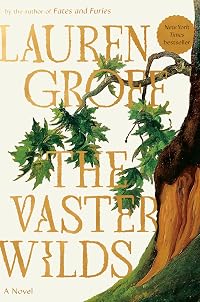
The Vaster Wilds
by Lauren Groff
On This Page
Description
A servant girl escapes from a colonial settlement in the wilderness. She carries nothing with her but her wits, a few possessions, and the spark of god that burns hot within her. What she finds in this terra incognita is beyond the limits of her imagination and will bend her belief in everything that her own civilization has taught her. Lauren Groff's new novel is at once a thrilling adventure story and a penetrating fable about trying to find a new way of living in a world succumbing to the show more churn of colonialism. The Vaster Wilds is a work of raw and prophetic power that tells the story of America in miniature, through one girl at a hinge point in history, to ask how--and if--we can adapt quickly enough to save ourselves. show lessTags
Recommendations

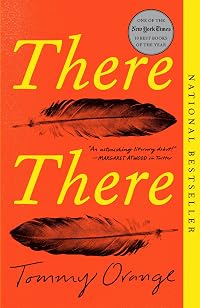
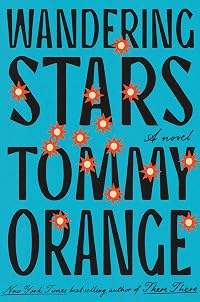
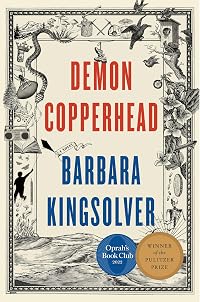
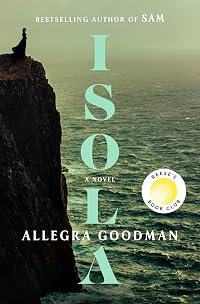
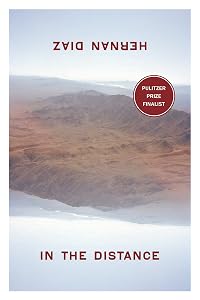
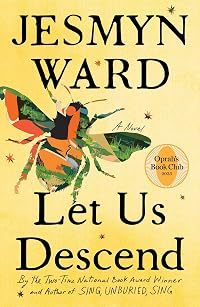
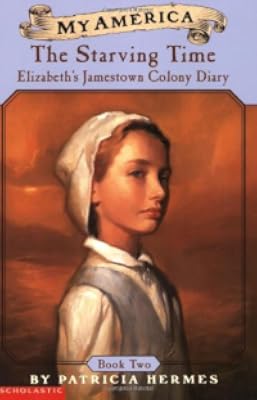
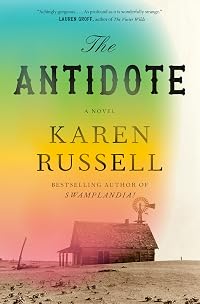

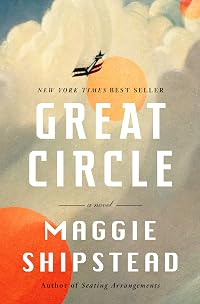
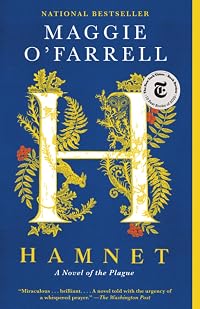
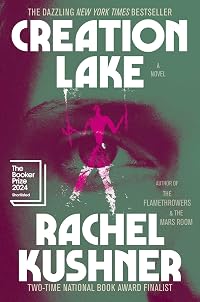
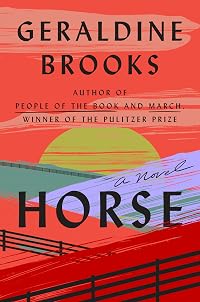
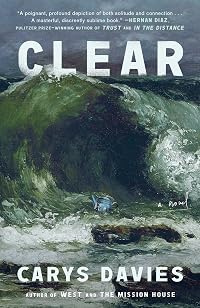
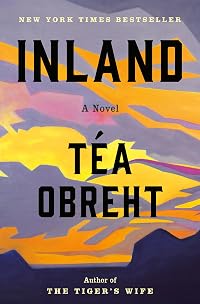
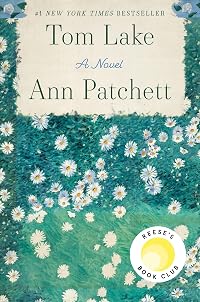
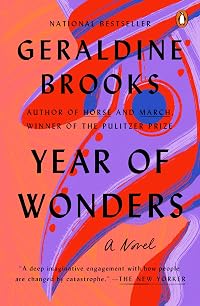




Member Recommendations

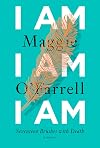
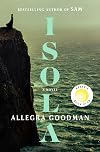
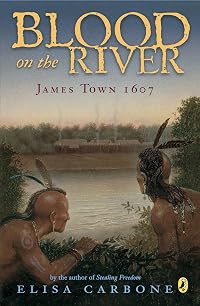
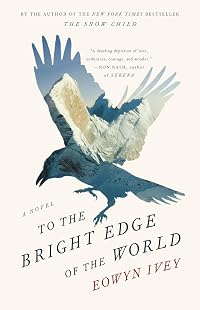
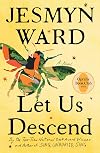
nicole_a_davis Stories of women forced to travel to the “new world” ending up trying to survive in the wilderness on their own.

Member Reviews
"This historical fever dream of a novel follows the flight of a servant girl through the Colonial American wilderness..." (Kirkus). The girl - dubbed Lamentations - was taken from a poorhouse orphanage at age four and folded into her mistress's household; she became companion to the mistress's baby daughter, Bess, and accompanied them and the lady's second husband, a minister, to the new world (no one asked her if she wanted to go). She endured a miserable crossing, and now famine inside a fort - which, after Bess's death, she escapes, and flees into the wilderness with a hatchet, knife, cup, and blankets. She is desperate, scrappy, and afraid - but ultimately, the most dangerous enemy is neither man nor nature but disease (smallpox). show more
At first I thought she would find a settlement - colonial or native - but, fearing both, she remains alone as winter turns to spring. A fascinating historical wilderness tale (I hesitate to call it a survival story).
See also: Kate Atkinson (Life After Life, A God in Ruins)
Quotes
...she did not know how to think first of herself. (22)
Perhaps the eternal chain of being was not a chain at all but a ring, one life not ending where the other begins but all souls overlapping. (34)
But of course men, particularly the godly ones, have little common sense. (72)
Slowly the vigilance in her seeped out. Sleep seeped in. (78)
...the new variety of pain something like relief. (158)
Naming, she understood, made things more visible. (164)
It is a moral failure to miss the profound beauty of the world, said the voice in her mind. (215)
Her madness had passed through her and left a kernel of herself behind. (239)
...she felt a grief and an anger at herself for her fear of others that outweighed her fear of the wilds. (242)
To be alone and surviving is not the same as being alive, she understood. (246) show less
At first I thought she would find a settlement - colonial or native - but, fearing both, she remains alone as winter turns to spring. A fascinating historical wilderness tale (I hesitate to call it a survival story).
See also: Kate Atkinson (Life After Life, A God in Ruins)
Quotes
...she did not know how to think first of herself. (22)
Perhaps the eternal chain of being was not a chain at all but a ring, one life not ending where the other begins but all souls overlapping. (34)
But of course men, particularly the godly ones, have little common sense. (72)
Slowly the vigilance in her seeped out. Sleep seeped in. (78)
...the new variety of pain something like relief. (158)
Naming, she understood, made things more visible. (164)
It is a moral failure to miss the profound beauty of the world, said the voice in her mind. (215)
Her madness had passed through her and left a kernel of herself behind. (239)
...she felt a grief and an anger at herself for her fear of others that outweighed her fear of the wilds. (242)
To be alone and surviving is not the same as being alive, she understood. (246) show less
In 1607 English settlers established a base in Jamestown, Virginia, and almost immediately the community faced a variety of diseases and a high mortality rate. The native population initially provided gifts of food to help them survive but as relations soured, famine took hold. In The Vaster Wilds, a girl flees this dire situation prepared to survive on her own until she finds other settlers.
She makes her way over rough terrain eating anything she can find, from mushrooms and berries to live insects to fish from the river. She creates overnight shelter using two coverlets brought with her from the settlement. Only rarely does she spy other humans, usually natives, and fear drives her on. As the days pass the girl’s back story is show more slowly revealed: her life in England, the circumstances surrounding her journey to Virginia, and the events in the settlement that led to her dramatic and dangerous decision.
On the surface the girl’s story is one of survival in the wilderness, but with sublime prose Lauren Groff adds layers of social commentary, about the native peoples’ respect for the land, the impact of colonialism, and women’s lack of agency and options. The result is a beautifully written and thought-provoking novel. show less
She makes her way over rough terrain eating anything she can find, from mushrooms and berries to live insects to fish from the river. She creates overnight shelter using two coverlets brought with her from the settlement. Only rarely does she spy other humans, usually natives, and fear drives her on. As the days pass the girl’s back story is show more slowly revealed: her life in England, the circumstances surrounding her journey to Virginia, and the events in the settlement that led to her dramatic and dangerous decision.
On the surface the girl’s story is one of survival in the wilderness, but with sublime prose Lauren Groff adds layers of social commentary, about the native peoples’ respect for the land, the impact of colonialism, and women’s lack of agency and options. The result is a beautifully written and thought-provoking novel. show less
An amazingly written, superb, despairing book about a young woman in a much earlier era. She is simply referred to with "she" and "her" as we get to know more about her life. And until that point, she is just a young girl? woman? who is escaping an English colony where death and starvation reign supreme.
The story begins as she escapes through the colony's fence with supplies to help her survive: an axe, food, good boots, a bag for carrying, and a will to survive. And fear of what she will face if she is caught and returned to the colony. She knows that there is a branch of the river to her north and if she follows that river she will be in safe territory.
We accompany her as she makes her journey on foot through the snowy terrain, as show more she kindles fire to help her survive and finds ways to create shelter. One morning she even wakes up in a bear's cave. She finds a boat on the shores of the river and we learn about its maker: a maddened Jesuit priest who has lived alone for decades, looked after from a distance by the native peoples.
But her body demands food, and she must find ways to obtain it, and Groff's use of language makes living off the land into something desperately real: squirrels in their nest and ducks sleeping at night are what she takes in order to survive.
Interwoven with her story are brief glimpses of the native peoples in their daily lives. And here we learn that an herbal combination with grease was what one tribe used on their skin to keep the bugs and mosquitoes away. Or how warriors of another tribe kept the colonists in their sights and killed any who tried to escape.
And the language of Groff's writing is what struck me the most as I read this book. It paints the reality of this girl's life in lyrical and beautiful prose, describing equally her love of her young charge, Bess, to whom she was nanny, the sea voyage and what led to it, and her life before she was forced to endure the voyage. I had to read it in small stages until the last third, and then I could not put it down. show less
The story begins as she escapes through the colony's fence with supplies to help her survive: an axe, food, good boots, a bag for carrying, and a will to survive. And fear of what she will face if she is caught and returned to the colony. She knows that there is a branch of the river to her north and if she follows that river she will be in safe territory.
We accompany her as she makes her journey on foot through the snowy terrain, as show more she kindles fire to help her survive and finds ways to create shelter. One morning she even wakes up in a bear's cave. She finds a boat on the shores of the river and we learn about its maker: a maddened Jesuit priest who has lived alone for decades, looked after from a distance by the native peoples.
But her body demands food, and she must find ways to obtain it, and Groff's use of language makes living off the land into something desperately real: squirrels in their nest and ducks sleeping at night are what she takes in order to survive.
Interwoven with her story are brief glimpses of the native peoples in their daily lives. And here we learn that an herbal combination with grease was what one tribe used on their skin to keep the bugs and mosquitoes away. Or how warriors of another tribe kept the colonists in their sights and killed any who tried to escape.
And the language of Groff's writing is what struck me the most as I read this book. It paints the reality of this girl's life in lyrical and beautiful prose, describing equally her love of her young charge, Bess, to whom she was nanny, the sea voyage and what led to it, and her life before she was forced to endure the voyage. I had to read it in small stages until the last third, and then I could not put it down. show less
The persecuted sled dogs in Jack London's Call of the Wild are described as "perambulating skeletons...not half living, or quarter living...bags of bones, in which sparks of life fluttered faintly." Comparable is the human underdog, "the girl" in Lauren Groff's The Vaster Wilds, yanked across the ocean from the acculturations of city life in seventeenth-century Europe by fortune-seeking colonialist, and then, by violent circumstances, chased alone into the merciless landscape of The New World primordial. Vaster Wild's forward narrative follows the girl's tormented journey across an unsettled frontier where she fights with her instinctive, often fluttering, commitment to survive. Subsisting on baby squirrels and spiders, between show more paroxysms of shitting her liquified guts out, neither the girl nor the reader can find respite from shocking new dangers and deprivations: predatory animals, human-male pursuers, insect sores and body lice, oppressive winter, debilitating hunger, untreated diseases, psychological torture, and her decaying morality and compassion. Every still-alive moment in this Job's wilderness is a challenge to her body, sanity, and her belief in the mercy of God. Eventually it sinks in the girl on the run is not realistically running toward someplace safer. What begins as a tale of escape, becomes a fable about the girl's adaptation, like London's hero dog, back to the deeps of animal nature–reviving savage ingenuity, relearning to possess greater patience than what preys upon you. Written in an ornate voice emulating the Elizabethan setting, the novel is also a triumph of foul, visceral prose; a description of the girl eating mud can be both lovely and gross, in the same way the hero can evolve by devolving, maturing into a Londonish "dominant primordial beast." The Vaster Wilds is much more than a survival adventure, it is about the girl finding in herself the desire to live at a new summit of life. show less
Imagine being a girl of sixteen, a New World victim of famine and plague, who seizes a chance to escape her dying settlement by fleeing into the woods in winter. Alone. Zed, an orphan who is so named by her mistress, becomes a servant to the wealthy widow who then marries a handsome minister and sails to the colonies. The novel is Zed's detailed description of how she makes use of what she wisely grabbed in her flight - a hatchet, a fork, blankets, boots - and how she survives and occasionally thrives in the random, feast-or-famine bounty of the woods and the river, the caves, the grubs, mushrooms, and fish. Around her are Natives who do not disturb her; a wildman hermit whose handmade boat she steals; and terrifying bears and vultures. show more Her thoughts are presented as a daily journal of her hardships and of her emerging spirituality and renouncement of the teachings of her stern church. This reader became fearful and knowledgeable along with Zed, as she presses on towards the north’s French settlements, and also became a grateful witness to this most unique of survival tests. I have not read anything like this short and sleek part history and part unravelling mystery, with Zed's regrets for her solitude and her recognition that she will only bring disease and death to anyone who tries to save her. Groff is an author whose subject matter varies but is always revealing the inner sanctums of her mostly noble characters. show less
Thank you so much, Riverhead Books, for sending me this ARC for The Vaster Wilds by Lauren Groff. There is no denying this is a work by one of our BEST living writers, but it is also one rich with exploration, experience, insight and brutality. ‘The Vaster Woods’ was a most anticipated for me. Lauren Groff’s works consistently leave me awestruck, moved and inspired, while being surprised by the settings, characters and direction. I thought it would be impossible to top ‘Matrix’ but ‘The Vaster Wilds’ hit a nerve. It was my perfect book.
Quickly, this is a brutal survival story set in the early 1600s in a Jamestown colony, in a time of starving and sickness. It follows a young woman as she flees the settlement after acts of show more violence, and chronicles her trek into the elements in these unknown lands. It is a cold and heavy winter, and she has only a few tools to help her through. She encounters extreme weather, starvation, and the animals of the forest. In her condition she is vulnerable to injury, illness and hallucinations. She’s also at war, within herself, over the contradictions of godly men, the god they speak of, the wilderness and those who inhabited the lands before they came. We see glimpses of her life before, and slowly unravel what plagues her, and what she’s lost.
So much of this called to mind classic survival stories, and specifically those of Jack London. I grew up reading about death in extreme cold, and it reminded me of the fascination I had with that kind of severity. But Lauren Groff brings to this type of story, an emotion and thoughtfullness missing from those earlier works. The prose can be deceptively sparse and matter of fact, but contains a lyricism and beauty that glistens. There are scenes in which the girl must interact with or observe animals; deer locked together after battle, an exhausted family of ducks, a bear confounded by her presence… and each time there is a wonder and “humanity” in it that broke my heart.
A large portion of this is spiritual. It's unpacking the existence of "god" and who gets to decide what that is. It's looking at afterlife and the natural world, and religion as a force for power and control, and the disconnect between colonizers and the lands they come to, and the ungodly manner in which they devour and dominate. It captures the struggle inside a person when they see these contradictions and the way the indoctrination imprints itself into your bones. I've heard some reviewers refer to this as "preachy" but I found it the antithesis of that. Rather I found it to be comforting and parallel to my own journey as a child and young woman, recognizing the ways religion had been used as a tool to separate me from imagination, communion with nature and had - ultimately - condemned me for the actions of others, perpetrated against me.
As you might imagine this was a highly personal read, despite never having to battle the climate and starvation like the girl we follow. It blew me away, broke my heart, and still - healed something long broken. I always encourage you to proceed with caution when subject matter is dark and your dealing with survival, but I do believe Lauren Groff perfectly balanced the brutality with the beauty and weaves a meaningful theme, making this well worth the read. It will be a journey, and one that transports you through space and time, but I'm better for the time spent with the girl.... the forest... and the unknown. show less
Quickly, this is a brutal survival story set in the early 1600s in a Jamestown colony, in a time of starving and sickness. It follows a young woman as she flees the settlement after acts of show more violence, and chronicles her trek into the elements in these unknown lands. It is a cold and heavy winter, and she has only a few tools to help her through. She encounters extreme weather, starvation, and the animals of the forest. In her condition she is vulnerable to injury, illness and hallucinations. She’s also at war, within herself, over the contradictions of godly men, the god they speak of, the wilderness and those who inhabited the lands before they came. We see glimpses of her life before, and slowly unravel what plagues her, and what she’s lost.
So much of this called to mind classic survival stories, and specifically those of Jack London. I grew up reading about death in extreme cold, and it reminded me of the fascination I had with that kind of severity. But Lauren Groff brings to this type of story, an emotion and thoughtfullness missing from those earlier works. The prose can be deceptively sparse and matter of fact, but contains a lyricism and beauty that glistens. There are scenes in which the girl must interact with or observe animals; deer locked together after battle, an exhausted family of ducks, a bear confounded by her presence… and each time there is a wonder and “humanity” in it that broke my heart.
A large portion of this is spiritual. It's unpacking the existence of "god" and who gets to decide what that is. It's looking at afterlife and the natural world, and religion as a force for power and control, and the disconnect between colonizers and the lands they come to, and the ungodly manner in which they devour and dominate. It captures the struggle inside a person when they see these contradictions and the way the indoctrination imprints itself into your bones. I've heard some reviewers refer to this as "preachy" but I found it the antithesis of that. Rather I found it to be comforting and parallel to my own journey as a child and young woman, recognizing the ways religion had been used as a tool to separate me from imagination, communion with nature and had - ultimately - condemned me for the actions of others, perpetrated against me.
As you might imagine this was a highly personal read, despite never having to battle the climate and starvation like the girl we follow. It blew me away, broke my heart, and still - healed something long broken. I always encourage you to proceed with caution when subject matter is dark and your dealing with survival, but I do believe Lauren Groff perfectly balanced the brutality with the beauty and weaves a meaningful theme, making this well worth the read. It will be a journey, and one that transports you through space and time, but I'm better for the time spent with the girl.... the forest... and the unknown. show less
I have mentioned before that one of my main considerations when rating a book is whether the author achieved what she wished to achieve in writing the book. Here I think the answer is a resounding yes. This is a compelling writing exercise, and the prose is remarkable. I never love Groff's books, but I have come away from reading her work awed by her craft every single time. There is true artistry here in Groff's descriptions of sensations and wonderings and experiences. Everything is visceral and deeply personal, and right there on the page. There were two problems for me, neither of which has a thing to do with Groff's skill. The first problem is that what she is bringing to life is mostly revolting, really disgusting, and a lot of show more the time it is not revolting it is kind of dull. (People who enjoy graphic horror might like this, though it is not in any traditional way horror.) The second problem for me is that Groff has a very clear point of view, an integrated theory really, about God and religion and nature and humans as part of the natural world and as destroyers of the natural world and it is well presented, it just does not ring true for me personally. (Other than the belief that the world is unsafe for woman. We agree on that. There is a passage that depicts grooming a young girl that is sickening but is the best writing I have ever read on the subject. Those 4 sentences pack a book into them and I have been fixated on that story for over 24 hours now and I expect it will stay with me for a long time, if not forever.) I don't buy into her theory so I didn't enjoy the book, but I admired every page.
Essentially this is dystopian history. It reads in many ways like the many dystopian novels, with our hero tromping through an apocalyptic hellscape outrunning those who wish her dead. Like many of those books, this is threaded through with a strong save the earth message. Those books though are set in the future or in alternate universes, and this book is set in 17th century Virginia. Our lead, we know her only as Zed (which is not her real name), is escaping a British settlement. (It's not mentioned by name, but it seems like it is Jamestown.) Zed is escaping to avoid repercussions from actions I won't spoil. In the early 17th century Jamestown experienced a famine that wiped out most everyone. (Thanks Lauren Groff for making those Williamsburg/Jamestown trips pay off!) Zed was a servant girl charged with raising a young child who is now dead -- she has no money, food or family. In her escape she shares memories (she is utterly alone with lots of time to ponder) and experiences many terrible things. The things that seem to take the most space on the page, other than a couple of long musings on God and nature, are vivid descriptions of Zed's pissing and shitting, her filth. Bothered by detailed descriptions of a woman picking the lice and fleas out of her pubic hair and armpits? Do you want to avoid frank and clinically detailed depictions of steaming torrential piss and ferocious diarrhea (color, texture, velocity of travel, etc.) If so you might want to take a pass. For my friends who appreciate art, reading this is like looking at a Francis Bacon painting. Fascinating, brilliantly rendered, repellant.
I am ending up with a 3 here. Personal enjoyment is a 2 and craft is a 5. show less
Essentially this is dystopian history. It reads in many ways like the many dystopian novels, with our hero tromping through an apocalyptic hellscape outrunning those who wish her dead. Like many of those books, this is threaded through with a strong save the earth message. Those books though are set in the future or in alternate universes, and this book is set in 17th century Virginia. Our lead, we know her only as Zed (which is not her real name), is escaping a British settlement. (It's not mentioned by name, but it seems like it is Jamestown.) Zed is escaping to avoid repercussions from actions I won't spoil. In the early 17th century Jamestown experienced a famine that wiped out most everyone. (Thanks Lauren Groff for making those Williamsburg/Jamestown trips pay off!) Zed was a servant girl charged with raising a young child who is now dead -- she has no money, food or family. In her escape she shares memories (she is utterly alone with lots of time to ponder) and experiences many terrible things. The things that seem to take the most space on the page, other than a couple of long musings on God and nature, are vivid descriptions of Zed's pissing and shitting, her filth. Bothered by detailed descriptions of a woman picking the lice and fleas out of her pubic hair and armpits? Do you want to avoid frank and clinically detailed depictions of steaming torrential piss and ferocious diarrhea (color, texture, velocity of travel, etc.) If so you might want to take a pass. For my friends who appreciate art, reading this is like looking at a Francis Bacon painting. Fascinating, brilliantly rendered, repellant.
I am ending up with a 3 here. Personal enjoyment is a 2 and craft is a 5. show less
Members
- Recently Added By
Lists

Best Contemporary Literary Fiction (Around the Last 30 Years)
400 works; 124 members

Books recommended by Barack Obama
295 works; 28 members

Reading Group 2024
4 works; 1 member

Literature About Women and Girls
394 works; 39 members

Books Read in 2023
5,638 works; 147 members

Indie Next Picks
196 works; 4 members

Bitter Southerner Summer Reading Roundup
198 works; 8 members

Books Set in Virginia
5 works; 3 members

Obama Reads
181 works; 3 members

Netgalley Reads
468 works; 3 members

Books Read in 2024
4,727 works; 128 members

At the Library
217 works; 1 member

Top Five Books of 2024
795 works; 264 members

Fiction Published in 2023
17 works; 2 members

Books Read in 2025
4,128 works; 98 members
Top Five Books of 2025
954 works; 303 members

2025 Christmas Gifts
70 works; 19 members

The LonesomeReader Book Club
36 works; 1 member
Author Information

33+ Works 15,089 Members
Lauren Groff graduated from Amherst College and received an MFA in fiction from the University of Wisconsin at Madison. Her books include The Monsters of Templeton, Delicate Edible Birds, and Fates and Furies. Arcadia won of the Medici Book Club Prize. Her fiction has also won the Paul Bowles Prize for Fiction, the PEN/O. Henry Award, and the show more Pushcart Prize. Her work has appeared in numerous magazines including the New Yorker, the Atlantic Monthly, Harper's, Tin House, One Story, McSweeney's, and Ploughshares, and in the anthologies 100 Years of the Best American Short Stories, The Pushcart Prize: Best of the Small Presses, PEN/O. Henry Prize Stories, and three editions of the Best American Short Stories. (Bowker Author Biography) show less
Some Editions
Awards and Honors
Awards
Distinctions
The Guardian Book of the Day (2023-09-18)
Common Knowledge
- Canonical title
- The Vaster Wilds
- Original publication date
- 2023-09-12
- Dedication
- For my sister, Sarah
- First words
- The moon hid itself behind the clouds.
- Last words
- (Click to show. Warning: May contain spoilers.)And feel it now, so soft, so eternal, this wind against your good and living skin.
- Blurbers
- Johnson, Daisy; Miller, Madeline; Alderman, Naomi; Wulf, Andrea; Mandel, Emily St. John
Classifications
Statistics
- Members
- 1,242
- Popularity
- 19,883
- Reviews
- 61
- Rating
- (3.89)
- Languages
- 7 — Dutch, English, French, German, Polish, Spanish, Swedish
- Media
- Paper, Audiobook, Ebook
- ISBNs
- 21
- ASINs
- 8