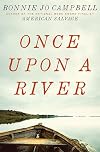
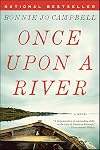
Once Upon a River
by Bonnie Jo Campbell
On This Page
Description
Margo Crane, a beautiful and uncanny markswoman, takes to the Stark River after being complicit in the death of her father and embarks on an odyssey in search of her vanished mother.Tags
Recommendations





Member Recommendations
Brass by Xhenet Aliu
by rjuris
by aprille

Member Reviews
Pearl Ruled: ONCE UPON A RIVER by BONNIE JO CAMPBELL (p82)
Rating: 4* of five
The Publisher Says: Bonnie Jo Campbell has created an unforgettable heroine in sixteen-year-old Margo Crane, a beauty whose unflinching gaze and uncanny ability with a rifle have not made her life any easier. After the violent death of her father, in which she is complicit, Margo takes to the Stark River in her boat, with only a few supplies and a biography of Annie Oakley, in search of her vanished mother. But the river, Margo's childhood paradise, is a dangerous place for a young woman traveling alone, and she must be strong to survive, using her knowledge of the natural world and her ability to look unsparingly into the hearts of those around her. Her river show more odyssey through rural Michigan becomes a defining journey, one that leads her beyond self-preservation and to the decision of what price she is willing to pay for her choices.
My Review: Oh heavy, heavy sigh. I cannot make myself read more of this beautifully crafted book. Campbell's trademark gorgeous sentences are not enough to propel me any further into the life of sixteen-year-old Margo Crane. I don't want to read about Margo's consensual sexual adventures with an adult man.
I just don't.
But let me tell you what's right with this book: The writing. Oh. Oh. Campbell is describing a harsh and unjust world in words that make me vibrate like a tuning fork that's just found its note. Campbell's descriptions of Michigan make me ache to see it for myself. Her deft, cruel characterizations are inarguably fine...nice, in the original sense of the word...I don't want to use the word "precise" because that conjures the spectre of Henry James, and that scares people off, but precise they are.
I hate like poison that the beauty of the book, its lovely wideness and its supremely inviting lushness, are closed to me by my own shuddering disgust for teenaged girls and heterosexual congress. But that, I fear, is where I am and what I feel.
DO NOT TAKE THIS AS A WARN-OFF!! I recommend to the straight people who like gorgeous writing and coming-of-age stories that this book rise to the top of the pile immediately! If it's your first try at a Bonnie Jo Campbell book, so much the better, and so much the more exciting for you. She is a talent to be savored and supported with book purchases. show less
Rating: 4* of five
The Publisher Says: Bonnie Jo Campbell has created an unforgettable heroine in sixteen-year-old Margo Crane, a beauty whose unflinching gaze and uncanny ability with a rifle have not made her life any easier. After the violent death of her father, in which she is complicit, Margo takes to the Stark River in her boat, with only a few supplies and a biography of Annie Oakley, in search of her vanished mother. But the river, Margo's childhood paradise, is a dangerous place for a young woman traveling alone, and she must be strong to survive, using her knowledge of the natural world and her ability to look unsparingly into the hearts of those around her. Her river show more odyssey through rural Michigan becomes a defining journey, one that leads her beyond self-preservation and to the decision of what price she is willing to pay for her choices.
My Review: Oh heavy, heavy sigh. I cannot make myself read more of this beautifully crafted book. Campbell's trademark gorgeous sentences are not enough to propel me any further into the life of sixteen-year-old Margo Crane. I don't want to read about Margo's consensual sexual adventures with an adult man.
I just don't.
But let me tell you what's right with this book: The writing. Oh. Oh. Campbell is describing a harsh and unjust world in words that make me vibrate like a tuning fork that's just found its note. Campbell's descriptions of Michigan make me ache to see it for myself. Her deft, cruel characterizations are inarguably fine...nice, in the original sense of the word...I don't want to use the word "precise" because that conjures the spectre of Henry James, and that scares people off, but precise they are.
I hate like poison that the beauty of the book, its lovely wideness and its supremely inviting lushness, are closed to me by my own shuddering disgust for teenaged girls and heterosexual congress. But that, I fear, is where I am and what I feel.
DO NOT TAKE THIS AS A WARN-OFF!! I recommend to the straight people who like gorgeous writing and coming-of-age stories that this book rise to the top of the pile immediately! If it's your first try at a Bonnie Jo Campbell book, so much the better, and so much the more exciting for you. She is a talent to be savored and supported with book purchases. show less
Bonnie Jo Campbell does down-and-out characters very well -- and she hits another bull’s eye with her portrayal of Margaret Louise Crane in her latest book. Sixteen-year-old Margo is a true river sprite who feels most at home in nature. She doesn’t talk much but knows the language of sexuality and how to use it to get what she needs. She acts like a woman but has the heart of a girl who has suffered a loss and wants to find her missing mother.
This book is part fairy tale and part odyssey. It is a beautiful story about a wild girl who doesn’t want to be tamed. Ms. Campbell has taken the story of Annie Oakley and given it a modern slant. It makes for a good read about a comely maiden who is sorely abused and escapes to search for show more her mother and ends up finding herself. I didn’t always like Margo, but I ended up respecting her for knowing herself and not giving up on the life she was meant to live. show less
This book is part fairy tale and part odyssey. It is a beautiful story about a wild girl who doesn’t want to be tamed. Ms. Campbell has taken the story of Annie Oakley and given it a modern slant. It makes for a good read about a comely maiden who is sorely abused and escapes to search for show more her mother and ends up finding herself. I didn’t always like Margo, but I ended up respecting her for knowing herself and not giving up on the life she was meant to live. show less
I received this book for free from Goodreads Giveaways.
This book tells of a teenage heroine who, after her father's death, travels alone to find her mother. The prose is very well-written, containing many vivid characters who overcome great odds, and the text, in some places, even feels like poetry. The author makes great use of imagery; some scenes (I'm thinking particularly of the Margo's final swim in the river) are beautifully written and beautiful to imagine.
That said, I had a dreadful time getting through this book. This is because the book focuses on the characters (who then drive the plot), and I neither understand nor like the characters. Early in the book, for example, Margo is raped; she makes excuses for her rapist and show more resists her family's efforts to call the police or even to comfort her. I know that traumatic experiences can have difficult psychological effects on victims, but although Margo is the main character, I could not get into her head enough to understand her difficulties. She is also a great shot with a rifle, and she enjoys hunting. Good for her: it's a sport, it's a way to find food, it involves something she's good at, and it represents her own independence. I can understand why she likes shooting. I cannot, however, understand, that sometimes she just has the desire to kill something. Margo repeatedly violates the terms of her hunting license by killing more deer than is legal, even when she doesn't need the food, and even when nonliving targets are available. I don't understand why she would risk the right to do something she loves (her license could be revoked) for something so trivial as a moment's impulse, not to mention the potential for a fine (which her father, who turned his life around just to give her a good home, would not be able pay). Despite her father's protests, she does not stop, nor does she seem to feel remorse for breaking the law. I also don't understand the sudden compulsion to kill an animal just because she sees it. She seems to follow the credo that might makes right, and she behaves as though her skill gives her some kind of entitlement. When her father is murdered, she lies to the police to protect the killer because she "did not want Billy imprisoned for murder. She wanted to deal with Billy herself . . ." It was dreadful trying to plow through a book when I neither like nor understand the heroine (or any character, for that matter), and finally, mercifully, I wound up skimming in many places.
It's hard to call the book bad -- because it is well written, and because the plot's conclusion is so satisfying. The book does not have a frustrating non-ending, but it still manages to leave much open for new possibilities for Margo. Moreover, the final portion of the book introduces a really good character, one who is a horrible person, but still great fun to read about.
This book was an experience, to say the least. (And I bet that by the end of this really long review, if you've read this far, you're wishing that I had said the least.) Enjoyment-wise, I'd give it two stars. In terms of the quality, it would get three or four. show less
This book tells of a teenage heroine who, after her father's death, travels alone to find her mother. The prose is very well-written, containing many vivid characters who overcome great odds, and the text, in some places, even feels like poetry. The author makes great use of imagery; some scenes (I'm thinking particularly of the Margo's final swim in the river) are beautifully written and beautiful to imagine.
That said, I had a dreadful time getting through this book. This is because the book focuses on the characters (who then drive the plot), and I neither understand nor like the characters. Early in the book, for example, Margo is raped; she makes excuses for her rapist and show more resists her family's efforts to call the police or even to comfort her. I know that traumatic experiences can have difficult psychological effects on victims, but although Margo is the main character, I could not get into her head enough to understand her difficulties. She is also a great shot with a rifle, and she enjoys hunting. Good for her: it's a sport, it's a way to find food, it involves something she's good at, and it represents her own independence. I can understand why she likes shooting. I cannot, however, understand, that sometimes she just has the desire to kill something. Margo repeatedly violates the terms of her hunting license by killing more deer than is legal, even when she doesn't need the food, and even when nonliving targets are available. I don't understand why she would risk the right to do something she loves (her license could be revoked) for something so trivial as a moment's impulse, not to mention the potential for a fine (which her father, who turned his life around just to give her a good home, would not be able pay). Despite her father's protests, she does not stop, nor does she seem to feel remorse for breaking the law. I also don't understand the sudden compulsion to kill an animal just because she sees it. She seems to follow the credo that might makes right, and she behaves as though her skill gives her some kind of entitlement. When her father is murdered, she lies to the police to protect the killer because she "did not want Billy imprisoned for murder. She wanted to deal with Billy herself . . ." It was dreadful trying to plow through a book when I neither like nor understand the heroine (or any character, for that matter), and finally, mercifully, I wound up skimming in many places.
It's hard to call the book bad -- because it is well written, and because the plot's conclusion is so satisfying. The book does not have a frustrating non-ending, but it still manages to leave much open for new possibilities for Margo. Moreover, the final portion of the book introduces a really good character, one who is a horrible person, but still great fun to read about.
This book was an experience, to say the least. (And I bet that by the end of this really long review, if you've read this far, you're wishing that I had said the least.) Enjoyment-wise, I'd give it two stars. In terms of the quality, it would get three or four. show less
Seven years I lived in a small town in a Michigan county described as being a downstate 'Up North,' an area of wide open spaces and farmland punctuated by woods and wild. We knew a self-sufficient family who supplied all their food by hunting, fishing, and gardening. I heard stories about family feuds and wild lives.
The local library book club was led by a retired professor from Kalamazoo. The group wanted to read Bonnie Jo Campbell's book Once Upon a River because of the setting--the rural area around the Stark and Kalamazoo Rivers just a half hour away. The book was so popular that the library couldn't get enough copies of the book for the group and we read another book.
As I finally read Once Upon a River, sexual assault and abuse show more have been in the national conversation. Women everywhere are sharing their stories.
Meanwhile, reports warn against eating fish from Michigan's rivers tainted with PFAS, including the Kalamazoo River. The rivers in the book, which is set around 1980, are polluted by factories.
I had picked up another timely book. Or perhaps a timeless book.
Once Upon a River is about Margo whose hero is Annie Oakley. She is a deadly shot, can prepare game, fish and travel the river, avoiding the water contaminated by factories. Margo is a beautiful young girl who does not understand life or herself, and who is preyed upon by men. She confuses sex with safety and protection.
At fifteen Margo does not yet understand that she has been raped. The rape is witnessed, leading to a series of catastrophic events. With no mother or father, and unable to trust her remaining family, Margo takes her grandfather's boat to live alone on the river. She finds temporary shelter with a series of men. With each relationship, she grows in her understanding of what is right and wrong, who she is, and what she wants for herself.
Campbell's writing is exquisite, vividly descriptive. Margo is an unforgettable character, strong yet vulnerable, negligent of her outer beauty that lures men, capable of skinning a muskrat or shooting a man. With its beautiful writing, unique character and setting, and timeless themes, I would heartily recommend it for book clubs. show less
The local library book club was led by a retired professor from Kalamazoo. The group wanted to read Bonnie Jo Campbell's book Once Upon a River because of the setting--the rural area around the Stark and Kalamazoo Rivers just a half hour away. The book was so popular that the library couldn't get enough copies of the book for the group and we read another book.
As I finally read Once Upon a River, sexual assault and abuse show more have been in the national conversation. Women everywhere are sharing their stories.
Meanwhile, reports warn against eating fish from Michigan's rivers tainted with PFAS, including the Kalamazoo River. The rivers in the book, which is set around 1980, are polluted by factories.
I had picked up another timely book. Or perhaps a timeless book.
Once Upon a River is about Margo whose hero is Annie Oakley. She is a deadly shot, can prepare game, fish and travel the river, avoiding the water contaminated by factories. Margo is a beautiful young girl who does not understand life or herself, and who is preyed upon by men. She confuses sex with safety and protection.
At fifteen Margo does not yet understand that she has been raped. The rape is witnessed, leading to a series of catastrophic events. With no mother or father, and unable to trust her remaining family, Margo takes her grandfather's boat to live alone on the river. She finds temporary shelter with a series of men. With each relationship, she grows in her understanding of what is right and wrong, who she is, and what she wants for herself.
Campbell's writing is exquisite, vividly descriptive. Margo is an unforgettable character, strong yet vulnerable, negligent of her outer beauty that lures men, capable of skinning a muskrat or shooting a man. With its beautiful writing, unique character and setting, and timeless themes, I would heartily recommend it for book clubs. show less
I recently commented on how my grit lit reading was comprised entirely of male authors and then stumbled upon this relatively gritty novel. This book wasn't even on my radar, but it was near the James M. Cain novels at my local library and caught my eye, between sharing a title with a more recent release on my to-read shelf and the author sharing my last name.
Once Upon a River follows teenage Margo Crane through the late 1970s and early 1980s as she undertakes a kind of Odyssey-like journey along the Stark River, a fictitious tributary of the Kalamazoo in Michigan. Abandoned by her beautiful, discontented mother and betrayed by her extended family, she hits the river after her father's violent death. She brings her three most prized show more possessions: a boat inherited from her grandfather, a rifle she knows how to use, and a children's book about her hero, Annie Oakley.
Although Margo loves her shiftless mother (for whom she searches) and her kind, hardworking aunt (who stands by her faithless husband), she doesn't want to be like either of them. Underage and alone, Margo uses her beauty and budding sexuality to survive, entering into relationships with older men. These relationships, along with graphic descriptions of Margo's hunting and other violence (including rape), are troubling, but a necessary part of Margo's development. She wants to live on her own terms, by her own wits and skills, like Annie Oakley, but late 20th century is a different time.
Overall, a very captivating read that I couldn't put down. show less
Once Upon a River follows teenage Margo Crane through the late 1970s and early 1980s as she undertakes a kind of Odyssey-like journey along the Stark River, a fictitious tributary of the Kalamazoo in Michigan. Abandoned by her beautiful, discontented mother and betrayed by her extended family, she hits the river after her father's violent death. She brings her three most prized show more possessions: a boat inherited from her grandfather, a rifle she knows how to use, and a children's book about her hero, Annie Oakley.
Although Margo loves her shiftless mother (for whom she searches) and her kind, hardworking aunt (who stands by her faithless husband), she doesn't want to be like either of them. Underage and alone, Margo uses her beauty and budding sexuality to survive, entering into relationships with older men. These relationships, along with graphic descriptions of Margo's hunting and other violence (including rape), are troubling, but a necessary part of Margo's development. She wants to live on her own terms, by her own wits and skills, like Annie Oakley, but late 20th century is a different time.
Overall, a very captivating read that I couldn't put down. show less
An allegory of patriarchy, that's what I think this story is about. We see a girl's emerging and unashamed sexuality shaped by her encounters into womanhood. Her father: focused on protection, her uncle Cal - rapes her and then lies about it, Brian becomes possessive, Michael cares physically for her but wants her to fit into a mold, Paul rapes her, the Indian enjoys her and leaves her pregnant, Fishbone grudgingly gives her a means to support herself, but wishes she was normal. Only Smoke, a dying gay man, encourages her to be. She eventually learns to protect her choices with a gun (is this a hopeful allegory?)
Patriarchy: is focused on protection of the females in one's own family (but lies about the incest that does happen.) It show more protects females who belong to a man, but only when that man is there and the protection is oppressive, bent on sequestering female sexuality. Trying to housebreak sexuality is like herding cats, as Michael discovers - and it's not about love, it's about the rules (proof: he wants her to go to the police after she saves his life.) It's a wild and free sexuality which the Indian recognizes and responds to but cannot commit to. Only someone else outside the pale, a gay man who smokes, is not afraid of her sex. He doesn't try to force it or fence it or claim it. He bestows on it respect, love and a place to live.
Woman's sexuality is powerful: it can kill, but it doesn't want to. It is concerned with "What's it mean to love someone?" (p.99) and "How should (Margo) live her life?" (p.115). It can go bad with selfishness. (Her mother's seemed to.) If the parallels with Billy's life (explicitly pointed out on p. 200/202) are a clue, there is choice involved.
We live our lives by the stories we tell. A woman's sexuality is slow to emerge, but it does. "She had not objected to Cal's actions in the shed, had even been curious about what was happening. For the last year, however, it had been gnawing at her and Margo had been forming her objection."(p.38) and then on p.240 "Once again, Margo could imagine no reason on earth not to trust her body." Her story of Annie Oakley helped her make sense of her life. Others might call her nymph or sprite, but her own perceptions of her self - wolverine. We live our lives by mythologies. The stories we tell shape us. This one, too. show less
Patriarchy: is focused on protection of the females in one's own family (but lies about the incest that does happen.) It show more protects females who belong to a man, but only when that man is there and the protection is oppressive, bent on sequestering female sexuality. Trying to housebreak sexuality is like herding cats, as Michael discovers - and it's not about love, it's about the rules (proof: he wants her to go to the police after she saves his life.) It's a wild and free sexuality which the Indian recognizes and responds to but cannot commit to. Only someone else outside the pale, a gay man who smokes, is not afraid of her sex. He doesn't try to force it or fence it or claim it. He bestows on it respect, love and a place to live.
Woman's sexuality is powerful: it can kill, but it doesn't want to. It is concerned with "What's it mean to love someone?" (p.99) and "How should (Margo) live her life?" (p.115). It can go bad with selfishness. (Her mother's seemed to.) If the parallels with Billy's life (explicitly pointed out on p. 200/202) are a clue, there is choice involved.
We live our lives by the stories we tell. A woman's sexuality is slow to emerge, but it does. "She had not objected to Cal's actions in the shed, had even been curious about what was happening. For the last year, however, it had been gnawing at her and Margo had been forming her objection."(p.38) and then on p.240 "Once again, Margo could imagine no reason on earth not to trust her body." Her story of Annie Oakley helped her make sense of her life. Others might call her nymph or sprite, but her own perceptions of her self - wolverine. We live our lives by mythologies. The stories we tell shape us. This one, too. show less
Once Upon A River by Bonnie Jo Campbell is a book that I am having a hard time defining. I would interpret this book loosely as the coming of age story of a young girl. Margo Crane lives along the Stark River in rural Michigan and is truly a river girl, brave, independent and well able to provide for herself yet over and over again she becomes a victim. A victim of neglect, abuse, incest, rape and violence.
Margo models herself after her heroine, Annie Oakley. She is a expert marksman and hunter. Abandoned by her mother at fourteen, she lives with her father but within a year he is killed during a family ruckus. She then flees to her sanctuary, the river. Relying upon her hunting skills and a assortment of men that meets on her journey show more she travels both up and down the river learning how to survive this life she finds herself in.
A strange and compelling read, I never warmed to Margo or any of the characters, except the dogs, yet I was fascinated and could not stop turning the pages. Beautifully written the words flow very much like the river, lyrical, almost poetic is scope, yet at times both cold and unemotional. With such complex and deep themes, Once Upon A River is a book that I know I will be mulling over for some time and Bonnie Jo Campbell is an author that I will not hesitate to revisit. show less
Margo models herself after her heroine, Annie Oakley. She is a expert marksman and hunter. Abandoned by her mother at fourteen, she lives with her father but within a year he is killed during a family ruckus. She then flees to her sanctuary, the river. Relying upon her hunting skills and a assortment of men that meets on her journey show more she travels both up and down the river learning how to survive this life she finds herself in.
A strange and compelling read, I never warmed to Margo or any of the characters, except the dogs, yet I was fascinated and could not stop turning the pages. Beautifully written the words flow very much like the river, lyrical, almost poetic is scope, yet at times both cold and unemotional. With such complex and deep themes, Once Upon A River is a book that I know I will be mulling over for some time and Bonnie Jo Campbell is an author that I will not hesitate to revisit. show less
Members
- Recently Added By
Published Reviews
ThingScore 75
Without creating a compelling case for her heroine choosing to ground herself, Campbell allows Margo to waver without justification over decisions that might have come easy to her earlier.
added by paradoxosalpha
Bonnie Jo Campbell might well be called the Bard of Michigan — if only ''bard'' didn't sound so stuffy and ''Michigan'' didn't sound so
nondescript as a global positioning device to locate such a vivid and mesmerizing novel as Once Upon a River. Fact is, Campbell is a bard,
a full-throated singer whose melodies are odes to farms and water and livestock and fishing rods and rifles, and show more to hardworking folks who know the value of life as well as the randomness of life's troubles. show less
added by Shortride
Lists

Favourite Books
1,820 works; 316 members

One Book, Many Authors
441 works; 40 members

A's favorite novels
100 works; 3 members

A Novel Cure
742 works; 23 members

Literary Travelogue of the United States Challenge
133 works; 6 members

Fiction With Familiar Settings
280 works; 93 members
Author Information

8+ Works 1,910 Members
Awards and Honors
Distinctions
Common Knowledge
- Canonical title
- Once Upon a River
- Original title
- Once Upon a River
- Original publication date
- 2011
- People/Characters
- Margaret Louise "Margo" Crane; Grandpa Murray; Dorothy Murray; Bernard Crane; Luanne Crane; Uncle Cal Murray (show all 7); Aunt Joanna Murray
- Important places
- Michigan, USA; Murrayville, Michigan
- Epigraph
- My home is on the water, I don't like no land at all.
Home is on the water, I don't like no land at all.
My home is on the water, I don't want no land at all.
I'd rather be dead than stay here and be your dog.
... (show all)
—"SEE SEE RIDER," TRADITIONAL - Dedication
- To All the Children Raised by Wolves
- First words
- THE STARK RIVER flowed around the oxbow at Murrayville the way blood flowed through Margo Crane's heart.
Classifications
Statistics
- Members
- 814
- Popularity
- 34,038
- Reviews
- 53
- Rating
- (3.85)
- Languages
- 7 — Dutch, English, French, German, Italian, Norwegian (Bokmål), Spanish
- Media
- Paper, Audiobook, Ebook
- ISBNs
- 28
- ASINs
- 5