
On This Page
Description
A novel of a down-and-out New England family that "seizes the reader on its opening page with . . . a knock-about country humor unmistakably its own" (Newsweek). There are families like the Beans all over America. They live on the wrong side of town in mobile homes strung with Christmas lights all year round. The women are often pregnant, the men drunk and just out of jail, and the children too numerous to count. In this novel that "pulses with kinetic energy," we meet the God-fearing show more Earlene Pomerleau, and experience her obsession with the whole swarming Bean tribe (Newsweek). There is cousin Rubie, a boozer and a brawler; tall Aunt Roberta, the earth mother surrounded by countless clinging babies; and Beal, sensitive, often gentle, but doomed by the violence within him. In The Beans of Egypt, Maine, Carolyn Chute--whose jobs included waitress, chicken factory worker, and hospital floor scrubber before gaining renown as a prize-winning novelist--creates "a fictional world so vivid and compelling that one feels at a loss when it ends. The Beans belong with the Snopes clan of Faulkner's Yoknapatawpha County, with Erskine Caldwell's white Southerners, and with the rural blacks of Alice Walker's The Color Purple" (San Jose Mercury News). show lessTags
Recommendations

























Member Recommendations


aprille Working-class people living off the grid with “fox-colored eyes.”
Member Reviews
Slowly rotting mobile homes. A yard full of broken down machinery being sold for parts. The stench of old cigarettes and motor oil. Illegal hunting out of season. Gum disease. Jail time. Illiteracy. Unwanted pregnancies. Developmental problems. Physical and mental abuse. Children who go to bed hungry. Praise Jesus!
This book is a brutally honest depiction of grinding rural poverty presented in a matter-of-fact voice. If you want a hopeful story with plot resolution, look elsewhere. This book doesn’t end, it just stops.
I’m afraid modern urbanites will think these vignettes of a multi-generational tribe of hillbillies in rural Maine are exaggerated… but believe me, they are spot on. These are my people. My dad “got out”.
This book is a brutally honest depiction of grinding rural poverty presented in a matter-of-fact voice. If you want a hopeful story with plot resolution, look elsewhere. This book doesn’t end, it just stops.
I’m afraid modern urbanites will think these vignettes of a multi-generational tribe of hillbillies in rural Maine are exaggerated… but believe me, they are spot on. These are my people. My dad “got out”.
The Beans are a sprawling family in rural Maine. Beat up trailer-homes, shabby little houses, with broken down cars in dirt front-yards. You get the idea. Someone cleverly coined the term “hillbilly noir” and this one certainly fits that bill. The author uses a chaotic yet engaging narrative to tell their rough-tumble stories and does not veer away from the uglier aspects of this life, with physical and sexual abuse, flaring up from time to time. I am glad I finally got to this novel, which was first published in 1985.
We had a lively discussion of this novel on Monday. Much of it centered on how we should think of the Beans, a working class family in rural Maine. From a middle or upper class point of view, the family is disfunctional and hapless, but the author regards them as victims of "big global businesss...the absurdities of modern education...this hi-tech, cold, cold, cold impersonal unaccountable new age." There's no doubt that the Beans have been left out of the American Dream, but they also don't seem to have any ambition to join it; rather, they see the evidence of that dream as a reproach and a sneer, and treat it accordingly. Rather than having an attitude of striving, they have no vision of how else they might live, no aspirations. In a show more strange way, they live in the moment of their poverty and aimlessness.
Underneath, there is a kind of desperation to them. The narrator, a child who lives across the road, is fascinated. Almost inevitably, when she grows up, she no longer narrates the story, but becomes a part of it too.
I am sure Maine is not the only place where people live in trailers, day by day, shrugging off education, with no expectations of success or advancement. This author knows the life intimately, and the picture she provides to us is both funny and sad.
If you are interested, there is an interview with Carolyn Chute on YouTube that is curiously revealing. show less
Underneath, there is a kind of desperation to them. The narrator, a child who lives across the road, is fascinated. Almost inevitably, when she grows up, she no longer narrates the story, but becomes a part of it too.
I am sure Maine is not the only place where people live in trailers, day by day, shrugging off education, with no expectations of success or advancement. This author knows the life intimately, and the picture she provides to us is both funny and sad.
If you are interested, there is an interview with Carolyn Chute on YouTube that is curiously revealing. show less
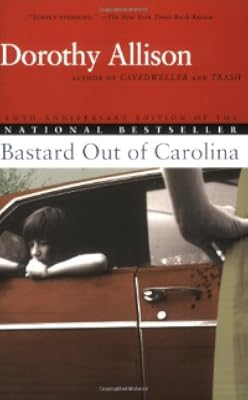
I was struck by this blackly humorous, northern counterpart to Dorothy Allison's 'Bastard Out of Carolina.' Rough-hewn, hopeless and fatalistic, "The Beans of Egypt Maine" underscores a truism: that a culture of poverty and ignorance is self-perpetuating, that people born into such a world have very few options other than what their families give them. Family is both curse and blessing here, for out of it comes not only one's limiting world view, but also a fierce independence that prepares one to cope with it.
Chute's writing is fresh and on-target. The book jacket mentions her closeness to that lifestyle while growing up, and this believability certainly comes through. The humor is pure comic relief for what, to our eyes, must feel show more like a world of chaos and desperation. But there is another truism here: people are usually doing the best they can under their circumstances. Being from rural Virginia, I have known (of) families like the Beans here in the South, as well. The brutal effect of poverty is everywhere the same, and it is often countered by an enviable toughness. If there be live counterparts to the Beans, I might shrink from an invitation to meet them. But that does not prevent me from carrying a respect for the particular path they are fated to walk: in which just getting by is its own brand of heroism. show less
Chute's writing is fresh and on-target. The book jacket mentions her closeness to that lifestyle while growing up, and this believability certainly comes through. The humor is pure comic relief for what, to our eyes, must feel show more like a world of chaos and desperation. But there is another truism here: people are usually doing the best they can under their circumstances. Being from rural Virginia, I have known (of) families like the Beans here in the South, as well. The brutal effect of poverty is everywhere the same, and it is often countered by an enviable toughness. If there be live counterparts to the Beans, I might shrink from an invitation to meet them. But that does not prevent me from carrying a respect for the particular path they are fated to walk: in which just getting by is its own brand of heroism. show less
I’d love to tell you what this book was about, but I’m afraid it wasn’t about very much for me. There is a lot of blood, gore, fighting, and mistreatment. There are a lot of sexual encounters (thankfully not too graphically depicted) and a lot of references to sexual encounters that have already taken place and produced innumerable sad and unkempt children. There is squalor and poverty and lack of education, and men who have a too easy affinity for guns.
For me, it is fine to expose this way of life and its underbelly if you have some point to make regarding it besides the obvious one--that it exists. I just could not unearth any other reason for this book than that. I did not see any hope for these characters, but I also did not show more see any awareness in them, any desire to be better or different, any struggle to overcome or any love of or ambition for their children. There were no qualities that seemed to redeem them. They just seemed content to have this squalid way of life and to want to perpetuate it indefinitely.
I kept waiting for something to happen. Not another roll in the hay or senseless fight or unwanted baby...an event that would bring some kind of meaning to one of these characters. I waited for Earlene to realize that the last thing she really wanted to be was a Bean. But, alas, I waited in vain. I suppose once a Bean, always a Bean. show less
For me, it is fine to expose this way of life and its underbelly if you have some point to make regarding it besides the obvious one--that it exists. I just could not unearth any other reason for this book than that. I did not see any hope for these characters, but I also did not show more see any awareness in them, any desire to be better or different, any struggle to overcome or any love of or ambition for their children. There were no qualities that seemed to redeem them. They just seemed content to have this squalid way of life and to want to perpetuate it indefinitely.
I kept waiting for something to happen. Not another roll in the hay or senseless fight or unwanted baby...an event that would bring some kind of meaning to one of these characters. I waited for Earlene to realize that the last thing she really wanted to be was a Bean. But, alas, I waited in vain. I suppose once a Bean, always a Bean. show less
This is one of the oddest books I've ever read As another reviewer mentioned, the characters are almost uniformly unlikable; the setting, in an extreme povery zone in Maine, is off-putting; the plotline is minimal. Nevertheless, Chute manages to hold your interest and somehow makes you care about the characters. The book abounds in grotesque scenes and ugly actions. Still, you feel that the book somehow presents a true picture of what life is like on the underside of the American dream.
I was not happy with the author's afterword to this edition, and it's quite apparent that she has a considerable axe to grind. Even so, this book is well worth a read; it's sort of like a post-modern "Grapes of Wrath" without the redemption factor.
I was not happy with the author's afterword to this edition, and it's quite apparent that she has a considerable axe to grind. Even so, this book is well worth a read; it's sort of like a post-modern "Grapes of Wrath" without the redemption factor.
Back in the mid-1980s The Beans of Egypt, Maine was a very popular book, but since that time it seems to have faded from view. Decades later, I have finally gotten around to reading it. This collection of interrelated short stories about the hardscrabble lives of the redoubtable Bean clan is filled with fantastical elements such as creepy skin conditions, hissing babies, and unusual eye colors, as well as more standard plot points like poverty and incest. These make for a very strange reading experience. The writing is striking in places; however, I found the large cast of characters and loose storytelling confusing. I have no immediate plans to read Chute's other books set in Egypt, Maine.
Members
- Recently Added By
Lists

Must-Read Maine
146 works; 91 members

Books Set in Maine
42 works; 6 members

Gen X Library
245 works; 4 members

Books Read in 2025
4,128 works; 98 members
Author Information

9+ Works 1,903 Members
A high school dropout at age 16, Carolyn Chute has been described as a shy, genial woman with idiosyncratic political views. Almost immediately after dropping out of school, Chute married and had a daughter. After the marriage ended in divorce, Chute held a variety of low-paying jobs, including driving a school bus, working on a potato farm, and show more plucking chickens to support herself and her child. In 1978, Chute completed high school and began taking classes at the University of Maine. While attending college, Chute started writing stories, and eventually had her work published in area magazines. Chute's first novel, The Beans of Egypt, Maine, published in 1986, details what it was like growing up in a poverty-stricken town. The characters and setting of her successful first novel were continued in Letourneau's Used Auto Parts (1988) and Merry Men (1994). A member of the 2nd Maine Militia, Chute is lobbying for several causes. Among the causes are limiting campaign contributions to $100 per citizen, extending the right of free speech and assembly to work-sites and shopping malls, banning lobbyists from the political process, and limiting the number of newspapers or magazines that can be owned by any single corporation to one. (Bowker Author Biography) show less
Some Editions
Awards and Honors
Distinctions
Notable Lists
Series

Work Relationships
Has the adaptation
Common Knowledge
- Original publication date
- 1985
- Important places
- Egypt, Maine, USA; Maine, USA
- Related movies
- The Beans of Egypt, Maine (1994 | IMDb)
- Dedication
- In memory of real Reuben. Who spared him this occasion? Who spared him rage?
- First words
- We've got a ranch house.
- Last words
- (Click to show. Warning: May contain spoilers.)In a fadin' whisper, I say, "REUBEN, YOU ARE GOIN' TA BURN IN HELL."
- Original language
- English
Classifications
Statistics
- Members
- 1,106
- Popularity
- 23,085
- Reviews
- 19
- Rating
- (3.55)
- Languages
- English, Spanish
- Media
- Paper, Audiobook, Ebook
- ISBNs
- 21
- UPCs
- 1
- ASINs
- 12