
The Marriage Portrait
by Maggie O'Farrell
On This Page
Description
"A novel set in Renaissance Italy, and centering on the captivating young duchess Lucrezia de' Medici"-- Florence, the 1550s. Lucrezia, third daughter of the grand duke, is comfortable with her obscure place in the palazzo: free to wonder at its treasures, observe its clandestine workings, and to devote herself to her own artistic pursuits. But when her older sister dies on the eve of her wedding to the ruler of Ferrara, Moderna and Regio, Lucrezia is thrust unwittingly into the limelight: show more the duke is quick to request her hand in marriage, and her father just as quick to accept on her behalf. Having barely left girlhood behind, Lucrezia must now make her way in a troubled court whose customs are opaque and where her arrival is not universally welcomed. Perhaps most mystifying of all is her new husband himself, Alfonso. Is he the playful sophisticate he appeared to be before their wedding, the aesthete happiest in the company of artists and musicians, or the ruthless politician before whom even his formidable sisters seem to tremble? As Lucrezia sits in constricting finery for a painting intended to preserve her image for centuries to come, one thing becomes worryingly clear. In the court's eyes, she has one duty: to provide the heir who will shore up the future of the Ferranese dynasty. Until then, for all of her rank and nobility, the new duchess's future hangs entirely in the balance. show lessTags
Recommendations

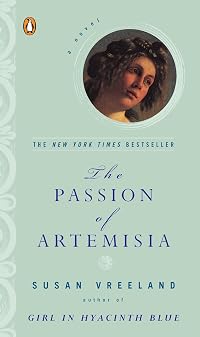

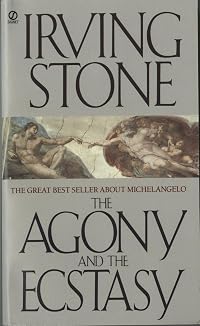

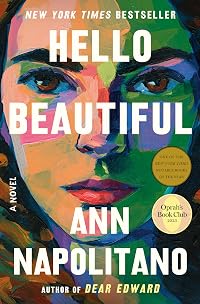
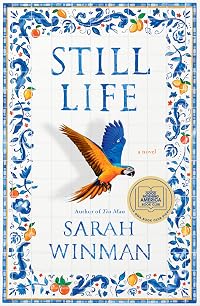





Member Recommendations
Member Reviews
Sublime, just sublime! The Marriage Portrait by Maggie O'Farrell is one of my most highly anticipated releases for 2022, especially after her previous novel Hamnet made it on to my Top 5 Books of 2021 list last year.
The Marriage Portrait is an historical fiction novel about the life of Lucrezia di Cosimo de' Medici set in Renaissance Florence in the 16th century. The author shares an historical note at the front of the book telling us that in 1560, newly married Lucrezia di Cosimo de' Medici left Florence at the age of fifteen to begin her life with husband Alfonso II d'Este, Duke of Ferrara. Less than a year later, Lucrezia would be dead, surrounded by the rumour she was murdered by her husband for failing to produce an heir.
This show more author's note made for an incredibly unexpected beginning, and ensured that every reader - regardless of their knowledge of Italian history - embarked on the novel on equal terms.
In doing so, we follow Lucrezia's narrative in dual timelines in pre-marriage years (1550s) and post marriage years of 1560, right up until her death in 1561. Lucrezia was a troubled child and her mother blamed herself for the girl's odd behaviour.
"It has been drummed into her by physicians and priests alike, that the character of a child is determined by the mother's thoughts at the moment of conception. Too late, however. Eleanora's mind, here in the map room, is unsettled, untamed, wandering at will. She is looking at maps, at landscapes, at wildernesses." Page 10
How is it even possible to shake our heads at the mistaken belief a woman's thoughts during sex and conception would affect a child's temperament, while simultaneously hopeful that the child born of such a union will be wild and adventurous. Reading this, I couldn't wait to find out what kind of girl Lucrezia would turn out to be.
The writing in The Marriage Portrait is simply divine. Each time I picked up this gorgeous book with stunning cover design, beautiful end papers and fabulous french flaps I had to stop and take note of page numbers I wanted to come back to and descriptions that took my breath away.
Here's a sample of the author's humour first:
"'Indeed,' Vitelli remarked, inclining his head, then he pulled an odd face, his eyes creased, his lips retreating from his teeth. It took Lucrezia a moment to realise that Vitelli was attempting a smile." Page 87
Later the author describe's the cause of Lucrezia's insomnia so clearly that every reader can relate to her plight:
"But sleep will not come for Lucrezia, refuses to hear her call. Her mind, made restless by the journey, by the new rooms, has too much to do, too many impressions to review and polish and store away, too many questions to pose and ponder." Quote page 303
How many readers can immediately relate to Lucrezia's insomnia? I'd go so far as to say all of us, yet somehow O'Farrell makes her protagonist's insomnia feel otherworldly, and so weighted down by history yet instantly relatable at the same time.
Sometimes the author was able to move me with just two words, in this case 'apologetic' and 'creep', have you ever seen them together? How's this:
"She is used to the Tuscan climate, where there is a slow tapering-off of warmth and light, a gradual tip into autumn, winter arriving in an apologetic creep." Page 353
This gave me a little shiver, and I instantly visualised the frosty winter creeping across the land. In some cases, the writing is free and other times - like this one - the writing is claustrophobic. When donning her wedding dress, Lucrezia notes the following:
"The gown rustles and slides around her, speaking a glossolalia all of its own, the silk moving against the rougher nap of the underskirts, the bone supports of the bodice straining and squealing against their coverings, the cuffs scuffing and chafing the skin of her wrists, the stiffened collar hooking and nibbling at her nape, the hip supports creaking like the rigging of a ship. It is a symphony, an orchestra of fabrics, and Lucrezia would like to cover her ears, to stop them with her palms, but she cannot. She must continue like this to the door; she must walk through it, out into the corridor, where there are people - her father's officials, her mother's retinue - waiting for her." Page 123
The author made me feel the oppressive weight of the fabric, itch with discomfort and bend under the pressure of the stifling expectations. Ugh, heavy stuff!
Lucrezia reluctantly fulfils her duty by marrying her dead sister's fiance, but her husband Alfonso is a real piece of work. Simultaneously charming and manipulative, he soon emerges as a fully developed monster. Lucrezia is a young woman without any agency, but thankfully she is still full of spirit:
"Only she knows that within, just under her chilled skin, something quite other is taking place: flames, vibrant and consoling, lick at her insides, a fire kindles, cracks and smoulders, throwing out smoke that infiltrates every corner of her, every fingernail, every inch of her limbs. Her hair surrounds her - all he can see of her is the top of her head. He must believe she is listening to his lecture, to his chiding, but no. She is stoking this conflagration, letting it blaze, encouraging it to sear every inside space. He will never know, will never reach this part of her, no matter how violently he grips her arm or seizes her wrists." Pages 277 - 278
When Lucrezia begins to fear her life is in danger, she is desperate to escape her plight. She ruminates:
"Her brothers, by contrast, were trained as rulers: they have been taught to fight, to argue, to debate, to negotiate, to outwit, to outmanoeuvre, to wait, to spot an advantage, to scheme and manipulate and consolidate their influence. They have been schooled in rhetoric, in narrative, in persuasion, both written and verbal. Every morning they are drilled in running, jumping, boxing, weight-lifting, fencing. They have learnt to handle a sword, a dagger, a bow, a lance, a spear; they are taught how to fight on a battlefield: they have studied military tactics. They have been instructed in hand-to-hand combat, with their fists and their feet, in the event of their needing to defend themselves on a street or in a room or on a staircase. They have been taught the fastest and most efficient ways to end the life of another person - an enemy or an assailant or an undesirable." Page 282
Just as Lucrezia is reflecting on all of this, the reader shares her absolute horror that her husband Alfonso will have undergone the same training. How can she refuse to yield herself to a man like that? How can she ever fight back or stand up to him? She is his inferior in every way.
Occasionally, due to the Florentine setting and the inclusion of the Medici family, I was reminded of Luna in The Brightest Star by Emma Harcourt. Set in 1479, that novel is also a young coming of age story set in renaissance Italy with a spirited and inspiring female protagonist chafing against the cultural constraints against women. If you enjoyed one, you'll love the other but I do recommend reading them more than three months apart.
The ending of The Marriage Portrait was a complete and utter shock, and it shouldn't have been. I'll say no more, but readers will either love the surprise, or they won't. I wasn't a fan, but the novel moved me so much that The Marriage Portrait is still a solid 5 star read for me and a definite contender for this year's Top 5 Books of 2022 list.
Sublime and highly recommended!
* Copy courtesy of Hachette * show less
The Marriage Portrait is an historical fiction novel about the life of Lucrezia di Cosimo de' Medici set in Renaissance Florence in the 16th century. The author shares an historical note at the front of the book telling us that in 1560, newly married Lucrezia di Cosimo de' Medici left Florence at the age of fifteen to begin her life with husband Alfonso II d'Este, Duke of Ferrara. Less than a year later, Lucrezia would be dead, surrounded by the rumour she was murdered by her husband for failing to produce an heir.
This show more author's note made for an incredibly unexpected beginning, and ensured that every reader - regardless of their knowledge of Italian history - embarked on the novel on equal terms.
In doing so, we follow Lucrezia's narrative in dual timelines in pre-marriage years (1550s) and post marriage years of 1560, right up until her death in 1561. Lucrezia was a troubled child and her mother blamed herself for the girl's odd behaviour.
"It has been drummed into her by physicians and priests alike, that the character of a child is determined by the mother's thoughts at the moment of conception. Too late, however. Eleanora's mind, here in the map room, is unsettled, untamed, wandering at will. She is looking at maps, at landscapes, at wildernesses." Page 10
How is it even possible to shake our heads at the mistaken belief a woman's thoughts during sex and conception would affect a child's temperament, while simultaneously hopeful that the child born of such a union will be wild and adventurous. Reading this, I couldn't wait to find out what kind of girl Lucrezia would turn out to be.
The writing in The Marriage Portrait is simply divine. Each time I picked up this gorgeous book with stunning cover design, beautiful end papers and fabulous french flaps I had to stop and take note of page numbers I wanted to come back to and descriptions that took my breath away.
Here's a sample of the author's humour first:
"'Indeed,' Vitelli remarked, inclining his head, then he pulled an odd face, his eyes creased, his lips retreating from his teeth. It took Lucrezia a moment to realise that Vitelli was attempting a smile." Page 87
Later the author describe's the cause of Lucrezia's insomnia so clearly that every reader can relate to her plight:
"But sleep will not come for Lucrezia, refuses to hear her call. Her mind, made restless by the journey, by the new rooms, has too much to do, too many impressions to review and polish and store away, too many questions to pose and ponder." Quote page 303
How many readers can immediately relate to Lucrezia's insomnia? I'd go so far as to say all of us, yet somehow O'Farrell makes her protagonist's insomnia feel otherworldly, and so weighted down by history yet instantly relatable at the same time.
Sometimes the author was able to move me with just two words, in this case 'apologetic' and 'creep', have you ever seen them together? How's this:
"She is used to the Tuscan climate, where there is a slow tapering-off of warmth and light, a gradual tip into autumn, winter arriving in an apologetic creep." Page 353
This gave me a little shiver, and I instantly visualised the frosty winter creeping across the land. In some cases, the writing is free and other times - like this one - the writing is claustrophobic. When donning her wedding dress, Lucrezia notes the following:
"The gown rustles and slides around her, speaking a glossolalia all of its own, the silk moving against the rougher nap of the underskirts, the bone supports of the bodice straining and squealing against their coverings, the cuffs scuffing and chafing the skin of her wrists, the stiffened collar hooking and nibbling at her nape, the hip supports creaking like the rigging of a ship. It is a symphony, an orchestra of fabrics, and Lucrezia would like to cover her ears, to stop them with her palms, but she cannot. She must continue like this to the door; she must walk through it, out into the corridor, where there are people - her father's officials, her mother's retinue - waiting for her." Page 123
The author made me feel the oppressive weight of the fabric, itch with discomfort and bend under the pressure of the stifling expectations. Ugh, heavy stuff!
Lucrezia reluctantly fulfils her duty by marrying her dead sister's fiance, but her husband Alfonso is a real piece of work. Simultaneously charming and manipulative, he soon emerges as a fully developed monster. Lucrezia is a young woman without any agency, but thankfully she is still full of spirit:
"Only she knows that within, just under her chilled skin, something quite other is taking place: flames, vibrant and consoling, lick at her insides, a fire kindles, cracks and smoulders, throwing out smoke that infiltrates every corner of her, every fingernail, every inch of her limbs. Her hair surrounds her - all he can see of her is the top of her head. He must believe she is listening to his lecture, to his chiding, but no. She is stoking this conflagration, letting it blaze, encouraging it to sear every inside space. He will never know, will never reach this part of her, no matter how violently he grips her arm or seizes her wrists." Pages 277 - 278
When Lucrezia begins to fear her life is in danger, she is desperate to escape her plight. She ruminates:
"Her brothers, by contrast, were trained as rulers: they have been taught to fight, to argue, to debate, to negotiate, to outwit, to outmanoeuvre, to wait, to spot an advantage, to scheme and manipulate and consolidate their influence. They have been schooled in rhetoric, in narrative, in persuasion, both written and verbal. Every morning they are drilled in running, jumping, boxing, weight-lifting, fencing. They have learnt to handle a sword, a dagger, a bow, a lance, a spear; they are taught how to fight on a battlefield: they have studied military tactics. They have been instructed in hand-to-hand combat, with their fists and their feet, in the event of their needing to defend themselves on a street or in a room or on a staircase. They have been taught the fastest and most efficient ways to end the life of another person - an enemy or an assailant or an undesirable." Page 282
Just as Lucrezia is reflecting on all of this, the reader shares her absolute horror that her husband Alfonso will have undergone the same training. How can she refuse to yield herself to a man like that? How can she ever fight back or stand up to him? She is his inferior in every way.
Occasionally, due to the Florentine setting and the inclusion of the Medici family, I was reminded of Luna in The Brightest Star by Emma Harcourt. Set in 1479, that novel is also a young coming of age story set in renaissance Italy with a spirited and inspiring female protagonist chafing against the cultural constraints against women. If you enjoyed one, you'll love the other but I do recommend reading them more than three months apart.
The ending of The Marriage Portrait was a complete and utter shock, and it shouldn't have been. I'll say no more, but readers will either love the surprise, or they won't. I wasn't a fan, but the novel moved me so much that The Marriage Portrait is still a solid 5 star read for me and a definite contender for this year's Top 5 Books of 2022 list.
Sublime and highly recommended!
* Copy courtesy of Hachette * show less
It’s 1561, and Lucrezia, the not-quite-sixteen-year-old duchess of Ferrara, refuses to believe that Alfonso, her husband of one year, means to kill her. She can see no cause for offense, and at certain moments, he seems tender and thoughtful, maybe even loving. Yet when Lucrezia, daughter of Cosimo de’ Medici and no stranger to the forms and unwritten rules of cutthroat court life, reconsiders how Alfonso has brought her to a deserted castle, she has to wonder.
A remarkable premise, this, and at times The Marriage Portrait reads like a thriller, written in O’Farrell’s trademark sumptuous prose. But this novel isn’t merely another tale of a child at risk, though Lucrezia is that; innocent, empathic by nature, a sensitive soul show more who loves animals, she’s ill suited to her time and station in life. Her father and husband care only to extend and preserve their power, which means that daughters exist to be sold in marriage for political advantage.
Like Hamnet, therefore, O’Farrell’s triumphant novel about the Shakespeare household, The Marriage Portrait deals with matrimony. But where Agnes Shakespeare worried about her husband’s constancy and their children’s health and struggled against the sexual double standard, here the stakes consider survival when a husband, not the plague, is the enemy. Lucrezia’s expendable, and as the novel opens, she’s coming to realize that.
The back story, which narrates her upbringing and bewildering early months of marriage, imagines how a young girl must have felt to be torn from home and thrust into the bed of a man almost twice her age. But Lucrezia’s much more than a victim. She has enough willfulness to want to ask why things must be how they are, even if she holds her tongue, and she likes to test the rules. In that vein, there’s a terrific childhood scene in which she contrives to be alone with a tigress her father has imprisoned in his basement menagerie.
Not only is Lucrezia like that tigress; her father, the kind of man who’d imprison the beast for his own amusement, treats his daughter similarly. That relationship foreshadows the Ferrara court, where all eyes focus on her, as though she too were a beast on display, yet no one really sees her. She craves understanding and friendship but, to her shock, can trust nobody, not even—maybe especially—her sisters-in-law. If she takes small pleasures, such as opening a window to watch a storm, her husband scolds her, often dragging her around. So he’s not just a tyrant; his violence makes him a sociopath.
Such extreme character disorders can, in the wrong authorial hands, function in an exaggerated way to create tension. But here, Alfonso’s not just an erratic personality. The narrative shows his motives, fears, and overweening pride—from his young bride’s perspective, to be sure—but nevertheless depicts him so that the reader understands what drives him, even if Lucrezia doesn’t always.
I usually dislike cliff-hanger openings, a prologue by another name, followed by lengthy back story. But again, O’Farrell goes one better, using that device to achieve several goals. First, she introduces the mystery Lucrezia’s trying to decipher, whether Alfonso truly means to do away with her—and her confusion, not just the threat, propels the narrative. Secondly, I believe that novels should start where the protagonist realizes that life will never be the same—and in Lucrezia’s case, that life appears to be short.
Moreover, O’Farrell doesn’t abuse the reader’s patience. She returns frequently to the scenes of 1561 and Lucrezia’s duress, while the back story advances rapidly, and I never feel manipulated through the withholding of secrets. Quite the contrary; a historical note before the first chapter establishes the premise, apparently inspired by a Robert Browning poem I've always liked, “My Last Duchess,” quoted there. That forthrightness marks the story throughout.
The resolution is predictable, based on a couple one-sentence clues dropped into the text. That bothered me, a little, though how the story gets there is anything but ordained.
Hamnet is a deeper novel, I think, offering at once a view of Elizabethan daily life, exploration of mortality and its impact on the living, and the themes of marriage referred to earlier. But The Marriage Portrait, though it has a narrower focus, is still a superb novel, and I highly recommend it. show less
A remarkable premise, this, and at times The Marriage Portrait reads like a thriller, written in O’Farrell’s trademark sumptuous prose. But this novel isn’t merely another tale of a child at risk, though Lucrezia is that; innocent, empathic by nature, a sensitive soul show more who loves animals, she’s ill suited to her time and station in life. Her father and husband care only to extend and preserve their power, which means that daughters exist to be sold in marriage for political advantage.
Like Hamnet, therefore, O’Farrell’s triumphant novel about the Shakespeare household, The Marriage Portrait deals with matrimony. But where Agnes Shakespeare worried about her husband’s constancy and their children’s health and struggled against the sexual double standard, here the stakes consider survival when a husband, not the plague, is the enemy. Lucrezia’s expendable, and as the novel opens, she’s coming to realize that.
The back story, which narrates her upbringing and bewildering early months of marriage, imagines how a young girl must have felt to be torn from home and thrust into the bed of a man almost twice her age. But Lucrezia’s much more than a victim. She has enough willfulness to want to ask why things must be how they are, even if she holds her tongue, and she likes to test the rules. In that vein, there’s a terrific childhood scene in which she contrives to be alone with a tigress her father has imprisoned in his basement menagerie.
Not only is Lucrezia like that tigress; her father, the kind of man who’d imprison the beast for his own amusement, treats his daughter similarly. That relationship foreshadows the Ferrara court, where all eyes focus on her, as though she too were a beast on display, yet no one really sees her. She craves understanding and friendship but, to her shock, can trust nobody, not even—maybe especially—her sisters-in-law. If she takes small pleasures, such as opening a window to watch a storm, her husband scolds her, often dragging her around. So he’s not just a tyrant; his violence makes him a sociopath.
Such extreme character disorders can, in the wrong authorial hands, function in an exaggerated way to create tension. But here, Alfonso’s not just an erratic personality. The narrative shows his motives, fears, and overweening pride—from his young bride’s perspective, to be sure—but nevertheless depicts him so that the reader understands what drives him, even if Lucrezia doesn’t always.
I usually dislike cliff-hanger openings, a prologue by another name, followed by lengthy back story. But again, O’Farrell goes one better, using that device to achieve several goals. First, she introduces the mystery Lucrezia’s trying to decipher, whether Alfonso truly means to do away with her—and her confusion, not just the threat, propels the narrative. Secondly, I believe that novels should start where the protagonist realizes that life will never be the same—and in Lucrezia’s case, that life appears to be short.
Moreover, O’Farrell doesn’t abuse the reader’s patience. She returns frequently to the scenes of 1561 and Lucrezia’s duress, while the back story advances rapidly, and I never feel manipulated through the withholding of secrets. Quite the contrary; a historical note before the first chapter establishes the premise, apparently inspired by a Robert Browning poem I've always liked, “My Last Duchess,” quoted there. That forthrightness marks the story throughout.
The resolution is predictable, based on a couple one-sentence clues dropped into the text. That bothered me, a little, though how the story gets there is anything but ordained.
Hamnet is a deeper novel, I think, offering at once a view of Elizabethan daily life, exploration of mortality and its impact on the living, and the themes of marriage referred to earlier. But The Marriage Portrait, though it has a narrower focus, is still a superb novel, and I highly recommend it. show less
The Marriage Portrait is the story of Lucrezia de’ Medici, who was married at 15 to Alfonso II d’Este, the Duke of Ferrara. Lucrezia died at 16, from tuberculosis, which is apparently the historical consensus, or by poisoning, according to rumor. Maggie O’Farrell gives another ending to Lucrezia, one that is more melodramatic, if more satisfying.
The Marriage Portrait is told in two timelines: chapters about her early life leading up to her marriage and chapters about her life married to Alfonso.
I thought that O’Farrell presented a window into the world of women in Renaissance Italy, especially the lives of noble women whose only purpose seemed to be to cement alliances or provide heirs, though this was surely true of noble or show more royal women throughout history. They had so little agency. Even affection between spouses was not required or expected. The affection between Lucrezia’s mother and father as presented in the novel was remarked upon and as far as historians can tell, this was true of her parents in “real life.”
The writing is wonderful, if just a little too detailed at times. This caused the book to drag for me in places. I also didn’t feel I got to know anyone other than Lucrezia, but I wonder if this was a choice that Maggie O’Farrell made. I felt for Lucrezia—at how trapped she was, how talented she was, and how she deserved more. Because the other characters (other than Sofia and Emilia) are somewhat hard to know and loom over Lucrezia’s life they seem more menacing.
As I said, the ending is a little melodramatic but satisfying. However, Emilia did NOT deserve her fate at the end.
Anyway, I enjoyed reading this novel, and because of this, I spent a lot of time on Wikipedia looking up Lucrezia, Alfonso, their parents, etc. This may be the best part of reading historical fiction. show less
The Marriage Portrait is told in two timelines: chapters about her early life leading up to her marriage and chapters about her life married to Alfonso.
I thought that O’Farrell presented a window into the world of women in Renaissance Italy, especially the lives of noble women whose only purpose seemed to be to cement alliances or provide heirs, though this was surely true of noble or show more royal women throughout history. They had so little agency. Even affection between spouses was not required or expected. The affection between Lucrezia’s mother and father as presented in the novel was remarked upon and as far as historians can tell, this was true of her parents in “real life.”
The writing is wonderful, if just a little too detailed at times. This caused the book to drag for me in places. I also didn’t feel I got to know anyone other than Lucrezia, but I wonder if this was a choice that Maggie O’Farrell made. I felt for Lucrezia—at how trapped she was, how talented she was, and how she deserved more. Because the other characters (other than Sofia and Emilia) are somewhat hard to know and loom over Lucrezia’s life they seem more menacing.
As I said, the ending is a little melodramatic but satisfying. However, Emilia did NOT deserve her fate at the end.
Anyway, I enjoyed reading this novel, and because of this, I spent a lot of time on Wikipedia looking up Lucrezia, Alfonso, their parents, etc. This may be the best part of reading historical fiction. show less
Lucrezia di Cosimo de’ Medici lived during the 16th century and was the daughter of the Duke of Florence. She left Florence to begin married life with Alfonso II d’Este, Duke of Ferrara, becoming a Duchess at a very young age. Official records are scarce, but Lucrezia is known to have died in 1561, very early in the marriage. The historical note that opens this novel reads, “The official cause of her death was given as ‘putrid fever,’ but it was rumoured that she had been murdered by her husband.”
Maggie O’Farrell offers a rich and plausible story of Lucrezia’s life and her untimely death. As the daughter of a duke, she led a privileged life, but also one with few choices. Marriage was a transaction, in which daughters show more were wedded off in hopes of strengthening political alliances. Initially, Lucrezia’s union looks promising; Alfonso is kind and respectful. But his dark side becomes increasingly apparent, especially when Lucrezia fails to immediately produce an heir (and yes, this was always the woman’s fault). Lucrezia is stuck: she cannot return to her family, nor can she live as an independent woman. She is, effectively, a prisoner in her own home.
This novel is so well written. The narrative structure gradually reveals details of Lucrezia’s life like pieces of a jigsaw puzzle falling into place. Despite knowing how her story ends, the tension is palpable. The ending is especially well done. The author’s note at the end clarifies which elements were fact, and which were fiction. There may have been little documentation of Lucrezia’s life, but other women of the period – other wives of Italian noblemen, in fact – were murdered by their husbands. How many times did this happen without proof? It brings an air of credibility to the theory that Lucrezia was poisoned, and draws attention to the ways in which women have been marginalized and written out of history. show less
Maggie O’Farrell offers a rich and plausible story of Lucrezia’s life and her untimely death. As the daughter of a duke, she led a privileged life, but also one with few choices. Marriage was a transaction, in which daughters show more were wedded off in hopes of strengthening political alliances. Initially, Lucrezia’s union looks promising; Alfonso is kind and respectful. But his dark side becomes increasingly apparent, especially when Lucrezia fails to immediately produce an heir (and yes, this was always the woman’s fault). Lucrezia is stuck: she cannot return to her family, nor can she live as an independent woman. She is, effectively, a prisoner in her own home.
This novel is so well written. The narrative structure gradually reveals details of Lucrezia’s life like pieces of a jigsaw puzzle falling into place. Despite knowing how her story ends, the tension is palpable. The ending is especially well done. The author’s note at the end clarifies which elements were fact, and which were fiction. There may have been little documentation of Lucrezia’s life, but other women of the period – other wives of Italian noblemen, in fact – were murdered by their husbands. How many times did this happen without proof? It brings an air of credibility to the theory that Lucrezia was poisoned, and draws attention to the ways in which women have been marginalized and written out of history. show less
After her sister's untimely death, Lucrezia de Medici is married at the young age of 15 to her sister's intended, the Duke of Ferrara. Before her marriage has lasted a year, Lucrezia is sure her husband is trying to kill her -- and she doesn't think she'll survive.
Inspired by Browning's "My Last Duchess" and the sparse information on Lucrezia's life and death, O'Farrell takes an overlooked figure in history and produces a compelling, beautifully written story of a young girl who is afraid for her life but not going to go down without a fight. I'm not sure I loved it quite as much as Hamnet, but this still gets 5 stars from me.
Inspired by Browning's "My Last Duchess" and the sparse information on Lucrezia's life and death, O'Farrell takes an overlooked figure in history and produces a compelling, beautifully written story of a young girl who is afraid for her life but not going to go down without a fight. I'm not sure I loved it quite as much as Hamnet, but this still gets 5 stars from me.
I've only read one other book by O'Farrell, [Hamnet], which I was blown away by. [The Marriage Portrait] was similarly well-written and engaging to read, but struck quite a different tone. Because it is set in the 16th century and is based on the life of Lucrezia de'Medici, I was expecting something a bit more erudite from Maggie O'Farrell. Instead, I got a domestic abuse thriller. I liked it once I accepted that.
Lucrezia grows up at the comfortable court in Florence, always the odd child out, but still loved and cared for. Then her older sister dies and she takes her place in a marriage to the Duke of Ferrara at the very young age of 15. At first she is impressed with his kindness to her, but cruel streaks in his personality begin to show more show through. He is desperate for an heir, and if Lucrezia can't provide she fears for her life.
I thoroughly enjoyed reading this, but as I said earlier, it's better approached as a suspense novel about a dangerous marriage that happens to be set in the 1550s. Fun characters and setting and writing that propels you along. But not a deep historical dive. show less
Lucrezia grows up at the comfortable court in Florence, always the odd child out, but still loved and cared for. Then her older sister dies and she takes her place in a marriage to the Duke of Ferrara at the very young age of 15. At first she is impressed with his kindness to her, but cruel streaks in his personality begin to show more show through. He is desperate for an heir, and if Lucrezia can't provide she fears for her life.
I thoroughly enjoyed reading this, but as I said earlier, it's better approached as a suspense novel about a dangerous marriage that happens to be set in the 1550s. Fun characters and setting and writing that propels you along. But not a deep historical dive. show less
Another beautifully written, completely immersive experience in the world of the Italian Renaissance, told through the point of view of Lucrezia de' Medici, a young teen girl born into the wealth and status of the Cosimo I de' Medici family, soon to head into an arranged marriage with another Italian power, Alfonso II, Duke of Ferrara. O'Farrell's atmospheric prose, and understanding of the Italian culture of the elite, gives us such an intimate, sympathetic character, culled from the pages of history into a fully rounded young, artistic, willful girl who finds herself in increasingly dangerous and confusing circumstances. I must admit, I preferred the author's ending for this woman, rather than what the historical record tells us. And show more of course now I'm looking up anywhere I can find on the internet the "real" info/images of these families and her one known portrait. Had to finish the last section in one big swoop -- the rising tension was too much!! show less
Members
- Recently Added By
Lists

Favourite Women's Prize for Fiction, Orange & Bailey's Prize contenders
132 works; 52 members

Books published and read in 2022
82 works; 5 members

Baileys Women's Prize for Fiction Winners and Shortlisted Books
61 works; 11 members

Books Read in 2023
5,547 works; 145 members

Library "dead tree" current reads, past loans/reads and TBR
25 works; 1 member

Maybe This Year? Books to Look Forward To
412 works; 9 members

Books Read in 2022
5,168 works; 114 members

Reese's Book Club
122 works; 2 members

Library List - Pulitzer Adjacent
40 works; 1 member

Travel Reads
26 works; 1 member

Books Read in 2024
4,623 works; 126 members

Reese Witherspoon Book Club
100 works; 4 members

Top Five Books of 2024
795 works; 264 members

Spotted in Public
9 works; 1 member

Top Five Books of 2023
767 works; 317 members
2023 Women's Prize for Fiction Longlist
16 works; 11 members

Library List 4.5
25 works; 1 member
Author Information

24+ Works 20,611 Members
Maggie O'Farrell is the author of several novels including After You'd Gone, My Lover's Lover, The Vanishing Act of Esme Lennox, Instructions for a Heatwave, and This Must Be the Place. She received a Somerset Maugham Award for The Distance Between Us and the 2010 Costa Novel Award for The Hand That First Held Mine. (Bowker Author Biography)
All Editions
Some Editions
Awards and Honors
Common Knowledge
- Canonical title
- The Marriage Portrait
- Original title
- The Marriage Portrait
- Original publication date
- 2022
- People/Characters
- Lucrezia de' Medici, Duchess of Ferrara; Alfonso II d'Este, Duke of Ferrara; Cosimo; Eleanora; Sofia; Emilia (show all 16); Leonello Baldassare; Il Bastianino aka Sebastiano Filippi; Jocopo; Maurizio; Elisabetta; Nunciata; Maria; Isabella; Ercole Contrari; Clelia
- Important places
- Florence, Tuscany, Italy; Delizia, Voghiera, Italy; Castella Ferrara; Fortezza, near Bondeno
- Epigraph
- That’s my last Duchess painted on the wall,
Looking as if she were alive.
ROBERT BROWNING, “MY LAST DUCHESS”
The ladies . . . are forced to follow the whims, fancies and dictates of their fathers, mothers, brothers and husbands, so that they spend most of their time cooped up within the narrow confines of their rooms, where they sit... (show all) in apparent idleness, wishing one thing and at the same time wishing its opposite, and reflecting on various matters . . .
GIOVANNI BOCCACCIO, THE DECAMERON - Dedication
- For Mary-Anne and Victoria
- First words
- Lucrezia is taking her seat at the long dining table, which is polished to a watery gleam and spread with dishes, inverted cups, a woven circlet of fir.
- Quotations
- No one, she believes, has ever kissed her in her sleep before. She likes to place a palm over the place, after he has left the room, as if to keep it there, to stop it floating off into the air , like pollen.
She has access suddenly to the private, hidden life of the castello, the wrong side of its embroidery, with all the knots and weave and secrets on display.
The animal was orange, burnished gold, fire made flesh; she was power and anger; she was vicious and exquisite; she carried on her body the marks of a prison, as if she had been branded exactly for this, as if captivity had b... (show all)een her destiny all along. (p. 21)
Liquid was her motion, like honey dripping from a spoon. (p. 43)
Sofia was listening, leaning on, as if every syllable Lucrezia spoke was a fragile airborne filament of gold, to be caught, not permitted to float away. (p. 82)
Light enters at an oblique angle from invisible lofty windows, high above their heads, warming the apex of the arches, alchemising the white plaster to lozenges of gold. (p. 131)
Death has come for her. It is knocking at her door; it is sliding its fingers through the keyhole; it is searching for a way past the lock. (p.141)
She sees the darkness weaken, grapple by degree with the dawn, then cedes its sovereignty to a vitreous grey mist. (p.304)
A maid in a brown dress might be as well a table or a sconce on the wall. She has access suddenly to the private life of the castello, the wrong side of its embroidery, with all the knots and weave and secrets on display. (p.... (show all) 343)
She leans over and thrusts the edge of the letter into the sconce burning on the wall of the stairwell. For a second or two, it seems the flame cannot believe its luck, refusing to consume the page. Then it comes to its sense... (show all)s, asserting its grasp, turning the edges of the paper black, schrivelling and devouring them. (p. 371) - Last words
- (Click to show. Warning: May contain spoilers.)Look. Here is Lucrezia, a small figure in the corner of a landscape with a river, a forest, an imposing stone building. She is moving across open ground, through the dark winter night, running, running, with all her strength, towards the merciful canopy of trees.
Classifications
Statistics
- Members
- 2,837
- Popularity
- 6,395
- Reviews
- 129
- Rating
- (3.97)
- Languages
- 10 — Catalan, Dutch, English, Finnish, French, German, Norwegian, Portuguese, Spanish, Swedish
- Media
- Paper, Audiobook, Ebook
- ISBNs
- 40
- ASINs
- 14