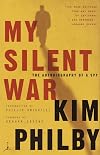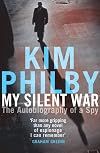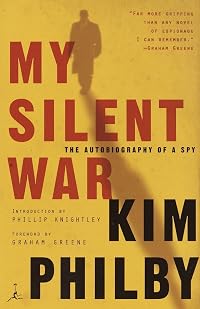
My Silent War: The Autobiography of a Spy
by Kim Philby
On This Page
Description
In the annals of espionage, one name towers above all others: that of H.A.R. “Kim” Philby, the ringleader of the legendary Cambridge spies. A member of the British establishment, Philby joined the Secret Intelligence Service in 1940, rose to the head of Soviet counterintelligence, and, as MI6’s liaison with the CIA and the FBI, betrayed every secret of Allied operations to the Russians, fatally compromising covert actions to roll back the Iron Curtain in the early years of the Cold show more War. Written from Moscow in 1967, My Silent War shook the world and introduced a new archetype in fiction: the unrepentant spy. It inspired John le Carré’s Smiley novels and the later espionage novels of Graham Greene. Kim Philby was history’s most successful spy. He was also an exceptional writer who gave us the great iconic story of the Cold War and revolutionized, in the process, the art of espionage writing. show lessTags
Recommendations


















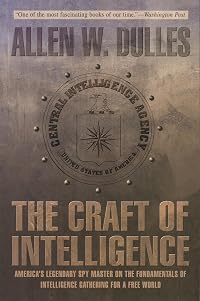
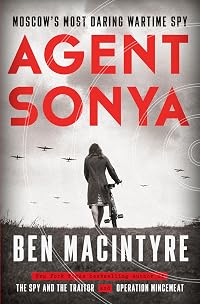
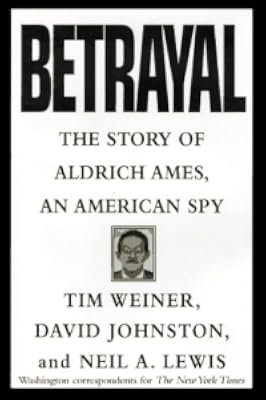


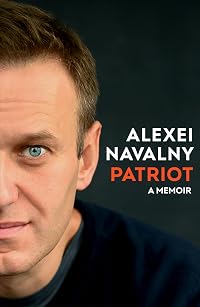
Member Recommendations


Member Reviews
Many of us enjoy the escapism of a good spy story, whether fictional or "true", and there is something strangely fascinating about the world of the secret services - a world we catch a glimpse of in this book. In this autobiography, Philby focuses mainly on the 1940s and early 1950s, when he was employed by Britain's Secret Intelligence Service (SIS or MI6), but when he was secretly working for the Russian secret service. Of course, this is Philby's version of history, but what history book is NOT biased?
What makes Philby interesting is that he was motivated by political principles. He genuinely believed that by spying for the USSR he was advancing the cause of a fairer and more peaceful world. Like many others in the 1930s he could see show more that capitalism was a system based on exploitation, a system which was dragging the world into economic crisis and war, and a system which had given birth to the monstrosity of fascism. (We see similar developments today.)
Unfortunately, the Russian state that Philby decided to serve had moved a long way from genuine Marxism. The 1917 Russian Revolution, led by Lenin, Trotsky and the Bolsheviks, had been a genuine workers' revolution, with working people exercising power through the "soviets" (elected workers' councils). But by the late 1920s the gains and democracy of the revolution had been destroyed by Stalin and the bureaucratic ruling class that had usurped power and turned Russia into a state capitalist tyranny.
Philby's tragedy is that he dedicated his life to a totalitarian state which called itself socialist, but which was just as exploitive a system as the one in the West. Perhaps there was some excuse in the early 1930s for Philby being unaware of the true nature of the USSR, but he stuck loyally by the Stalinist regime even when its crimes could not be ignored, right up to his death in 1988. (Whereas genuine Marxists had long been advocating the slogan of "Neither Washington Nor Moscow But International Socialism".)
In this book, Philby acknowledges that at one point he saw that "much was going badly wrong in the Soviet Union", but he says that he decided to "stick it out, in the confident faith that the principles of the Revolution would outlive the aberration of individuals, however enormous." Sadly, what had gone wrong in the USSR was not just an "aberration", it was a full-scale counter-revolution.
So I enjoyed reading Philby's autobiography, but the wider political background casts a dark shadow over it. And we also need to remember that the real world of secret services is a nasty one. They do not just spy on each other. They spy on (and often persecute) dissenting voices within their own countries, and they conduct dirty tricks such as the toppling of elected governments (as the CIA did in Chile).
The secret services on both sides of Philby's "silent war" are villains. But these spooks are not all-powerful: the Tsar's secret police could not stop the 1917 Revolution; the KGB could not stop the fall of the state capitalist regimes of Russia and Eastern Europe; and MI6 did not even see the collapse of these so-called "communist" regimes coming. show less
What makes Philby interesting is that he was motivated by political principles. He genuinely believed that by spying for the USSR he was advancing the cause of a fairer and more peaceful world. Like many others in the 1930s he could see show more that capitalism was a system based on exploitation, a system which was dragging the world into economic crisis and war, and a system which had given birth to the monstrosity of fascism. (We see similar developments today.)
Unfortunately, the Russian state that Philby decided to serve had moved a long way from genuine Marxism. The 1917 Russian Revolution, led by Lenin, Trotsky and the Bolsheviks, had been a genuine workers' revolution, with working people exercising power through the "soviets" (elected workers' councils). But by the late 1920s the gains and democracy of the revolution had been destroyed by Stalin and the bureaucratic ruling class that had usurped power and turned Russia into a state capitalist tyranny.
Philby's tragedy is that he dedicated his life to a totalitarian state which called itself socialist, but which was just as exploitive a system as the one in the West. Perhaps there was some excuse in the early 1930s for Philby being unaware of the true nature of the USSR, but he stuck loyally by the Stalinist regime even when its crimes could not be ignored, right up to his death in 1988. (Whereas genuine Marxists had long been advocating the slogan of "Neither Washington Nor Moscow But International Socialism".)
In this book, Philby acknowledges that at one point he saw that "much was going badly wrong in the Soviet Union", but he says that he decided to "stick it out, in the confident faith that the principles of the Revolution would outlive the aberration of individuals, however enormous." Sadly, what had gone wrong in the USSR was not just an "aberration", it was a full-scale counter-revolution.
So I enjoyed reading Philby's autobiography, but the wider political background casts a dark shadow over it. And we also need to remember that the real world of secret services is a nasty one. They do not just spy on each other. They spy on (and often persecute) dissenting voices within their own countries, and they conduct dirty tricks such as the toppling of elected governments (as the CIA did in Chile).
The secret services on both sides of Philby's "silent war" are villains. But these spooks are not all-powerful: the Tsar's secret police could not stop the 1917 Revolution; the KGB could not stop the fall of the state capitalist regimes of Russia and Eastern Europe; and MI6 did not even see the collapse of these so-called "communist" regimes coming. show less
This book was quite exciting to read and the quote from Graham Greene on the front cover of my edition, that it is far more gripping than any novel of espionage, while over-stated, does contain some truth. But on the downside, Philby's self righteousness in his own cause oozes off the pages and leaves at times a sour taste in the reader's mouth. His routine dismissal of anyone opposed to the Soviet view as being at best a reactionary if not a fascist, and the denigration of well known Soviet defectors of the 1940s such as Viktor Kravchenko and Walter Krivitzky, will elicit knowing nods from anyone familiar with the standard Soviet reactions to criticism and dissent both then and in later decades.
In the annals of espionage, one name towers above all others: that of H.A.R. “Kim” Philby, the ringleader of the legendary Cambridge spies. A member of the British establishment, Philby joined the Secret Intelligence Service in 1940, rose to the head of Soviet counterintelligence, and, as MI6’s liaison with the CIA and the FBI, betrayed every secret of Allied operations to the Russians, fatally compromising covert actions to roll back the Iron Curtain in the early years of the Cold War.
Written from Moscow in 1967, My Silent War shook the world and introduced a new archetype in fiction: the unrepentant spy. It inspired John le Carré’s Smiley novels and the later espionage novels of Graham Greene. Kim Philby was history’s most show more successful spy. He was also an exceptional writer who gave us the great iconic story of the Cold War and revolutionized, in the process, the art of espionage writing. show less
Written from Moscow in 1967, My Silent War shook the world and introduced a new archetype in fiction: the unrepentant spy. It inspired John le Carré’s Smiley novels and the later espionage novels of Graham Greene. Kim Philby was history’s most show more successful spy. He was also an exceptional writer who gave us the great iconic story of the Cold War and revolutionized, in the process, the art of espionage writing. show less
This is a short, rather bare bones account of Kim Philby's pre-Moscow life, mainly centering on his time spent in the British secret service and abroad. Written by Philby whilst in exile in the Soviet Union, it's not so much an autobiography (Philby avoids talking too much about himself) more an insider's look at a life many of us can never hope, or really want, to lead.
Starting with his Cambridge years and brief stint as a journalist in Franco Spain, it moves on to Philby's early career in the SIS, through his rapid rise through the ranks, finally culminating in his fall from grace following the Burgess and Maclean scandal. Throughout, Philby comments pungently on the various figures who made up his secret world, many of whom are now show more mere footnotes. Of his own actions that led to the death and capture of countless agents he remains chillingly detached.
A couple of the chapters focus on specific cases, several of which seem to have formed the background for a number of well known spy thrillers. One of these, involving an operation to infiltrate spies into Soviet occupied Georgia, is probably the most interesting part of the book, though also the most disturbing, knowing as we do Philby's probable role in the doomed operation. The fact that it's described in such matter-of-fact tones makes it all the more so.
It's hard to say what to make of the book as a whole. As a portrait of the intelligence world it's tainted by the fact that we can never be sure just how truthful Philby's words are, or how much he was forced to leave out by his Moscow masters. As an exploration of Philby as a person, his motivations and deepest convictions, it's rather too shallow and glossy. An interesting read, all told, though much like Philby himself impossible to pin down. show less
Starting with his Cambridge years and brief stint as a journalist in Franco Spain, it moves on to Philby's early career in the SIS, through his rapid rise through the ranks, finally culminating in his fall from grace following the Burgess and Maclean scandal. Throughout, Philby comments pungently on the various figures who made up his secret world, many of whom are now show more mere footnotes. Of his own actions that led to the death and capture of countless agents he remains chillingly detached.
A couple of the chapters focus on specific cases, several of which seem to have formed the background for a number of well known spy thrillers. One of these, involving an operation to infiltrate spies into Soviet occupied Georgia, is probably the most interesting part of the book, though also the most disturbing, knowing as we do Philby's probable role in the doomed operation. The fact that it's described in such matter-of-fact tones makes it all the more so.
It's hard to say what to make of the book as a whole. As a portrait of the intelligence world it's tainted by the fact that we can never be sure just how truthful Philby's words are, or how much he was forced to leave out by his Moscow masters. As an exploration of Philby as a person, his motivations and deepest convictions, it's rather too shallow and glossy. An interesting read, all told, though much like Philby himself impossible to pin down. show less
This is a short, rather bare bones account of Kim Philby's pre-Moscow life, mainly centering on his time spent in the British secret service and abroad. Written by Philby whilst in exile in the Soviet Union, it's not so much an autobiography (Philby avoids talking too much about himself) more an insider's look at a life many of us can never hope, or really want, to lead.
Starting with his Cambridge years and brief stint as a journalist in Franco Spain, it moves on to Philby's early career in the SIS, through his rapid rise through the ranks, finally culminating in his fall from grace following the Burgess and Maclean scandal. Throughout, Philby comments pungently on the various figures who made up his secret world, many of whom are now show more mere footnotes. Of his own actions that led to the death and capture of countless agents he remains chillingly detached.
A couple of the chapters focus on specific cases, several of which seem to have formed the background for a number of well known spy thrillers. One of these, involving an operation to infiltrate spies into Soviet occupied Georgia, is probably the most interesting part of the book, though also the most disturbing, knowing as we do Philby's probable role in the doomed operation. The fact that it's described in such matter-of-fact tones makes it all the more so.
It's hard to say what to make of the book as a whole. As a portrait of the intelligence world it's tainted by the fact that we can never be sure just how truthful Philby's words are, or how much he was forced to leave out by his Moscow masters. As an exploration of Philby as a person, his motivations and deepest convictions, it's rather too shallow and glossy. An interesting read, all told, though much like Philby himself impossible to pin down. show less
Starting with his Cambridge years and brief stint as a journalist in Franco Spain, it moves on to Philby's early career in the SIS, through his rapid rise through the ranks, finally culminating in his fall from grace following the Burgess and Maclean scandal. Throughout, Philby comments pungently on the various figures who made up his secret world, many of whom are now show more mere footnotes. Of his own actions that led to the death and capture of countless agents he remains chillingly detached.
A couple of the chapters focus on specific cases, several of which seem to have formed the background for a number of well known spy thrillers. One of these, involving an operation to infiltrate spies into Soviet occupied Georgia, is probably the most interesting part of the book, though also the most disturbing, knowing as we do Philby's probable role in the doomed operation. The fact that it's described in such matter-of-fact tones makes it all the more so.
It's hard to say what to make of the book as a whole. As a portrait of the intelligence world it's tainted by the fact that we can never be sure just how truthful Philby's words are, or how much he was forced to leave out by his Moscow masters. As an exploration of Philby as a person, his motivations and deepest convictions, it's rather too shallow and glossy. An interesting read, all told, though much like Philby himself impossible to pin down. show less
Full of swagger and lies, condescension and arrogance, but still a fascinating account of spying and treachery. Philby was not a nice man, but he was nothing if not interesting.
This was a very solid and engaging memoir. There will definetly never be a spy book like this one. It was fun, engaging and thrilling to read. His memory was immaculate, giving an amazing look into the inner workings of the SIS and the FBI of the time. I wish the book had been longer, for I found myself not reading just to prolonge the experience.
Members
- Recently Added By
Author Information

4+ Works 396 Members
Some Editions
Awards and Honors
Series
Belongs to Publisher Series
Common Knowledge
- Original publication date
- 1968
- People/Characters
- Kim Philby; Frederick Thornton Peters; Guy Burgess; Claude Dansey; Stewart Menzies; Graham Greene (show all 23); Malcolm Muggeridge; Felix Cowgill; Guy Liddell; Valentine Vivian; Robert Carew-Hunt; Roger Hollis; Jane Archer; Paul Dehn; James Angleton; J. Edgar Hoover; Konstantin Volkov; Donald Maclean; Klaus Fuchs; Jim Skardon; Helenus Milmo; Judith Coplon; Robert J. Lamphere
- Important events
- World War II; Cold War
Classifications
- Genres
- Biography & Memoir, Nonfiction, General Nonfiction, History
- DDC/MDS
- 327.1247041092 — Society, government, & culture Political science International Relations: Spies Foreign policy and specific topics in international relations Espionage and subversion Intelligence Gathering - Europe
- LCC
- UB271 .R92 .P45 — Military Science Military administration Military administration Intelligence
- BISAC
Statistics
- Members
- 392
- Popularity
- 79,299
- Reviews
- 12
- Rating
- (3.63)
- Languages
- Czech, English, German, Portuguese
- Media
- Paper, Ebook
- ISBNs
- 12
- ASINs
- 19