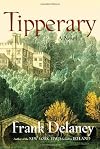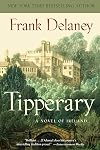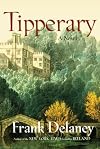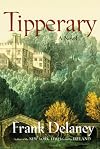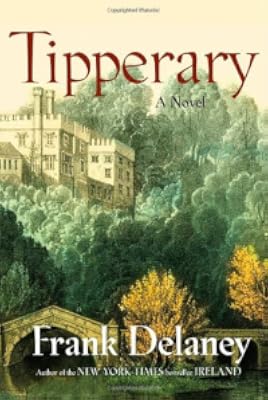
Tipperary
by Frank Delaney
On This Page
Description
“My wooing began in passion, was defined by violence and circumscribed by land; all these elements molded my soul.” So writes Charles O’Brien, the unforgettable hero of bestselling author Frank Delaney’s extraordinary novel—a sweeping epic of obsession, profound devotion, and compelling history involving a turbulent era that would shape modern Ireland.Born into a respected Irish-Anglo family in 1860, Charles loves his native land and its long-suffering but irrepressible people. show more As a healer, he travels the countryside dispensing traditional cures while soaking up stories and legends of bygone times–and witnessing the painful, often violent birth of land-reform measures destined to lead to Irish independence.
At the age of forty, summoned to Paris to treat his dying countryman–the infamous Oscar Wilde–Charles experiences the fateful moment of his life. In a chance encounter with a beautiful and determined young Englishwoman, eighteen-year-old April Burke, he is instantly and passionately smitten–but callously rejected. Vowing to improve himself, Charles returns to Ireland, where he undertakes the preservation of the great and abandoned estate of Tipperary, in whose shadow he has lived his whole life–and which, he discovers, may belong to April and her father.
As Charles pursues his obsession, he writes the “History” of his own life and country. While doing so, he meets the great figures of the day, including Charles Parnell, William Butler Yeats, and George Bernard Shaw. And he also falls victim to less well-known characters–who prove far more dangerous. Tipperary also features a second “historian:” a present-day commentator, a retired and obscure history teacher who suddenly discovers that he has much at stake in the telling of Charles’s story.
In this gloriously absorbing and utterly satisfying novel, a man’ s passion for the woman he loves is twinned with his country’s emergence as a nation. With storytelling as sweeping and dramatic as the land itself, myth, fact, and fiction are all woven together with the power of the great nineteenth-century novelists. Tipperary once again proves Frank Delaney’s unrivaled mastery at bringing Irish history to life.
Praise for Tipperary
“The narrative moves swiftly and surely. . . . A sort of Irish Gone With the Wind, marked by sly humor, historical awareness and plenty of staying power.”—Kirkus Reviews
“Another meticulously researched journey…Delaney’s careful scholarship and compelling storytelling bring it uniquely alive. Highly recommended.”—Library Journal (starred). show less
Tags
Recommendations






Member Reviews
Played out against the backdrop of one of the most turbulent periods of Irish history, Tipperary doesn't read like a history lesson, yet it paints a vivid picture of those brutal days. If it is a love story, then it is a tale of the Irish and their great love of the land, revealed through journal entries, some penned more than half a century apart. This device works well, if a bit awkwardly in a few places. The overall effect is one of a chorus of voices weaving a complex tale of turmoil, with the predominant theme being the people's great passion for Ireland itself. The romances between people mostly take a back seat here, thankfully.
We see predominantly through the eyes of Charles O'Brien, who has an almost Forest Gump-like ability show more to meet and interact with nearly every important player who graced that period of Irish history. His encounters include that tragic genius Oscar Wilde, the legendary Charles Parnell, those brilliant writers William Butler Yeats and James Joyce, and culminate with his interactions with many crucial participants in the battle for Irish Home Rule, including Michael Collins himself. While I initially felt these meeting to be too contrived, I came to the realization that a member of the Irish upper class in that period could indeed have interacted with many of the history makers of those days.
I could barely put the book down while finishing off the final third of it, and having finished, I am left not only with a longing to fill those woefully large gaps in my knowledge of Irish History, but also with a desire to seek out more works by Frank Delaney. show less
We see predominantly through the eyes of Charles O'Brien, who has an almost Forest Gump-like ability show more to meet and interact with nearly every important player who graced that period of Irish history. His encounters include that tragic genius Oscar Wilde, the legendary Charles Parnell, those brilliant writers William Butler Yeats and James Joyce, and culminate with his interactions with many crucial participants in the battle for Irish Home Rule, including Michael Collins himself. While I initially felt these meeting to be too contrived, I came to the realization that a member of the Irish upper class in that period could indeed have interacted with many of the history makers of those days.
I could barely put the book down while finishing off the final third of it, and having finished, I am left not only with a longing to fill those woefully large gaps in my knowledge of Irish History, but also with a desire to seek out more works by Frank Delaney. show less
 This review was written for LibraryThing Early Reviewers.
Tipperary reads like a historical love poem to Ireland. The story is not the sort of historical fiction where history rides alongside the characters; it’s a tale where history itself IS the story. Unless you’ve strong knowledge of Irish history and its personalities, you’d better have reference sources ready. Several times I must admit to regressing to the dreadful Wikipedia search.
The protagonist, Charles O’Brien, is an early twentieth-century Irish Forrest Gump. A common man, with good manners and a kind heart, Charles wanders the historical steps of late 19th and early 20th centuries. His travels eventually land him in London, at the deathbed of Oscar Wilde, where he’s introduced to the love of his life. Celebrities and show more politicians, art and culture, history and war, all meander adjacent to Charles as he pines for his one true love.
Author Frank Delaney has an innate sense of what makes Irish folk tick. The celebrities, as well as the common folk, spring from the pages in their eccentricity and quirk. But with so many souls passing across the stage, character investment does take a bit of time.
Delaney also understands the importance of plot twists. Each twist can be seen as a separate stanza in the love poem to Ireland. Just when all is settled, much like real-life, a wrench comes flying on stage.
My one qualm is also the writer’s greatest treat. He uses alternating narrators, a difficult device for writers. I’m left wondering why the contemporary narrator waited to reveal his investment in the tale. Was this for dramatic emphasis in a dragging middle ground? Could we not have known his alignment to the story sooner, his quest for answers riding alongside as we read each passage from Charlie’s memoir? I honestly feel that holding the narrator’s introduction to the latter third of the story could have afforded an even grander climax. I saw no ‘special’ significance of his entering at the moment Delaney prescribed.
The long tale ends strong and poignant, if a bit contrived. We get to witness Charles O’Brien’s life to its happy end and Ireland’s hope of possibility. “Tipperary” is an enjoyable and enlightening read, especially for admirers of historical fiction or Ireland.
Review first published on Many A Quaint & Curious Volume show less
The protagonist, Charles O’Brien, is an early twentieth-century Irish Forrest Gump. A common man, with good manners and a kind heart, Charles wanders the historical steps of late 19th and early 20th centuries. His travels eventually land him in London, at the deathbed of Oscar Wilde, where he’s introduced to the love of his life. Celebrities and show more politicians, art and culture, history and war, all meander adjacent to Charles as he pines for his one true love.
Author Frank Delaney has an innate sense of what makes Irish folk tick. The celebrities, as well as the common folk, spring from the pages in their eccentricity and quirk. But with so many souls passing across the stage, character investment does take a bit of time.
Delaney also understands the importance of plot twists. Each twist can be seen as a separate stanza in the love poem to Ireland. Just when all is settled, much like real-life, a wrench comes flying on stage.
My one qualm is also the writer’s greatest treat. He uses alternating narrators, a difficult device for writers. I’m left wondering why the contemporary narrator waited to reveal his investment in the tale. Was this for dramatic emphasis in a dragging middle ground? Could we not have known his alignment to the story sooner, his quest for answers riding alongside as we read each passage from Charlie’s memoir? I honestly feel that holding the narrator’s introduction to the latter third of the story could have afforded an even grander climax. I saw no ‘special’ significance of his entering at the moment Delaney prescribed.
The long tale ends strong and poignant, if a bit contrived. We get to witness Charles O’Brien’s life to its happy end and Ireland’s hope of possibility. “Tipperary” is an enjoyable and enlightening read, especially for admirers of historical fiction or Ireland.
Review first published on Many A Quaint & Curious Volume show less
This review was written for LibraryThing Early Reviewers.Tipperary tells the life of Charles O'Brien, an Irishman, traveling healer, proponent of Irish independence and man of some passion. His story is told by the 21st-century narrator who finds some of Charles’ personal effects in an old trunk donated to a library and, curious, begins to research his life.
From with his childhood on an Irish farm and apprenticeship to a local herbalist, we follow Charles to France where he attends Oscar Wilde at his sickbed and also falls in love, and back to Ireland where his life’s crowning achievement is overseeing the restoration of an ancient Irish castle fallen into disrepair and ruin. Meanwhile, the Irish War of Independence and the Irish Civil War are transpiring in the background and, on show more occasion, in the foreground as well.
I found this an enjoyable read, with just a one small quibble. Having the narrator, who punctuates episodes from Charles’ life with additional historical information of interest to the reader as well as an account of how his research is progressing, is a bit confusing and somewhat jarring initially. Just as the reader is becoming engaged with one storyline, the perspective changes and one must guess who’s speaking. Otherwise, this period in the history of Ireland is fascinating and was almost entirely new to me, having very little idea of Irish history prior to independence. The parallels to slavery in America – Irish Catholics were forbidden to write and could be deported for owning books – were a complete surprise. I would definitely read more of Delaney’s works. show less
From with his childhood on an Irish farm and apprenticeship to a local herbalist, we follow Charles to France where he attends Oscar Wilde at his sickbed and also falls in love, and back to Ireland where his life’s crowning achievement is overseeing the restoration of an ancient Irish castle fallen into disrepair and ruin. Meanwhile, the Irish War of Independence and the Irish Civil War are transpiring in the background and, on show more occasion, in the foreground as well.
I found this an enjoyable read, with just a one small quibble. Having the narrator, who punctuates episodes from Charles’ life with additional historical information of interest to the reader as well as an account of how his research is progressing, is a bit confusing and somewhat jarring initially. Just as the reader is becoming engaged with one storyline, the perspective changes and one must guess who’s speaking. Otherwise, this period in the history of Ireland is fascinating and was almost entirely new to me, having very little idea of Irish history prior to independence. The parallels to slavery in America – Irish Catholics were forbidden to write and could be deported for owning books – were a complete surprise. I would definitely read more of Delaney’s works. show less
This review was written for LibraryThing Early Reviewers.Many thanks to Random House and LibraryThing for the opportunity to review an Advance Reader's Edition of Tipperary, by Frank Delaney.
Delaney is a marvelous writer, and his descriptions of the Irish countryside and Tipperary Castle are wonderfully alive. As he details the years-long work of restoring the old castle to its original beauty, I felt I was in the rooms, observing those who worked with great skill, care, and true enjoyment, to restore the structure to brilliance.
Delaney's portraits of some of the novel's human characters are less complete and dazzling than of Tipperary Castle, and I believe the book suffers a bit for it, overall. I did like Charles O'Brien from the start, though his obvious intelligence seemed at odds with show more that streak of innocence and naivete - perhaps the best example of that being his actions after meeting Parnell. But Charles is a good and honorable man, and an interesting narrator.
In April Burke's early scenes, I admire her strength and spunk, even as she is rejecting Charles's affections. Given the situation - declarations of "love at first sight" from a man more than twice her age, a "healer" who hadn't been able to cure her new acquaintance, Oscar Wilde - her feelings are completely understandable. As she begins to pursue the rights to the castle, she does seem "icy," as Charles's mother says, and she seems to take advantage of Charles's good nature and affections. Finally, it is her own devotion to the castle, and her willingness to toil and get dirty with the rest of the workers, that makes me truly like her.
For me, the whole book became more interesting with the introduction of Joe Harney, who becomes Charles's closest friend, and then April's as well. His narration is always honest and lively, and also serves the function of showing a fuller and more objective view of Charles. Harney tells us things that Charles doesn't know or won't speak about, and gives another perspective of Charles and April's relationship.
The modern-day narrator was actually the least engaging character. His narratives helped to explain the historical events of Charles and April's era, which was very beneficial for me, as I was unfamiliar with the events depicted. Once he introduced himself at the start of chapter four, I started to get a sense of him as a character, rather than simply a voice in the present explaining events of the past; however, his own story didn't hold me as that of Charles, April, and Harney did.
Along with the restoration of the castle, the Irish war for independence from Britain is the other "sustained narrative" where Delaney excels. The fights are gripping, and the danger palpable; I feared for Harney's life! What little I have heard of the Irish Republican Army and Sinn Fein had given me a negative impression of them, yet seeing the Irish desire for independence from Britain in the novel, I sympathized with them. I'm not a great fan of history, but I appreciate those historical novels that make me want to learn more about the real events behind them.
Perhaps Tipperary would be a stronger novel without the modern-day narrator; I believe I would have enjoyed the story of long ago just as much without him in the book. But, now that I know him, perhaps I'd like him better if I had time to reread the book. I appreciate Delaney's way of telling stories through different characters, to give the reader a more complete view. Perhaps his next novel could be leaner, shorter, and a bit more focused, but with the same fine writing and fondness for storytelling he exhibits here - the ingredients for a true page-turner. show less
Delaney is a marvelous writer, and his descriptions of the Irish countryside and Tipperary Castle are wonderfully alive. As he details the years-long work of restoring the old castle to its original beauty, I felt I was in the rooms, observing those who worked with great skill, care, and true enjoyment, to restore the structure to brilliance.
Delaney's portraits of some of the novel's human characters are less complete and dazzling than of Tipperary Castle, and I believe the book suffers a bit for it, overall. I did like Charles O'Brien from the start, though his obvious intelligence seemed at odds with show more that streak of innocence and naivete - perhaps the best example of that being his actions after meeting Parnell. But Charles is a good and honorable man, and an interesting narrator.
In April Burke's early scenes, I admire her strength and spunk, even as she is rejecting Charles's affections. Given the situation - declarations of "love at first sight" from a man more than twice her age, a "healer" who hadn't been able to cure her new acquaintance, Oscar Wilde - her feelings are completely understandable. As she begins to pursue the rights to the castle, she does seem "icy," as Charles's mother says, and she seems to take advantage of Charles's good nature and affections. Finally, it is her own devotion to the castle, and her willingness to toil and get dirty with the rest of the workers, that makes me truly like her.
For me, the whole book became more interesting with the introduction of Joe Harney, who becomes Charles's closest friend, and then April's as well. His narration is always honest and lively, and also serves the function of showing a fuller and more objective view of Charles. Harney tells us things that Charles doesn't know or won't speak about, and gives another perspective of Charles and April's relationship.
The modern-day narrator was actually the least engaging character. His narratives helped to explain the historical events of Charles and April's era, which was very beneficial for me, as I was unfamiliar with the events depicted. Once he introduced himself at the start of chapter four, I started to get a sense of him as a character, rather than simply a voice in the present explaining events of the past; however, his own story didn't hold me as that of Charles, April, and Harney did.
Along with the restoration of the castle, the Irish war for independence from Britain is the other "sustained narrative" where Delaney excels. The fights are gripping, and the danger palpable; I feared for Harney's life! What little I have heard of the Irish Republican Army and Sinn Fein had given me a negative impression of them, yet seeing the Irish desire for independence from Britain in the novel, I sympathized with them. I'm not a great fan of history, but I appreciate those historical novels that make me want to learn more about the real events behind them.
Perhaps Tipperary would be a stronger novel without the modern-day narrator; I believe I would have enjoyed the story of long ago just as much without him in the book. But, now that I know him, perhaps I'd like him better if I had time to reread the book. I appreciate Delaney's way of telling stories through different characters, to give the reader a more complete view. Perhaps his next novel could be leaner, shorter, and a bit more focused, but with the same fine writing and fondness for storytelling he exhibits here - the ingredients for a true page-turner. show less
This review was written for LibraryThing Early Reviewers.Often a second novel does not live up to the first – the breakthrough, for an author. Mr. Delaney, though, has served up yet another gem. In the author's note to Ireland, Mr. Delaney points out “Beneath all the histories of Ireland...there has always been another, less obvious, reporter speaking – the oral tradition, Ireland's vernacular narrative, telling the country's tale to her people in stories handed down since God was a boy”.
Although Wikipedia lists ten castles in County Tipperary (http://en.wikipedia.org/wiki/List_of_castles_in_Ireland#County_Tipperary), Mr. Delaney's Tipperary Castle is either a figment of a fine imagination, an amalgam of other castles, or a combination of the two. Charles O'Brien is born on land show more adjacent to Tipperary Castle. The story, or history, is O'Brien's. A personal history of a Castle, and a woman, that captivate him.
Charles' story begins “Be careful about me. Be careful about my country and my people and how we tell our story. We Irish prefer embroideries to plain cloth...We love the 'story' part of the word 'history,' and we love it trimmed out with color and drama. Ribbons and bows. Listen to our tunes, observe a Celtic scroll: we always decorate our essence.” A description of what love of the land means, roughly a quarter of the way into the book, is memorable - and a description of Irish cuisine a third of the way in is laugh out loud funny
"All seemed gray or black - excellent colors in themselves, but not in meat or potatoes. I thought
I was looking at beef until Lady G said 'Why must we always have mutton?'
To which her daughter replied, 'Mamma, this is pork'.
Mr. Delaney puts the O'Brien family in the upper middle class, and after his education Charles becomes an itinerant healer; there were not enough doctors to cover rural Ireland. This allows Charles to travel the country, mingling at all levels of society, from poor tenant farmers to the Anglo-Irish in the country for hundreds of years, to recent more English immigrants.
In Charles' travels he is called to Paris to care for Oscar Wilde, who is on his death bed. Wilde is cared for my many others, including April Burke. With only a few days to live, Wilde tells a tale of another April Burke, an actress in a troupe and former shady lady, that owned Tipperary Castle. Charles, stricken by April, tries desperately to get her attention and does, but not in the way he hopes – she threatens to have the police throw him in jail as a stalker if he doesn't quit following her around.
O'Brien resolves that the way to get noticed is to make the ancestral connection between the Actress April Burke. So begins a quixotic quest. Along the way are strewn other well known Irish names – William Butler Yeats, George Bernard Shaw and Michael Connor to name a few. Throw in a castle restoration of monumental proportion, during a civil war that breaks an imperial yoke, with a genealogical mystery mixed in and you end up with is a finely embroidered and thoroughly enjoyable tale. show less
Although Wikipedia lists ten castles in County Tipperary (http://en.wikipedia.org/wiki/List_of_castles_in_Ireland#County_Tipperary), Mr. Delaney's Tipperary Castle is either a figment of a fine imagination, an amalgam of other castles, or a combination of the two. Charles O'Brien is born on land show more adjacent to Tipperary Castle. The story, or history, is O'Brien's. A personal history of a Castle, and a woman, that captivate him.
Charles' story begins “Be careful about me. Be careful about my country and my people and how we tell our story. We Irish prefer embroideries to plain cloth...We love the 'story' part of the word 'history,' and we love it trimmed out with color and drama. Ribbons and bows. Listen to our tunes, observe a Celtic scroll: we always decorate our essence.” A description of what love of the land means, roughly a quarter of the way into the book, is memorable - and a description of Irish cuisine a third of the way in is laugh out loud funny
"All seemed gray or black - excellent colors in themselves, but not in meat or potatoes. I thought
I was looking at beef until Lady G said 'Why must we always have mutton?'
To which her daughter replied, 'Mamma, this is pork'.
Mr. Delaney puts the O'Brien family in the upper middle class, and after his education Charles becomes an itinerant healer; there were not enough doctors to cover rural Ireland. This allows Charles to travel the country, mingling at all levels of society, from poor tenant farmers to the Anglo-Irish in the country for hundreds of years, to recent more English immigrants.
In Charles' travels he is called to Paris to care for Oscar Wilde, who is on his death bed. Wilde is cared for my many others, including April Burke. With only a few days to live, Wilde tells a tale of another April Burke, an actress in a troupe and former shady lady, that owned Tipperary Castle. Charles, stricken by April, tries desperately to get her attention and does, but not in the way he hopes – she threatens to have the police throw him in jail as a stalker if he doesn't quit following her around.
O'Brien resolves that the way to get noticed is to make the ancestral connection between the Actress April Burke. So begins a quixotic quest. Along the way are strewn other well known Irish names – William Butler Yeats, George Bernard Shaw and Michael Connor to name a few. Throw in a castle restoration of monumental proportion, during a civil war that breaks an imperial yoke, with a genealogical mystery mixed in and you end up with is a finely embroidered and thoroughly enjoyable tale. show less
This review was written for LibraryThing Early Reviewers.Ireland. The word conjures up many images. Green fields, low mountains, picturesque tranquility; rough and tough fighting men, beautiful ladies, and fair haired children; great authors, great fighters, and a fight for nationhood that spanned centuries; each image a part of Ireland, each depicting a land of many facets. To most readers, Ireland is the home or birthplace of Yeats and Shaw, Wilde and Joyce. The Irish urge to create beauty from within their indomitable spirit led to many a feat in all spheres of life.
It is this spirit that Frank Delaney captures in Tipperary, his third US publication. Delaney is himself an émigré from Ireland, born in the very town where the novel is set. His knowledge of the town and its environs comes show more through clearly, as does his experience as a BBC broadcaster and judge for the Man Booker Prize.
Tipperary is told primarily through the voices of two men, separated by a generation, one living at the dawn of the 20th century, and the other at the dawn of the 21st. They are both historians, one writing a personal and contemporary history, the other a commentator on the first. Charles O’Brien, the former of these, is a man of Victorian Ireland, a gentleman born in 1860 to an Ireland depopulated by famine. It is from him that the reader receives most of the story. O’Brien tells of the tumultuous times in which he lived by keeping a personal journal, something he calls a “small personal history of Ireland in my lifetime – a life of love and pain and loss and trouble and delight and knowledge.” The other historian, Michael Nugent, discovered Charles O’Brien’s text and interrupts the narrative often to explain or verify O’Brien’s assertions or historical accuracy. However, unbeknownst to Nugent, he has a personal stake in the story, one which develops as the plot progresses.
The plot follows O’Brien as he pursues April Burke, a woman twenty years his junior with whom he as fallen in love, but who vehemently rejects him. In the process, he meets with famous Irish notables of the period such as George Bernard Shaw, William Butler Yeats, Oscar Wilde, Charles Stewart Parnell, and even Michael Collins, highly esteemed leader of the Irish Republican Army. April is discovered to be the heir to Tipperary Castle (which had lain unclaimed for fifty years) in a time when the landed aristocracy is greatly out of favor in Ireland. Many of the Irish wish the return of their ancestral lands to the people and civil and military unrest are on the rise. Against this backdrop April pursues her land, and Charles pursues her. Ultimately, it is a love story, one of a man for a woman, and of a people for its land.
The novel itself is beautifully written. Delaney switches back and forth from the contemporary history of the late 1800s and early 1900s by Charles O’Brien and the commentary on that text by Nugent. Some readers will find the switches difficult to follow, but this reviewer did not. Delaney made sure within the first sentence, sometimes even the first word, to ensure that the reader knew he had moved from Charles O’Brien’s history to Nugent’s commentary and vice versa. Other voices are later introduced by Nugent to help explain the circumstances surrounding O’Brien’s life such as O’Brien’s mother, Joe Harney, and even April herself.
Delaney has written a novel which delves into the psyches of the various Irish and Anglo-Irish of the period. Their desire for nationhood and the love of the people for their land are a driving force within the story. And yet, he has made it all deeply personal by telling us of the story of Charles and April. In their relationship, we see Ireland reflected.
The first two chapters spend a great deal of time on back story and setting, and readers may find it slow and difficult to read, as Delaney writes O’Brien using a Victorian style. Since O’Brien’s reminisces fill the majority of the first two chapters and the first part of the third, those unschooled in Victorian language may dislike the tone and voice. It is necessary to set the stage for the mystery that comes next, and the reader would be well advised to pay attention. In chapter three, more voices are introduced, and the plot twists and turns in such a way as to make a mystery that is both intriguing and beguiling.
Delaney is a master of the voice. Each of his characters is unique in the way they write, from O’Brien and his Victorian style, to Nugent and his historian’s need for accuracy. From the random and chaotic nature of April Burke’s letters, to the colloquial voice of Joe Harney, each character sees Ireland in a different light, and so illuminates an era of much personal and political turmoil. It is “a story of a passionate romance within an epic struggle for nationhood,” told in a variety of perspectives, but always realizing that history is always personal, and never objective.
I highly recommend Tipperary. It is storytelling as only the Irish can tell. show less
It is this spirit that Frank Delaney captures in Tipperary, his third US publication. Delaney is himself an émigré from Ireland, born in the very town where the novel is set. His knowledge of the town and its environs comes show more through clearly, as does his experience as a BBC broadcaster and judge for the Man Booker Prize.
Tipperary is told primarily through the voices of two men, separated by a generation, one living at the dawn of the 20th century, and the other at the dawn of the 21st. They are both historians, one writing a personal and contemporary history, the other a commentator on the first. Charles O’Brien, the former of these, is a man of Victorian Ireland, a gentleman born in 1860 to an Ireland depopulated by famine. It is from him that the reader receives most of the story. O’Brien tells of the tumultuous times in which he lived by keeping a personal journal, something he calls a “small personal history of Ireland in my lifetime – a life of love and pain and loss and trouble and delight and knowledge.” The other historian, Michael Nugent, discovered Charles O’Brien’s text and interrupts the narrative often to explain or verify O’Brien’s assertions or historical accuracy. However, unbeknownst to Nugent, he has a personal stake in the story, one which develops as the plot progresses.
The plot follows O’Brien as he pursues April Burke, a woman twenty years his junior with whom he as fallen in love, but who vehemently rejects him. In the process, he meets with famous Irish notables of the period such as George Bernard Shaw, William Butler Yeats, Oscar Wilde, Charles Stewart Parnell, and even Michael Collins, highly esteemed leader of the Irish Republican Army. April is discovered to be the heir to Tipperary Castle (which had lain unclaimed for fifty years) in a time when the landed aristocracy is greatly out of favor in Ireland. Many of the Irish wish the return of their ancestral lands to the people and civil and military unrest are on the rise. Against this backdrop April pursues her land, and Charles pursues her. Ultimately, it is a love story, one of a man for a woman, and of a people for its land.
The novel itself is beautifully written. Delaney switches back and forth from the contemporary history of the late 1800s and early 1900s by Charles O’Brien and the commentary on that text by Nugent. Some readers will find the switches difficult to follow, but this reviewer did not. Delaney made sure within the first sentence, sometimes even the first word, to ensure that the reader knew he had moved from Charles O’Brien’s history to Nugent’s commentary and vice versa. Other voices are later introduced by Nugent to help explain the circumstances surrounding O’Brien’s life such as O’Brien’s mother, Joe Harney, and even April herself.
Delaney has written a novel which delves into the psyches of the various Irish and Anglo-Irish of the period. Their desire for nationhood and the love of the people for their land are a driving force within the story. And yet, he has made it all deeply personal by telling us of the story of Charles and April. In their relationship, we see Ireland reflected.
The first two chapters spend a great deal of time on back story and setting, and readers may find it slow and difficult to read, as Delaney writes O’Brien using a Victorian style. Since O’Brien’s reminisces fill the majority of the first two chapters and the first part of the third, those unschooled in Victorian language may dislike the tone and voice. It is necessary to set the stage for the mystery that comes next, and the reader would be well advised to pay attention. In chapter three, more voices are introduced, and the plot twists and turns in such a way as to make a mystery that is both intriguing and beguiling.
Delaney is a master of the voice. Each of his characters is unique in the way they write, from O’Brien and his Victorian style, to Nugent and his historian’s need for accuracy. From the random and chaotic nature of April Burke’s letters, to the colloquial voice of Joe Harney, each character sees Ireland in a different light, and so illuminates an era of much personal and political turmoil. It is “a story of a passionate romance within an epic struggle for nationhood,” told in a variety of perspectives, but always realizing that history is always personal, and never objective.
I highly recommend Tipperary. It is storytelling as only the Irish can tell. show less
This review was written for LibraryThing Early Reviewers.Having read and thoroughly loved Frank Delaney's Ireland last year while enjoying a holiday in Dublin, I was thrilled to learn that I had been selected to receive an Advanced Reader's Copy of his new novel, Tipperary.
Let me say upfront that this review is based solely on what I've read of Tipperary (I've only been able to make it to page 190) as I have no desire to finish the novel.
I find myself comparing both of his novels as mirror images of each other. Both tell a history; Ireland, a history of the land told by a man, and Tipperary, a history of a man told through his land. Ireland reads like a remarkable novel disguised as an engrossing history lesson, while Tipperary reads like a prolonged history lesson disguised as a chaotic show more novel. Ireland has multiple narrators, each voicing his part of the story through clearly separated chapters that tie nicely into each other and weave a wonderful story. Tipperary jumps from narrator to narrator, not always with a clear picture of who is telling what part of the story.
Tipperary follows the twin stories of the narrator, who lives "now," and is researching the journals and papers of Charles O'Brien, who writes of his homeland and the love of his life that he discovers in England. Through a happenstance meeting with Oscar Wilde, he learns that the woman who has stolen his heart may in fact be the rightful owner of Tipperary Castle, which just so happens to be located next door to the O'Brien family's land, and of which she has no prior knowledge, since her true ancestry is a mystery. Truthfully, in my eyes, this all seems a little too contrived and coincidental. The back and forth telling of this story between a combination of Charles O'Brien's journals, stories that he relates from the people he meets in his journeys, his mother's journals and other random correspondence, along with the narrator's frequent interruptions in the story to have his say in the matter, make for a less than cohesive reading experience. I found myself struggling just to keep clear who it was telling the story, and for me, a book should not be a struggle to read, but an escape.
There are some who will love this book, and to them I give my blessing. Frank Delaney is a gifted writer, as evidenced, at least to me, by his previous novel, Ireland. My copy is a well-traveled and loved edition at this point, being lent to many a friend for their enjoyment. It seems that Delaney tried to replicate the same idea with Tipperary, to tell a grand and epic story of Ireland through the eyes of his characters, but somewhere along this particular journey, he definitely lost his way. Someday, I will revisit this book, and see where the journey takes me then, but for now, I find myself simply not caring what happens to Charles O'Brien as I glance longingly at the stack of books next to me that are crying out to be read. show less
Let me say upfront that this review is based solely on what I've read of Tipperary (I've only been able to make it to page 190) as I have no desire to finish the novel.
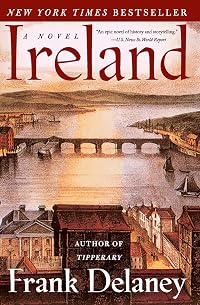
I find myself comparing both of his novels as mirror images of each other. Both tell a history; Ireland, a history of the land told by a man, and Tipperary, a history of a man told through his land. Ireland reads like a remarkable novel disguised as an engrossing history lesson, while Tipperary reads like a prolonged history lesson disguised as a chaotic show more novel. Ireland has multiple narrators, each voicing his part of the story through clearly separated chapters that tie nicely into each other and weave a wonderful story. Tipperary jumps from narrator to narrator, not always with a clear picture of who is telling what part of the story.
Tipperary follows the twin stories of the narrator, who lives "now," and is researching the journals and papers of Charles O'Brien, who writes of his homeland and the love of his life that he discovers in England. Through a happenstance meeting with Oscar Wilde, he learns that the woman who has stolen his heart may in fact be the rightful owner of Tipperary Castle, which just so happens to be located next door to the O'Brien family's land, and of which she has no prior knowledge, since her true ancestry is a mystery. Truthfully, in my eyes, this all seems a little too contrived and coincidental. The back and forth telling of this story between a combination of Charles O'Brien's journals, stories that he relates from the people he meets in his journeys, his mother's journals and other random correspondence, along with the narrator's frequent interruptions in the story to have his say in the matter, make for a less than cohesive reading experience. I found myself struggling just to keep clear who it was telling the story, and for me, a book should not be a struggle to read, but an escape.
There are some who will love this book, and to them I give my blessing. Frank Delaney is a gifted writer, as evidenced, at least to me, by his previous novel, Ireland. My copy is a well-traveled and loved edition at this point, being lent to many a friend for their enjoyment. It seems that Delaney tried to replicate the same idea with Tipperary, to tell a grand and epic story of Ireland through the eyes of his characters, but somewhere along this particular journey, he definitely lost his way. Someday, I will revisit this book, and see where the journey takes me then, but for now, I find myself simply not caring what happens to Charles O'Brien as I glance longingly at the stack of books next to me that are crying out to be read. show less
This review was written for LibraryThing Early Reviewers.Members
- Recently Added By
Lists

Top Five Books of 2014
1,064 works; 397 members
Author Information

34+ Works 4,791 Members
Francis James Joseph Raphael Delaney was born in County Tipperary, Ireland on October 24, 1942. Before becoming a full-time writer, he was a radio and television reporter for BBC broadcasting. He wrote about two dozen fiction and nonfiction books during his lifetime including Ireland, Jim Hawkins and the Curse of Treasure Island, The Celts, A Walk show more to the Western Isles, and James Joyce's Odyssey: A Guide to the Dublin of Ulysses. He died following a stroke on February 21, 2017 at the age of 74. (Bowker Author Biography) show less
Work Relationships
Is contained in
Common Knowledge
- Canonical title
- Tipperary
- Dedication
- For my brother Michael
- First words
- Be careful about me.
Classifications
Statistics
- Members
- 508
- Popularity
- 59,031
- Reviews
- 68
- Rating
- (3.30)
- Languages
- English, French, German
- Media
- Paper, Audiobook, Ebook
- ISBNs
- 9
- ASINs
- 4