
Night Shift
by Stephen King
On This Page
Description
Presents a collection of twenty stories of horror and nightmarish fantasy that transform everyday situations into experiences of compelling terror in the worlds of the living, the dying, and the nonliving.Tags
Recommendations
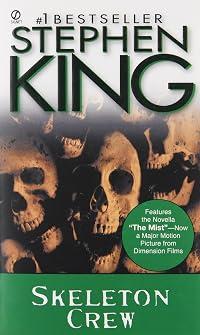
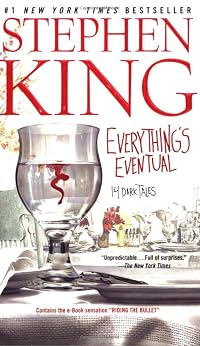
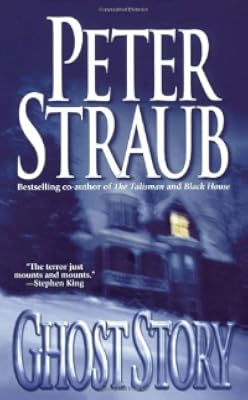
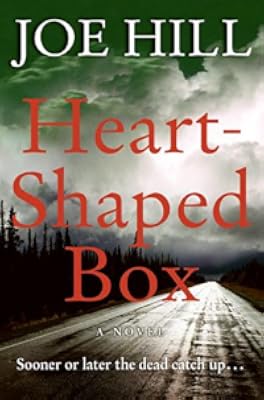
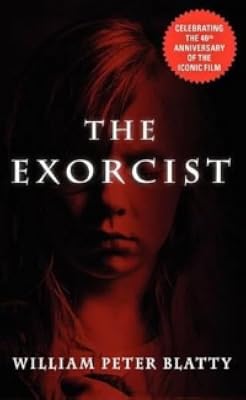
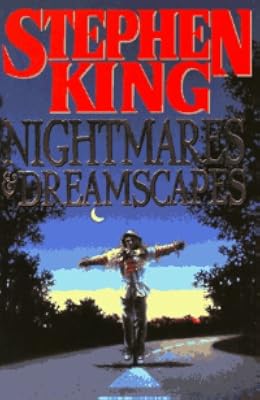
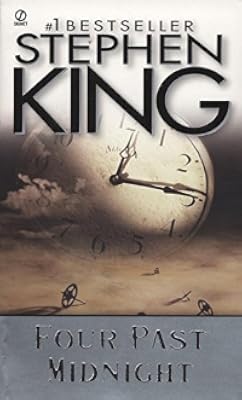
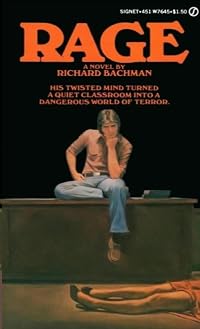
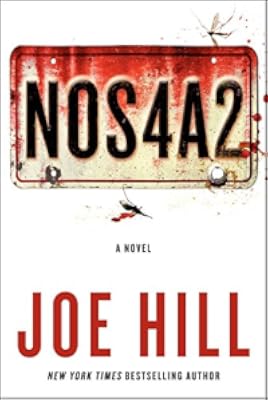
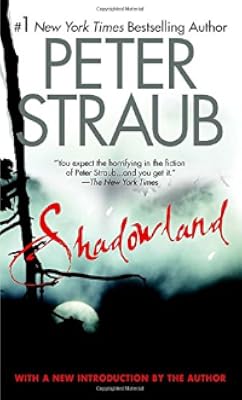
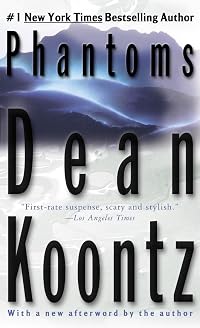
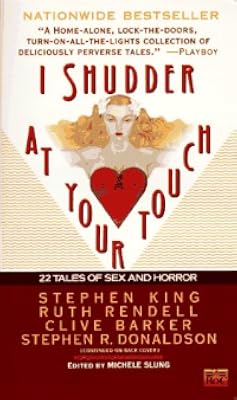
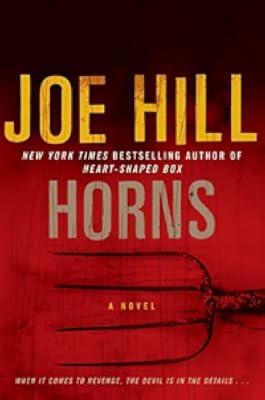
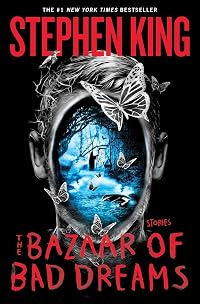
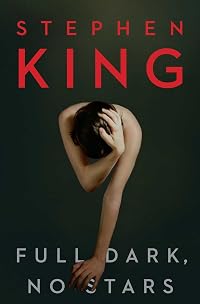
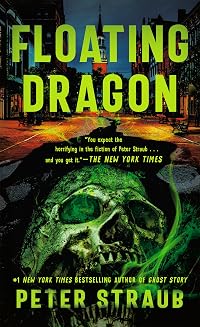
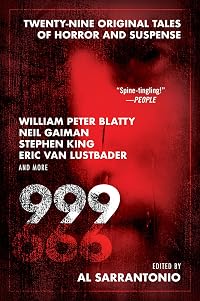

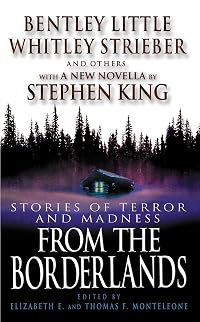
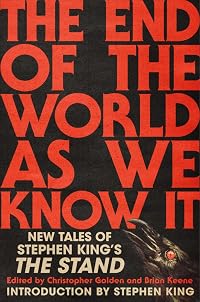

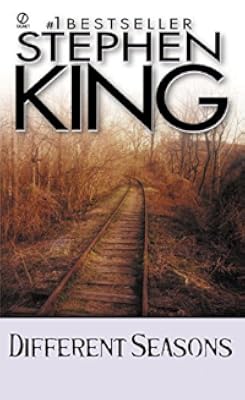


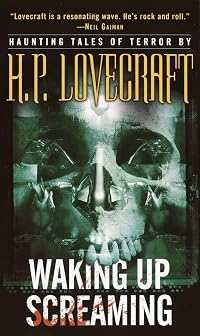



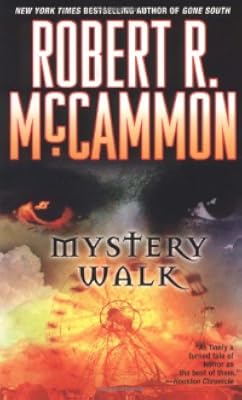
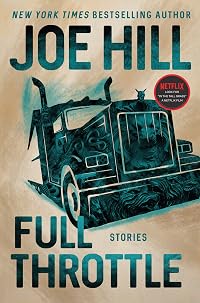
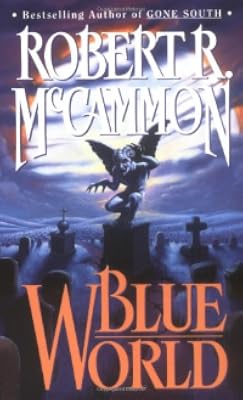
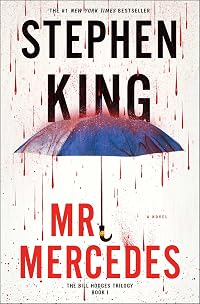
Member Recommendations

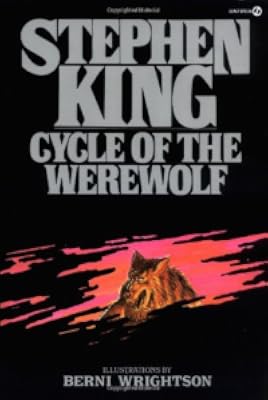
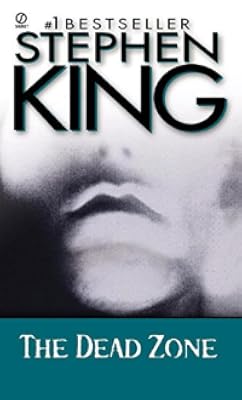
artturnerjr Another collection of King's early fiction where the rough edges are still intact.
40
GWoloszczuk Mccammon's Short stories are very reminiscent of this collection of early King stories
10

Member Reviews
Stephen King is one of my writing idols. I stand in awe of his talent, his skill, and most of all, his discipline. Though perhaps better known for his novels, he is an absolute master of the short form, and this collection of his earliest short stories, originally published in a variety of magazines, provides proof of that.
All of these stories are variations on the theme of fear: things we can see, things we can't see, things we can't even fathom as being real - whether supernatural/paranormal or just the deep dark recesses of the human mind. These stories range from horrific to gory to psychologically thrilling to outright sad.
There are classics - "The Lawnmower Man" and "Children of the Corn" are perhaps the best known, having become show more pop culture tropes - and there are bookends to some of his longer works (most notably Salem's Lot, for which a prequel and sequel are present). There is a lot of uncanny valley and deja vu. There are psycho stalkers and inanimate objects coming to life, vying for human blood. There are aliens and diseases and unknown entities. There is a theme of Maine - the isolation, the snowstorms, the deep pockets of rural unknown.
I wanted to read this collection much faster than I actually could. It was very easy to fall into each story, the rhythm of the storytelling and pace of the plot, when the horror (or sadness) sneaks up at the last second and grabs you! I had to take frequent breaks to clear the residual negativity from my brain before I could keep going.
Nevertheless, this is an amazing collection of work and a wonderful example of the sheer brilliance of the writer. show less
All of these stories are variations on the theme of fear: things we can see, things we can't see, things we can't even fathom as being real - whether supernatural/paranormal or just the deep dark recesses of the human mind. These stories range from horrific to gory to psychologically thrilling to outright sad.
There are classics - "The Lawnmower Man" and "Children of the Corn" are perhaps the best known, having become show more pop culture tropes - and there are bookends to some of his longer works (most notably Salem's Lot, for which a prequel and sequel are present). There is a lot of uncanny valley and deja vu. There are psycho stalkers and inanimate objects coming to life, vying for human blood. There are aliens and diseases and unknown entities. There is a theme of Maine - the isolation, the snowstorms, the deep pockets of rural unknown.
I wanted to read this collection much faster than I actually could. It was very easy to fall into each story, the rhythm of the storytelling and pace of the plot, when the horror (or sadness) sneaks up at the last second and grabs you! I had to take frequent breaks to clear the residual negativity from my brain before I could keep going.
Nevertheless, this is an amazing collection of work and a wonderful example of the sheer brilliance of the writer. show less
For me, this collection of early King stories doesn't hold up as well as the stories in Skeleton Crew. A lot of these stories are overly familiar from their movie adaptations and seem gimmicky now. There are a few that bear up to rereading, though, notably, "I Am the Doorway" and "I Know What You Need." I also enjoyed "Night Surf," a sort-of forerunner to The Stand, which is one of my all-time favorite King novels.
Nachtschicht enthält 20 Kurzgeschichten von Stephen King. 20 Kurzgeschichten, die es mal mehr, mal weniger in sich haben. Dabei gingen mir einige extrem unter die Haut, andere waren dafür nicht gruselig, berührten mich aber trotzdem sehr. In Briefe aus Jerusalem und Einen auf den Weg kehren wir zurück in die Welt von Brennen muss Salem, wobei letztere schon sehr für Gänsehaut sorgte. In Nächtliche Brandung geht’s zurück in die Welt von The Stand – Das Letzte Gefecht
Wenig konnte ich mit Spätschicht, Der Wäschemangler, Schlachtfeld und Lastwagen anfangen. Aber das waren auch die einzigen, bei denen der Funke nicht so recht überspringen wollte.
Sehr hohen Gruselfaktor hatten neben Einen auf den Weg auch Kinder des Mais und show more Das Schreckgespenst. Letztere ist dafür verantwortlich, dass ich auch heute als Erwachsene noch immer nicht schlafen kann, wenn in meinem Zimmer eine Schranktür offen ist. Es war schon faszinierend, dass diese Geschichte für mich auch nach all den Jahren nichts an Faszination verloren hat.
Die Geschichten Der Mauervorsprung, Der Mann, der Blumen liebte und Erdbeerfrühling hatten einen Hauch von Psychothriller während King in Ich weiß, was Du brauchst und Die Frau im Zimmer mal wieder ganz hervorragend zeigte, wie gut er Menschen versteht und in Worten zu portraitieren vermag, und sich dabei mit emotionaler Manipulation und dem Thema Tod auseinandersetzt. Diese beiden Geschichten gingen mir besonders nah.
Auch wenn mich vielleicht nicht alle Kurzgeschichten mitreißen konnten, so muss ich schon erneut feststellen, dass Stephen King ein hervorragender Geschichtenerzähler ist. Nicht jede Geschichte mag gut sein, aber erzählen kann er sie trotzdem ganz hervorragend. show less
Wenig konnte ich mit Spätschicht, Der Wäschemangler, Schlachtfeld und Lastwagen anfangen. Aber das waren auch die einzigen, bei denen der Funke nicht so recht überspringen wollte.
Sehr hohen Gruselfaktor hatten neben Einen auf den Weg auch Kinder des Mais und show more Das Schreckgespenst. Letztere ist dafür verantwortlich, dass ich auch heute als Erwachsene noch immer nicht schlafen kann, wenn in meinem Zimmer eine Schranktür offen ist. Es war schon faszinierend, dass diese Geschichte für mich auch nach all den Jahren nichts an Faszination verloren hat.
Die Geschichten Der Mauervorsprung, Der Mann, der Blumen liebte und Erdbeerfrühling hatten einen Hauch von Psychothriller während King in Ich weiß, was Du brauchst und Die Frau im Zimmer mal wieder ganz hervorragend zeigte, wie gut er Menschen versteht und in Worten zu portraitieren vermag, und sich dabei mit emotionaler Manipulation und dem Thema Tod auseinandersetzt. Diese beiden Geschichten gingen mir besonders nah.
Auch wenn mich vielleicht nicht alle Kurzgeschichten mitreißen konnten, so muss ich schon erneut feststellen, dass Stephen King ein hervorragender Geschichtenerzähler ist. Nicht jede Geschichte mag gut sein, aber erzählen kann er sie trotzdem ganz hervorragend. show less
I reread this because I heard a bunch of references recently to "Children of the Corn" and as long as I was rereading *that*, I figured I'd go all the way.
This collection really stands the test of time. "Children of the Corn" is (still) brilliant, but I think my favorite is (still) "Quitters, Inc."
What I really enjoyed was reading this as an adult and catching the various literary references and influences. Now that I've read plenty of H.P. Lovecraft, I can see that King was practically channeling him. But there are other, more surprising influences. If you've read "David Copperfield," read "The Last Rung On The Ladder" with that in mind -- the story is basically a rewrite of one aspect of D.C.
And there was some unexpected humor. show more "Sometimes They Come Back" is still a wrenching and terrifying story. But I love the fact that the main character fends off a supernatural attack with the help of a book called "Raising Demons." Sounds scary. But that's the title of one of Shirley Jackson's hilariously funny books about her family. And King was almost as heavily influenced by Jackson as he was by Lovecraft.
This book used to scare the bejabbers out of me. Now it just gives me a pleasant case of the shivers. show less
This collection really stands the test of time. "Children of the Corn" is (still) brilliant, but I think my favorite is (still) "Quitters, Inc."
What I really enjoyed was reading this as an adult and catching the various literary references and influences. Now that I've read plenty of H.P. Lovecraft, I can see that King was practically channeling him. But there are other, more surprising influences. If you've read "David Copperfield," read "The Last Rung On The Ladder" with that in mind -- the story is basically a rewrite of one aspect of D.C.
And there was some unexpected humor. show more "Sometimes They Come Back" is still a wrenching and terrifying story. But I love the fact that the main character fends off a supernatural attack with the help of a book called "Raising Demons." Sounds scary. But that's the title of one of Shirley Jackson's hilariously funny books about her family. And King was almost as heavily influenced by Jackson as he was by Lovecraft.
This book used to scare the bejabbers out of me. Now it just gives me a pleasant case of the shivers. show less
This collection represents around twenty of Stephen King's stories from the 1970s. They are variable in quality and style so that the collection is really one for completists of King's work (who generally needs a much larger canvas than the short story) or of twentieth century American horror fiction.
There are clues to other works as ideas are tested out - 'Jerusalem's Lot' is a Lovecraftian prequel to 'Salem's Lot', 'One for the Road' is another incident from the 'Salem's Lot' universe and the grimly pessimistic 'Night Surf' is an incident from the universe of 'The Stand' with a reference to the lethal 'swine flu' of that tale, Captain Trips.
In that last story, you even get a clue to the cause of King's greatest contribution to the show more contemporary psyche, the turning of the clown from the modern harlequin, a figure of melancholy and laughter, into a figure of sheer boogeyman horror. In 'Night Surf', he refers to a 'fun house with a big clown face on the front and you walked in through the mouth' from the narrator's childhood. The reference is to the screaming mouth of an hysterical woman - 'nuff said.
Some of the stories are potboilers that would have served for Weird Tales or even as scripts for Tales from the Crypt (which is referenced in one story) or the Twilight Zone. I tend to think that stories with twists in the tale are a fairly weak form of horror - the Alfred Hitchcock School of jumping to a 'boo' or getting a slightly nasty taste in the mouth. The Ledge' could be a study of cruelty by Roald Dahl. King is better than that and we assume that he did these for the money.
Other stories contain interesting psychological studies - perhaps practice runs in characterisation for the novels. Two stories have little to do with horror as we conventionally understand the genre. 'The Last Rung on the Ladder' is a genuinely moving account of how unintended neglect and small incidents can, if not destroy lives, fail to save them. 'The Woman in the Room' is about euthanasia and moral choice with no demon or dark force in sight.
These are both minor triumphs that makes one wonder what King might have written if he had only produced 10% of his eventual output and had concentrated his genius on literature as the 'New Yorker' might understand the term.
But he made the right choice because, whether potboilers or minor works of genius, so many of these stories have been filmed that you can see that he taps into popular demand for solid narrative. Sometimes the idea is not up to the execution. The short TV version of 'Battleground' was a slick and highly entertaining short episode in a series but the story itself is just silly.
On the other hand, 'Children of the Corn' is genuinely disturbing, a fine adaptation of the European fear of the isolated village community but set in the wastes (as an urban reader might see it) of Nebraska. This should enter anthologies of American literature as a representative of the fears of the mid-twentieth century literary mind as much as 'Call of Chthulhu' that of the early twentieth century and 'Teatro Grottesco' that of its fin de siecle.
Some stories are well written, others less so - the influence of Lovecraft can be seen in more than one story but there is a distinctive King voice. Where Lovecraft sees great and sinister forces impinging on our lives at the margins yet existentially, King sees evil as less heroic but more vicious and more immediate in its use of our own technology against us - trucks, industrial machinery, the forgotten parts of our buildings (the latter better explored by Thomas Ligotti). The problem is not cosmic indifference or the use of us as pawns in some greater game but a truly nasty desire to do us positive harm and to do so remorselessly, without pity and perhaps for the pleasure of it.
There are some stories other than 'Children of the Corn', 'Last Rung on the Ladder' or 'The Woman in the Room' to mark out and these have in common an ability to convey the inner fear of persons faced by horror and of necessity having to deal with it: 'Grey Matter' where a father turns into a slug of sorts, 'Sometimes They Come Back' where a teacher faces zombie hoodlums in his class and 'I Know What You Need' in which a young woman is stalked by magic. These stories show a sensitivity and sympathy for the victims of unnatural acts that is also found in the larger works of this flawed genius.
This is definitely one for the compleat horror library but I wonder what civilians will get out of it. The six stories in the previous paragraph are very much worth reading at a level slightly above mere entertainment. The others you could probably take or leave. show less
There are clues to other works as ideas are tested out - 'Jerusalem's Lot' is a Lovecraftian prequel to 'Salem's Lot', 'One for the Road' is another incident from the 'Salem's Lot' universe and the grimly pessimistic 'Night Surf' is an incident from the universe of 'The Stand' with a reference to the lethal 'swine flu' of that tale, Captain Trips.
In that last story, you even get a clue to the cause of King's greatest contribution to the show more contemporary psyche, the turning of the clown from the modern harlequin, a figure of melancholy and laughter, into a figure of sheer boogeyman horror. In 'Night Surf', he refers to a 'fun house with a big clown face on the front and you walked in through the mouth' from the narrator's childhood. The reference is to the screaming mouth of an hysterical woman - 'nuff said.
Some of the stories are potboilers that would have served for Weird Tales or even as scripts for Tales from the Crypt (which is referenced in one story) or the Twilight Zone. I tend to think that stories with twists in the tale are a fairly weak form of horror - the Alfred Hitchcock School of jumping to a 'boo' or getting a slightly nasty taste in the mouth. The Ledge' could be a study of cruelty by Roald Dahl. King is better than that and we assume that he did these for the money.
Other stories contain interesting psychological studies - perhaps practice runs in characterisation for the novels. Two stories have little to do with horror as we conventionally understand the genre. 'The Last Rung on the Ladder' is a genuinely moving account of how unintended neglect and small incidents can, if not destroy lives, fail to save them. 'The Woman in the Room' is about euthanasia and moral choice with no demon or dark force in sight.
These are both minor triumphs that makes one wonder what King might have written if he had only produced 10% of his eventual output and had concentrated his genius on literature as the 'New Yorker' might understand the term.
But he made the right choice because, whether potboilers or minor works of genius, so many of these stories have been filmed that you can see that he taps into popular demand for solid narrative. Sometimes the idea is not up to the execution. The short TV version of 'Battleground' was a slick and highly entertaining short episode in a series but the story itself is just silly.
On the other hand, 'Children of the Corn' is genuinely disturbing, a fine adaptation of the European fear of the isolated village community but set in the wastes (as an urban reader might see it) of Nebraska. This should enter anthologies of American literature as a representative of the fears of the mid-twentieth century literary mind as much as 'Call of Chthulhu' that of the early twentieth century and 'Teatro Grottesco' that of its fin de siecle.
Some stories are well written, others less so - the influence of Lovecraft can be seen in more than one story but there is a distinctive King voice. Where Lovecraft sees great and sinister forces impinging on our lives at the margins yet existentially, King sees evil as less heroic but more vicious and more immediate in its use of our own technology against us - trucks, industrial machinery, the forgotten parts of our buildings (the latter better explored by Thomas Ligotti). The problem is not cosmic indifference or the use of us as pawns in some greater game but a truly nasty desire to do us positive harm and to do so remorselessly, without pity and perhaps for the pleasure of it.
There are some stories other than 'Children of the Corn', 'Last Rung on the Ladder' or 'The Woman in the Room' to mark out and these have in common an ability to convey the inner fear of persons faced by horror and of necessity having to deal with it: 'Grey Matter' where a father turns into a slug of sorts, 'Sometimes They Come Back' where a teacher faces zombie hoodlums in his class and 'I Know What You Need' in which a young woman is stalked by magic. These stories show a sensitivity and sympathy for the victims of unnatural acts that is also found in the larger works of this flawed genius.
This is definitely one for the compleat horror library but I wonder what civilians will get out of it. The six stories in the previous paragraph are very much worth reading at a level slightly above mere entertainment. The others you could probably take or leave. show less
Usually short-story collections, especially by the same author, always tend to garner a three from me: because they are almost always a mix of the good, the bad and the indifferent, and follows the bell-shaped curve of the normal distribution. But not this one. These collection of early stories from King is filled with the excellent, the very good, the good... and a few mildly good. The distribution skewed heavily in the direction of the terrific.
It's been a long time, but many of the stories linger: the seminal one, in my opinion, is The Boogeyman. This points to the basic concerns behind King's writing, and any horror story in general. The author does a fine job of walking the tightrope between psychological horror and pure, show more gut-wrenching terror, without let-up in the suspense towards the very end.
Another story which still haunts me is The Children of the Corn. The feral children of the cornfield and their twisted religion is one of the finest examples of creeping horror in the traditional sense.
I am the Doorway and Sometimes They Come Back are two other stories which really creeped me out. The remaining ones, even though not as frightening, gave me pleasant shivers and "delicious nightmare" (to borrow a phrase from Alfred Hitchcock). I return to this collection again and again, whenever I feel that life has become too safe and dull... just to remind myself that the boogeyman is always an arm's length away, behind the closet door.
(P.S. BTW, if you ask me to pick one story from this collection as my favourite, I'd choose the only one which is not a horror story - The Last Rung on the Ladder. The reason is personal. I too have a kid sister like the protagonist of that story, who knows that the hay will always be there.) show less
It's been a long time, but many of the stories linger: the seminal one, in my opinion, is The Boogeyman. This points to the basic concerns behind King's writing, and any horror story in general. The author does a fine job of walking the tightrope between psychological horror and pure, show more gut-wrenching terror, without let-up in the suspense towards the very end.
Another story which still haunts me is The Children of the Corn. The feral children of the cornfield and their twisted religion is one of the finest examples of creeping horror in the traditional sense.
I am the Doorway and Sometimes They Come Back are two other stories which really creeped me out. The remaining ones, even though not as frightening, gave me pleasant shivers and "delicious nightmare" (to borrow a phrase from Alfred Hitchcock). I return to this collection again and again, whenever I feel that life has become too safe and dull... just to remind myself that the boogeyman is always an arm's length away, behind the closet door.
(P.S. BTW, if you ask me to pick one story from this collection as my favourite, I'd choose the only one which is not a horror story - The Last Rung on the Ladder. The reason is personal. I too have a kid sister like the protagonist of that story, who knows that the hay will always be there.) show less
It is December 2020 and I picked this up after a good friend recommended it. I started reading and got to the story 'Night Surf' - utterly freaked out, by how close elements of that story are to the current Covid19 SARS2 pandemic. I admit that it rattled me a little. Thank goodness we didn't get quite as far as the characters in the story.
The stories are all strong stories - I have come across some of them before, but not all.
Apart from one item of language (we don't use the 'r' word) that needs to be updated for today, but was accurate for the time, they still stand their ground in the current day.
The stories are all strong stories - I have come across some of them before, but not all.
Apart from one item of language (we don't use the 'r' word) that needs to be updated for today, but was accurate for the time, they still stand their ground in the current day.
Members
- Recently Added By
Lists

Best Horror Books
281 works; 85 members
Top 5 Books by Stephen King
27 works; 18 members

Scary Stories for the Season
160 works; 94 members

Favorite Short Fiction
228 works; 99 members
Stephen King Bibliography
77 works; 3 members
Bloody Good Vampire Books
394 works; 28 members

Nightmare Magazine's Top 100 Horror Books
100 works; 7 members
1970s Horror
28 works; 8 members

Derry and Castle Rock Books By Stephen King
21 works; 3 members

ScaredyKIT 2018
17 works; 1 member

Books That Go Bump in the Night
42 works; 6 members

Florida
366 works; 3 members

BlackDog's Complete Paperbacks From Hell List
639 works; 3 members

Books We Want To Read Again For The First Time
384 works; 160 members

Sinister AudioTales
65 works; 1 member
Eerie eTales
192 works; 3 members

KING of Scare
48 works; 2 members

Reading Glasses Podcast
410 works; 3 members

Nightmares Not Included
175 works; 3 members

Dark Tower Books
47 works; 2 members

Short Story Collections and Anthologies
261 works; 40 members

Favourite Books
1,820 works; 308 members
1970s
657 works; 23 members

Jarett's Books
86 works; 1 member

Books Read in 2012
816 works; 34 members

Books I Own But Haven't Read
144 works; 2 members
Stephen King books
81 works; 1 member
Author Information

966+ Works 867,771 Members
Stephen King was born in Portland, Maine, on September 21, 1947. After graduating with a Bachelor's degree in English from the University of Maine at Orono in 1970, he became a teacher. His spare time was spent writing short stories and novels. King's first novel would never have been published if not for his wife. She removed the first few show more chapters from the garbage after King had thrown them away in frustration. Three months later, he received a $2,500 advance from Doubleday Publishing for the book that went on to sell a modest 13,000 hardcover copies. That book, Carrie, was about a girl with telekinetic powers who is tormented by bullies at school. She uses her power, in turn, to torment and eventually destroy her mean-spirited classmates. When United Artists released the film version in 1976, it was a critical and commercial success. The paperback version of the book, released after the movie, went on to sell more than two-and-a-half million copies. Many of King's other horror novels have been adapted into movies, including The Shining, Firestarter, Pet Semetary, Cujo, Misery, The Stand, and The Tommyknockers. Under the pseudonym Richard Bachman, King has written the books The Running Man, The Regulators, Thinner, The Long Walk, Roadwork, Rage, and It. He is number 2 on the Hollywood Reporter's '25 Most Powerful Authors' 2016 list. King is one of the world's most successful writers, with more than 100 million copies of his works in print. Many of his books have been translated into foreign languages, and he writes new books at a rate of about one per year. In 2003, he received the National Book Foundation Medal for Distinguished Contribution to American Letters. In 2012 his title, The Wind Through the Keyhole made The New York Times Best Seller List. King's title's Mr. Mercedes and Revival made The New York Times Best Seller List in 2014. He won the Edgar Allan Poe Award in 2015 for Best Novel with Mr. Mercedes. King's title Finders Keepers made the New York Times bestseller list in 2015. Sleeping Beauties is his latest 2017 New York Times bestseller. (Bowker Author Biography) Stephen King is the author of more than thirty books, all of them worldwide bestsellers. Among his most recent are "Hearts in Atlantis", "The Girl Who Loved Tom Gordon", "Bag of Bones", & "The Green Mile". "On Writing" is his first book of nonfiction since "Danse Macabre", published in 1981. He served as a judge for Prize Stories: The Best of 1999, The O. Henry Awards. He lives in Bangor, Maine with his wife, novelist Tabitha King. King's book, The Bazaar of Bad Dreams: Stories, made the 2015 New York Times bestseller list. (Publisher Provided) show less
Some Editions
Awards and Honors
Awards
Distinctions
Series
Belongs to Publisher Series
Work Relationships
Is contained in
Contains
Common Knowledge
- Canonical title
- Night Shift
- Original title
- Night Shift
- Alternate titles*
- Night Shift
- Original publication date
- 1978-02
- Important places
- Preacher's Corners, Maine, USA; Jerusalem's Lot, Maine, USA; Gates Falls, Maine, USA; Anson Beach; Key Caroline, Florida, USa; Falmouth, Maine, USA
- First words
- Let's talk, you and I. Let's talk about fear.
- Last words
- (Click to show. Warning: May contain spoilers.)While he waits, he watches TV and drinks a lot of water.
- Original language*
- Englisch
- Canonical LCC
- PS3561.I483
- Disambiguation notice
- ISBN 0373588585 is for Night Shift by Nora Roberts; large print edition.
*Some information comes from Common Knowledge in other languages. Click "Edit" for more information.
Classifications
Statistics
- Members
- 10,566
- Popularity
- 912
- Reviews
- 129
- Rating
- (3.83)
- Languages
- 23 — Catalan, Chinese, Czech, Danish, Dutch, English, Estonian, Finnish, French, German, Greek, Hungarian, Italian, Korean, Latvian, Norwegian (Bokmål), Norwegian, Polish, Slovak, Spanish, Swedish, Turkish, Portuguese (Portugal)
- Media
- Paper, Audiobook, Ebook
- ISBNs
- 128
- ASINs
- 44