
The Bachman Books
by Stephen King
On This Page
Description
A collection of Stephen King's early works, written under the pseudonym of Richard Bachman.Tags
Recommendations






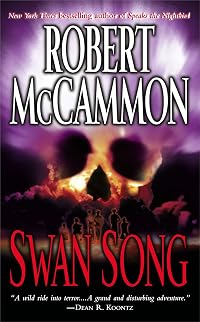
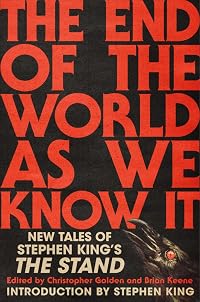

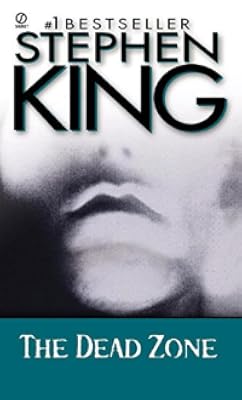
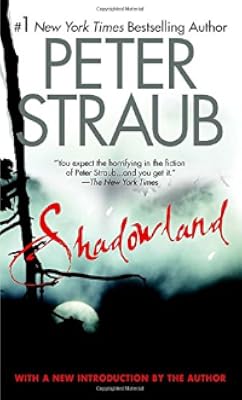



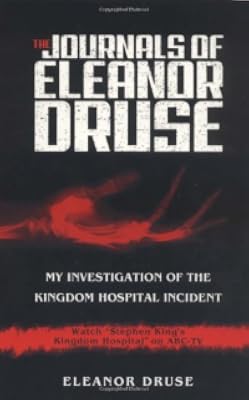
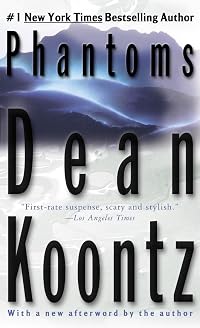
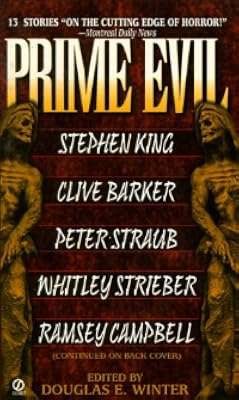
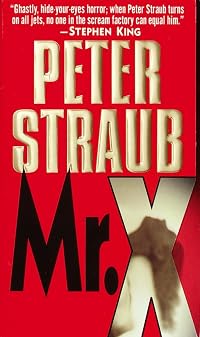



Member Recommendations

artturnerjr Another collection of King's early fiction where the rough edges are still intact.
20
Member Reviews
These four novels have nothing whatsoever to do with the supernatural, as King was using his pseudonym early on as a vehicle to write and publish fiction outside of the expectations he had created under his own name. Surprisingly, despite his other novels having monsters, ghosts, and demons, these stories have less mainstream appeal and seem more like a young author trying to be literary. And achieving it, in my opinion. All four of these books are dead serious, and delve deeply into their characters' psychological underpinnings. Before he died from "cancer of the pseudonym," as King calls it, Bachman did branch out into King territory with his next and last book, Thinner, but the early ones are in their own category. For a different show more take on Stephen King's writing talents, and maybe an appreciation for his diversity and ambition as an author, give The Bachman Books a read. show less
More tightly written than I have come to expect from Stephen King, although that may be that I have read more of his later works, and fewer of the early ones. These stories are intensely memorable - the basic conceits worm their way into the subconscious, and make looking out at the world just that little bit stranger. For me, "The Long Walk" and "Thinner" stand out from the other two novels, but I suspect that different people will react to different stories. These stories are not in your face horror, but the creeping horror of the way that humans can lose their humanity, as they fail to respect the humanity of others.
In terms of individual books:
Rage: Definitely an early work by King, but kind of interesting, if you can stomach the school shooting-centric plot (and if you can find a copy, being that King has let it go out of print).
The Long Walk: An actual masterpiece, something that could easily have been published as a full-on King novel rather than one of the Bachman books. A long, unending scream of a book.
Roadwork: Just so-so, easily the most half-baked of all of these.
The Running Man: Somewhat interesting, but also half-baked and feeling kind of like a rehash of parts of The Long Walk (and those aren't parts Running Man finds a way to improve on).
Overall: interesting, but not necessary unless you're a King completionist. Seek out The Long show more Walk and skip the rest. show less
Rage: Definitely an early work by King, but kind of interesting, if you can stomach the school shooting-centric plot (and if you can find a copy, being that King has let it go out of print).
The Long Walk: An actual masterpiece, something that could easily have been published as a full-on King novel rather than one of the Bachman books. A long, unending scream of a book.
Roadwork: Just so-so, easily the most half-baked of all of these.
The Running Man: Somewhat interesting, but also half-baked and feeling kind of like a rehash of parts of The Long Walk (and those aren't parts Running Man finds a way to improve on).
Overall: interesting, but not necessary unless you're a King completionist. Seek out The Long show more Walk and skip the rest. show less
Ok…
Anyone checking out my book list will instantly notice that I am a Big Stephen King Fan. The stories in this collection are earlier works, written under the pseudonym, Richard Bachman and they are all fantastic. Just shy of 700 pages, it took me a while to complete it – I read slow.
Rage:
Every parent of teens could take a lesson from this story – we don’t have a clue as to what our children are thinking, going through and dealing with in their confused and hormone-driven lives. Alienation, sexual choices, fitting in, standing out or giving up – time goes on and nothing really changes. They have to learn to cope with the world as they find it and for many coping is just too much, too soon.
The Long Walk:
This story was by show more far, one of the scariest things I’ve ever read – because it’s a very clear depiction of the realities of war. This is what happens when our Sons and Daughters sign up to do their patriotic duty and are sent to war by some egotistical maniac. 99 young males walked themselves to death or were shot when they could walk no longer – and for what – riches, fame, glory? Every time a youngster makes the conscious (yet uninformed) decision to commit a crime, it’s just like the long walk, because they all think it will be fine. They think they will get away – and many do, but some don’t and the consequences can be quite grave. How many times have I signed up for something without a realistic idea of what that decision entailed? Too many, I suppose.
Road Work:
This is a story of a man who died when his son died. He was still walking, talking and going through the motions of life – but all zest and zeal were gone. His lack of hope culminated to the point of lunacy, which could, in reality happen to anyone who has no Higher Power as their guide and source of sustenance. The saddest aspect, was that he managed to alienate all those who genuinely cared for him, thus rendering himself alone and unable to fight the demons that plagued his psyche.
The Running Man:
Unlike the movie that ended with a genuine victory for Ben Richards, this anti-hero lost it all – E-VA-RY-FREA-KIN-THING – in his quest to save his sick child. He did well – tried like hell to overcome every challenge that faced him, but end the end, his final choice was to give up all that made him a man or to rebel against the machine – he chose to fight the power – gotta love him for it.
Now, a word for Stephen King. I realize that these are indeed earlier works, and I hope you have learned more and grown much in your years. The liberties you took with the “N” word is a sad testament to the racism in our country. And for your information – Black People do not call each-other nigger. They may say Nigga, Nucka or some variation – it’s BLACK thing and you are not Black and wouldn’t be privy to that inside information. You “F’ed” Up! show less
Anyone checking out my book list will instantly notice that I am a Big Stephen King Fan. The stories in this collection are earlier works, written under the pseudonym, Richard Bachman and they are all fantastic. Just shy of 700 pages, it took me a while to complete it – I read slow.
Rage:
Every parent of teens could take a lesson from this story – we don’t have a clue as to what our children are thinking, going through and dealing with in their confused and hormone-driven lives. Alienation, sexual choices, fitting in, standing out or giving up – time goes on and nothing really changes. They have to learn to cope with the world as they find it and for many coping is just too much, too soon.
The Long Walk:
This story was by show more far, one of the scariest things I’ve ever read – because it’s a very clear depiction of the realities of war. This is what happens when our Sons and Daughters sign up to do their patriotic duty and are sent to war by some egotistical maniac. 99 young males walked themselves to death or were shot when they could walk no longer – and for what – riches, fame, glory? Every time a youngster makes the conscious (yet uninformed) decision to commit a crime, it’s just like the long walk, because they all think it will be fine. They think they will get away – and many do, but some don’t and the consequences can be quite grave. How many times have I signed up for something without a realistic idea of what that decision entailed? Too many, I suppose.
Road Work:
This is a story of a man who died when his son died. He was still walking, talking and going through the motions of life – but all zest and zeal were gone. His lack of hope culminated to the point of lunacy, which could, in reality happen to anyone who has no Higher Power as their guide and source of sustenance. The saddest aspect, was that he managed to alienate all those who genuinely cared for him, thus rendering himself alone and unable to fight the demons that plagued his psyche.
The Running Man:
Unlike the movie that ended with a genuine victory for Ben Richards, this anti-hero lost it all – E-VA-RY-FREA-KIN-THING – in his quest to save his sick child. He did well – tried like hell to overcome every challenge that faced him, but end the end, his final choice was to give up all that made him a man or to rebel against the machine – he chose to fight the power – gotta love him for it.
Now, a word for Stephen King. I realize that these are indeed earlier works, and I hope you have learned more and grown much in your years. The liberties you took with the “N” word is a sad testament to the racism in our country. And for your information – Black People do not call each-other nigger. They may say Nigga, Nucka or some variation – it’s BLACK thing and you are not Black and wouldn’t be privy to that inside information. You “F’ed” Up! show less
it's a little strange to me that there are so many typos in this edition. they're all reprints and assuming these typos (many of them major) are in the originals, they should have been fixed here. ignoring that, we've got stories here that are, at least it seems to me, more...politically pointed than king's stories often are. eminent domain, pollution, class, and devolution of humanity (a common theme, i suppose).
these stories are novellas, and each is long enough to review in its own right.
rage: in the introduction, he says that he wrote this in high school, but revised it much later. it feels like a young, early work, and it needed more maturing. the story itself is pretty solid, but it just didn't work for me all that well, show more especially the ending, which is vintage stephen king, and so certainly had potential, but was just poorly done. in general, there wasn't enough depth and character background. also in the introduction, he says that the story used to be named getting it on; i wish they hadn't changed that. (1.5 - 2 stars)
the long walk: i tried not to have expectations of this, because i knew i only remembered small pieces of it, but i also remember really liking it the first (only?) time i read it. as i was going through it this time, i was thinking that it was overly long, but in retrospect i actually think that it was just right. it dragged a bit, but i think that matched what was happening in the story, and it helped the reader (this reader, anyway) to get to the point that the kids get to; to see the pointlessness of it, and the inevitability. for me, it actually had to be that long or i think i would have missed some of the point. i thought he did a really nice job with this one, and kind of find it endlessly fascinating to think that we (societally) could get to this kind of place. which i think he revisits in the 4th book in this one, the running man. (4 stars)
roadwork: this is so well written. i have no idea why it took me forever to read, because it's a pretty fantastic character study on the effects of grief and subsequent spiral into insanity. (and *so* quintessential stephen king that i can't believe anyone would think richard bachman could be anyone but him, or had stolen a manuscript from him.) the last few pages were a disappointment compared to the rest, but not enough to bring it too far down for me.it also just all seemed like...such a waste, and it didn't make that much sense for bart to do what he did, but i guess since he was going crazy that i couldn't expect it to? . i really like that the title of this one refers to more than it seems to.
"His windshield wipers beat a steady back-and-forth tune, and beyond their sweep snow that had been defrosted into slush ran down the Saf-T-Glass like tears." (4.25 stars)
the running man: (i wonder how 9/11 has imprinted onto our nation's consciousness, and how that incident might affect someone's feeling about the end of this story. i remember really loving this story, along with the long walk. i think i must have been fascinated with the idea, basically, of the gladiators, and that anyone would actually watch someone fight for their life for sport. and in this story, being a part of hunting him down. it seemed like such a statement of where we're going, and soon, but also so far from what i could imagine on my own. i thought these two stories said so much about our culture and our lack of humanity, what we're willing to sacrifice and become for the sake of entertainment. i also liked the gore in each of them, at the time. now, maybe twenty years later or more, i feel ... actually largely the same. except that we've moved far technologically, and we do see these things - videos of people being killed, mauled, what-have-you. and we click, and we watch, and we forward. i remain un-understanding of it. that this story is more reality than fantasy says more than i'd like it to. (4 stars) show less
these stories are novellas, and each is long enough to review in its own right.
rage: in the introduction, he says that he wrote this in high school, but revised it much later. it feels like a young, early work, and it needed more maturing. the story itself is pretty solid, but it just didn't work for me all that well, show more especially the ending, which is vintage stephen king, and so certainly had potential, but was just poorly done. in general, there wasn't enough depth and character background. also in the introduction, he says that the story used to be named getting it on; i wish they hadn't changed that. (1.5 - 2 stars)
the long walk: i tried not to have expectations of this, because i knew i only remembered small pieces of it, but i also remember really liking it the first (only?) time i read it. as i was going through it this time, i was thinking that it was overly long, but in retrospect i actually think that it was just right. it dragged a bit, but i think that matched what was happening in the story, and it helped the reader (this reader, anyway) to get to the point that the kids get to; to see the pointlessness of it, and the inevitability. for me, it actually had to be that long or i think i would have missed some of the point. i thought he did a really nice job with this one, and kind of find it endlessly fascinating to think that we (societally) could get to this kind of place. which i think he revisits in the 4th book in this one, the running man. (4 stars)
roadwork: this is so well written. i have no idea why it took me forever to read, because it's a pretty fantastic character study on the effects of grief and subsequent spiral into insanity. (and *so* quintessential stephen king that i can't believe anyone would think richard bachman could be anyone but him, or had stolen a manuscript from him.) the last few pages were a disappointment compared to the rest, but not enough to bring it too far down for me.
"His windshield wipers beat a steady back-and-forth tune, and beyond their sweep snow that had been defrosted into slush ran down the Saf-T-Glass like tears." (4.25 stars)
the running man: (
Rage - This book was exactly the right length. It had the potential to drag on too long, and I found myself fearing it would, but he ended it at exactly the right point. It had the same feel to it as "Lord Of The Flies". You could feel something bad coming from the odd anarchy happening with the characters, but until it happened you weren't quite sure what it was going to be... Brilliant. Four stars, just because it wasn't a gripping tale. It didn't captivate me like Stephen King usually does.
The Long Walk - This book was incredibly depressing, even for a Stephen King book. Like my partner pointed out, though, if you go to Stephen King you aren't looking for rainbows and butterflies. It always messes with my head a bit when Stephen King show more walks his characters through the town I live in but these characters walked a road I drive every single day for work, and a lot of them died on that road. Morbid, even for Stephen King. However, it captivated me, partly because of its morbidity. I couldn't put it down. There were a few obvious and annoying errors, such as using the word "anthology" instead of "analogy" (unless there is a definition for anthology I'm not aware of that is blatantly incorrect). I think I would give this story on its own three stars.
Roadwork - Fascinating story. This entire breakdown of this man's life was amazing to witness. I particularly liked the way he began to care for the young hitchhiker. She was more than a one-night stand. That was beautiful. The whole story was beautiful and tragic and amazing.
The Running Man - Honestly, after reading The Long Walk and my girlfriend talking nonstop about "Hunger Games" I was kind of tired of the reality-tv-gone-morbid plotline by the time I got to this book. The first half of it, because of that, kind of bored. The ending made it worth it though. The frantic method in which is was written perfectly portrayed the frantic thoughts of the lead character as he tried to figure out what he was going to do. Brilliant.
Overall I am giving the whole book 3 stars because it was entirely too easy for me to put this book down at points and not pick it up for days, even when in the middle of one of the plotlines. Rage is still my favorite of the four because of the psychological and socio themes behind it. Overall, great book. show less
The Long Walk - This book was incredibly depressing, even for a Stephen King book. Like my partner pointed out, though, if you go to Stephen King you aren't looking for rainbows and butterflies. It always messes with my head a bit when Stephen King show more walks his characters through the town I live in but these characters walked a road I drive every single day for work, and a lot of them died on that road. Morbid, even for Stephen King. However, it captivated me, partly because of its morbidity. I couldn't put it down. There were a few obvious and annoying errors, such as using the word "anthology" instead of "analogy" (unless there is a definition for anthology I'm not aware of that is blatantly incorrect). I think I would give this story on its own three stars.
Roadwork - Fascinating story. This entire breakdown of this man's life was amazing to witness. I particularly liked the way he began to care for the young hitchhiker. She was more than a one-night stand. That was beautiful. The whole story was beautiful and tragic and amazing.
The Running Man - Honestly, after reading The Long Walk and my girlfriend talking nonstop about "Hunger Games" I was kind of tired of the reality-tv-gone-morbid plotline by the time I got to this book. The first half of it, because of that, kind of bored. The ending made it worth it though. The frantic method in which is was written perfectly portrayed the frantic thoughts of the lead character as he tried to figure out what he was going to do. Brilliant.
Overall I am giving the whole book 3 stars because it was entirely too easy for me to put this book down at points and not pick it up for days, even when in the middle of one of the plotlines. Rage is still my favorite of the four because of the psychological and socio themes behind it. Overall, great book. show less
Two dystopian stories (The Long Walk & The Running Man) and one drama (Roadwork). All three of them laced with despair.
However, these main characters are all the type to witness (anti-Black) racism and not say anything. Which made me feel more detached from them and their lives.
Even if they main characters themselves were not racists. They did nothing to stop it. Which is very realistic, but again, it made me care less about them.
I did enjoy the side character Bradley Throckmorton from The Running Man. I think that's why I prefer that story over the other two.
However, these main characters are all the type to witness (anti-Black) racism and not say anything. Which made me feel more detached from them and their lives.
Even if they main characters themselves were not racists. They did nothing to stop it. Which is very realistic, but again, it made me care less about them.
I did enjoy the side character Bradley Throckmorton from The Running Man. I think that's why I prefer that story over the other two.
Members
- Recently Added By
Lists

Best Horror Books
281 works; 85 members

Books Read in 2023
5,638 works; 147 members

Books We Want To Read Again For The First Time
384 works; 160 members
Author Information

Stephen King was born in Portland, Maine, on September 21, 1947. After graduating with a Bachelor's degree in English from the University of Maine at Orono in 1970, he became a teacher. His spare time was spent writing short stories and novels. King's first novel would never have been published if not for his wife. She removed the first few show more chapters from the garbage after King had thrown them away in frustration. Three months later, he received a $2,500 advance from Doubleday Publishing for the book that went on to sell a modest 13,000 hardcover copies. That book, Carrie, was about a girl with telekinetic powers who is tormented by bullies at school. She uses her power, in turn, to torment and eventually destroy her mean-spirited classmates. When United Artists released the film version in 1976, it was a critical and commercial success. The paperback version of the book, released after the movie, went on to sell more than two-and-a-half million copies. Many of King's other horror novels have been adapted into movies, including The Shining, Firestarter, Pet Semetary, Cujo, Misery, The Stand, and The Tommyknockers. Under the pseudonym Richard Bachman, King has written the books The Running Man, The Regulators, Thinner, The Long Walk, Roadwork, Rage, and It. He is number 2 on the Hollywood Reporter's '25 Most Powerful Authors' 2016 list. King is one of the world's most successful writers, with more than 100 million copies of his works in print. Many of his books have been translated into foreign languages, and he writes new books at a rate of about one per year. In 2003, he received the National Book Foundation Medal for Distinguished Contribution to American Letters. In 2012 his title, The Wind Through the Keyhole made The New York Times Best Seller List. King's title's Mr. Mercedes and Revival made The New York Times Best Seller List in 2014. He won the Edgar Allan Poe Award in 2015 for Best Novel with Mr. Mercedes. King's title Finders Keepers made the New York Times bestseller list in 2015. Sleeping Beauties is his latest 2017 New York Times bestseller. (Bowker Author Biography) Stephen King is the author of more than thirty books, all of them worldwide bestsellers. Among his most recent are "Hearts in Atlantis", "The Girl Who Loved Tom Gordon", "Bag of Bones", & "The Green Mile". "On Writing" is his first book of nonfiction since "Danse Macabre", published in 1981. He served as a judge for Prize Stories: The Best of 1999, The O. Henry Awards. He lives in Bangor, Maine with his wife, novelist Tabitha King. King's book, The Bazaar of Bad Dreams: Stories, made the 2015 New York Times bestseller list. (Publisher Provided) show less
Awards and Honors
Distinctions
Work Relationships
Is contained in
Contains
Common Knowledge
- Canonical title
- The Bachman Books
- Original publication date
- 1977-09-13 (Rage) (Rage); 1985; 1979-07 (The Long Walk) (The Long Walk); 1981-03-03 (Roadwork) (Roadwork); 1982-05-04 (The Running Man) (The Running Man); 1985-10-04
- People/Characters
- Charlie Decker; Mrs. Underwood; Mr. Vance; Ted Jones; The Major; Ray Garraty (show all 21); Peter McVries; Arthur Baker; Hank Olson; Collie Parker; Pearson; Abraham; Gary Barkovitch; Rank; Stebbins; Scramm; Barton George Dawes; Ben Richards; Cathy Richards; Sheila Richards; Dan Killian
- Important places
- Maine, USA; Boston, Massachusetts, USA; Manchester, New Hampshire, USA; Massachusetts, USA; New Hampshire, USA; New York, USA (show all 9); New York, New York, USA; Portland, Maine, USA; Derry, Maine, USA
- Related movies
- The Running Man (1987 | IMDb); The Long Walk (2025 | IMDb)
- Dedication
- For Susan Artz and WGT [Rage]
This is for Jim Bishop and Burt Hatlen and Ted Holmes. [The Long Walk]
In memory of Charlotte Littlefield
Proverbs 31:10-28. [Roadwork] - First words
- Between 1977 and 1984 I published five novels under the pseudonym of Richard Bachman. [foreword: Why I Was Bachman]
Classifications
Statistics
- Members
- 6,303
- Popularity
- 1,967
- Reviews
- 54
- Rating
- (3.87)
- Languages
- Dutch, English, Portuguese, Russian
- Media
- Paper, Audiobook, Ebook
- ISBNs
- 17
- UPCs
- 4
- ASINs
- 35