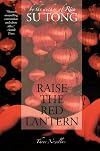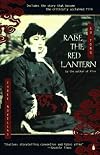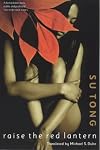
Raise the Red Lantern
by Tong Su
On This Page
Description
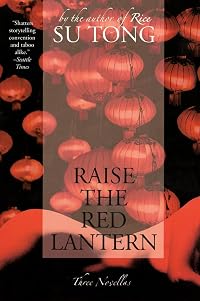
When the internationally acclaimed film Raise the Red Lantern opened in North America, it was praised by critics and nominated for an Academy Award. This extraordinary film was based on an even more sensual and brutal novella by one of China's most provocative New Wave writers--a then-twenty-six-year-old Nanjing resident named Su Tong (now thirty-one). The title novella is a hauntingly beautiful, nightmarish tale of four concubines competing for the sexual attentions of their master in a show more stifling, 1930s rural clan house. Su Tong explores a world where emotionally stunted men thoughtlessly destroy the women in their lives; where the women seem to rise above their surroundings even as they are crushed by their circumstances; where insanity is both a weapon and a refuge. Called "a little feast of venomous subtlety" by one critic. Raise the Red Lantern dazzles with its cold beauty, perverse cruelty, violent sexuality, and hypnotic decadence. Nineteen thirty-four Escapes is also concerned with the grotesque psychological realities of the human condition. The narrator examines the history of his family in 1934, a year of disaster. In this novella, a fifteen-year-old boy (the narrator's uncle) collects and sells dog turds to raise money for rubber overshoes. A strange, demonic landlord hoards semen in a white jade crock. And the narrator's grandmother shivers with happiness as she smells the sweet, putrid odor of death at a pool of rotting corpses. The final novella, Opium Family, is a brilliant portrait of self-destruction. Su Tong describes with riveting suspense the complete breakdown of morality as a rich, enervated family is ruined by greed, lust, sloth, savagery, and impotence: Bandits come and go; a boy tries to shoot the genitals off his father; the intoxicating smell of the family's poppy fields permeates every scene and every action. Written with astonishing intensity and elegance, these three novellas break new ground in Chinese fiction and establish Su Tong as one of the world's most explosive young writers. -- Inside jacket flaps. show lessTags
Recommendations



Member Recommendations
Member Reviews
Whilst Su Tong's novellas will be easily forgotten once read, there's something very hypnotic about his writing style which make his stories compulsive reading. It's very much like sitting down and listening to your grandparents telling stories about their past, at times disjointed, but always coming together and conveying the most important elements of plot and character. The three tales that Su Tong tells in this way, become alive in the reader's mind.
Of course particular credit has to be given to the novella 'Raise the Red Lantern', inspiring the award winning film of the same name. This story is told wonderfully, the different characters come alive in the reader's mind, and you find yourself emotionally involved in the affairs show more concerning fourth concubine, Lotus, as she slips into insanity. All of her anger and her frustrations are passionately described, in a way that the reader feels the struggles of what she is having to go through, and why at times, she strives to put on a face to show her gratitude for being accepted into a wealthy family, whilst she equally recognises her exploitation as a concubine and contemplates death.
The Opium Family and Nineteen Thirty Four Escapes are likewise, brutally vivid stories about the struggles of the poor, and how family life is torn apart. Fantastically told and depicted so vividly, they are hard stories to put down and return from 1930s China, to reality. show less
Of course particular credit has to be given to the novella 'Raise the Red Lantern', inspiring the award winning film of the same name. This story is told wonderfully, the different characters come alive in the reader's mind, and you find yourself emotionally involved in the affairs show more concerning fourth concubine, Lotus, as she slips into insanity. All of her anger and her frustrations are passionately described, in a way that the reader feels the struggles of what she is having to go through, and why at times, she strives to put on a face to show her gratitude for being accepted into a wealthy family, whilst she equally recognises her exploitation as a concubine and contemplates death.
The Opium Family and Nineteen Thirty Four Escapes are likewise, brutally vivid stories about the struggles of the poor, and how family life is torn apart. Fantastically told and depicted so vividly, they are hard stories to put down and return from 1930s China, to reality. show less
I enjoyed all three stories in here. It was a new experience to read Su Tong's work because his writing style and narration was different from most other authors that I have read. I also saw the movie with the same name, and it was interesting to note the differences between the story and the film - the bad servant that constantly antagonizes Lotus is punished in very different ways in the movie and book. All in all, a good read.
I initially bought this book because I'd seen the movie Raise the Red Latern and was intrigued to see whether the book was the same. In fact, the book differs somewhat, and in some ways I liked the differences, but the book made me think that the author was misogynostic. Although it is clear from the text (and history) that the women had no choice in becoming concubines, there seemed to be no sympathy for these women. Each was presented in a consistently bad light, especially in relation to the men in the story. Though the text shows that Lotus had little choice in sinking to virtual prostitution, there was little other discussion of the situation, a huge hole in the story to my way of thinking.
The two other novellas have the same kind show more of treatment of the women in the stories. Though there is lip service paid to the fact that they are poverty stricken and the men hold all the power, there is no sympathy for them. They are pawns, expendible and unloveable.
Several times in Raise the Red Latern one of the male characters says that he's afraid of women -- I suspect the author was speaking from his heart here and that his fear of women carries itself over into his fiction where he can demean and mistreat his female characters. show less
The two other novellas have the same kind show more of treatment of the women in the stories. Though there is lip service paid to the fact that they are poverty stricken and the men hold all the power, there is no sympathy for them. They are pawns, expendible and unloveable.
Several times in Raise the Red Latern one of the male characters says that he's afraid of women -- I suspect the author was speaking from his heart here and that his fear of women carries itself over into his fiction where he can demean and mistreat his female characters. show less
De rode lantaarn is het schokkende relaas van vier vrouwen, gehuwd met dezelfde man. Elk voor zich strijden zij om de liefde en de aandacht van hun echtgenoot en meester. De jonge Lotus moet, na de dood van haar vader, van school af om de vierde vrouw te worden van een rijke koopman. Ze is eenzaam en ongelukkig en vindt maar bij één van de andere vrouwen enige steun en vriendschap. De andere twee maken haar het leven zo zuur mogelijk. Waanzin blijkt haar enige schuilplaats, maar uiteindelijk ook haar wapen te zijn.
Aug 16, 2009Dutch
> Babelio : https://www.babelio.com/livres/Tong-Epouses-et-concubines/35522
> Le Livre de Poche (celiatas) : https://fr.calameo.com/books/0043038443afedcb9a996
> Songlian a dix-neuf ans, elle est étudiante, elle est belle... Mais la ruine de sa famille l'oblige à devenir la quatrième épouse du riche Chen Zuoqian. Dans le huis clos de sa nouvelle vie, elle va découvrir la seule loi qui compte : celle de la séduction. Car la favorite de la nuit est la maîtresse de la maison.
Jalousie, haine, pouvoir : quatre femmes se livrent une lutte à mort pour le plaisir du maître, dans la Chine des années 1920 encore féodale...
Révélation majeure de la jeune littérature chinoise. Épouses et concubines a été porté à l'écran par le show more cinéaste Zhang Yimou et a connu en France un extraordinaire succès. show less
> Le Livre de Poche (celiatas) : https://fr.calameo.com/books/0043038443afedcb9a996
> Songlian a dix-neuf ans, elle est étudiante, elle est belle... Mais la ruine de sa famille l'oblige à devenir la quatrième épouse du riche Chen Zuoqian. Dans le huis clos de sa nouvelle vie, elle va découvrir la seule loi qui compte : celle de la séduction. Car la favorite de la nuit est la maîtresse de la maison.
Jalousie, haine, pouvoir : quatre femmes se livrent une lutte à mort pour le plaisir du maître, dans la Chine des années 1920 encore féodale...
Révélation majeure de la jeune littérature chinoise. Épouses et concubines a été porté à l'écran par le show more cinéaste Zhang Yimou et a connu en France un extraordinaire succès. show less
Feb 1, 2019 (Edited)French
Ratings
Members
- Recently Added By
Lists

Historical Fiction
889 works; 91 members

Chinese Literature
12 works; 4 members

CHINESE FICTION (in translation)
33 works; 1 member

Books Read in 2013
1,630 works; 51 members

Books written in uncommon languages
97 works; 7 members
Author Information

51+ Works 1,247 Members
Awards and Honors
Notable Lists
Series
Belongs to Publisher Series
Work Relationships
Has the adaptation
Common Knowledge
- Canonical title
- Raise the Red Lantern
- Original title
- 妻妾成群; Qīqiè Chéngqún
- Original publication date
- 1990
- Related movies
- Da hong deng long gao gao gua (1991 | IMDb)
Classifications
- Genres
- Fiction and Literature, General Fiction, Historical Fiction
- DDC/MDS
- 813 — Literature & rhetoric American literature in English American fiction in English
- LCC
- PL2904 .T86 .A24 — Language and Literature Languages and literatures of Eastern Asia, Africa, Oceania Languages of Eastern Asia, Africa, Oceania Chinese language and literature Chinese literature Individual authors and works
- BISAC
Statistics
- Members
- 454
- Popularity
- 67,029
- Reviews
- 5
- Rating
- (3.58)
- Languages
- 7 — Dutch, English, Finnish, French, German, Italian, Swedish
- Media
- Paper
- ISBNs
- 19
- ASINs
- 4