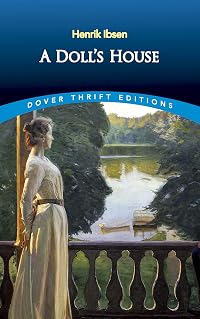
A Doll's House
by Henrik Ibsen
On This Page
Description
When A Doll's House was first published in 1879 it created a sensation. The play follows the ordinary life of a housewife. Gradually the tensions within her marriage become clear and build to a final, stunning action. The play is widely studied because of its sharp critique of 19th century marriage norms, and its feminist tendencies..
Tags
Recommendations

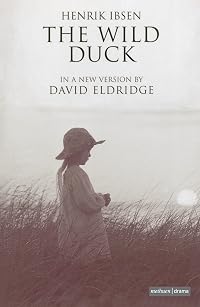

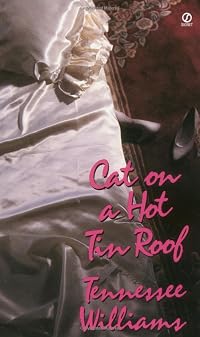
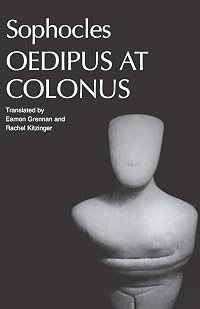

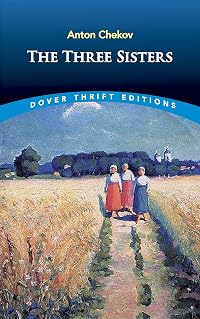






Member Recommendations
CGlanovsky A woman realizes she has a responsibility to herself that comes before that to her husband, children and societal expectations.
40



by anonymous user

by anonymous user

by lucy.depalma, anonymous user



by anonymous user

by anonymous user

by anonymous user




Member Reviews
Ibsen by 1879 had removed himself from the 'theatre of ideas' exemplified by 'Brand' and 'Peer Gynt' (1866-1867). 'A Doll's House' is very different in tone and intent and all the better for that. Apart from the hysterical last act, this is complex theatre that is true to human nature.
Ibsen denied it was a 'feminist play'. He is a better judge of his own work than the liberal middle class that seized upon it for their own ideological purposes. After all, Nora is, in fact, an unimpressive human being - a rather dim young thing looking for an excuse to break free from obligations.
Torvald, her husband, is, of course, a self-deluding patriarch bound by convention and by a duty that suits his leadership position in a bourgeois family but show more both are victims of that convention. The last act sees him genuinely seeking to find a way to make amends in some way he barely understands.
Ibsen is, in this play, observing human interactions in a closed society with theatrical brilliance and the play hooks you with its 'truth' throughout the first two acts. These are interactions with no easy resolution but drama demands resolution and so we have to accept the sometimes risible final act.
Even that final act contains truths in the cold reaction of Nora to the possibility of a way out that would preserve a family and, incidentally, the duty of care to two small children who barely seem to matter here. This is a narcissist finding a way out and seizing it.
Of course, this is not how the play has been presented since. It became part of a more general search for middle class feminist justifications of rebellion reaching a peak of literary canonisation in the next century. Middle class liberals appropriated it for all the wrong reasons.
Nora's true nature was abandoned by ideologues for a 'message', turning the play back to being the vehicle for an 'idea' which is not what Ibsen intended. On the contrary, Ibsen was getting closer to a Chekovian observation of a situation and allowing us to draw our own conclusions.
In this case, the sensible conclusion is that the stable conventions of bourgeois marriage contain the seeds of their own potential unravelling and of human misery at the point when a justifiable questioning of their grounds emerged. Thinking is a problem within such a society.
The justifiable questioning of course requires triggering since most people find it difficult to think 'ab initio'. Torvald cannot but respond when he is triggered. Nora is triggered by Kristine Lynd, her 'friend', who is actually expressive of the sort of sly bitterness that gives feminism a bad name.
There are interesting sub-plots in Dr. Rank being the victim of his selfish father's syphilitic adventurism and in the blackmailing Krogstad whose 'evil' proves to be more grounded in mere mistake and desperation and perhaps deserving of redemption.
The play abounds with error - of a father irresponsibly passing on disease, of a man who forged a document, of a woman forced to give up her own child and caring for Nora's, of Nora being an irresponsible idiot because she has no understanding of money and of Torvald for being conventional.
The errors are errors of ignorance and circumstance. The hidden question is always how to come clean and forgive or not as the case may be. Convention creates order but it also creates misery in creating order yet breaking free of convention also creates misery and pain.
If there is a hidden message, it might be that the ambiguous conservative anarchism of Ibsen is struggling here with the role of truth-telling within social order. As a good dramatist, he leaves any possible answers to the conscience of his audience. Some have come up with nonsense. show less
Ibsen denied it was a 'feminist play'. He is a better judge of his own work than the liberal middle class that seized upon it for their own ideological purposes. After all, Nora is, in fact, an unimpressive human being - a rather dim young thing looking for an excuse to break free from obligations.
Torvald, her husband, is, of course, a self-deluding patriarch bound by convention and by a duty that suits his leadership position in a bourgeois family but show more both are victims of that convention. The last act sees him genuinely seeking to find a way to make amends in some way he barely understands.
Ibsen is, in this play, observing human interactions in a closed society with theatrical brilliance and the play hooks you with its 'truth' throughout the first two acts. These are interactions with no easy resolution but drama demands resolution and so we have to accept the sometimes risible final act.
Even that final act contains truths in the cold reaction of Nora to the possibility of a way out that would preserve a family and, incidentally, the duty of care to two small children who barely seem to matter here. This is a narcissist finding a way out and seizing it.
Of course, this is not how the play has been presented since. It became part of a more general search for middle class feminist justifications of rebellion reaching a peak of literary canonisation in the next century. Middle class liberals appropriated it for all the wrong reasons.
Nora's true nature was abandoned by ideologues for a 'message', turning the play back to being the vehicle for an 'idea' which is not what Ibsen intended. On the contrary, Ibsen was getting closer to a Chekovian observation of a situation and allowing us to draw our own conclusions.
In this case, the sensible conclusion is that the stable conventions of bourgeois marriage contain the seeds of their own potential unravelling and of human misery at the point when a justifiable questioning of their grounds emerged. Thinking is a problem within such a society.
The justifiable questioning of course requires triggering since most people find it difficult to think 'ab initio'. Torvald cannot but respond when he is triggered. Nora is triggered by Kristine Lynd, her 'friend', who is actually expressive of the sort of sly bitterness that gives feminism a bad name.
There are interesting sub-plots in Dr. Rank being the victim of his selfish father's syphilitic adventurism and in the blackmailing Krogstad whose 'evil' proves to be more grounded in mere mistake and desperation and perhaps deserving of redemption.
The play abounds with error - of a father irresponsibly passing on disease, of a man who forged a document, of a woman forced to give up her own child and caring for Nora's, of Nora being an irresponsible idiot because she has no understanding of money and of Torvald for being conventional.
The errors are errors of ignorance and circumstance. The hidden question is always how to come clean and forgive or not as the case may be. Convention creates order but it also creates misery in creating order yet breaking free of convention also creates misery and pain.
If there is a hidden message, it might be that the ambiguous conservative anarchism of Ibsen is struggling here with the role of truth-telling within social order. As a good dramatist, he leaves any possible answers to the conscience of his audience. Some have come up with nonsense. show less
I've been meaning to read this ever since I finished Miss Julie, that beautifully written atrocity of Strindberg. To have an empowered female protagonist in a 20th century Naturalist play is out of ordinary, and Ibsen's plays are just that extraordinary. Like Torvald the husband, almost all of the dramatists of 1900s lobbed all women into the same category, ascribing to them personalities so diverse, that they could've been condensed to just one inconsequential character that nudges the hero's path.
I've never really identified with the utter breakdown of a person described in books, but I saw myself in Nora. Silently going through life liking everything your father likes, and then your lover, afraid of disagreeing, afraid of holding a show more different opinion, going silently through personal hell for them, only to come out and discover that that reciprocation will never come. Nora holds out till her final breakdown. She silently prepares herself for the worst, hoping it would never materialise because they would surely come through for you. And then one desperate moment you realise that you're utterly utterly mistaken.
Walking out has always been hard, you know you'll be labelled as the immoral, inhuman wretch by society. I don't know if Nora ever explained her decisions to the world, and if she did, was it all in vain?
Note:
In this review I've often drifted from Nora's pov to mine. It is grammatically inconsistent, and I realised that when I proofread before hitting send. But I've decided to let it stay as it is. This kind of representation in literature is hard to come by. Oh to discover their pain in yours... show less
I've never really identified with the utter breakdown of a person described in books, but I saw myself in Nora. Silently going through life liking everything your father likes, and then your lover, afraid of disagreeing, afraid of holding a show more different opinion, going silently through personal hell for them, only to come out and discover that that reciprocation will never come. Nora holds out till her final breakdown. She silently prepares herself for the worst, hoping it would never materialise because they would surely come through for you. And then one desperate moment you realise that you're utterly utterly mistaken.
Walking out has always been hard, you know you'll be labelled as the immoral, inhuman wretch by society. I don't know if Nora ever explained her decisions to the world, and if she did, was it all in vain?
Note:
In this review I've often drifted from Nora's pov to mine. It is grammatically inconsistent, and I realised that when I proofread before hitting send. But I've decided to let it stay as it is. This kind of representation in literature is hard to come by. Oh to discover their pain in yours... show less
This does two things that are really hard. 1) It delivers a murderously effective emotional blow in a very compact space, and 2) It has kept its edge for 130 years. I’ve read the criticism and I think that Ibsen’s critique of marriage is out of date, but he is spot on in the moment the Nora realizes that the person she adored and sacrificed for has never loved her, and probable never thought highly of her. I’ve lived through one of those.
English review at the bottom
El idílico retrato de un matrimonio del siglo XIX es el escenario de esta obra que lleva a la reflexión del papel del hombre y la mujer en la sociedad. En una relación común para la época tenemos a Nora, una sumisa, complaciente y perfecta esposa, que acata cada capricho de Torvaldo, el recto, sabio y proveedor esposo, esté último tiene un sentido de la moral, la responsabilidad y el orgullo que(hoy día) podríamos considerar chocante aunque en 1879 era el común. Pero, en este retrato ¿Qué sucede cuando Torvalo descubre que su maravillosa esposa no es tan perfecta como siempre lo ha creído? ¿Puede perdonarle el ser sólo humana? La relación entre ambos es odiosa, si bien se puede señalar a Nora show more como una mujer tonta y débil difiero de esa opinión, es una mujer que actúa como se espera que sea no como es realmente; mientras que Torvaldo es marcado como un imbécil que funge el papel de esposo y padre (de hecho esto último es recalcado en repetidas ocasiones por parte del matrimonio), lo cual tampoco es del todo correcto, sí bien él no es para nada de mi agrado ¿debo juzgarlo en base a la percepción de la realidad actual y no de la de su época? No debo (aunque por dentro lo hago) y por tanto no puedo señalarlo como un hombre tonto y machista.
La premisa de la historia puede ser simple pero el desarrollo de la misma muestra un crecimiento impresionante en Nora quien, tras ocho años de esconder un "terrible"(?) secreto se ve entre Escila y Caribdis, y ella, al sacar el gato de la bolsa, dolorosamente vislumbra la realidad de su vida. De hecho esta situación lleva a que todos los personajes demuestren su verdadera naturaleza fuera de esa imagen de rectitud demostrada ante la sociedad.
La escena final está rodeada de polémica y, pasado más de un siglo, en muchos aspectos estamos igual. Nora es señalada y estigmatizada por sus decisiones y, el otro culpable, es completamente ignorado o justificado en cierto modo. Con un mensaje que dependiendo del lector puede ser positivo o negativo y una metáfora que inequívocamente todos entendemos la lectura es placida y desesperante, una dicotomía que pocas veces funciona pero que aquí lo logra perfectamente.
___________________________________________________
The idyllic portrait of a marriage nineteenth century is the setting for this work that leads to reflection of the role of men and women in society. In a common relationship for the time we have to Nora, a submissive, compaciente and perfect wife who obeys every whim of Torvald, rectum, wise and husband supplier, the latter has a sense of morality, responsibility and pride ( today) we might consider shocking but in 1879 it was the common. But in this picture, what happens when Torvalo discovers that his wonderful wife is not as perfect as he has always believed? You can forgive the only human being? The relationship between the two is odious, but may point to Nora like a fool and weak woman differ from that opinion, is a woman who acts as expected is not as it really is; while Torvald is marked as a jerk who acts the role of husband and father (in fact the latter is stressed repeatedly by marriage), which is not entirely correct, although it is not at all to my liking should I judge him based on the perception of the current reality and not of its time? I should not (although inside I do) and therefore I can not identify it as a fool and macho man.
The premise of the story may be simple but the development of it shows an impressive growth in Nora who, after eight years of hiding a "terrible" (?) secret is found between Scylla and Charybdis, and she, to get out the cat bag, painfully saw the reality of his life. In fact, this situation leads to all the characters to show their true nature beyond the image of rectitude demonstrated to society.
The final scene is surrounded by controversy and more than a century later, in many ways, we are at the same point. Nora is singled out and stigmatized by their decisions and the other guilty, is completely ignored or justified in a way. With a message depending on the reader can be positive or negative and a metaphor that unequivocally all understand reading is placid and exasperating, a dichotomy that rarely works but here it succeeds perfectly. show less
El idílico retrato de un matrimonio del siglo XIX es el escenario de esta obra que lleva a la reflexión del papel del hombre y la mujer en la sociedad. En una relación común para la época tenemos a Nora, una sumisa, complaciente y perfecta esposa, que acata cada capricho de Torvaldo, el recto, sabio y proveedor esposo, esté último tiene un sentido de la moral, la responsabilidad y el orgullo que(hoy día) podríamos considerar chocante aunque en 1879 era el común. Pero, en este retrato ¿Qué sucede cuando Torvalo descubre que su maravillosa esposa no es tan perfecta como siempre lo ha creído? ¿Puede perdonarle el ser sólo humana? La relación entre ambos es odiosa, si bien se puede señalar a Nora show more como una mujer tonta y débil difiero de esa opinión, es una mujer que actúa como se espera que sea no como es realmente; mientras que Torvaldo es marcado como un imbécil que funge el papel de esposo y padre (de hecho esto último es recalcado en repetidas ocasiones por parte del matrimonio), lo cual tampoco es del todo correcto, sí bien él no es para nada de mi agrado ¿debo juzgarlo en base a la percepción de la realidad actual y no de la de su época? No debo (aunque por dentro lo hago) y por tanto no puedo señalarlo como un hombre tonto y machista.
La premisa de la historia puede ser simple pero el desarrollo de la misma muestra un crecimiento impresionante en Nora quien, tras ocho años de esconder un "terrible"(?) secreto se ve entre Escila y Caribdis, y ella, al sacar el gato de la bolsa, dolorosamente vislumbra la realidad de su vida. De hecho esta situación lleva a que todos los personajes demuestren su verdadera naturaleza fuera de esa imagen de rectitud demostrada ante la sociedad.
La escena final está rodeada de polémica y, pasado más de un siglo, en muchos aspectos estamos igual. Nora es señalada y estigmatizada por sus decisiones y, el otro culpable, es completamente ignorado o justificado en cierto modo. Con un mensaje que dependiendo del lector puede ser positivo o negativo y una metáfora que inequívocamente todos entendemos la lectura es placida y desesperante, una dicotomía que pocas veces funciona pero que aquí lo logra perfectamente.
___________________________________________________
The idyllic portrait of a marriage nineteenth century is the setting for this work that leads to reflection of the role of men and women in society. In a common relationship for the time we have to Nora, a submissive, compaciente and perfect wife who obeys every whim of Torvald, rectum, wise and husband supplier, the latter has a sense of morality, responsibility and pride ( today) we might consider shocking but in 1879 it was the common. But in this picture, what happens when Torvalo discovers that his wonderful wife is not as perfect as he has always believed? You can forgive the only human being? The relationship between the two is odious, but may point to Nora like a fool and weak woman differ from that opinion, is a woman who acts as expected is not as it really is; while Torvald is marked as a jerk who acts the role of husband and father (in fact the latter is stressed repeatedly by marriage), which is not entirely correct, although it is not at all to my liking should I judge him based on the perception of the current reality and not of its time? I should not (although inside I do) and therefore I can not identify it as a fool and macho man.
The premise of the story may be simple but the development of it shows an impressive growth in Nora who, after eight years of hiding a "terrible" (?) secret is found between Scylla and Charybdis, and she, to get out the cat bag, painfully saw the reality of his life. In fact, this situation leads to all the characters to show their true nature beyond the image of rectitude demonstrated to society.
The final scene is surrounded by controversy and more than a century later, in many ways, we are at the same point. Nora is singled out and stigmatized by their decisions and the other guilty, is completely ignored or justified in a way. With a message depending on the reader can be positive or negative and a metaphor that unequivocally all understand reading is placid and exasperating, a dichotomy that rarely works but here it succeeds perfectly. show less
"A Doll's House" is a classic. But this edition had an introduction by R. Farquharson Sharp that kinda ruined it for me. Sharp's insistence that Ibsen, "...had no patience with those whose idea of self-development seems to consist chiefly in the abandonment of the sphere in which woman is pre-eminent and the invasion of spheres for which she is organically unsuited.Women, he used to maintain, must inevitably in the future have an immense influence in the practical world: but as mothers, and as mothers only."
But, this isn't true, is it? All that I have read and heard people say, is that his view of the role of women had changed from a very conventional upbringing's stereotypic one to a more humane expectation of the role of gender in show more society. show less
But, this isn't true, is it? All that I have read and heard people say, is that his view of the role of women had changed from a very conventional upbringing's stereotypic one to a more humane expectation of the role of gender in show more society. show less
I was surprised by this: it was a lot more readable and interesting than I expected it to be. It's also very thought-provoking: I can't decide whether Nora's actions are completely convincing, but I've been thinking about the play ever since I finished it, which must be a sign of an excellent piece of writing.
Nora Helmer, years earlier, committed a forgery in order to save the life of her authoritarian husband, Torvald. Now she is being blackmailed and lives in fear of her husband finding out and the shame such a revelation would bring to his career. But when the truth comes out, Nora is shocked to learn where she really stands in her husband's esteem.
Members
- Recently Added By
Lists

Classics you know you should have read but probably haven't
421 works; 408 members

College Reads (Lit Edition)
75 works; 5 members

Mensa for Kids Excellence in Reading Award Program (Grades 9-12)
116 works; 3 members

Five star books
1,767 works; 110 members

1964 College Preparatory Reading List
202 works; 8 members
The Well-Educated Mind Reading Challenge
75 works; 7 members

1870s
15 works; 2 members

Stage Plays/Screenplays/Dialogues/Anything Dialogue-Storytelling Related
81 works; 2 members
r/acting on Reddit - Essential Plays
44 works; 2 members

Books Read in 2009
464 works; 11 members

Hulk's Essential Reading List
38 works; 1 member

Books Read in 2021
5,361 works; 114 members
How to Read a Book's Recommended Reading List
309 works; 10 members
1:28 p.m.'s 350 Stage Plays Challenge
94 works; 3 members

Well-Educated Mind
150 works; 3 members

Greatest Books, allegedly
484 works; 9 members

Europe
205 works; 6 members

AP Lit
363 works; 6 members
Essential/Recognized Stage Plays
115 works; 4 members

Which house?
423 works; 16 members
New Lifetime Reading Plan by Fadiman and Major
225 works; 5 members

Books You Read For University
184 works; 3 members

Books Read in 2023
5,547 works; 145 members

2024 Reads
31 works; 1 member

Books Read In 2009
43 works; 1 member

The Well-Educated Mind, Susan Wise Bauer, 2016
179 works; 3 members

Recommended Reading : 600 Classics Reviewed, Editors of Salem Press, 2015
634 works; 6 members
My Play Collection
769 works; 3 members

My Favorite Plays
25 works; 1 member

School Made Us Read It
380 works; 196 members
Mensa for Kids Excellence in Reading Award Program (Grades 9-12)
116 works; 5 members

Authors from Norway
4 works; 1 member
Favourite 19th century fiction
257 works; 62 members

Books That Changed Me
158 works; 47 members
Plays I Like
230 works; 31 members

Books You Read During High School (For School)
301 works; 53 members

Best Feminist Literature
188 works; 26 members
Favourite Books
1,819 works; 316 members
Most Popular Penguins
70 works; 5 members
19th Century
190 works; 16 members

Women's Stories
88 works; 13 members

Allie's Favourite 150 Books
145 works; 3 members
The 100 Best Books of All Time by Norwegian Book Club (World Library)
104 works; 23 members
Female Protagonist
1,056 works; 57 members
Philip Ward's Lifetime Reading Plan
592 works; 22 members
The Top Ten: Writers Pick Their Favorite Books
240 works; 31 members

F. Scott Fitzgerald's 22 Essential Books (1936)
22 works; 3 members

Books Read in 2012
816 works; 34 members

Books Read in 2016
4,666 works; 199 members
Literature About Women and Girls
394 works; 39 members
Read These Too
458 works; 9 members
Bibliography for How to be a Heroine
148 works; 12 members

I Could Live There
185 works; 12 members

Literary Works Read in College
316 works; 15 members

Global Reads: Books Set in Western Europe
186 works; 10 members
100 World Classics
99 works; 15 members
Blue Pyramid 1,276 Best Books of All Time
1,248 works; 32 members

Books I've read
87 works; 2 members
Western World's Greatest Books - Project Gutenberg
295 works; 15 members

Modernism
140 works; 8 members

Short and Sweet
246 works; 24 members

100 Most Recommended Works
100 works; 11 members
The College Board: 101 Great Books Recommended for College-Bound Readers
111 works; 7 members

bound
100 works; 1 member
Author Information

Henrik Ibsen, poet and playwright was born in Skein, Norway, in 1828. His creative work spanned 50 years, from 1849-1899, and included 25 plays and numerous poems. During his middle, romantic period (1840-1875), Ibsen wrote two important dramatic poems, Brand and Peer Gynt, while the period from 1875-1899 saw the creation of 11 realistic plays show more with contemporary settings, the most famous of which are A Doll's House, Ghosts, Hedda Gabler, and The Wild Duck. Henrik Ibsen died in Christiania (now Oslo), Norway in 1906. (Bowker Author Biography) show less
Some Editions
Awards and Honors
Notable Lists
Torchlight List (#172)
Series
Belongs to Publisher Series
Work Relationships
Is contained in
Pillars of Society / A Doll House / Ghosts / An Enemy of the People / The Wild Duck / Rosmersholm / The Lady from the Sea / Hedda Gabler / The Master Builder / Little Eyolf / John Gabriel Borkman / When We Dead Awaken by Henrik Ibsen
The Master Builder / The Wild Duck / Peer Gynt / Hedda Gabler / Pillars of Society / A Doll's House / The League of Youth / Ghosts / Rosmersholm / John Gabriel Borkman / An Enemy of the People by Henrik Ibsen
World Drama, Volume 2: Italy, Spain, France, Germany, Denmark, Russia and Norway by Barrett H. Clark
A Doll's House / Ghosts / Hedda Gabler / The Master Builder / An Enemy of the People / The Lady from the Sea by Henrik Ibsen
A Doll's House / Ghosts / An Enemy of the People / The Wild Duck / Hedda Gabler / The Master Builder by Henrik Ibsen
A Doll’s House / Ghosts / An Enemy of the People / The Wild Duck / Rosmersholm / The Lady from the Sea / Hedda Gabler / The Master Builder by Henrik Ibsen
Hedda Gabler / Ghosts / An Enemy of the People / A Doll's House / The League of Youth / The Wild Duck / The Master Builder by Henrik Ibsen
Nine Famous Plays, Including: Peer Gynt, A Doll's House, Ghosts, Hedda Gabler, An Enemy of the People by Henrik Ibsen
The Methuen Drama Book of Naturalist Plays: A Doll's House; Miss Julie; The Weavers; Mrs Warren's Profession; Three Sisters; Strife (Play Anthologies) by Chris Megson
Hedda Gabler / Ghosts / An Enemy of the People / A Doll's House / The League of Youth / The Wild Duck / Peer Gynt by Henrik Ibsen
Ibsen's Selected Plays: Peer Gynt; A Doll's House; The Wild Duck; Hedda Gabler; The Master Builder [Norton Critical Edition] by Henrik Ibsen
I capolavori: I pilastri della società-Casa di bambola-Spettri-Un nemico del popolo-La casa dei Rosmer-La donna del mare-Hedda Gabler. Ediz. integrale by Henrik Ibsen
Peer Gynt | Pillars of Society | A Doll's House | Ghosts | An Enemy of the People | The Wild Duck | Hedda Gabler | John Gabriel Borkman by Henrik Ibsen
Erster Band : Brand; Peer Gynt; Stützen der Gesellschaft; Ein Puppenheim; Gespenster by Henrik Ibsen
IBSEN: Five Major Plays A Doll's House, Ghosts, The Wild Duck, Hedda Gabler, The Master Builder Analytic Notes and Review text by JOseph T. Shipley, Ph.D, Columbia University by Henrik Ibsen
Nora - Ein Puppenheim. Gespenster. Ein Volksfeind. Die Wildente. Rosmersholm (= Sämtliche Werke Band IV) by Henrik Ibsen
A Doll's House / An Enemy of the People / Ghosts / Hedda Gabler / The Master Builder / Little Eyolf by Henrik Ibsen
Die Höhepunkte seines Schaffens. DAS KLASSISCHE WERK -PeerGynt; Die Stützen der Gesellschaft; Nora oder ein Puppenheim; Gespenster, Ein Volksfeind, Die Wildente, Hedda Gabler, Das Fest auf Solhaug by Henrik Ibsen
Gespenster und andere Dramen (Nora - Gespenster - Die Wildente - Hedda Gabler - Wenn wir Toten erwachen) by Henrik Ibsen
Peer Gynt / A Doll's House / Ghosts / An Enemy of the People / The Wild Duck / John Gabriel Borkman by Henrik Ibsen
Una cassa di bambola - Spettri - L'anitra selvatica - Peer Gynt - La fattoria Rosmer - La do nna del mare - Hedda Gabler - Quando noi morti ci destiamo by Henrik Ibsen
Samlede verker Bind3 : Samfundets støtter ; Et dukkehjem ; Gengangere ; En folkefiende ; Vildanden ; Rosmersholm by Henrik Ibsen
Has the (non-series) sequel
Has the adaptation
Is replied to in
Inspired
Has as a commentary on the text
Has as a student's study guide
Has as a teacher's guide
Common Knowledge
- Canonical title
- A Doll's House
- Original title
- Et dukkehjem
- Alternate titles*
- Ein Puppenheim
- Original publication date
- 1879
- People/Characters
- Nora Helmer; Torvald Helmer; Christine Linde; Nils Krogstad; Dr. Rank; Anne-Marie (show all 8); A Porter; The Helmer's three children
- Important places
- The Helmer's apartment
- Related movies
- Hallmark Hall of Fame: A Doll's House (1960 | IMDb); A Doll’s House (1973 | Patrick Garland | IMDb); A Doll's House (1973/II | IMDb); A Doll's House (1992 | IMDb); Sara (1993 | IMDb); Nora (2003 | TV | IMDb)
- First words
- Hide the Christmas Tree carefully, Helen. Be sure the children do not see it till this evening, when it is dressed.
- Last words
- (Click to show. Warning: May contain spoilers.)Nora! Nora! (Looks round, and rises.) Empty. She is gone. (A hope flashes across his mind.) The most wonderful thing of all—?
- Publisher's editor*
- Osztovits, Levente
- Original language
- Norwegian; Norwegian: Bokmål
- Canonical DDC/MDS
- 839.8226
- Disambiguation notice
- The original Norwegian title was “Et dukkehjem”.
DO NOT combine with editions which include other works.
3458320237 1978 softcover German insel taschenbuch 323
*Some information comes from Common Knowledge in other languages. Click "Edit" for more information.
Classifications
- Genre
- Fiction and Literature
- DDC/MDS
- 839.8226 — Literature & rhetoric German & related literatures Other Germanic literatures Danish and Norwegian literatures Norwegian literature Norwegian drama 1800–1899
- LCC
- PT8861 .A31 — Language and Literature German, Dutch and Scandinavian literatures Norwegian literature Individual authors or works 19th century Ibsen, Henrik
- BISAC
Statistics
- Members
- 6,198
- Popularity
- 2,011
- Reviews
- 113
- Rating
- (3.62)
- Languages
- 25 — Arabic, Belarusian, Catalan, Chinese, Danish, Dutch, English, Esperanto, Finnish, French, German, Galician, Greek, Hungarian, Indonesian, Italian, Korean, Norwegian (Bokmål), Norwegian, Polish, Portuguese, Russian, Spanish, Swedish, Turkish
- Media
- Paper, Audiobook, Ebook
- ISBNs
- 372
- UPCs
- 2
- ASINs
- 79