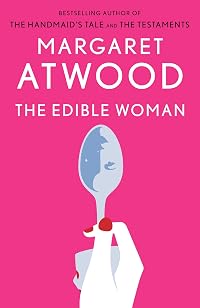
The Edible Woman
by Margaret Atwood
On This Page
Description
A humorous, ironic, disturbing, and parabolic novel features a woman who, after her engagement to be wed, first loses her appetite and then becomes obsessed with the idea that she herself is being eaten.Tags
Recommendations






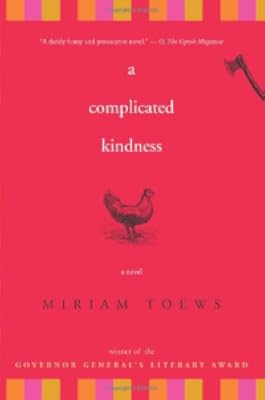

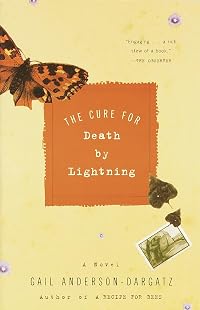
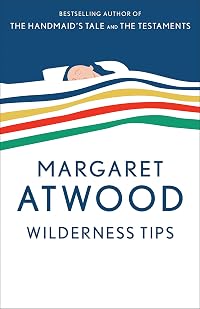
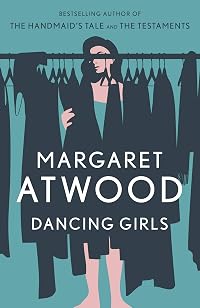








Member Recommendations

Member Reviews
"You look delicious," she told her. "Very appetizing. And that's what will happen to you; that's what you get for being food."
There was a lot to take in with this book. The lines aren't just lines - they are either absurd or profound, full of questions and ideas. The main theme - whether Marian should give up her career and her life and finally get on with what she's "supposed" to want to do - get married, have kids, settle down. But once she's made that decision, her world seems upside down. She can't seem to eat, she can't seem to remember what she's like - she acquiesces to her soon to be husband often. But she bucks the norm and seeks out Duncan, an odd fellow who has a house and roommates that feel very much like Alice in show more Wonderland as they eat their odd dinner on joined card tables and expensive silver and china.
I could definitely identify with Clara, the tired, pregnant mother of 2 (soon to be 3) who wasn't embarrassed by her kids but just rolled with their smelly, messy ways. Marian judged her often and fought to remind herself not to be like her when Marian became a mom and wife. It made me chuckle - of course Marion would do it better than Clara. I enjoyed this odd little story. show less
There was a lot to take in with this book. The lines aren't just lines - they are either absurd or profound, full of questions and ideas. The main theme - whether Marian should give up her career and her life and finally get on with what she's "supposed" to want to do - get married, have kids, settle down. But once she's made that decision, her world seems upside down. She can't seem to eat, she can't seem to remember what she's like - she acquiesces to her soon to be husband often. But she bucks the norm and seeks out Duncan, an odd fellow who has a house and roommates that feel very much like Alice in show more Wonderland as they eat their odd dinner on joined card tables and expensive silver and china.
I could definitely identify with Clara, the tired, pregnant mother of 2 (soon to be 3) who wasn't embarrassed by her kids but just rolled with their smelly, messy ways. Marian judged her often and fought to remind herself not to be like her when Marian became a mom and wife. It made me chuckle - of course Marion would do it better than Clara. I enjoyed this odd little story. show less
Atwood’s first novel, a slightly whimsical, Toronto, sixties take on the Girls of Slender Means idea. Marian and Ainsley are flatmates with an intrusive landlady downstairs trying to supervise their behaviour, doing the sort of short-term jobs that women graduates were expected to put up with until they got married. Marian has an eminently suitable boyfriend, the young lawyer Peter, whilst Ainsley has read too many magazine articles about expressing her femininity and is plotting to become a single mother. Naturally it all goes horribly wrong for both of them.
The perspective, questioning the roles mapped out for women in conservative, postwar, middle-class Canadian society, overlaps with the rise of second wave feminism, but Atwood show more herself insists that she wasn’t really aware of feminist writers when she wrote this.
The real joy of the book is in Atwood’s gloriously off-beat imagery, where sentences start off in one direction and then run off somewhere else altogether, turning ordinary Toronto office and social life into something bizarre and unsettling. I particularly enjoyed the opening of Chapter 20, which comes at a point when Marian has just become engaged to Peter:
The perspective, questioning the roles mapped out for women in conservative, postwar, middle-class Canadian society, overlaps with the rise of second wave feminism, but Atwood show more herself insists that she wasn’t really aware of feminist writers when she wrote this.
The real joy of the book is in Atwood’s gloriously off-beat imagery, where sentences start off in one direction and then run off somewhere else altogether, turning ordinary Toronto office and social life into something bizarre and unsettling. I particularly enjoyed the opening of Chapter 20, which comes at a point when Marian has just become engaged to Peter:
Marian was walking slowly down the aisle, keeping pace with the gentle music that swelled and rippled around her. "Beans," she said. She found the kind marked "Vegetarian" and tossed two cans into her wire cart.show less
ok - so I want to tell you about Atwood's first novel, how the second wave of feminism plays in it, but also, mainly, the humor. This is a really fun, and funny, look at a serious problem - for Marian and for the world, relevant today.
This was Atwood's first novel, written in 1964, and published in 1969 and it sits among the feminist second wave of the late 1960's. Atwood argues this book wasn't part of a movement, as she couldn't know of this second wave because it hadn't happed yet when she wrote. The second wave happened in the late 1960’s, and this novel was eventually published in the thick of it. Maybe it was in the air, or maybe Atwood was just being really normal...
Marian McAlpin lives in a state of what I would call show more blindness, or near-sightedness. She doesn't say it, but she can't figure out this world. She's trying to, and yet at the same time riding along. She has a boyfriend and they're happily uncommitted. She has a job that can't go anywhere. There's a clear-cut glass ceiling and her co-workers are either young and single, like her, or empty-nest wives with steady lives and no interest in moving up anywhere. Everyone around her is a woman, and everyone upstairs, where the decisions are made, is a man. And she lives with a roommate in an unnamed city that seems clearly Toronto. Now her roommate, Ainsley, has her own plan. She wants a baby and she wants to raise it herself. She just needs the right man to impregnate her, and then she needs to discard this person. Morals aren't at issue here. Marian is all practical. If he's kind of a pedophile, she can make herself look younger...
For Marian, everything is ok until her boyfriend, Peter Wollander, proposes. Marian responds by secretly developing an uncontrollable aversion to food. First meat, then carrots, then even cake and pretty much everything else. (Biblical readers of Samuel may take interest the heart-cake Marian presents to Peter.)
The thing is Marian comes across as really normal. She never seems to be going crazy. Her humorous observations and perspectives make sense. When Ainsley plans to bring a man up to their room, Marian wonders how the get rid of the body after they do the deed, without hurting him or drawing any attention. (When Ainsley's plans don't work out, Ainsely is fine, and just figures she'll find another man to fill the role.) Socially near-sighted Marian is just caught up amongst many different and not very comforting or sane guides, role models, and expectations.
The best lines are by Len, the maybe pedophile. He's the one who accuses Ainsley, "You deliberately allowed me to get myself drunk." And complains to her, "What a moron I was to think you were sweet and innocent, when it turns out you were actually college-educated the whole time." That's maybe the best line a very playful and funny book.
But the points here are serious. This novel still works today and is still relevant. The 1963 Toronto cultural and sexism issues are still here. It's also a very fun, smart novel that's enjoyable to read, and shows a writer in complete control. Atwood was clearly a promising writer. 🙂
2025
https://www.librarything.com/topic/375106#9055166 show less
This was Atwood's first novel, written in 1964, and published in 1969 and it sits among the feminist second wave of the late 1960's. Atwood argues this book wasn't part of a movement, as she couldn't know of this second wave because it hadn't happed yet when she wrote. The second wave happened in the late 1960’s, and this novel was eventually published in the thick of it. Maybe it was in the air, or maybe Atwood was just being really normal...
Marian McAlpin lives in a state of what I would call show more blindness, or near-sightedness. She doesn't say it, but she can't figure out this world. She's trying to, and yet at the same time riding along. She has a boyfriend and they're happily uncommitted. She has a job that can't go anywhere. There's a clear-cut glass ceiling and her co-workers are either young and single, like her, or empty-nest wives with steady lives and no interest in moving up anywhere. Everyone around her is a woman, and everyone upstairs, where the decisions are made, is a man. And she lives with a roommate in an unnamed city that seems clearly Toronto. Now her roommate, Ainsley, has her own plan. She wants a baby and she wants to raise it herself. She just needs the right man to impregnate her, and then she needs to discard this person. Morals aren't at issue here. Marian is all practical. If he's kind of a pedophile, she can make herself look younger...
For Marian, everything is ok until her boyfriend, Peter Wollander, proposes. Marian responds by secretly developing an uncontrollable aversion to food. First meat, then carrots, then even cake and pretty much everything else. (Biblical readers of Samuel may take interest the heart-cake Marian presents to Peter.)
The thing is Marian comes across as really normal. She never seems to be going crazy. Her humorous observations and perspectives make sense. When Ainsley plans to bring a man up to their room, Marian wonders how the get rid of the body after they do the deed, without hurting him or drawing any attention. (When Ainsley's plans don't work out, Ainsely is fine, and just figures she'll find another man to fill the role.) Socially near-sighted Marian is just caught up amongst many different and not very comforting or sane guides, role models, and expectations.
The best lines are by Len, the maybe pedophile. He's the one who accuses Ainsley, "You deliberately allowed me to get myself drunk." And complains to her, "What a moron I was to think you were sweet and innocent, when it turns out you were actually college-educated the whole time." That's maybe the best line a very playful and funny book.
But the points here are serious. This novel still works today and is still relevant. The 1963 Toronto cultural and sexism issues are still here. It's also a very fun, smart novel that's enjoyable to read, and shows a writer in complete control. Atwood was clearly a promising writer. 🙂
2025
https://www.librarything.com/topic/375106#9055166 show less
it's kind of amazing that this is her first (published) book because it's pretty radical for 1965 and quite a risk for a publisher to take on a relatively unknown author. although i guess she was already known for her poetry at that point so her name was somewhat familiar. still, this is a statement book to make coming out of the gate. about marriage and society eating woman alive, about femininity and the mixed signals of what that entails pulling women apart. it's nothing new for a reader of today, but it's so well done and i can only think of the splash it must have made when it was released, if people found it. what a subversive joy.
In 1960s Toronto, a young woman develops an eating disorder when she decides to marry the young man she has been having a somewhat desultory relationship with.
There were some laugh out loud moments but most of the time I didn't feel much connection with the main character. But then she didn't seem to feel much connection with herself, so I suppose that was kind of the point. Actually, I would have liked to know more about the side characters even though they seemed to be mostly stereotypes rather than actual people.
There were some laugh out loud moments but most of the time I didn't feel much connection with the main character. But then she didn't seem to feel much connection with herself, so I suppose that was kind of the point. Actually, I would have liked to know more about the side characters even though they seemed to be mostly stereotypes rather than actual people.
A Perfectly Atwoodian Anti-Romance
Ever since her engagement to Peter Wollander, Marian McAlpin has been unable to eat. Not for lack of desire, mind you; rather, her body simply refuses to ingest certain foods under threat of regurgitation. It started with the meats: beef (cows), pork (pigs), poultry (chickens), lambs, and finally seafood (fishes and oysters). Next came eggs, then fruits and vegetables, until even toast and OJ are off-limits. The nearer the date of her wedding, the more ferocious the rebellion brewing in her belly.
By all accounts, her soon-to-be husband is a fine specimen: handsome, educated, well-dressed with impeccable manners, a real up-and-coming lawyer. Any woman should be thrilled with such a catch. So why does show more Marian find herself drawn to Duncan, a sullen and self-absorbed grad student who professes not to care for her - almost as vociferously as she claims her own disinterest in him?
The Edible Woman is a sort of anti-romance, written in Atwood's distinctive style. (There's no shortage of dry humor here.) It's obvious that Marian and Peter are ill-matched from the start; and when the two become engaged (during an especially alarming fight/flight), their relationship continues to unravel. For Marian, anyway; her fiance couldn't be more content with the retro arrangement. (The Edible Woman was originally published in 1969, and it shows in the archaic attitudes towards gender roles and marriage. Attitudes that persist today: for example, did you know that 50% of Americans think it should be illegal for a woman to keep her last name after marriage? I guess lesbians are just supposed to swap last names then?)
Peter slowly begins to consume ("destroy," "assimilate," what have you) Marian: his friends become her friends, while her besties are left behind ("Peter shouldn't be expected to adjust to her past; it was the future that mattered."). His hobbies become her hobbies; his interests, her interests. Though the couple spends more time together, less and less of it is intimate; rather, Peter begins to show her off to others, much like a shiny new bauble he just acquired: "Now that she had been ringed he took pride in displaying her." He becomes more critical of her appearance, telling her what to wear and how to style her hair for his parties. And once her bosses learn of her engagement, it's made perfectly clear that Marian is expected to leave her job before the wedding.
Previously a young, independent woman, Marian finds herself floating as if on a tide, increasingly content (or seemingly so) to leave the important decisions up her to man.
Though I don't have the time (or, frankly, the expertise) to unpack all of the metaphors and symbols found in The Edible Woman, as a vegan I did read it with an eye on the idea of women as food (and, conversely, food as people). As Peter slowly begins to (metaphorically) devour her, Marian loses the ability to (literally) devour others: it's no coincidence that her anorexia begins with nonhuman animals. This would suggest a developing empathy toward other sentient beings, except Marian's disordered eating doesn't stop there: over time, she finds herself unable to consume plant foods as well.
In one especially amusing scene, Marian looks down with horror at the carrot she's grating for a salad: "She was watching her own hands and the peeler and the curl of crisp orange skin. She became aware of the carrot. It's a root, she thought, it grows in the ground and sends up leaves. Then they come along and dig it up, maybe it even makes a sound, a scream too low for us to hear, but it doesn't die right away, it keeps on living, right now it's still alive...
"She thought she felt it twist in her hands. She dropped it on the table. 'Oh no,' she said, almost crying. 'Not this too!'" (page 194)
Ah, the old screaming plants meme! Amirite, vegans?
(Indeed, it's telling that the book's cover art features a seemingly nude woman unceremoniously stuffed into a basket of fruit, instead of displayed, say, inside a package of beef cuts or alongside chicken drumsticks, a la a PETA ad.)
Atwood also continues her irksome trend of classifying fish as not-quite-a-meat - and thus, by extension, not-quite-animals. (She's currently a pescatarian, though she may not have been when writing The Edible Woman.)
By book's end, Marian has neither wasted away nor adopted a plant-based diet. In a conclusion that's as disappointing as it is expected, she forgets those lessons learned and returns to her old habits of consumption. She pridefully boasts to Duncan that she enjoyed steak for lunch. Marian is a consumer again. Yay?
The Edible Woman is interesting in that I found few (if any) of the characters especially likable - and yet I highly enjoyed the story just the same. The ending is a bit silly, perhaps, but perfectly in keeping with the rest of the book. And - spoiler alert! - Marian doesn't end up with either of the guys. Now there's a love triangle I can root for.
A strong 4.5 stars, rounded up to 5 on Amazon. Atwood could rewrite the Yellow Pages, and I'd happily read it.
http://www.easyvegan.info/2014/03/17/the-edible-woman-by-margaret-atwood/ show less
Ever since her engagement to Peter Wollander, Marian McAlpin has been unable to eat. Not for lack of desire, mind you; rather, her body simply refuses to ingest certain foods under threat of regurgitation. It started with the meats: beef (cows), pork (pigs), poultry (chickens), lambs, and finally seafood (fishes and oysters). Next came eggs, then fruits and vegetables, until even toast and OJ are off-limits. The nearer the date of her wedding, the more ferocious the rebellion brewing in her belly.
By all accounts, her soon-to-be husband is a fine specimen: handsome, educated, well-dressed with impeccable manners, a real up-and-coming lawyer. Any woman should be thrilled with such a catch. So why does show more Marian find herself drawn to Duncan, a sullen and self-absorbed grad student who professes not to care for her - almost as vociferously as she claims her own disinterest in him?
The Edible Woman is a sort of anti-romance, written in Atwood's distinctive style. (There's no shortage of dry humor here.) It's obvious that Marian and Peter are ill-matched from the start; and when the two become engaged (during an especially alarming fight/flight), their relationship continues to unravel. For Marian, anyway; her fiance couldn't be more content with the retro arrangement. (The Edible Woman was originally published in 1969, and it shows in the archaic attitudes towards gender roles and marriage. Attitudes that persist today: for example, did you know that 50% of Americans think it should be illegal for a woman to keep her last name after marriage? I guess lesbians are just supposed to swap last names then?)
Peter slowly begins to consume ("destroy," "assimilate," what have you) Marian: his friends become her friends, while her besties are left behind ("Peter shouldn't be expected to adjust to her past; it was the future that mattered."). His hobbies become her hobbies; his interests, her interests. Though the couple spends more time together, less and less of it is intimate; rather, Peter begins to show her off to others, much like a shiny new bauble he just acquired: "Now that she had been ringed he took pride in displaying her." He becomes more critical of her appearance, telling her what to wear and how to style her hair for his parties. And once her bosses learn of her engagement, it's made perfectly clear that Marian is expected to leave her job before the wedding.
Previously a young, independent woman, Marian finds herself floating as if on a tide, increasingly content (or seemingly so) to leave the important decisions up her to man.
Though I don't have the time (or, frankly, the expertise) to unpack all of the metaphors and symbols found in The Edible Woman, as a vegan I did read it with an eye on the idea of women as food (and, conversely, food as people). As Peter slowly begins to (metaphorically) devour her, Marian loses the ability to (literally) devour others: it's no coincidence that her anorexia begins with nonhuman animals. This would suggest a developing empathy toward other sentient beings, except Marian's disordered eating doesn't stop there: over time, she finds herself unable to consume plant foods as well.
In one especially amusing scene, Marian looks down with horror at the carrot she's grating for a salad: "She was watching her own hands and the peeler and the curl of crisp orange skin. She became aware of the carrot. It's a root, she thought, it grows in the ground and sends up leaves. Then they come along and dig it up, maybe it even makes a sound, a scream too low for us to hear, but it doesn't die right away, it keeps on living, right now it's still alive...
"She thought she felt it twist in her hands. She dropped it on the table. 'Oh no,' she said, almost crying. 'Not this too!'" (page 194)
Ah, the old screaming plants meme! Amirite, vegans?
(Indeed, it's telling that the book's cover art features a seemingly nude woman unceremoniously stuffed into a basket of fruit, instead of displayed, say, inside a package of beef cuts or alongside chicken drumsticks, a la a PETA ad.)
Atwood also continues her irksome trend of classifying fish as not-quite-a-meat - and thus, by extension, not-quite-animals. (She's currently a pescatarian, though she may not have been when writing The Edible Woman.)
By book's end, Marian has neither wasted away nor adopted a plant-based diet. In a conclusion that's as disappointing as it is expected, she forgets those lessons learned and returns to her old habits of consumption. She pridefully boasts to Duncan that she enjoyed steak for lunch. Marian is a consumer again. Yay?
The Edible Woman is interesting in that I found few (if any) of the characters especially likable - and yet I highly enjoyed the story just the same. The ending is a bit silly, perhaps, but perfectly in keeping with the rest of the book. And - spoiler alert! - Marian doesn't end up with either of the guys. Now there's a love triangle I can root for.
A strong 4.5 stars, rounded up to 5 on Amazon. Atwood could rewrite the Yellow Pages, and I'd happily read it.
http://www.easyvegan.info/2014/03/17/the-edible-woman-by-margaret-atwood/ show less
Atwood bridges the gap between the "woman's experience as horror" genre (Perkins Gilman, Plath) and the modern female-centered narrative of self-determination. This is a classic work of literature, Atwood's first novel, and interestingly, it's been one of the last Atwoods that I've read. I've been doling them out over the years so that they last longer.
The descriptions of the book harp on consumerism, and perhaps Atwood intended to write a novel about consumerism, and instead wrote a classic piece of feminist literature. The main character is not getting any fulfillment out of buying things, but she's also unhappy with the lack of emotional intimacy in her relationship, her boring job, and the tension between her nutty roommate and show more overbearing landlady. She starts a rather bizarre affair, as if she's staging a different concept of herself. At one point she keeps on asking the people around her if she's normal, and they all reassure her that she's normal, but what she's really looking for is reassurance that she's not normal, that she has something different to offer than what is currently expected of her.
This was the first book I read coming out of 3-4 years of difficulty focusing which turned out to be chronic migraine. I cannot adequately explain the pleasure I took in reading a real (read: complex) novel for the first time in several years. I'm so happy it was this one. show less
The descriptions of the book harp on consumerism, and perhaps Atwood intended to write a novel about consumerism, and instead wrote a classic piece of feminist literature. The main character is not getting any fulfillment out of buying things, but she's also unhappy with the lack of emotional intimacy in her relationship, her boring job, and the tension between her nutty roommate and show more overbearing landlady. She starts a rather bizarre affair, as if she's staging a different concept of herself. At one point she keeps on asking the people around her if she's normal, and they all reassure her that she's normal, but what she's really looking for is reassurance that she's not normal, that she has something different to offer than what is currently expected of her.
This was the first book I read coming out of 3-4 years of difficulty focusing which turned out to be chronic migraine. I cannot adequately explain the pleasure I took in reading a real (read: complex) novel for the first time in several years. I'm so happy it was this one. show less
Members
- Recently Added By
Lists

20th Century Literature
1,161 works; 55 members

Best Feminist Literature
188 works; 26 members

The Best of Canadian Literature
235 works; 33 members

Women's Stories
88 works; 13 members

Female Author
1,234 works; 66 members

1960s, Best books published therein
254 works; 22 members

New Canadian Library
191 works; 7 members

Books Read in 2014
2,344 works; 89 members

CBC's Great Canadian Reading List
149 works; 5 members

Top 50 Favourite Books
50 works; 2 members

University literature
145 works; 5 members
First Novels
373 works; 17 members

Literary Works Read in College
316 works; 15 members

A Smorgasbord of Culinary Fiction
221 works; 94 members

Books You Read For University
184 works; 3 members
Author Information

291+ Works 199,871 Members
Margaret Atwood was born on November 18, 1939 in Ottawa, Canada. She received a B.A. from Victoria College, University of Toronto in 1961 and an M.A. from Radcliff College in 1962. Her first book of verse, Double Persephone, was published in 1961 and was awarded the E. J. Pratt Medal. She has published numerous books of poetry, novels, story show more collections, critical work, juvenile work, and radio and teleplays. Her works include The Journals of Susanna Moodie, Power Politics, Cat's Eye, The Robber Bride, Morning in the Buried House, the MaddAdam trilogy, and The Heart Goes Last. She has won numerous awards including the Prince of Asturias Award for Literature, the Booker Prize in 2000 for The Blind Assassin, the Giller Prize and the Premio Mondello for Alias Grace, and the Governor General's Award in 1966 for The Circle Game and in 1986 for The Handmaid's Tale, which also won the very first Arthur C. Clarke Award in 1987. She won the PEN Pinter prize in 2016 for her political activism. She was awarded the 2016 PEN Pinter Prize for the outstanding literary merit of her body of work. (Bowker Author Biography) show less
Some Editions
Awards and Honors
Notable Lists
Series
Belongs to Publisher Series
Work Relationships
Is contained in
Has the adaptation
Has as a commentary on the text
Has as a student's study guide
Common Knowledge
- Canonical title*
- The Edible Woman
- Original title
- The Edible Woman
- Original publication date
- 1969
- People/Characters
- Marian MacAlpin; Ainsley Tewce; Peter Wollander; Emmy; Lucy; Millie (show all 14); Mrs Brogue; Clara Bates; Joe Bates; Leonard 'Len' Slank; Duncan; Mrs Grot; Trevor; Fischer 'Fish' Smythe
- Important places
- Toronto, Ontario, Canada (feel of)
- Epigraph
- "The surface on which you work (preferably marble), the tools, the ingredients and your fingers should be chilled throughout the operation...."
(Recipe for Puff Pastry in I. S. Rombauer and M. R. Becker, The Joy of Co... (show all)oking.) - Dedication
- For J.
- First words
- Introduction
I wrote The Edible Woman in the spring and summer of 1965, on empty examination booklets filched from the University of British Columbia, where I had been teaching freshman English for the previous eigh... (show all)t months.
I know I was all right on Friday when I got up; if anything I was feeling more stolid than usual. - Quotations
- I don't see how anyone can love their children till they start to be human beings.
- Last words
- (Click to show. Warning: May contain spoilers.)"It was delicious".
- Original language
- English
*Some information comes from Common Knowledge in other languages. Click "Edit" for more information.
Classifications
Statistics
- Members
- 4,402
- Popularity
- 3,408
- Reviews
- 91
- Rating
- (3.63)
- Languages
- 13 — Danish, Dutch, English, French, German, Hungarian, Italian, Japanese, Norwegian, Portuguese, Spanish, Swedish, Turkish
- Media
- Paper, Audiobook, Ebook
- ISBNs
- 67
- ASINs
- 33