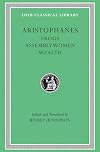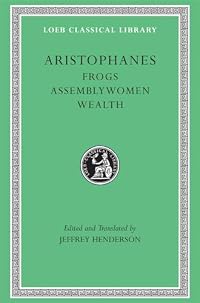
3 Plays: Frogs / Assembly-Women / Wealth
by Aristophanes
On This Page
Description
Aristophanes (c. 450-c. 386 BCE) has been admired since antiquity for his wit, fantasy, language, and satire. Traditional Aeschylus and modern Euripides compete in Frogs. In Assemblywomen Athenian women plot against male misgovernance. The humor and morality of Wealth made it the most popular of Aristophanes' plays until the Renaissance.Tags
Recommendations














Member Reviews
Loeb translations are often problematic. The books themselves are handy for having a bi-lingual text side by side but the English is often turgid, out of date and can be quite inaccurate.
However the new Aristophanes are, IMO anyway, a fantastic departure from the norm. Jeffrey Henderson has written a very funny, vivid and fast paced translation without seeming overly-modern and anachronistic.
Proof that Aristophanes can still be hilarious!
However the new Aristophanes are, IMO anyway, a fantastic departure from the norm. Jeffrey Henderson has written a very funny, vivid and fast paced translation without seeming overly-modern and anachronistic.
Proof that Aristophanes can still be hilarious!
A Taste of Aristophanes "Congresswomen" ΕΚΚΛΗΣΙΑΖΟΥΣΑΙ
"χαλεπὸν μὲν οὖν ἄνδρας δυσαρέστους νουθετεῖν, /
οἳ τοὺς φιλεῖν μὲν βουλομένους δεδοίκατε /
τοὺς δ'οὐκ ἐθέλοντας ἀντιβολεῖθ' ἑκάστοτε." Lines 180-182
My translation:
"How hard it is to counsel men who are chronically dissatisfied,
like you who are afraid of those who wish to love you, and yet
keep supplicating those who don't, each time you meet them."
'The Congresswomen' ΕΚΚΛΗΣΙΑΖΟΥΣΑΙ is clever and relpete with belly-laughs, and its Greek is NOT difficult. There's plenty of bawdy ribaldry, irony, satire and earthy expressions.
What is show more quite likely the longest word in Greek literature is found near the very end; namely, λοπαδοτεμαχοσελαχογαλεοκρανιολευψανοδριμυποτριμματοσιλφιολιπαρομελιτοκατακεχυμενοκιχλεπικοσσυφοφαττοπεριστεραλεκτρυονοπτοπιφαλλιδοκιγκλοπελειολαγῳοσιραιοβαφητραγαλοπτερυγών. This mouthful of a word means a banquet with the various foods in it. Greek shares with German this compounding of different roots to make up words with detailed specifications. show less
"χαλεπὸν μὲν οὖν ἄνδρας δυσαρέστους νουθετεῖν, /
οἳ τοὺς φιλεῖν μὲν βουλομένους δεδοίκατε /
τοὺς δ'οὐκ ἐθέλοντας ἀντιβολεῖθ' ἑκάστοτε." Lines 180-182
My translation:
"How hard it is to counsel men who are chronically dissatisfied,
like you who are afraid of those who wish to love you, and yet
keep supplicating those who don't, each time you meet them."
'The Congresswomen' ΕΚΚΛΗΣΙΑΖΟΥΣΑΙ is clever and relpete with belly-laughs, and its Greek is NOT difficult. There's plenty of bawdy ribaldry, irony, satire and earthy expressions.
What is show more quite likely the longest word in Greek literature is found near the very end; namely, λοπαδοτεμαχοσελαχογαλεοκρανιολευψανοδριμυποτριμματοσιλφιολιπαρομελιτοκατακεχυμενοκιχλεπικοσσυφοφαττοπεριστεραλεκτρυονοπτοπιφαλλιδοκιγκλοπελειολαγῳοσιραιοβαφητραγαλοπτερυγών. This mouthful of a word means a banquet with the various foods in it. Greek shares with German this compounding of different roots to make up words with detailed specifications. show less
Read "The Frogs," but don't be drinking diet pepsi when you do. The debate between Aeschylus and Euripides is as intellectual as any two pundits squaring off on tv today.
Ratings
Members
- Recently Added By
Author Information

Aristophanes, 448 b.c. - 385 b.c. Aristophanes is considered to be one of the greatest comedic writers ever to have taken to the stage. He was born in Athens, Greece, in the town of Cydathenaeum. Aristophanes is believed to have been well educated, which would explain his propensity towards words. It is also believed that he owned land on the show more island of Aegina. Aristophanes was first a satirist, he was well known for attacking anything from politics to poets, mainly the war between Sparta and Athens and the poet Euripides. He wrote more than 40, eleven of which are still being acted today. "The Acharnians" was his first play, written in 425, B.C.. This was the first of his plays in reaction to the war, as well as the play "Peace." But perhaps Aristophanes most famous play, Lysistrata, made his true feelings of the war known. In this play, the women seek peace by claiming celibacy until the fighting is stopped. It is the play that he is most famous for, for capturing the feeling of the people in a way that was both lighthearted and poignant. Aristophanes died three years after the war ended, in 385, B.C.,but left behind a legacy that has lasted to the present day. (Bowker Author Biography) show less
Some Editions
Series
Belongs to Publisher Series
Loeb Classical Library (180N)
Work Relationships
Common Knowledge
- Canonical title
- 3 Plays: Frogs / Assembly-Women / Wealth
- Original language
- Ancient Greek
Classifications
- Genre
- Fiction and Literature
- DDC/MDS
- 882.01 — Literature & rhetoric Classical & modern Greek literatures Classical Greek dramatic poetry and drama standard subdivisions; collections; history, description, critical appraisal; Specific periods Ancient period to ca. 499
- LCC
- PA3877 .A1 .H46 — Language and Literature Greek language and literature. Latin language and literature Greek literature Individual authors
- BISAC
Statistics
- Members
- 151
- Popularity
- 215,907
- Reviews
- 3
- Rating
- (4.23)
- Languages
- English, Greek (Ancient), Italian
- Media
- Paper, Ebook
- ISBNs
- 3
- ASINs
- 1