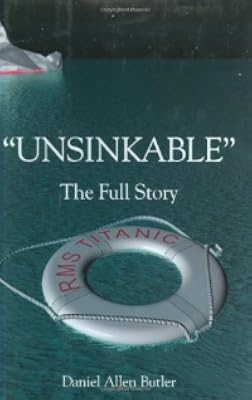
Unsinkable: The Full Story of RMS Titanic
by Daniel Allen Butler
On This Page
Description
History. Transportation. Nonfiction. HTML:Just before midnight on April 14, 1912, the ocean liner Titanic struck an iceberg. Less than three hours later, she lay at the bottom of the Atlantic Ocean, having taken with her more than 1,500 of the roughly 2,200 people on board. Even now, a century later, no other ship in history has attracted so much attention, stirred up such powerful emotion, or accumulated as many legends. “Unsinkable” provides a fresh look at the Titanic’s incredible show more story. Following the great ship from her conception to her fateful collision to the ambitious attempts to salvage her right up to the present day, Daniel Allen Butler draws on thirty years of research to explore the tragedy and its aftermath in remarkable depth and detail. The result is a must-read for anyone interested in the Titanic.. show less
Tags
Recommendations
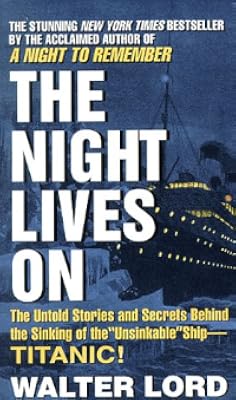






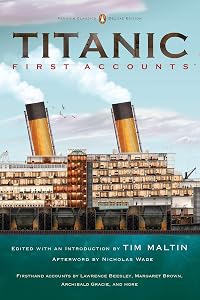
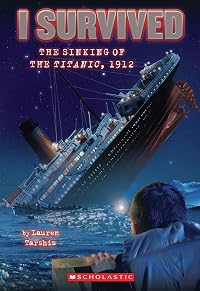


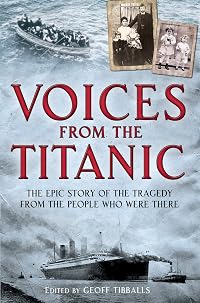
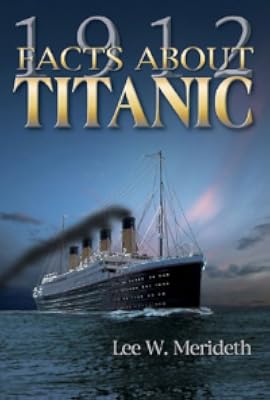


Member Recommendations

Member Reviews
I really enjoyed this history that arced from the planning for the building of Titanic and her sister vessels Olympic and Gigantic (later Britannic) on to Titanic: The Exhibition which I travelled to Boston to see in the summer of 1998. This tragedy has taken on a mythic locus, in the tidal zone between the sunsetting of class privilege and the dawning of the now ubiquitous wireless technology. The frantic use (and abuse of wireless) adds tempo and pulse to this work, making it a nice double feature with Dead Wake: The Last Crossing of the Lusitania. Since the work is so recent, while it may not have the persona charm of A Night To Remember And The Night Lives On, it does have the advantage of more hindsight, research and more recent show more scholarship. This allows us to get even onto The Californian idly drifting ten miles away and observing but not reacting to standard, all-white signal flares sent from the doomed vessel. There is a nice glossary of nautical terms and be sure to also read the appendices. One is a closer examination of the indefensible Capt. Lord of the pitiless Californian and more takes a dim view of White Star's unchivalrous Ismay while treating Capt. Smith of The Titanic like a PTSD victim. Personally, I think he unblemished record theretofore meant he had no experience with disaster or disaster averted when his passengers needed such experience the most.
An interesting sub-theme of this work is England's maritime-focused Southampton and that community's impact due to crew deaths, etc. show less
An interesting sub-theme of this work is England's maritime-focused Southampton and that community's impact due to crew deaths, etc. show less
Another book about the Titanic. This one is quite detailed: it starts with the building of the ship and continues through the sailing and the night the ship sank. It includes the investigations (one in the US, one in the UK) into what happened afterward, and follows up with what happened to some of the survivors.
I have read so much about the Titanic, so I do “know”/recognize some of the names of some of the guests on the ship (yes, beyond John Jacob Astor), but it continues to fascinate. Again, this was quite detailed, so I lost a bit of interest in the building of the ship, but overall, this is very good - in part, because of all the detail. The author has also written a separate book on the Carpathia and the Californian, the two show more ships that were closest. The Californian, within sight distance, did nothing to help. The Carpathia, though about four hours away, raced as fast as it could to help. It was the Carpathia that picked up the people off the lifeboats, so the author is well versed in that perspective, as well. This book was originally published in 1998, but this was a 2012 edition, so there was an extra chapter with updates. Given all the detail in this one, it’s probably one of the better Titanic books. show less
I have read so much about the Titanic, so I do “know”/recognize some of the names of some of the guests on the ship (yes, beyond John Jacob Astor), but it continues to fascinate. Again, this was quite detailed, so I lost a bit of interest in the building of the ship, but overall, this is very good - in part, because of all the detail. The author has also written a separate book on the Carpathia and the Californian, the two show more ships that were closest. The Californian, within sight distance, did nothing to help. The Carpathia, though about four hours away, raced as fast as it could to help. It was the Carpathia that picked up the people off the lifeboats, so the author is well versed in that perspective, as well. This book was originally published in 1998, but this was a 2012 edition, so there was an extra chapter with updates. Given all the detail in this one, it’s probably one of the better Titanic books. show less
Great book, gives everything you'd ever want to know about the sinking of the Titanic. Including the building of the ship and the inquiry afterwords. Some of the heartwrenching stories of the passengers are also related.
As a novice Titanic 'enthusiast' (for lack of a better description), this serves as a very good introduction. Although technical aspects of the Titanic's story aren't neglected, much focus is given to the people on the Titanic, once again giving them life and being of much more relevance than 'Jack and Rose' -- the social commentary in particular is much appreciated, for placing the incident in the proper historical context.
This book certainly stands up to its subtitle. Although the author lists a few titles of the books he used as sources, his extensive research also included court transcripts from England & America, records concerning the collection of wreckage & debris, of interviews with the survivors, traveling to several other countries to research the records of safety regulations on ships at that time, & the different memorials erected to the people that did not survive.
It is the best book I have read about the disaster.
It is the best book I have read about the disaster.
“It has been said that Titanic is the third most recognized word in the world, following ‘God’ and ‘Coca-cola’ “. The story of the sinking has been told over and over from several different perspectives, but usually by those who have an axe to grind or who wish to cast aspersions on one ethnic group of the passengers or crew or another. Revisionists have tried to blame different sets of people, or absolve others, for example, holding the builders to a set of standards that were not in place until many years later. Butler has written a straight narrative history that illuminates the myths that have been surrounding the ship’s accident over the past decades without the “moralizing, social leveling, finger pointing, or myth show more making.
By the launch date of the Titanic transatlantic steaming had reached a level of safety unheard of with any other form of transportation. Only four people had died in the forty years prior to the Titanic’s sinking, so a level of overconfidence and complacency was perhaps not unreasonable.
Titanic was the first of a planned set of three ships. The first to be launched was the Olympic, and the Titanic was to be followed by the Gigantic. Many modifications were made to the Titanic after the seas trials of the Olympic. All were owned by the White Star line that had just been purchased by J. P. Morgan who was trying to create a transportation monopoly that would stretch all the way from Europe to California. By this time he owned all the steamship lines except Cunard that was desperately seeking government assistance to fight off his takeover bid. A massive fare war erupted. At one point steerage fares could be had to America for as little as £2. This contrasted with the one-way fare on the Titanic for the most luxurious suites of about $80,000 in 1997 dollars. The robber barons who enjoyed traveling in style could easily afford it.
One unusual feature on the Titanic was the configuration of the engines. The ship had two reciprocating engines and a low pressure steam turbine that efficiently used the excess low pressure steam from the other engines, but it could not be operated in reverse. This was not thought to be a defect, but it made emergency reverse difficult. The 162 furnaces that heated water in the 29 boilers required the services of over two hundred men around the clock and used about 600 tons of coal per day.
The ship sailed just before the end of the great coal strike that managed to hurt most those people it was intended to help. The effect on the Titanic was that because coal was in such short supply, two other White Star ships had their sailings canceled in order to fill Titanic’s bunkers. It was rushed aboard and not wet down properly causing a fire to begin that smoked and smoldered the entire abbreviated journey.
The ship itself met and, in some cases, exceeded all the Board of Trade safety regulations. In fact, the inspector, the hated Captain Clarke, was known to be the most persnickety of all the B. O. T. inspectors. He passed the ship. The ship had more than the number of required lifeboats even though they were far short of being able to carry all of the passengers and crew. The theory at the time was that lifeboats were merely to be used to transfer crew and passengers from a sinking ship to the rescue vessel. A complicated formula was used to calculate the number of lifeboats based on the cubic foot capacity. The disaster was to result in rewriting the regulations regarding lifeboat capacity. show less
By the launch date of the Titanic transatlantic steaming had reached a level of safety unheard of with any other form of transportation. Only four people had died in the forty years prior to the Titanic’s sinking, so a level of overconfidence and complacency was perhaps not unreasonable.
Titanic was the first of a planned set of three ships. The first to be launched was the Olympic, and the Titanic was to be followed by the Gigantic. Many modifications were made to the Titanic after the seas trials of the Olympic. All were owned by the White Star line that had just been purchased by J. P. Morgan who was trying to create a transportation monopoly that would stretch all the way from Europe to California. By this time he owned all the steamship lines except Cunard that was desperately seeking government assistance to fight off his takeover bid. A massive fare war erupted. At one point steerage fares could be had to America for as little as £2. This contrasted with the one-way fare on the Titanic for the most luxurious suites of about $80,000 in 1997 dollars. The robber barons who enjoyed traveling in style could easily afford it.
One unusual feature on the Titanic was the configuration of the engines. The ship had two reciprocating engines and a low pressure steam turbine that efficiently used the excess low pressure steam from the other engines, but it could not be operated in reverse. This was not thought to be a defect, but it made emergency reverse difficult. The 162 furnaces that heated water in the 29 boilers required the services of over two hundred men around the clock and used about 600 tons of coal per day.
The ship sailed just before the end of the great coal strike that managed to hurt most those people it was intended to help. The effect on the Titanic was that because coal was in such short supply, two other White Star ships had their sailings canceled in order to fill Titanic’s bunkers. It was rushed aboard and not wet down properly causing a fire to begin that smoked and smoldered the entire abbreviated journey.
The ship itself met and, in some cases, exceeded all the Board of Trade safety regulations. In fact, the inspector, the hated Captain Clarke, was known to be the most persnickety of all the B. O. T. inspectors. He passed the ship. The ship had more than the number of required lifeboats even though they were far short of being able to carry all of the passengers and crew. The theory at the time was that lifeboats were merely to be used to transfer crew and passengers from a sinking ship to the rescue vessel. A complicated formula was used to calculate the number of lifeboats based on the cubic foot capacity. The disaster was to result in rewriting the regulations regarding lifeboat capacity. show less
I was always fascinated by the Titanic. However, I was not getting into this book at all and made it to page 25. It was reading more like a textbook than anything else. Boring and way too much information that I didn't care about or really didn't need to know. Not for me.
No stars.
No stars.
Members
- Recently Added By
Author Information

14 Works 774 Members
Daniel Allen Butler, a maritime and military historian, is the bestselling author of "Unsinkable": The Full Story of RMS Titanic, Distant Victory: The Battle of Jutland and the Allied Triumph in the First World War, and Field Marshal: The Life and Death of Erwin Rommel. He is an internationally recognized authority on military and maritime show more subjects. show less
Common Knowledge
- Original publication date
- 1998
- People/Characters
- Captain Edward J. Smith
- Important places
- Titanic; Atlantic Ocean; North Atlantic Ocean
- Important events
- Gilded Age; Sinking of the Titanic (1912-04-14 | 1912-04-15)
- Epigraph
- There go the ships, and Leviathan...
--Psalm 104:26 - Dedication
- To Eleanor, who believed.
- First words
- Foreword (2012): It has been said that "Titanic" is the third most widely recognized word in the world, following "God" and "Coca-Cola."
Prologue: It was a force of nature.
Chapter 1: It was just a few minutes before noon on May 31, 1911. - Last words
- (Click to show. Warning: May contain spoilers.)It was their fate, and their triumph, that when asked by circumstances to become extraordinary, they found within themselves the determination, like Ulysses, "to strive, to seek, to find, and not to yield."
- Canonical DDC/MDS
- 910.91634
- Canonical LCC
- G530.T6
Classifications
- Genres
- Nonfiction, History, General Nonfiction, Travel
- DDC/MDS
- 910.91634 — History & geography Geography & travel modified standard subdivisions of Geography and travel Explorers & Travelers Geography of and travel in areas, regions, places in general Air And Water Atlantic Ocean
- LCC
- G530 .T6 — Geography, Anthropology and Recreation Geography (General) Adventures, shipwrecks, buried treasure, etc.
- BISAC
Statistics
- Members
- 387
- Popularity
- 80,497
- Reviews
- 9
- Rating
- (4.17)
- Languages
- English
- Media
- Paper, Ebook
- ISBNs
- 10
- UPCs
- 1
- ASINs
- 6