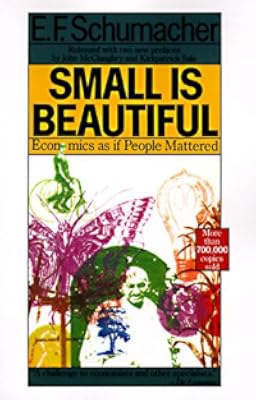
Small is Beautiful: A Study of Economics as if People Mattered
by E. F. Schumacher
On This Page
Description
"Small is Beautiful is Oxford-trained economist E.F. Schumacher's classic call for the end of excessive consumption. Schumacher inspired such movements as "Buy Locally" and "Fair Trade", while voicing strong opposition to "casino capitalism" and wasteful corporate behemoths. ... [It] presents eminently logical arguments for building our economies around the needs of communities, not corporations."--Tags
Recommendations




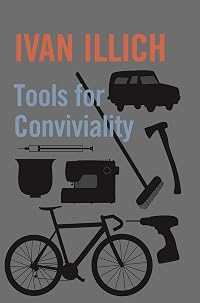
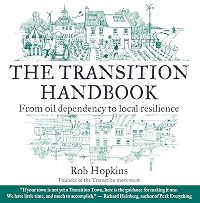
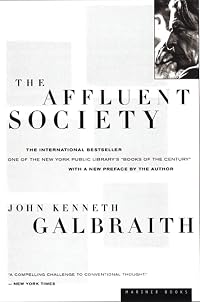
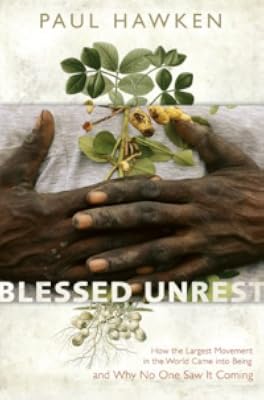













Member Reviews
Despite being originally published nearly 50 years ago in 1973 (wow), this non-fiction book re-imagining what people-first economics could look like is only a bit dated. It's quite interesting to notice what has and hasn't drifted into public discourse. The key here is a different set of starting assumptions from traditional economics that lead us different conclusions -- most especially the idea that there are different planes of existence, humans are indeed near the top, and we hold a responsibility to each other and to the rest of the world to not screw it up. This stands far apart from underlying tenants of modernism -- especially the positivist idea that the only real truths are scientific truths, and the economic idea that greed show more is a virtue as long as you re-invest the proceeds. It's all rather traditionally religious.
The parts that especially stood out to me were about work and education:
There's a bunch more in the book too (like the illogic of treating $1 of a renewable good like corn as equivalent to $1 of a non-renewable good like oil as equivalent to $1 of a manufactured good like cloth as equivalent to $1 of a service like a haircut, environmentalist thoughts on how we're living in a rather large but still limited planet which left me thinking about Easter Island and Biosphere 2, and exposition on the value of intermediate technologies that are labor-intensive and capital-limited as being better positioned for humanizing and effective international development work than shipping abroad major machinery that requires only a handful of low skill workers). Some parts vary pretty far from my ideology (like a strong recommendation for England to burn coal now and forever), but even reasoning through those was fruitful for me. I do suspect this book will continue to stand up to reads for years to come.
Dense, but a very worthy read for anyone wondering what alternatives to our current economics might look like. show less
The parts that especially stood out to me were about work and education:
- Schumacher argues that work itself is humanizing. Not all work -- just the work that involves the right amount of brain challenge and outcomes where improvement is tangible. That's a core Buddhist tenet, but it's also one that we find in Catholicism and even in political science (we know social instability is severely aggravated when most of a society's young men lack both work and families). Now I'm thinking this is pretty universal.
- In contrast to the idea of work being valuable in itself, today's economics treat work as entirely problematic. From the employer's perspective, labor is a cost that should be minimized. From the employee's perspective, it would be ideal to be paid without having to work. This insightful framing explains to me the rise of interest in UBI from rich folks (most recent and vocally Andrew Yang) -- it's a way to "make things more even" for workers while still working within the system that made them rich. A fundamental need of humans to work on tasks that challenge them and show them rewards is also an intriguing and new-to-me argument against UBI.
- A focus on STEM and on education as a vehicle for making more money means insufficient focus on the higher calling of education: knowing oneself, one's moral duties, and what you will bring to the world.
- The type of work that modern tech is most successful at reducing is skillful, productive work done by human hands -- the kind of work that human beings enjoy and need the most. Some people are still able to engage in tasks like woodworking, gardening, sewing, small engine repair and cooking, but they tend to be richer people who have the space and tools and teachers to create humanizing value through their "spare time" work.
There's a bunch more in the book too (like the illogic of treating $1 of a renewable good like corn as equivalent to $1 of a non-renewable good like oil as equivalent to $1 of a manufactured good like cloth as equivalent to $1 of a service like a haircut, environmentalist thoughts on how we're living in a rather large but still limited planet which left me thinking about Easter Island and Biosphere 2, and exposition on the value of intermediate technologies that are labor-intensive and capital-limited as being better positioned for humanizing and effective international development work than shipping abroad major machinery that requires only a handful of low skill workers). Some parts vary pretty far from my ideology (like a strong recommendation for England to burn coal now and forever), but even reasoning through those was fruitful for me. I do suspect this book will continue to stand up to reads for years to come.
Dense, but a very worthy read for anyone wondering what alternatives to our current economics might look like. show less
This book should be required reading in schools - it is that good. Insightful, clear and to the point, the author's analysis of the issues is as relevant today as it was when he wrote it.
His basic premise is that fossil fuels are capital , and yet we consume it like it is a revenue stream, and this is ultimately destructive. Instead we should spend our capital resources in order to create the infrastructure for sustainability.
This book inspired the organic movement, and is the intellectual basis of so much of environmentalism. We ignore its lessons at our peril.
His basic premise is that fossil fuels are capital , and yet we consume it like it is a revenue stream, and this is ultimately destructive. Instead we should spend our capital resources in order to create the infrastructure for sustainability.
This book inspired the organic movement, and is the intellectual basis of so much of environmentalism. We ignore its lessons at our peril.
Frankly depressing to read this eminently sane, eloquent, well-defended, ethical book 40 years after its original publication and look at how all of the ills it describes are still with us. In the last 40 years our economic system has gone on galloping at breakneck speed in exactly the opposite direction from the one Schumacher endorses, with precisely the consequences he describes. It's like reading a book about the danger of runaway trains from the compartment of a runaway train.
It must be so frustrating to be ahead of your time: to know that you have an important message only to find that the world is not ready to listen. Schumacher's book is so foresighted that, even now, many people have not awoken to the problems which he foresaw.
When I introduce some of the concepts discussed by Schumacher, you will be forgiven for thinking that this would be a difficult read. You would, however, be wrong in that supposition. He has a remarkable ability to express his vies in plain language, open to all and the text draws you along.
With the election of Jeremy Corbyn to the Labour leadership, I have read many people questioning the need for a Green Party. They should read this book. Even on monetary issues, Schumacher show more defines the error of both right and traditional left: the right give money to the 'haves' and hope for trickle down to sustain the poor, the left value labour but both consider the material worked upon by the labour to be free. If there is one thing that is blindingly obvious today, it is the potentially fatal error in this belief. Schumacher says that the standard of living is covered by capitalism but we need to look at the quality of life, culture, etc.
Schumacher proves, admittedly with 1970's figures, that Capitalism as we currently pursue it, is unsustainable (USA with 5.6% of the world population consumes 40% of world resources). You will not find these figures improving.
The book, written before Climate Change was an issue, argues for localisation where ever possible. The only uncomfortable view that he expresses is that every race needs its own homeland. This sounds a little racist to 21st century ears, but when you consider that Malcolm X argued a similar view in the '70's, I think that one has to accept that this was not meant in the 'foreigners go home' insularism of present day right wing groups. It was more concerned with people having a base, a homeland.
EF. Schumacher is the Green Philosopher. show less
When I introduce some of the concepts discussed by Schumacher, you will be forgiven for thinking that this would be a difficult read. You would, however, be wrong in that supposition. He has a remarkable ability to express his vies in plain language, open to all and the text draws you along.
With the election of Jeremy Corbyn to the Labour leadership, I have read many people questioning the need for a Green Party. They should read this book. Even on monetary issues, Schumacher show more defines the error of both right and traditional left: the right give money to the 'haves' and hope for trickle down to sustain the poor, the left value labour but both consider the material worked upon by the labour to be free. If there is one thing that is blindingly obvious today, it is the potentially fatal error in this belief. Schumacher says that the standard of living is covered by capitalism but we need to look at the quality of life, culture, etc.
Schumacher proves, admittedly with 1970's figures, that Capitalism as we currently pursue it, is unsustainable (USA with 5.6% of the world population consumes 40% of world resources). You will not find these figures improving.
The book, written before Climate Change was an issue, argues for localisation where ever possible. The only uncomfortable view that he expresses is that every race needs its own homeland. This sounds a little racist to 21st century ears, but when you consider that Malcolm X argued a similar view in the '70's, I think that one has to accept that this was not meant in the 'foreigners go home' insularism of present day right wing groups. It was more concerned with people having a base, a homeland.
EF. Schumacher is the Green Philosopher. show less
Schumacher ha tenido una evolución interesante en su filosofía, no solo económica, sino personal y religiosa. “Lo pequeño es hermoso” refleja un proceso de estudio interior en el que el autor, economista de profesión, evalúa el coste de confiar en un capital que no es propio y que no se regenera. Una bella transición de lo macro a lo micro que sin duda hará replantearse a todo el que lo lea el propio impacto en su entorno inmediato y planetario.
A classic treatise on Gandhian economics, or as the title says, "people centered economics". Schumacher provides a good criticism of the modern methods of production that resulted from the desacrilisation of nature and man. Production relations that resulted in the alienation of man from his work and creative spirit, and the culture of mass production and mass consumption that led to the ruthless and violent exploitation of nature.
He rightly challenges the unsustainable path of accumulation and consumption and the Keynesian economic models that are built on the principles of market individualism and social non-responsibility. He challenges the modern politics where economic growth has become the highest of all values and the human, show more cultural and ecological concerns have become subordinated to it.
This isn't just romantic idealism. Schumacher gives many practical ideas regarding using intermediate technology to enable production by masses and some interesting case studies and ideas regarding common ownership of the means of production. show less
He rightly challenges the unsustainable path of accumulation and consumption and the Keynesian economic models that are built on the principles of market individualism and social non-responsibility. He challenges the modern politics where economic growth has become the highest of all values and the human, show more cultural and ecological concerns have become subordinated to it.
This isn't just romantic idealism. Schumacher gives many practical ideas regarding using intermediate technology to enable production by masses and some interesting case studies and ideas regarding common ownership of the means of production. show less
E.F. Schumacher was a German expatriate living and working in England. He was a trained Economist and worked as a bureaucrat for the British coal board. His “Small is Beautiful” is a collection of 19 essays; some published in the 1960’s, and many written for this work.
Originally published in 1973, many of its thoughts are dated, but aligns strongly with what I’ve learned lately (for example from the Copenhagen climate summit and treaty of December 2009). The book was printed 5 years after the Club of Rome and a year after its “Limit of Growth”. I first read Schumacher 25 or so years ago, but rereading it today has been very worthwhile. I noticed many things quickly passed before. For example, buried in his summary to one show more article, Schumacher adds “possibly by changing the political system.”
I’ve also learned to apply totally new standards to many of his ideas such as ‘sustainable’ development, ‘green’ work and natural or ‘organic’ gardening. His views of the “human scale” of enterprise and the ‘Global Villages’ are also very enlightening. The book, as a whole, raises very mixed response. Schumacher is against ‘big industry, and very supportive of craft like work; he prefers the day when a cobbler or tailor served a small village and opposes large shoe or apparel plants. He is not unaware of the increased productivity or lower cost today, but berates it as ‘dehumanizing’. However many of his observations, such as need created by advertising, have a ring of truth.
I very strongly disagree with Schumacher’s conclusions, and find them reminiscent of the economic limits seen by Malthus. So my recommendation to read the book should not be treated as endorsing its contents. But, it is clearly written and presented emotionally and movingly. If you support Schumacher’s positions you will love it. If you don’t support them it is still important for the view and insight it provides to your opposition. show less
Originally published in 1973, many of its thoughts are dated, but aligns strongly with what I’ve learned lately (for example from the Copenhagen climate summit and treaty of December 2009). The book was printed 5 years after the Club of Rome and a year after its “Limit of Growth”. I first read Schumacher 25 or so years ago, but rereading it today has been very worthwhile. I noticed many things quickly passed before. For example, buried in his summary to one show more article, Schumacher adds “possibly by changing the political system.”
I’ve also learned to apply totally new standards to many of his ideas such as ‘sustainable’ development, ‘green’ work and natural or ‘organic’ gardening. His views of the “human scale” of enterprise and the ‘Global Villages’ are also very enlightening. The book, as a whole, raises very mixed response. Schumacher is against ‘big industry, and very supportive of craft like work; he prefers the day when a cobbler or tailor served a small village and opposes large shoe or apparel plants. He is not unaware of the increased productivity or lower cost today, but berates it as ‘dehumanizing’. However many of his observations, such as need created by advertising, have a ring of truth.
I very strongly disagree with Schumacher’s conclusions, and find them reminiscent of the economic limits seen by Malthus. So my recommendation to read the book should not be treated as endorsing its contents. But, it is clearly written and presented emotionally and movingly. If you support Schumacher’s positions you will love it. If you don’t support them it is still important for the view and insight it provides to your opposition. show less
Members
- Recently Added By
Published Reviews
ThingScore 100
It is in the very human experiences of compassion, dignity and creative spirit that Schumacher locates a sustainable human path. For instance, he challenges the blind pursuit of technological “advancement” and computerized systems when human-scale technology would better serve communities and provide opportunities to perform meaningful work.
added by mikeg2
Lists

New York Public Library's Books of the Century - All
170 works; 14 members

Top Five Books of 2020
982 works; 348 members

Blackwell's Five Foot Bookshelf
72 works; 4 members

My List
302 works; 1 member

Books Read in 2006
424 works; 8 members

Economics
12 works; 1 member

Books That Changed Our Perspective
423 works; 168 members

Read in 2006
140 works; 1 member
Author Information

18+ Works 4,435 Members
Born in Germany, Dr. E. F. Schumacher (1911-1977) fled to England after the rise of Nazism and, with the help of John Maynard Keynes, taught economics at Oxford University. He is the author of Small Is Beautiful, the book that "changed the way many people think about bigness and its human cost" (New York Times).
All Editions
Some Editions
Awards and Honors
Series
Belongs to Publisher Series
Work Relationships
Common Knowledge
- Canonical title
- Small is Beautiful: A Study of Economics as if People Mattered
- Original title
- Small is Beautiful: A Study of Economics as if People Mattered
- Alternate titles*
- Il piccolo è bello. Una tecnologia dal volto umano
- Original publication date
- 1973
- First words
- Introduction
Theodore Roszak
For nearly two centuries -- since Adam Smith published his Wealth of Nations in 1776 -- economists have been advertising themselves as the most rigorous and successful of all s... (show all)ocial scientists. The aspiration has transcended ideological boundaries.
I
I. The Problem of Production
One of the most fateful errors of our age is the belief that 'the problem of production' has been solved. - Original language
- English
*Some information comes from Common Knowledge in other languages. Click "Edit" for more information.
Classifications
Statistics
- Members
- 3,157
- Popularity
- 5,556
- Reviews
- 45
- Rating
- (4.05)
- Languages
- 14 — Catalan, Chinese, Czech, Dutch, English, Finnish, French, German, Hungarian, Italian, Polish, Portuguese, Spanish, Swedish
- Media
- Paper, Audiobook, Ebook
- ISBNs
- 60
- UPCs
- 1
- ASINs
- 24