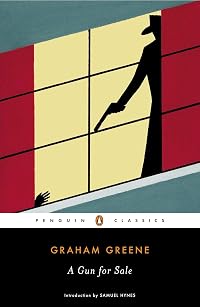
A Gun for Sale
by Graham Greene 
On This Page
Description
A detective and a chorus girl stalk the shadows of a murderer in this thriller from "a pioneer of the modern mood we now think of as noir" (LA Weekly). Born out of a brutal childhood, Raven is an assassin for hire whose latest hit—a government minister—is one calculated to ignite a war. When the most wanted man in England is paid off in marked bills, he also becomes the easiest to track—and police detective Jimmy Mather has the lead. But Raven's got an advantage. Crossing paths with a show more sympathetic dancer named Anne Crowder, the emotionally scarred Raven has found someone in the wreckage of his life he can trust, maybe his only hope for salvation. Or at least, escape—because Anne is also Mather's fiancée. Now the fate of two men will depend on her. And either way, it's betrayal. With its themes of deception, double cross, and the consequences of indiscriminate passion, the breathless cinematic narrative of Graham Greene's thriller became a perfect fit for the classic 1942 film noir starring Alan Ladd and Veronica Lake. Classic Literature. Suspense. Thriller. Fiction. show lessTags
Recommendations














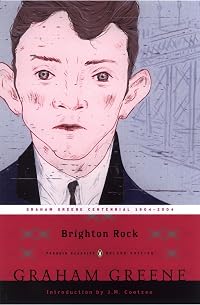



Member Recommendations
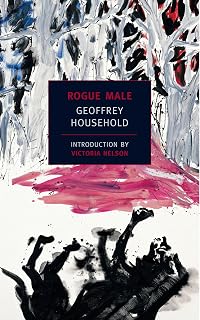
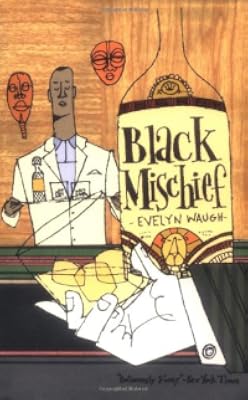
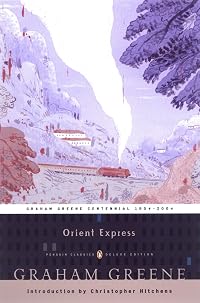
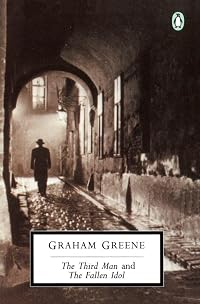
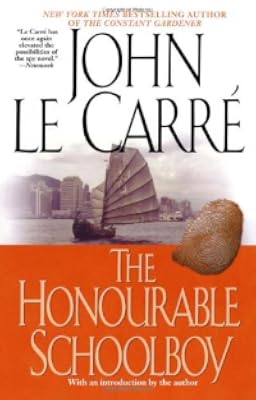
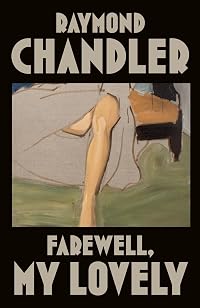
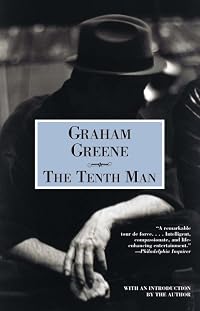
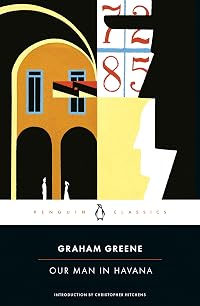
Cecrow Events in these two Greene novels are loosely related ('A Gun for Sale' first).
Member Reviews
This tale of a plot by an armaments manufacturers to spark a profitable little war by hiring an assassin to bump off the British Minister of War showcases everything that Graham Greene does so brilliantly: memorably complex characters, biting social commentary, humor, pathos, a poke or two at Catholicism, empathy for the damaged people of the world, all overlaid by an exquisite patina of irony. (There’s even a bit with a dog!) Only the themes change from novel to novel, the theme of this one being the ease with which we betray one another.
Or so discovers our doomed anti-hero, Raven, the assassin of the piece, an unloved and unloveable gent with a harelip and a justifiable grudge against the world, who experiences betrayal after show more betrayal: first, his employers pay him with stolen money, ensuring a police pursuit; then, his location is given up by a string of fellow villains; finally, having made the mistake of letting his guard down to the sympathetic woman of the piece, he is betrayed by her as well.
However, Raven isn’t the only one betrayed herein. Greene presents us with betrayal in all its most recognizable forms: children betrayed by their parents, orphans betrayed by the adults who are supposed to protect them, wives betrayed by their husbands, employees betrayed by their employers, war heroes betrayed by their nation, nations betrayed by their own industrial complex. This background of betrayal serves to shine a light on the few relationships in this tale that arise above the murk: the uncomplicated loyalty of a police sergeant towards his superior, the bedraggled affection of an old bawd towards her shop-stained husband, the tragedy-tested love between a courageous young woman and her stalwart beau … the hope and promise of virtue in a worth too often stained by vice.
All of which makes this sound like a bleak novel, which I regret, because in addition to being very funny, there’s also so much compassion here. You’d think after all the Graham Greene novels I’ve read over the years, I wouldn’t be surprised anymore to find myself crying over the downfall of the villain, but I always do and I always am. As Raven contemplates at one point: “Perhaps if we knew all there was to know, the kind of breaks a fellow had had, we’d see his point of view.” Greene’s particular gift is manipulating us into walking in the shoes of his damaged characters, forcing us to see the world through their damaged perspective. Yes, Raven’s an unrepentant murderer, but to what extent can we hold a man accountable for violence when all he has ever known is violence? In perhaps the most moving scene of the tale, Raven dares to drop his guard and confess his sins, revealing a soul as desperate for absolution as that of any saint.
You’ll laugh, you’ll cry; you’ll probably feel a little bit more jaded about the world after this; but I’m also willing to bet that the complex moral questions aroused by this deceptively simple tale will haunt you long after you’ve turned the final page. show less
Or so discovers our doomed anti-hero, Raven, the assassin of the piece, an unloved and unloveable gent with a harelip and a justifiable grudge against the world, who experiences betrayal after show more betrayal: first, his employers pay him with stolen money, ensuring a police pursuit; then, his location is given up by a string of fellow villains; finally, having made the mistake of letting his guard down to the sympathetic woman of the piece, he is betrayed by her as well.
However, Raven isn’t the only one betrayed herein. Greene presents us with betrayal in all its most recognizable forms: children betrayed by their parents, orphans betrayed by the adults who are supposed to protect them, wives betrayed by their husbands, employees betrayed by their employers, war heroes betrayed by their nation, nations betrayed by their own industrial complex. This background of betrayal serves to shine a light on the few relationships in this tale that arise above the murk: the uncomplicated loyalty of a police sergeant towards his superior, the bedraggled affection of an old bawd towards her shop-stained husband, the tragedy-tested love between a courageous young woman and her stalwart beau … the hope and promise of virtue in a worth too often stained by vice.
All of which makes this sound like a bleak novel, which I regret, because in addition to being very funny, there’s also so much compassion here. You’d think after all the Graham Greene novels I’ve read over the years, I wouldn’t be surprised anymore to find myself crying over the downfall of the villain, but I always do and I always am. As Raven contemplates at one point: “Perhaps if we knew all there was to know, the kind of breaks a fellow had had, we’d see his point of view.” Greene’s particular gift is manipulating us into walking in the shoes of his damaged characters, forcing us to see the world through their damaged perspective. Yes, Raven’s an unrepentant murderer, but to what extent can we hold a man accountable for violence when all he has ever known is violence? In perhaps the most moving scene of the tale, Raven dares to drop his guard and confess his sins, revealing a soul as desperate for absolution as that of any saint.
You’ll laugh, you’ll cry; you’ll probably feel a little bit more jaded about the world after this; but I’m also willing to bet that the complex moral questions aroused by this deceptively simple tale will haunt you long after you’ve turned the final page. show less
Now I know what a mix of thriller and solid literature reads like. The 1936 publication date explains why war is in the air, and all the comparisons with how the Great War was triggered. Raven (we aren't told his real name) commits the murder that precipitates a crisis and, as nations react, he discovers himself framed and sets out to track down his mysterious employer. I felt real sympathy for the guy despite his rough-and-tumble ways and his quickness to threaten people with lead. It isn't hard to follow the trail that led to how he views the world and his distrust of everyone. Ultimately this novel is a tragedy, but it was a tragedy before it began. I'd not read Greene before but after this I'm sure to read more by him.
I can't remember whether I've made any pronouncements on my favourite Graham Greene novel, but this one is probably going to fill that spot if nothing else has. It is the most entertaining of his "entertainments" I have read so far.
The story begins with a killer for hire by the name of Raven, who kills the Minister of War in an unnamed country. The murder is supposed to set various events in train that lead to another world war, but it's just a job to Raven until he discovers that he's been paid in stolen bank notes. How dare they! So Raven seeks to track down the people who double-crossed him even as he is being pursued by the police because he tried to use the stolen notes.
This is a very quick read but also a fascinating one, given show more that it was published in 1936 and it posits the rise of a second world war. The precipitating event was different in reality, but the scenario presented here is fairly plausible. We spend a great deal of time in Raven's head and come to appreciate his life circumstances, even as we shift to other characters' viewpoints and appreciate how they see the whole situation as well. (I'm being deliberately vague for fear of spoilers, and at any rate part of the fun of this book is watching it unfold -- one part actually made me almost gasp out loud on the bus, I was so surprised.)
If you like Brighton Rock, this is supposed to be its precursor and so would be interesting to look at as a point of comparison. I would also recommend this book to fans of Greene and those who like briskly moving plots coupled with substantial character study. show less
The story begins with a killer for hire by the name of Raven, who kills the Minister of War in an unnamed country. The murder is supposed to set various events in train that lead to another world war, but it's just a job to Raven until he discovers that he's been paid in stolen bank notes. How dare they! So Raven seeks to track down the people who double-crossed him even as he is being pursued by the police because he tried to use the stolen notes.
This is a very quick read but also a fascinating one, given show more that it was published in 1936 and it posits the rise of a second world war. The precipitating event was different in reality, but the scenario presented here is fairly plausible. We spend a great deal of time in Raven's head and come to appreciate his life circumstances, even as we shift to other characters' viewpoints and appreciate how they see the whole situation as well. (I'm being deliberately vague for fear of spoilers, and at any rate part of the fun of this book is watching it unfold -- one part actually made me almost gasp out loud on the bus, I was so surprised.)
If you like Brighton Rock, this is supposed to be its precursor and so would be interesting to look at as a point of comparison. I would also recommend this book to fans of Greene and those who like briskly moving plots coupled with substantial character study. show less
It’s all about betrayal - betrayal of the innocent and the malevolent; betrayal of the individual and the country; betrayal of self and ideals. Crime fiction with a political and ethical undertow. Given Greene’s slightly stiff 1930s style, it mercifully delivers its punches quickly and unsentimentally. The distant lights of faith, hope and charity sputter thinly in the cold yellow fog of the nearly unredeemed nihilism curling through these pages.
A Gun For Sale by Graham Greene was originally published in 1936. It is a story about a professional assassin, Philip Raven, who kills the Czech War Minister and leaves behind evidence that points to other European nations. This is a ploy by those who hired him to push Europe towards war, but they make the mistake of betraying Raven by paying him off in counterfeit money. Now Raven is being sought by the police for passing phony money, but he is also on the trail of those who betrayed him. He manages to lures a young woman into helping him even though he plans on murdering her when she is no longer useful.
I found this to be a story of contrasts. Raven is a dark, damaged character who speaks in a hard-boiled manner. Anne, the girl he show more uses, is idealistic and has hope for the future. The times are politically difficult as war is looming over Europe and the general population is fearful and uncertain. Yet Raven was hired to provoke war as there are some who would profit greatly from war.
Graham Greene has produced a claustrophobic manhunt novel that immediately grabs the readers attention. His writing skill is such that Raven, the main character, is someone who the reader can both hate and empathize with. While the story is quite bleak and chilling, the use of Anne with her innocence and idealistic hopes for the future helps to lighten the tone. A Gun For Sale is a tight, well crafted story that captures the pre-war jitters and sentiments of the times. show less
I found this to be a story of contrasts. Raven is a dark, damaged character who speaks in a hard-boiled manner. Anne, the girl he show more uses, is idealistic and has hope for the future. The times are politically difficult as war is looming over Europe and the general population is fearful and uncertain. Yet Raven was hired to provoke war as there are some who would profit greatly from war.
Graham Greene has produced a claustrophobic manhunt novel that immediately grabs the readers attention. His writing skill is such that Raven, the main character, is someone who the reader can both hate and empathize with. While the story is quite bleak and chilling, the use of Anne with her innocence and idealistic hopes for the future helps to lighten the tone. A Gun For Sale is a tight, well crafted story that captures the pre-war jitters and sentiments of the times. show less
Summary: A paid assassin murders a foreign minister of war, creating an international crisis that could lead to war but is betrayed by the middleman who paid him, who he pursues even as the police pursue him.
Raven is a paid assassin whose life represents a series of betrayals from being born with a hare lip to finding his mother dead by suicide as a child. Taking lives for hire does not trouble him. And so being hired to kill the Minister for War of Czechoslovakia is just another. He cleans up, killing the overly diligent secretary as well.
Back in England, he discovers that the payment from Mr. Cholmondeley (pronounced “Chumley”) is in stolen notes and police, in the person of detective Jimmy Mather is on his tale. He’s betrayed show more again by a doctor he asks to operate on the telltale hare lip. His picture is in the papers and serial numbers in the possession of shopkeepers. Betrayed. He has to flee and wants to find Cholmondeley. He spots him on a train to Nottwich, to visit a theatre he supports under the name Davis, using his patronage to pick up women actresses. Anne Crowder, Jimmy Mather’s girl is on the same train, to try out for a part at the theatre.
In short order, Anne escapes attempts of both Raven and Cholmondeley to kill her only to be taken hostage again by Raven as the police, including Mathers, converge on a coal shack where the two are sheltering. A “Stockholm syndrome” type of situation arises as Raven trusts Anne and Anne learns of the plot behind the assassination, to create an international crisis leading to a war that will profit a steel company Cholmondeley/Davis works for. But will Anne survive to tell the story and Raven to exact revenge?
Greene crafts a story at a personal level around trust and betrayal. Raven, as noted, has crafted his life story around betrayal. Anne, the hostage, is in the midst of it. She’s torn between betraying Jimmy and betraying Raven, all to save her life. The story is also about betrayal at a larger level–powerful companies manipulating foreign policy at the cost of many young lives in war (and the expendability of their assassin). Greene includes several scenes showing the vapid social relations among the elite who indulge themselves while preparing to sacrifice young lives. He reminds me of Dwight Eisenhower’s famous and prescient warning about the military-industrial complex.
This was one of Greene’s earlier novels, and in my opinion, not one of his best. Anne’s ability to get into and out of trouble stretches credulity as does the setup that she just happens to be Jimmy Mathers girl. Still, the relationship that forms between Anne and Raven, and the dialogue in the coal shack signals to me what Greene would become as a writer. show less
Raven is a paid assassin whose life represents a series of betrayals from being born with a hare lip to finding his mother dead by suicide as a child. Taking lives for hire does not trouble him. And so being hired to kill the Minister for War of Czechoslovakia is just another. He cleans up, killing the overly diligent secretary as well.
Back in England, he discovers that the payment from Mr. Cholmondeley (pronounced “Chumley”) is in stolen notes and police, in the person of detective Jimmy Mather is on his tale. He’s betrayed show more again by a doctor he asks to operate on the telltale hare lip. His picture is in the papers and serial numbers in the possession of shopkeepers. Betrayed. He has to flee and wants to find Cholmondeley. He spots him on a train to Nottwich, to visit a theatre he supports under the name Davis, using his patronage to pick up women actresses. Anne Crowder, Jimmy Mather’s girl is on the same train, to try out for a part at the theatre.
In short order, Anne escapes attempts of both Raven and Cholmondeley to kill her only to be taken hostage again by Raven as the police, including Mathers, converge on a coal shack where the two are sheltering. A “Stockholm syndrome” type of situation arises as Raven trusts Anne and Anne learns of the plot behind the assassination, to create an international crisis leading to a war that will profit a steel company Cholmondeley/Davis works for. But will Anne survive to tell the story and Raven to exact revenge?
Greene crafts a story at a personal level around trust and betrayal. Raven, as noted, has crafted his life story around betrayal. Anne, the hostage, is in the midst of it. She’s torn between betraying Jimmy and betraying Raven, all to save her life. The story is also about betrayal at a larger level–powerful companies manipulating foreign policy at the cost of many young lives in war (and the expendability of their assassin). Greene includes several scenes showing the vapid social relations among the elite who indulge themselves while preparing to sacrifice young lives. He reminds me of Dwight Eisenhower’s famous and prescient warning about the military-industrial complex.
This was one of Greene’s earlier novels, and in my opinion, not one of his best. Anne’s ability to get into and out of trouble stretches credulity as does the setup that she just happens to be Jimmy Mathers girl. Still, the relationship that forms between Anne and Raven, and the dialogue in the coal shack signals to me what Greene would become as a writer. show less
This one took me longer to finish than I anticipated.
Story begins when Raven, assassin for hire, book protagonist and all-around anti-hero gets double-crossed after a high profile assassination he executed on Europe mainland. Cold and ruthless Raven is not interested in his marks, he knows only he needs to go to specific location, kill the mark and return back safely.
So when he gets betrayed his rage grows, not because of betrayal itself (risk o business ... I guess?) but because he was betrayed by his own kind, criminal underworld. If there is no honor amongst thieves what can man do - right? So he decides to take revenge and goes to north of England chasing the man that is responsible for putting police on Raven's track. On his way show more to kill the people that betrayed him Raven will cross paths with Anne, friendly and justice driven member of acting and dancing troupe and Mather, policeman and Anne's fiancee who is not sure what is going on and why is Anne found working alongside Raven.
Unlike stoic gunmen like say Delon's Le Samourai or Leon Professional, Raven is very much self-aware and runs on pure emotions and rage. After very hard childhood and aware that his harelip was cause of so many difficulties Raven thinks everybody is after him because of his scarred face (which I guess was quite an issue when the novel was written). We follow him as he moves from the cold calculated killer to someone truly touched, like an animal that was constantly beaten and then shown true kindness, by friendship and support of Anne (no matter she might have few hidden motives of her own). Raven is a tragic figure, man who survived only by living in great fear, man to be brought down after he accepts other's friendship and kindness.
Besides Raven author gives very good description of society classes - those at the top looking forward to profiteering from war either directly (money) or indirectly (other material or social privileges) and those at the bottom either dumb and witless about the horror of wars and seeking glory in it, or terrified to the very bone [since terrors from the last one are still fresh in memory]. This entire reaction and justification of war have left bitter taste in my mouth because they show how propaganda can direct nations in a very, very, very wrong direction (like last year......brrrr).
Only issue I had with the book was level of details and descriptions author paints in his story. It could be that today we are more or less more visual creatures and do not have problems imagining things [when provided with less information] - authors very detailed descriptions and the ways he handles character discussions (ticks and face expressions included) tend to be verbose, and as a result my reading pace would suddenly drop to very low rate. Again this could be me [English is not my mother tongue] but was a cause for longer than expected time period to finish the book. On the good side when action picks up it truly picks up and pages just fly away.
Very interesting story, recommended to fans of slower burning thrillers. show less
Story begins when Raven, assassin for hire, book protagonist and all-around anti-hero gets double-crossed after a high profile assassination he executed on Europe mainland. Cold and ruthless Raven is not interested in his marks, he knows only he needs to go to specific location, kill the mark and return back safely.
So when he gets betrayed his rage grows, not because of betrayal itself (risk o business ... I guess?) but because he was betrayed by his own kind, criminal underworld. If there is no honor amongst thieves what can man do - right? So he decides to take revenge and goes to north of England chasing the man that is responsible for putting police on Raven's track. On his way show more to kill the people that betrayed him Raven will cross paths with Anne, friendly and justice driven member of acting and dancing troupe and Mather, policeman and Anne's fiancee who is not sure what is going on and why is Anne found working alongside Raven.
Unlike stoic gunmen like say Delon's Le Samourai or Leon Professional, Raven is very much self-aware and runs on pure emotions and rage. After very hard childhood and aware that his harelip was cause of so many difficulties Raven thinks everybody is after him because of his scarred face (which I guess was quite an issue when the novel was written). We follow him as he moves from the cold calculated killer to someone truly touched, like an animal that was constantly beaten and then shown true kindness, by friendship and support of Anne (no matter she might have few hidden motives of her own). Raven is a tragic figure, man who survived only by living in great fear, man to be brought down after he accepts other's friendship and kindness.
Besides Raven author gives very good description of society classes - those at the top looking forward to profiteering from war either directly (money) or indirectly (other material or social privileges) and those at the bottom either dumb and witless about the horror of wars and seeking glory in it, or terrified to the very bone [since terrors from the last one are still fresh in memory]. This entire reaction and justification of war have left bitter taste in my mouth because they show how propaganda can direct nations in a very, very, very wrong direction (like last year......brrrr).
Only issue I had with the book was level of details and descriptions author paints in his story. It could be that today we are more or less more visual creatures and do not have problems imagining things [when provided with less information] - authors very detailed descriptions and the ways he handles character discussions (ticks and face expressions included) tend to be verbose, and as a result my reading pace would suddenly drop to very low rate. Again this could be me [English is not my mother tongue] but was a cause for longer than expected time period to finish the book. On the good side when action picks up it truly picks up and pages just fly away.
Very interesting story, recommended to fans of slower burning thrillers. show less
Members
- Recently Added By
Lists

The Guardian's 1000 Novels Everyone Must Read
1,005 works; 550 members

Folio Society
831 works; 53 members

Noirvember: The Best Noir
113 works; 56 members
20th Century Literature
1,161 works; 54 members

Books Read in 2020
4,379 works; 124 members

Books I Own But Haven't Read
144 works; 2 members

Books mentioned in Julian Symons’ Bloody Murder
438 works; 6 members
Stephen King's 'On Writing' reading list
95 works; 4 members

Art Bourgeau's Favorites [Mystery Lovers Companion, 1986]
124 works; 2 members
Author Information

356+ Works 87,436 Members
Born in 1904, Graham Greene was the son of a headmaster and the fourth of six children. Preferring to stay home and read rather than endure the teasing at school that was a by-product of his father's occupation, Greene attempted suicide several times and eventually dropped out of school at the age of 15. His parents sent him to an analyst in show more London who recommended he try writing as therapy. He completed his first novel by the time he graduated from college in 1925. Greene wrote both entertainments and serious novels. Catholicism was a recurring theme in his work, notable examples being The Power and the Glory (1940) and The End of the Affair (1951). Popular suspense novels include: The Heart of the Matter, Our Man in Havana and The Quiet American. Greene was also a world traveler and he used his experiences as the basis for many books. One popular example, Journey Without Maps (1936), was based on a trip through the jungles of Liberia. Greene also wrote and adapted screenplays, including that of the 1949 film, The Third Man, which starred Orson Welles. He died in Vevey, Switzerland in 1991. (Bowker Author Biography) show less
Graham Greene has a Legacy Library. Legacy libraries are the personal libraries of famous readers, entered by LibraryThing members from the Legacy Libraries group.
Some Editions
Awards and Honors
Awards
Notable Lists
Series
Belongs to Publisher Series
Work Relationships
Is contained in
Has the adaptation
Has as a student's study guide
Common Knowledge
- Canonical title
- A Gun for Sale
- Original title
- A Gun for Sale
- Alternate titles
- This Gun for Hire
- Original publication date
- 1936
- People/Characters
- Raven; Anne Crowder; Detective-sergeant Jimmy Mather; Cholmondeley
- Related movies
- This Gun for Hire (1942 | IMDb); This Gun for Hire (1991 | IMDb); Short Cut to Hell (1957 | IMDb)
- First words
- Murder didn't mean much to Raven. It was just a new job. You had to be careful. You had to use
your brains. It was not a question of hatred. He had only seen the minister once : he had been
pointed out to R... (show all)aven as he walked down the new housing estate between the little lit Christmas
trees--an old rather grubby man without any friends, who was said to love humanity. - Quotations
- Acky was writing a long letter on the kitchen table. He had pushed his wife's mauve ink to one side and was using the best blue-black and a fountain pen which had long ceased to hold ink.
- Last words
- (Click to show. Warning: May contain spoilers.)"Oh," she said with a sigh of unshadowed happiness, "we're home."
- Original language*
- Englisch
*Some information comes from Common Knowledge in other languages. Click "Edit" for more information.
Classifications
Statistics
- Members
- 1,288
- Popularity
- 18,891
- Reviews
- 30
- Rating
- (3.52)
- Languages
- 15 — Catalan, Czech, Danish, Dutch, English, Estonian, Finnish, French, German, Hungarian, Italian, Norwegian, Russian, Spanish, Swedish
- Media
- Paper, Audiobook, Ebook
- ISBNs
- 49
- UPCs
- 1
- ASINs
- 44