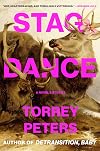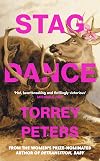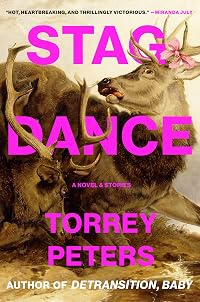
Stag Dance
by Torrey Peters
On This Page
Description
"In this collection of one novel and three stories, bestselling author Torrey Peters's keen eye for the rough edges of community and desire push the limits of trans writing. In Stag Dance, the titular novel, a group of restless lumberjacks working in an illegal winter logging outfit plan a dance that some of them will volunteer to attend as women. When the broadest, strongest, plainest of the axmen announces his intention to dance as a woman, he finds himself caught in a strange rivalry with show more a pretty young jack, provoking a cascade of obsession, jealousy, and betrayal that will culminate on the big night in an astonishing vision of gender and transition. Three startling stories surround Stag Dance: "Infect Your Friends and Loved Ones" imagines a gender apocalypse brought about by an unstable ex-girlfriend. In "The Chaser," a secret romance between roommates at a Quaker boarding school brings out intrigue and cruelty. In the last story, "The Masker," a party weekend on the Las Vegas strip turns dark when a young crossdresser must choose between two guides: a handsome mystery man who objectifies her in thrilling ways, or a cynical veteran trans woman offering unglamorous sisterhood"-- show lessTags
Recommendations











Member Reviews
A collection of four novellas, although one probably qualifies as a short story, by the author of Detransition, Baby. I’d tracked down one of these - ‘The Masker’ - to a site for self-published fiction after reading Peters’s novel, but I’d been waiting for this collection.
There are four stories: ‘Infect Your Friends and Loved Ones’, ‘The Chaser’, ‘Stag Dance’ and ‘The Masker’. The first is science fiction, in which the narrator is the inadvertent patient zero of a virus which prevents the body from producing hormones. Society - in the US - has fallen apart, and people fight over manufactured hormones. This is not subtle - but that’s actually a strength of the story, and indeed the collection, not a weakness, show more I was reminded in parts of Ralph A Sperry’s Status Quotient: The Carrier and Necessary Ill by Deb Taber (the latter I can definitely recommend, and would really like to see more by her).
‘The Chaser’ is much more disturbing. It’s set at a Quaker school, and narrated by a senior whose relationship with a junior room-mate is… well, one is manipulating the other, or perhaps vice versa. And when the senior tries to distance himself, the junior begins a hate campaign. In parts, I was reminded of James Clavell’s King Rat and, having attended a British boarding-school I grew up hearing stories that are… “adjacent” to this one.
The title story is… astonishing. It’s set in a pirate logging camp in nineteenth-century USA. I’ve no idea if the vocabulary and practices are correct, but they read as completely authentic. The protagonist is male and oversized and nicknamed Babe after Paul Bunyan’s pet ox, but his gender identity is not so clear-cut. One member of the camp, who is not a logger, and very pretty, is a pretend wife to several - more echoes of King Rat. This all comes to a head when the camp chief puts on a “stag dance”, where some of the loggers can pretend to be women by pinning a triangle of brown cloth to their groins. Which Babe does. When I first came across mention of this collection, it had a different title - but I can see why ‘Stag Dance’ was eventually chosen as the title piece. It’s a remarkable novella,
‘The Masker’ is the least satisfactory of the four stories. At a crossdresser/transgender convention in Las Vegas, a young crossdresser is torn between an older trans woman and a man who uses a silicone female mask to crossdress. The trans woman, an ex-law enforcement officer, persuades the narrator to set a trap for the masker but instead they do the same for the trans woman.
The first two stories are good, and the last is okay. But the title novella is worth the price of admission alone. To be honest, I think it could have been published on its own. The other stories probably only really suffer in comparison, and might well hold up better in a collection on their own, but I can understand the urge to get something into print quickly. Peters is a name to watch, not only a good writer but writing stuff that’s straight up trans, documenting (US) trans culture… and more of them are definitely needed in the mainstream. show less
There are four stories: ‘Infect Your Friends and Loved Ones’, ‘The Chaser’, ‘Stag Dance’ and ‘The Masker’. The first is science fiction, in which the narrator is the inadvertent patient zero of a virus which prevents the body from producing hormones. Society - in the US - has fallen apart, and people fight over manufactured hormones. This is not subtle - but that’s actually a strength of the story, and indeed the collection, not a weakness, show more I was reminded in parts of Ralph A Sperry’s Status Quotient: The Carrier and Necessary Ill by Deb Taber (the latter I can definitely recommend, and would really like to see more by her).
‘The Chaser’ is much more disturbing. It’s set at a Quaker school, and narrated by a senior whose relationship with a junior room-mate is… well, one is manipulating the other, or perhaps vice versa. And when the senior tries to distance himself, the junior begins a hate campaign. In parts, I was reminded of James Clavell’s King Rat and, having attended a British boarding-school I grew up hearing stories that are… “adjacent” to this one.
The title story is… astonishing. It’s set in a pirate logging camp in nineteenth-century USA. I’ve no idea if the vocabulary and practices are correct, but they read as completely authentic. The protagonist is male and oversized and nicknamed Babe after Paul Bunyan’s pet ox, but his gender identity is not so clear-cut. One member of the camp, who is not a logger, and very pretty, is a pretend wife to several - more echoes of King Rat. This all comes to a head when the camp chief puts on a “stag dance”, where some of the loggers can pretend to be women by pinning a triangle of brown cloth to their groins. Which Babe does. When I first came across mention of this collection, it had a different title - but I can see why ‘Stag Dance’ was eventually chosen as the title piece. It’s a remarkable novella,
‘The Masker’ is the least satisfactory of the four stories. At a crossdresser/transgender convention in Las Vegas, a young crossdresser is torn between an older trans woman and a man who uses a silicone female mask to crossdress. The trans woman, an ex-law enforcement officer, persuades the narrator to set a trap for the masker but instead they do the same for the trans woman.
The first two stories are good, and the last is okay. But the title novella is worth the price of admission alone. To be honest, I think it could have been published on its own. The other stories probably only really suffer in comparison, and might well hold up better in a collection on their own, but I can understand the urge to get something into print quickly. Peters is a name to watch, not only a good writer but writing stuff that’s straight up trans, documenting (US) trans culture… and more of them are definitely needed in the mainstream. show less
Summary:
Infect Your Friends and Loved Ones: A disease sweeps the world, eliminating the human body’s ability to produce sex hormones. A trans woman travels the remains of civilization trying to survive and keep access to synthetic hormones while hiding her identity as trans people are blamed for the disease. In flashbacks to pre-contagion times, her tumultuous relationship with the disease’s architect unfolds.
The Chaser: Two roommates at a Quaker boarding school start a secret and toxic relationship. Shame, desire, and rejection dissolve their relationship into bullying and lies.
Stag Dance: Isolated on a mountain for months, the woodsmen of an illegal logging operation entertain themselves with a stag dance in which some loggers show more volunteer to attend and be courted as women. Driven by a repressed desire, the narrator – rough, broad, and renowned for oxlike strength – volunteers. The choice draws the narrator into a strange rivalry, cut through by moments of solidarity, with Lisen, a beautiful young man who had already captured the covetous attentions of the loggers. As the dance grows nearer, the narrator’s desire grows to fully embrace the womanhood the other volunteers only play at.
The Masker: Attending a Las Vegas party for trans women and crossdressers, a young crossdresser finds herself pursued by an alluring man who plays into all her fantasies of force fem domination and objectification. She’s warned away by an older trans woman who instead offers her sisterhood and support in pursuing the unsexy realities of transition. Caught in the two’s feud and between her own conflicting desires, the main character must choose who to betray.
Reflections: You have to be in the mood for people doing nasty things to people they should care for as an outlet for their issues that they won’t acknowledge when you start reading this collection. It explores a lot of the dirty edges of transitioning and the love-hate, support and cannibalism, in queer connections/relationships/community.
The Masker might be my favorite of the collection. It’s kind of vile in a wonderful way. All of these stories feature betrayals of like individuals — girls turning on their sisters, lovers trying to ruin each other — usually born of a perverse, seductive desire for out-group validation, but this one felt the most bitter. Maybe it’s because the betrayal feels more grounded and pedestrian, the way it could traumatize or ruin the victim’s life is something that happens frequently; maybe it’s because this betrayal of all of them, feels the most bleakly pointless and against everyone’s interests or because it’s the one where the victim reciprocates the cruelty the least (towards the main character at least).
Stag Dance, the main novel of the collection, was the hardest to get into because of some combination of the slow pace (especially compared to the short stories surrounding it) and the style which leans into a historical, western vibe and incorporates a lot of unfamiliar technical and slang terms. But I did get attached to the main character and feel so much sympathy for her. The way she’s inherently forced/assumed to be hyper-masculine by dint of being ugly and large. She can’t even access the conditional tolerance of her femininity and desire to fill a ‘female’ role in the way Lisen does not necessarily just by being more attractive (because men are attracted to the main character too) but by being closer to what they are willing to accept their attraction to. It was heartbreaking, the moments when she is longing so intensely for an expression of her womanhood that she also felt was impossible.
Infect Your Friends and Loved Ones felt like it needed more time if it was going to play out the sci-fi post-apocalyptic survival plot side of things, but it still hit with the emotional journey. Lexi’s “revenge” against cis society/for the suffering caused by transmisogyny starting by violating a fellow trans woman was such a frustrating choice (not narratively, just to witness).
The teen drama of The Chaser brought in the naivete and youthful uncertainty that felt different than the adult drama of the other stories, although much of the conflict and toxic feelings relating to gender and sexuality were similar. Robbie, despite the social warfare he’s waging, had this odd innocence in thinking things would really be easy and beautiful if the main character would just admit their love. The main character is obtuse and avoidant in a way that also feels so teenage. show less
Infect Your Friends and Loved Ones: A disease sweeps the world, eliminating the human body’s ability to produce sex hormones. A trans woman travels the remains of civilization trying to survive and keep access to synthetic hormones while hiding her identity as trans people are blamed for the disease. In flashbacks to pre-contagion times, her tumultuous relationship with the disease’s architect unfolds.
The Chaser: Two roommates at a Quaker boarding school start a secret and toxic relationship. Shame, desire, and rejection dissolve their relationship into bullying and lies.
Stag Dance: Isolated on a mountain for months, the woodsmen of an illegal logging operation entertain themselves with a stag dance in which some loggers show more volunteer to attend and be courted as women. Driven by a repressed desire, the narrator – rough, broad, and renowned for oxlike strength – volunteers. The choice draws the narrator into a strange rivalry, cut through by moments of solidarity, with Lisen, a beautiful young man who had already captured the covetous attentions of the loggers. As the dance grows nearer, the narrator’s desire grows to fully embrace the womanhood the other volunteers only play at.
The Masker: Attending a Las Vegas party for trans women and crossdressers, a young crossdresser finds herself pursued by an alluring man who plays into all her fantasies of force fem domination and objectification. She’s warned away by an older trans woman who instead offers her sisterhood and support in pursuing the unsexy realities of transition. Caught in the two’s feud and between her own conflicting desires, the main character must choose who to betray.
Reflections: You have to be in the mood for people doing nasty things to people they should care for as an outlet for their issues that they won’t acknowledge when you start reading this collection. It explores a lot of the dirty edges of transitioning and the love-hate, support and cannibalism, in queer connections/relationships/community.
The Masker might be my favorite of the collection. It’s kind of vile in a wonderful way. All of these stories feature betrayals of like individuals — girls turning on their sisters, lovers trying to ruin each other — usually born of a perverse, seductive desire for out-group validation, but this one felt the most bitter. Maybe it’s because the betrayal feels more grounded and pedestrian, the way it could traumatize or ruin the victim’s life is something that happens frequently; maybe it’s because this betrayal of all of them, feels the most bleakly pointless and against everyone’s interests or because it’s the one where the victim reciprocates the cruelty the least (towards the main character at least).
Stag Dance, the main novel of the collection, was the hardest to get into because of some combination of the slow pace (especially compared to the short stories surrounding it) and the style which leans into a historical, western vibe and incorporates a lot of unfamiliar technical and slang terms. But I did get attached to the main character and feel so much sympathy for her. The way she’s inherently forced/assumed to be hyper-masculine by dint of being ugly and large. She can’t even access the conditional tolerance of her femininity and desire to fill a ‘female’ role in the way Lisen does not necessarily just by being more attractive (because men are attracted to the main character too) but by being closer to what they are willing to accept their attraction to. It was heartbreaking, the moments when she is longing so intensely for an expression of her womanhood that she also felt was impossible.
Infect Your Friends and Loved Ones felt like it needed more time if it was going to play out the sci-fi post-apocalyptic survival plot side of things, but it still hit with the emotional journey. Lexi’s “revenge” against cis society/for the suffering caused by transmisogyny starting by violating a fellow trans woman was such a frustrating choice (not narratively, just to witness).
The teen drama of The Chaser brought in the naivete and youthful uncertainty that felt different than the adult drama of the other stories, although much of the conflict and toxic feelings relating to gender and sexuality were similar. Robbie, despite the social warfare he’s waging, had this odd innocence in thinking things would really be easy and beautiful if the main character would just admit their love. The main character is obtuse and avoidant in a way that also feels so teenage. show less
This is a fantastic quartet of novellas/short stories. I've reviewed each of them individually below, without spoilers. Common themes of gender performativity, relationships bonded by loneliness, and community that is imperfect but necessary (plus how trying to stick to social prescriptions of sex and gender isolate you from said community).
It's worth noting that two of these stories ("Infect Your Friends and Loved Ones" and "The Masker") appear to have been published previously, so if you're a big Torrey Peters fan, keep that in mind.
____________________
Infect Your Friends and Loved Ones: 4/5
I really enjoyed this story. The back-and-forth vignettes work very well, unfolding the nature of the main character's relationship with her show more friend/lover/enemy/ally. Both Lexi and our nameless protagonist feel exceptionally well-drawn and realistic; I never questioned their motives even when they did terrible things. In fact, I came out of the story with a profound tenderness towards them both.
The world-building is clunky—the story starts with a big info-dump—but it's a forgivable flaw in an otherwise well-done piece. I believe this was first published in 2016, and I can't believe how prescient it is: transness and pandemics and the power of community amidst a crumbling world.
The Chaser: 4/5
Vivid and brutal. My main complaint is that Peters initially commits to the voice of a teenage boy, but very soon it unravels because she wants to plumb her narrator's inner world and seems to find the chosen voice too limiting—so he starts talking in an unconvincingly eloquent way about his own masculinity.
Even if the vocabulary has a ring of falseness (and you can hand-wave that away by saying he's reflecting on these events several years after they've happened) this is a harrowing and deeply layered story. I liked how the narrator never fully understood the nature of his own desires, never really came to terms with why he wanted what he wanted—how many of us can explain our fetishes or preferences, much less in high school, when they're both overwhelming and nebulous? The tension, drama, and inner turmoil of adolescence combined with the confusion and potency of socially forbidden desire. There's a lot to chew on.
Stag Dance: 3/5
This is probably my favorite narrator so far, he's a delight. His quiet, resigned frustrations about his appearance are heartbreaking; his thwarted quest for womanhood, doomed as it is from the start, is beautiful. (One particular scene involving his communion with a fabric triangle is downright transcendent.) It's much more than a straightforward trans narrative, illuminating the fact that whole swaths of human experience—emotional vulnerability, the joy of vanity, being pursued, being held—are inaccessible to men who adhere rigidly to their social roles. This gender subversion in an all-male environment reminded me of a nonfiction book I read a while ago, Sodomy and the Pirate Tradition that always draws comments when people see it on my bookshelf at home.
So where does this story go wrong? Well, it's clear that Peters has done her homework on nineteenth century timber piracy, and man, is she just dying to tell you about it. I liked this setting, but no modern reader is going to understand even a fraction of the jargon she uses here, so at times it felt like a poorly-disguised research paper on logging in the 1800s.
And, for the length of this novella, it never really gets off the ground. It could've been so much tighter and punchier. The ending felt unfinished as well—ultimately, I think this one just needed more time in the editing stage.
The Masker: 5/5
Torrey Peters is so good at characterization. The main character in this story and the two people she's caught between are all distinct, yet similarly lonely, flawed, grasping. Sally, a been-around-the-block trans woman who makes our protagonist Krys face the terrifying possibilities of transition—of not passing, of coming out, of potential lifelong social rejection—and Felix, a warped figure pulled straight from Krys' masturbatory fantasies, who promises her that she can trade her dignity and identity for sexual gratification and adoration.
I love this story not just for its wonderfully simple and devastating plot, with several stomach-sinking moments and an ending I'll never forget, but because it investigates something I've never seen represented on page or screen: sissies. They are ubiquitous in the kink world, and yet, as BDSM trickles piecemeal into the mainstream, you hear nothing about this confusing breed, caught halfway between crossdressers and trans women. I'm still torn myself on whether to feel sympathy for their ostracism, feminist outrage at their fetishisation of misogyny, or allyship with their gender fuckery. I think Peters' treatment of sissies here is both sincere and, in keeping with the rest of this collection, brutally tragic. show less
It's worth noting that two of these stories ("Infect Your Friends and Loved Ones" and "The Masker") appear to have been published previously, so if you're a big Torrey Peters fan, keep that in mind.
____________________
Infect Your Friends and Loved Ones: 4/5
I really enjoyed this story. The back-and-forth vignettes work very well, unfolding the nature of the main character's relationship with her show more friend/lover/enemy/ally. Both Lexi and our nameless protagonist feel exceptionally well-drawn and realistic; I never questioned their motives even when they did terrible things. In fact, I came out of the story with a profound tenderness towards them both.
The world-building is clunky—the story starts with a big info-dump—but it's a forgivable flaw in an otherwise well-done piece. I believe this was first published in 2016, and I can't believe how prescient it is: transness and pandemics and the power of community amidst a crumbling world.
The Chaser: 4/5
Vivid and brutal. My main complaint is that Peters initially commits to the voice of a teenage boy, but very soon it unravels because she wants to plumb her narrator's inner world and seems to find the chosen voice too limiting—so he starts talking in an unconvincingly eloquent way about his own masculinity.
Even if the vocabulary has a ring of falseness (and you can hand-wave that away by saying he's reflecting on these events several years after they've happened) this is a harrowing and deeply layered story. I liked how the narrator never fully understood the nature of his own desires, never really came to terms with why he wanted what he wanted—how many of us can explain our fetishes or preferences, much less in high school, when they're both overwhelming and nebulous? The tension, drama, and inner turmoil of adolescence combined with the confusion and potency of socially forbidden desire. There's a lot to chew on.
Stag Dance: 3/5
This is probably my favorite narrator so far, he's a delight. His quiet, resigned frustrations about his appearance are heartbreaking; his thwarted quest for womanhood, doomed as it is from the start, is beautiful. (One particular scene involving his communion with a fabric triangle is downright transcendent.) It's much more than a straightforward trans narrative, illuminating the fact that whole swaths of human experience—emotional vulnerability, the joy of vanity, being pursued, being held—are inaccessible to men who adhere rigidly to their social roles. This gender subversion in an all-male environment reminded me of a nonfiction book I read a while ago, Sodomy and the Pirate Tradition that always draws comments when people see it on my bookshelf at home.
So where does this story go wrong? Well, it's clear that Peters has done her homework on nineteenth century timber piracy, and man, is she just dying to tell you about it. I liked this setting, but no modern reader is going to understand even a fraction of the jargon she uses here, so at times it felt like a poorly-disguised research paper on logging in the 1800s.
And, for the length of this novella, it never really gets off the ground. It could've been so much tighter and punchier. The ending felt unfinished as well—ultimately, I think this one just needed more time in the editing stage.
The Masker: 5/5
Torrey Peters is so good at characterization. The main character in this story and the two people she's caught between are all distinct, yet similarly lonely, flawed, grasping. Sally, a been-around-the-block trans woman who makes our protagonist Krys face the terrifying possibilities of transition—of not passing, of coming out, of potential lifelong social rejection—and Felix, a warped figure pulled straight from Krys' masturbatory fantasies, who promises her that she can trade her dignity and identity for sexual gratification and adoration.
I love this story not just for its wonderfully simple and devastating plot, with several stomach-sinking moments and an ending I'll never forget, but because it investigates something I've never seen represented on page or screen: sissies. They are ubiquitous in the kink world, and yet, as BDSM trickles piecemeal into the mainstream, you hear nothing about this confusing breed, caught halfway between crossdressers and trans women. I'm still torn myself on whether to feel sympathy for their ostracism, feminist outrage at their fetishisation of misogyny, or allyship with their gender fuckery. I think Peters' treatment of sissies here is both sincere and, in keeping with the rest of this collection, brutally tragic. show less
I really enjoy Torrey Peters' writing. This book has three short stories and one longer "novel" (more of a novella). I thought all of them were quite thought-provoking, although I thought the short stories were all better than the novel which was a bit dull and hard to get through at times. I think the novel would be more effective if it was cut in half to be made a short story like the other three. Not all the descriptions and background was really necessary for the story it was trying to tell. By the end of it though, I did like the novel as well, but not as much as the other three stories.
That being said, Torrey Peters has an excellent voice throughout all her work. I didn't like any of these as much as I liked Detransition Baby, but show more everything I've read from her is complex and multifaceted. There's a lot of unpleasantness and although I didn't especially "enjoy" reading through some of this (the pig scene...), it's honest and raw and the characters are all real and flawed. I really appreciate the nuance in Torrey's characterization of queer experiences. The way she writes about queerness and sexuality is unique and real in a way I appreciate. She doesn't shy away from anything. All of the stories here are weird and have extremely different premises that are connected by an exploration of transfeminine experiences.
I would still recommend Detransition Baby over Stag Dance, but both are good. I'll probably buy whatever Torrey Peters writes next as well. show less
That being said, Torrey Peters has an excellent voice throughout all her work. I didn't like any of these as much as I liked Detransition Baby, but show more everything I've read from her is complex and multifaceted. There's a lot of unpleasantness and although I didn't especially "enjoy" reading through some of this (the pig scene...), it's honest and raw and the characters are all real and flawed. I really appreciate the nuance in Torrey's characterization of queer experiences. The way she writes about queerness and sexuality is unique and real in a way I appreciate. She doesn't shy away from anything. All of the stories here are weird and have extremely different premises that are connected by an exploration of transfeminine experiences.
I would still recommend Detransition Baby over Stag Dance, but both are good. I'll probably buy whatever Torrey Peters writes next as well. show less
2025. Stag Dance contains four really different stories. My favorite was Stag Dance which is about loggers. They had a really beautiful language and reality. Logging illegally in the snow somewhere, trying not to get caught. One huge lumberjack known as Babe Bunyan, because she’s strong and ugly as an ox, is probably really trans. Her chance to express herself as herself comes at the stag dance, when some of the men volunteer to be the women, so people can hook up. It does not go well. Beautiful story which creates its own folklore. The other three stories were really good too. More straight forward and accessible and less haunting.
The main story is very clever and funny. Babe of Paul Bunyon fame isn't a blue ox, but an unconsummated gay? / cross dressing? / trans? giant, and the story tells of his self discovery and outing.
The audiobook is delivered with special bravado by a full cast including Lee Osorio, Briggon Snow, Eileen Noonan, and Pyrrha Nicole deserves special praise.
The surrounding vignettes are less funny and more melodramatic. They are powerful in their own ways, but lack the self-effacing humor that powers the title story.
The audiobook is delivered with special bravado by a full cast including Lee Osorio, Briggon Snow, Eileen Noonan, and Pyrrha Nicole deserves special praise.
The surrounding vignettes are less funny and more melodramatic. They are powerful in their own ways, but lack the self-effacing humor that powers the title story.
Uneven but, when it gets going, fantastic. Reminded me of Girl, Woman, Other and that book’s author gives the perfect blurb: “Adventurous, mind-expanding and provocative”
Members
- Recently Added By
Lists

Trans Books by Trans Authors
134 works; 10 members
Transgender Characters
91 works; 5 members

2026 Tournament of Books Longlist
70 works; 2 members
Author Information

6 Works 2,165 Members
Some Editions
Awards and Honors
Awards
Distinctions
Common Knowledge
- Canonical title
- Stag Dance
- Original publication date
- 2025
- Dedication
- To Cecelia: You asked me to hang out, but instead I worked on this novel, and then you were gone.
Classifications
Statistics
- Members
- 366
- Popularity
- 86,063
- Reviews
- 9
- Rating
- (3.99)
- Languages
- English
- Media
- Paper, Audiobook, Ebook
- ISBNs
- 8
- ASINs
- 3