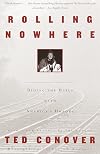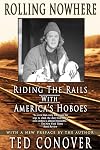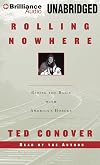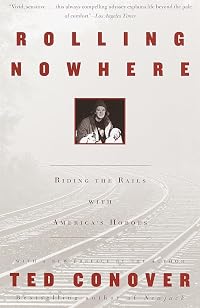
Rolling Nowhere: Riding the Rails with America's Hoboes
by Ted Conover
On This Page
Description
"I crouched quietly in the patch of tall weeds. Around me fell the shadow of the viaduct that carried a highway over the railroad yards. From the edge of the yards, I squinted as I watched the railroad cars being switched from track to track. Cars and trucks were rolling over the viaduct, but what occupied my attention was the dark, cool corridor underneath it, where I hoped to intercept my train." Riding the rails, Ted Conover tasted the life of a tramp with companions like Pistol Pete, BB, show more and Sheba Sheila Sheils. From them he learned survival skills - how to "read" a freight train, scavenge for food and clothing, avoid the railroad "bulls." He was initiated into the customs of their unique, shadowy society - men and women bound together by a mutual bond of failure, camaraderie, and distrust. Sixty-five freight trains, 12,000 miles, and fifteen states later, Conover chronicles his impressions of their lives in this fascinating piece of first-hand reporting that becomes a thoughtful story of self-discovery. show lessTags
Recommendations














Member Reviews
Conover wrote this book while he was still an undergraduate at Amherst; but it establishes his method as an author. He is a combination of cultural chameleon (spy), investigative journalist, anthropologist, autobiographer and social commentator. He pulls off this combination nicely. Paul Theroux, at his best and least obnoxious has a similar style of telling true stories; but Conover is more political and engaged--in his action and focus. I haven't read John Howard Griffin's "Black Like Me"--the story of Griffin's experiences as a white man, painted to look like a black man, in the American South of the early 20th century--but it seems that Griffin's book had the most profound impact on Conover's methodology and concerns.
Conover's style show more has matured a great deal since "Rolling Nowhere", as has the sharpness of his perception and the importance of his research. It might grate some people when Conover's pampered background prances into the foreground, especially when he seems so pleased with himself for managing the transition from rich kid to railway tramp; but those moments do provide readers with a much clearer understanding of the nature and limitations of their narrator. I'm thinking about moments like, "I had dismissed the church as simply the place in whose lot my dad used to park his sports car. Looking again, I saw a number of young men lounging around on the lawn outside the place, and all of a sudden remembered similar scenes from days when I had passed the church with Dad. He worried about the safety of his car with guys like those around, and had intentionally looked away from them. That had frightened me. Tonight, though, I exchanged greetings with some." Balancing out some of the hokier, doctors in Aspen type references, is the perspective Conover develops of his own background. For instance, "Being suddenly among the Stanford students was less a solace than a shock. Most of them were from wealthy backgrounds, had seen few hard times, and appeared to be suffering the maladies that an overdose of comfort can cause: self-indulgence, self-pity, self-absorption." It was a clear sign of the talented and significant author that Conover turned out to be, that he managed to write this book at the dawn of his twenties without being self-indulgent, self-pitying or self-absorbed. show less
Conover's style show more has matured a great deal since "Rolling Nowhere", as has the sharpness of his perception and the importance of his research. It might grate some people when Conover's pampered background prances into the foreground, especially when he seems so pleased with himself for managing the transition from rich kid to railway tramp; but those moments do provide readers with a much clearer understanding of the nature and limitations of their narrator. I'm thinking about moments like, "I had dismissed the church as simply the place in whose lot my dad used to park his sports car. Looking again, I saw a number of young men lounging around on the lawn outside the place, and all of a sudden remembered similar scenes from days when I had passed the church with Dad. He worried about the safety of his car with guys like those around, and had intentionally looked away from them. That had frightened me. Tonight, though, I exchanged greetings with some." Balancing out some of the hokier, doctors in Aspen type references, is the perspective Conover develops of his own background. For instance, "Being suddenly among the Stanford students was less a solace than a shock. Most of them were from wealthy backgrounds, had seen few hard times, and appeared to be suffering the maladies that an overdose of comfort can cause: self-indulgence, self-pity, self-absorption." It was a clear sign of the talented and significant author that Conover turned out to be, that he managed to write this book at the dawn of his twenties without being self-indulgent, self-pitying or self-absorbed. show less
A fascinating account of hobo/tramp train riding sub-culture in America.
i was a little dissapointed since he is just a college kid who wants to make a book. but i enjoyed it. the end gets a bit boring with him getting bored or tired.
Ratings
Members
- Recently Added By
Author Information

10+ Works 1,883 Members
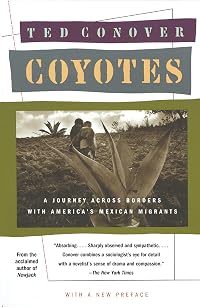
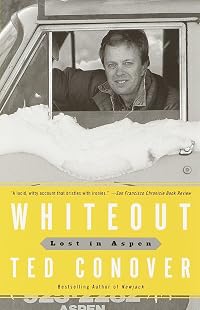
Ted Conover is a journalist and associate professor of journalism at New York University. His book Newjack: Guarding Sing Sing won the National Book Critics Circle Award in 2000 and was a finalist for the Pulitzer Prize. Conover is also the author of Rolling Nowhere: Riding the Rails with America's Hoboes; Coyotes: A Journey Across Borders with show more America's Mexican Migrants; Whiteout: Lost in Aspen; and The Routes of Man: Travels in the Paved World. He regularly writes for the New York Times, Harper's, the Atlantic, and many other publications. show less
Awards and Honors
Distinctions
Series
Belongs to Publisher Series
Common Knowledge
- Canonical title
- Rolling Nowhere: Riding the Rails with America's Hoboes
- Original title
- Rolling Nowhere: Riding the Rails with America's Hoboes
- Original language
- English
Classifications
- Genres
- Nonfiction, Travel, General Nonfiction, Sociology, Biography & Memoir, Teen
- DDC/MDS
- 305.568 — Society, government, & culture Social sciences, sociology & anthropology Social group - Age, Gender, Ethnicity People by social and economic levels Lower, alienated, excluded classes
- LCC
- HV4504 .C66 — Social sciences Social pathology. Social and public welfare. Criminology Social pathology. Social and public welfare. Protection, assistance and relief Mendicancy. Vagabondism. Tramps.
- BISAC
Statistics
- Members
- 239
- Popularity
- 136,660
- Reviews
- 3
- Rating
- (3.77)
- Languages
- English, French
- Media
- Paper, Audiobook, Ebook
- ISBNs
- 11
- ASINs
- 3