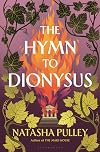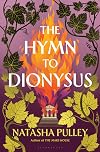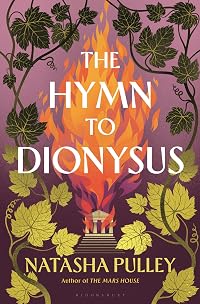
The Hymn to Dionysus
by Natasha Pulley
On This Page
Description
"Raised in a Greek legion, Phaidros has been taught to follow his commander's orders at all costs. But when Phaidros rescues a baby from a fire at Thebes's palace, his commander's orders cease to make sense: Phaidros is forced to abandon the blue-eyed boy at a temple, and to keep the baby's existence a total secret. Years later, struggling with panic attacks and flashbacks, Phaidros is enlisted by the Queen to find her son, Thebes' young crown prince, who has vanished to escape an arranged show more marriage. The search leads him to a blue-eyed witch named Dionysus, whose guidance is as wise as the events that surround him are strange. In Dionysus's company, Phaidros witnesses sudden outbursts of riots and unrest, and everywhere Dionysus goes, rumors follow about a new god, one sired by Zeus but lost in a fire." -- show lessTags
Recommendations











Member Reviews
Rating: 4.5* of five
The Publisher Says: A timely and timeless reimagining of the story of Dionysus, Greek God of ecstasy and madness, revelry and ruin, for readers of The Song of Achilles and Elektra.
Raised in a Greek legion, Phaidros has been taught to fight for the homeland he’s never seen and to follow his commander’s orders at all costs. But when he rescues a baby from a fire at Thebes’s palace, his commander’s orders cease to make sense: Phaidros is forced to abandon the blue-eyed boy at a temple, and to keep the baby’s existence a secret.
Years later, after a strange encounter that led to the death of his battalion, Phaidros has become a training master for young soldiers. He struggles with panic attacks and flashbacks, show more and he is not the only one: all around him, his fellow veterans are losing their minds.
Phaidros’s risk of madness is not his only problem: his life has become entangled with Thebes’s young crown prince, who wishes to escape the marriage his mother, the Queen, has chosen for him. When the prince vanishes, Phaidros is drawn into the search for him—a search that leads him to a blue-eyed witch named Dionysus, whose guidance is as wise as the events that surround him are strange. In Dionysus’s company, Phaidros witnesses sudden outbursts of riots and unrest, and everywhere Dionysus goes, rumors follow about a new god, one sired by Zeus but lost in a fire.
In The Hymn to Dionysus, bestselling author Natasha Pulley transports us to an ancient empire on the edge of ruin to tell an utterly captivating story about a man needing a god to remind him how to be a human.
I RECEIVED A DRC FROM THE PUBLISHER VIA NETGALLEY. THANK YOU.
My Review: Phaidros saves an infant god, fights in an unjust war, gets PTSD from it, and...in later years...gives his skills thus acquired to saving his home city of Thebes (the one in Greece, not the one the Egyptians now call Luxor) and calls in his massive debt from Dionysus the god to...address things.
Now go buy one. Seriously...you've heard the good bits. It's Natasha Pulley's latest book (notably and annoyingly not the apparently-written sequel to The Half-Life of Valery K.)! What more do you need to know?
Plot? Already told you. Action? Read the blurb!
Fine. Spoiled brats. This is not a myth retelling. It's the story of two men a generation apart who truly fall in love, after the whole "he's so dreamy phase ends, and embark on that scariest of things to do, a mature relationship. One's a badly fucked up veteran, the other's...um...maybe divine, certainly an old soul. It bears a solid resemblance to Phaedrus, in that it is a solid and thorough examination of love in its guises, morality, and the intersection of emotion and morality that is Greek spirituality's idea of reincarnation. (Their word for it freaks people in the US right out, so I'm skipping it.) Phaidros is not partcularly like the historical Phaedrus, an Athenian aristocrat who did naughty things against the Mysteries...y'all don't much care, I get it, so the important part of using his name for our Theban hero is his name: It means "Shining" or "Brightening" as in to shine light on or brighten a room.
Greek names are so cool. They MEAN stuff. Like Plato..."flatface" or, as the Mexicans I knew in childhood used the same idea, "Chato." No big arching nose on you, sir, so you must be lower class! Yet that put-down is the most famous name in Greek philosophy. And Phaidros! Well, no one loves the one who rips the wizard's curtain down, do they? Dionysus the...god? demigod?...beautiful wild creature does, because he is also a force of opposing chaos. Nature is all shadows and shades and spectra. Dionysus is the perfect foil to light-shining Phaidros.
As a reimagining of Bacchae by Euripides, it's a loose one. It's also, tonally, a bit off. Why do these men speak to each other as modern middle-class Brits? The spark that illuminated Glorious Exploits as it used Dublin-Irish English for ancient Syracusan Greek came from its sly, side-eye commentary on the role of Ireland-v-England as replicated in the colonial war waged by Athens on Syracuse. The characters in this book do not have any comment to make on Thebes by their use of British vernacular, at least not one I can suss out. (That was deliberate.) So off came that half-star.
Still and all, as a fantastical meditation on Love, love, and their intersection points with morality, responsibility, and the eternal human desire to connect to others, I liked the story a lot. Pulley's trademark men-who-love subplot is again, and expectedly, rendered with all the grace a writer can bring, and deepened by the careful and unobtrusive use of the reincarnation-like connective tissue.
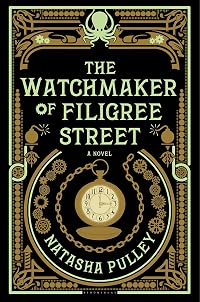
I hope, though, that this will remain her foray into Classical mundane-meets-magical worlds. It's better left in The Watchmaker of Filigree Street stories. This iteration is just that indefinable bit...off. show less
The Publisher Says: A timely and timeless reimagining of the story of Dionysus, Greek God of ecstasy and madness, revelry and ruin, for readers of The Song of Achilles and Elektra.
Raised in a Greek legion, Phaidros has been taught to fight for the homeland he’s never seen and to follow his commander’s orders at all costs. But when he rescues a baby from a fire at Thebes’s palace, his commander’s orders cease to make sense: Phaidros is forced to abandon the blue-eyed boy at a temple, and to keep the baby’s existence a secret.
Years later, after a strange encounter that led to the death of his battalion, Phaidros has become a training master for young soldiers. He struggles with panic attacks and flashbacks, show more and he is not the only one: all around him, his fellow veterans are losing their minds.
Phaidros’s risk of madness is not his only problem: his life has become entangled with Thebes’s young crown prince, who wishes to escape the marriage his mother, the Queen, has chosen for him. When the prince vanishes, Phaidros is drawn into the search for him—a search that leads him to a blue-eyed witch named Dionysus, whose guidance is as wise as the events that surround him are strange. In Dionysus’s company, Phaidros witnesses sudden outbursts of riots and unrest, and everywhere Dionysus goes, rumors follow about a new god, one sired by Zeus but lost in a fire.
In The Hymn to Dionysus, bestselling author Natasha Pulley transports us to an ancient empire on the edge of ruin to tell an utterly captivating story about a man needing a god to remind him how to be a human.
I RECEIVED A DRC FROM THE PUBLISHER VIA NETGALLEY. THANK YOU.
My Review: Phaidros saves an infant god, fights in an unjust war, gets PTSD from it, and...in later years...gives his skills thus acquired to saving his home city of Thebes (the one in Greece, not the one the Egyptians now call Luxor) and calls in his massive debt from Dionysus the god to...address things.
Now go buy one. Seriously...you've heard the good bits. It's Natasha Pulley's latest book (notably and annoyingly not the apparently-written sequel to The Half-Life of Valery K.)! What more do you need to know?
Plot? Already told you. Action? Read the blurb!
Fine. Spoiled brats. This is not a myth retelling. It's the story of two men a generation apart who truly fall in love, after the whole "he's so dreamy phase ends, and embark on that scariest of things to do, a mature relationship. One's a badly fucked up veteran, the other's...um...maybe divine, certainly an old soul. It bears a solid resemblance to Phaedrus, in that it is a solid and thorough examination of love in its guises, morality, and the intersection of emotion and morality that is Greek spirituality's idea of reincarnation. (Their word for it freaks people in the US right out, so I'm skipping it.) Phaidros is not partcularly like the historical Phaedrus, an Athenian aristocrat who did naughty things against the Mysteries...y'all don't much care, I get it, so the important part of using his name for our Theban hero is his name: It means "Shining" or "Brightening" as in to shine light on or brighten a room.
Greek names are so cool. They MEAN stuff. Like Plato..."flatface" or, as the Mexicans I knew in childhood used the same idea, "Chato." No big arching nose on you, sir, so you must be lower class! Yet that put-down is the most famous name in Greek philosophy. And Phaidros! Well, no one loves the one who rips the wizard's curtain down, do they? Dionysus the...god? demigod?...beautiful wild creature does, because he is also a force of opposing chaos. Nature is all shadows and shades and spectra. Dionysus is the perfect foil to light-shining Phaidros.
As a reimagining of Bacchae by Euripides, it's a loose one. It's also, tonally, a bit off. Why do these men speak to each other as modern middle-class Brits? The spark that illuminated Glorious Exploits as it used Dublin-Irish English for ancient Syracusan Greek came from its sly, side-eye commentary on the role of Ireland-v-England as replicated in the colonial war waged by Athens on Syracuse. The characters in this book do not have any comment to make on Thebes by their use of British vernacular, at least not one I can suss out. (That was deliberate.) So off came that half-star.
Still and all, as a fantastical meditation on Love, love, and their intersection points with morality, responsibility, and the eternal human desire to connect to others, I liked the story a lot. Pulley's trademark men-who-love subplot is again, and expectedly, rendered with all the grace a writer can bring, and deepened by the careful and unobtrusive use of the reincarnation-like connective tissue.
I hope, though, that this will remain her foray into Classical mundane-meets-magical worlds. It's better left in The Watchmaker of Filigree Street stories. This iteration is just that indefinable bit...off. show less
Phaidros, a world-weary soldier, has returned to his hometown of Thebes. Long ago, when he was a child, he and his guardian Helios stole a baby who might or might not have been a child of Zeus, whom the queen wanted dead. Now, a strange witch (or god?) has come to town, and everyone is literally running mad. What's up with that? Are the gods real, or just a means for manipulating the common folk? Is the strange witch the same person as the baby who disappeared all those years ago -- or did something even more weird and complicated happen? And will Phaidros ever get over himself and accept that he is deserving of love?
This is the first of Natasha Pulley's books that I've read that I have not straight-up loved. It should have been show more everything I find enjoyable, with the mythology and the ancient setting -- and I did love several things about it, but it didn't come together for me as cohesively as I would have liked. I got irritated with Phaidros being so self-abnegating, for all that I also loved him and wanted the best for him. I got a little irritated with Dionysus for being so mysterious, while understanding that the mystery is a key part of his character and the plot. I will say that Pulley has come up with a fresh view of Dionysus, who is hard to pin down even for a Greek god. Occasionally the idiosyncratic use of language threw me out of the story. For instance, Phaidros uses the word "atomic" at one point, but the story is set long before the theory of the atom was so much as a gleam in a philosopher's eye. Also, there are a couple of relationships with a significant age/experience gap, one of which is defended in the text as best as possible, but that still might be considered a little squicky. (The other involves a god and a mortal, which is common in mythology but still a little bit of a moral grey area.) All in all, I'm glad to have read this, but I probably won't read it again. I'd recommend it to fans of the author, but not as an entry point to her work. I might also recommend it to readers with a deep love for mythology and books that play with those themes. show less
This is the first of Natasha Pulley's books that I've read that I have not straight-up loved. It should have been show more everything I find enjoyable, with the mythology and the ancient setting -- and I did love several things about it, but it didn't come together for me as cohesively as I would have liked. I got irritated with Phaidros being so self-abnegating, for all that I also loved him and wanted the best for him. I got a little irritated with Dionysus for being so mysterious, while understanding that the mystery is a key part of his character and the plot. I will say that Pulley has come up with a fresh view of Dionysus, who is hard to pin down even for a Greek god. Occasionally the idiosyncratic use of language threw me out of the story. For instance, Phaidros uses the word "atomic" at one point, but the story is set long before the theory of the atom was so much as a gleam in a philosopher's eye. Also, there are a couple of relationships with a significant age/experience gap, one of which is defended in the text as best as possible, but that still might be considered a little squicky. (The other involves a god and a mortal, which is common in mythology but still a little bit of a moral grey area.) All in all, I'm glad to have read this, but I probably won't read it again. I'd recommend it to fans of the author, but not as an entry point to her work. I might also recommend it to readers with a deep love for mythology and books that play with those themes. show less
The Hymn to Dionysus was literally an I-can't-fall-asleep-until-I-finish-it book for me. I was so tired yesterday, could barely keep my eyes open, was looking for some solid, uninterrupted sleep, but I figured I'd just read another chapter of Pulley's The Hymn to Dionysus first.
Ha!
It was 1:30a.m. when I finished the book.
This book is a bit of a chimera: parts of it are very Pulley-esque; other parts feel like new ground. Part of that new ground feeling comes from its time setting in ancient Greece. It's also exploring questions of faith and of god-identity, if that makes any sense. Who is a god? How do we know? And it explores positionality, what we might call the impact of nurture. What are the benefits and losses of fitting rigidly show more into one's own culture? What does it take to free one from that culture and what risks accompany that move toward an unknown?
Pulley has packed so much into this novel. At 416 pages it's long-ish, but not looooooong, but it is fullllllllllllllll. There were at least three moments during the course of The Hymn to Dionysus when I thought "well, that's it. The story ends here. We've reached resolution. Why are there all these pages left?" But no. This was a Russian doll sort of a story with with something nested within something else which in turn is nested within yet another thing and, oh, surprise!, yet one more nest. This isn't a complaint. It was delightful, like watching a magician pull rabbit after rabbit after rabbit after—you get the idea—rabbit from her hat.
I'll be reading this title again soon, probably over the summer. I want to spend some more time rustling about in those nests. There's so much there, I can't have begun to see it all.
I received a free electronic review copy of this title from the publisher via NetGalley; the opinions are my own. show less
Ha!
It was 1:30a.m. when I finished the book.
This book is a bit of a chimera: parts of it are very Pulley-esque; other parts feel like new ground. Part of that new ground feeling comes from its time setting in ancient Greece. It's also exploring questions of faith and of god-identity, if that makes any sense. Who is a god? How do we know? And it explores positionality, what we might call the impact of nurture. What are the benefits and losses of fitting rigidly show more into one's own culture? What does it take to free one from that culture and what risks accompany that move toward an unknown?
Pulley has packed so much into this novel. At 416 pages it's long-ish, but not looooooong, but it is fullllllllllllllll. There were at least three moments during the course of The Hymn to Dionysus when I thought "well, that's it. The story ends here. We've reached resolution. Why are there all these pages left?" But no. This was a Russian doll sort of a story with with something nested within something else which in turn is nested within yet another thing and, oh, surprise!, yet one more nest. This isn't a complaint. It was delightful, like watching a magician pull rabbit after rabbit after rabbit after—you get the idea—rabbit from her hat.
I'll be reading this title again soon, probably over the summer. I want to spend some more time rustling about in those nests. There's so much there, I can't have begun to see it all.
I received a free electronic review copy of this title from the publisher via NetGalley; the opinions are my own. show less
The Hymn to Dionysus is one of the best books I've read this year. I can't love it, though I love parts of it - the humor is dark and treacly and unusual - and I liked the whole very much. A Theban knight has got to have as alien a mind as I've encountered in fantasy. It was too heavy for me not to put it down from time to time, but engaging enough that I always wanted to pick it up again.
I read this book after reading the posted reviews. I read Ancient Greek history and have recently returned from a tour of ancient sites in Greece. While I appreciated and enjoyed the references to Ancient Greek life and myth, the world building, and the relationship between Phaidros and Dionysus, I was disappointed. It was a bit of a slog to get through. It could have been better edited by a 100 pages shorter and told the story just as well.
Ratings
Members
- Recently Added By
Lists

Books Read in 2025
4,091 works; 97 members

Library Fantasy/Science Fiction
159 works; 2 members

Top Five Books of 2025
954 works; 303 members
Author Information

10+ Works 5,111 Members
Common Knowledge
- People/Characters
- Dionysus
- Important places
- Thebes, Greece
Classifications
Statistics
- Members
- 207
- Popularity
- 157,992
- Reviews
- 6
- Rating
- (4.37)
- Languages
- English
- Media
- Paper, Audiobook, Ebook
- ISBNs
- 7
- ASINs
- 3