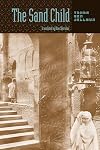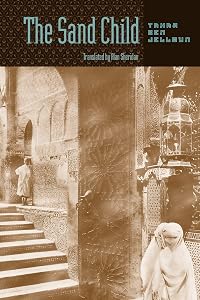
The Sand Child
by Tahar Ben Jelloun
On This Page
Description
In this lyrical, hallucinatory novel set in Morocco, Tahar Ben Jelloun offers an imaginative and radical critique of contemporary Arab social customs and Islamic law. The Sand Child tells the story of a Moroccan father's effort to thwart the consequences of Islam's inheritance laws regarding female offspring. Already the father of seven daughters, Hajji Ahmed determines that his eighth child will be a male. Accordingly, the infant, a girl, is named Mohammed Ahmed and raised as a young man show more with all the privileges granted exclusively to men in traditional Arab-Islamic societies. As she matures, however, Ahmed's desire to have children marks the beginning of her sexual evolution, and as a woman named Zahra, Ahmed begins to explore her true sexual identity. Drawing on the rich Arabic oral tradition, Ben Jelloun relates the extraordinary events of Ahmed's life through a professional storyteller and the listeners who have gathered in a Marrakesh market square in the 1950s to hear his tale. show lessTags
Recommendations





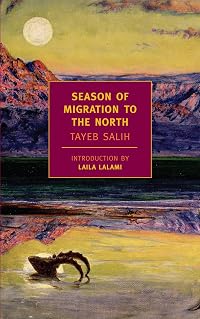
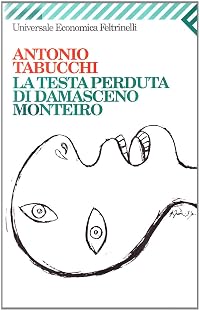
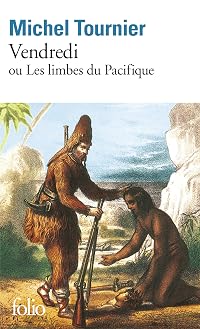

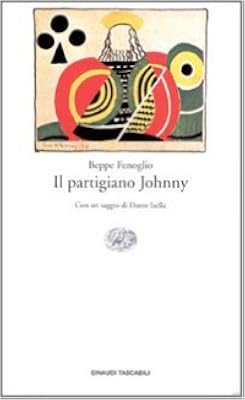





Member Recommendations

Member Reviews
This is a haunting tale of a female child who is born the eighth daughter and raised as a boy on the instructions of her father who wanted a male heir. The novel was written in French and published in 1985. The uncertain ending aroused such interest in readers that Ben Jelloun continued the story in two more novels.
The story starts and ends with storytellers, men in a market sitting on a mat who claim to have the secret journal of our despondent young man, named Ahmed, later reclaiming his female identity as Zahra. Ahmed retreated to an attic as a young man and in addition to writing a journal he also corresponded with an anonymous observer, a man who followed his actions in the street.
The life Ahmed lives as a man in a woman's body show more would be sufficient to fill a novel like this, but the book really took off for me with the inclusion of the multiple narrators. The different endings of the life of our character, given by the different narrators and the diaries make this a book to read more than once. It is not as smooth as the other books I have read by this author but I was glad to reread it as soon as I finished it. show less
The story starts and ends with storytellers, men in a market sitting on a mat who claim to have the secret journal of our despondent young man, named Ahmed, later reclaiming his female identity as Zahra. Ahmed retreated to an attic as a young man and in addition to writing a journal he also corresponded with an anonymous observer, a man who followed his actions in the street.
The life Ahmed lives as a man in a woman's body show more would be sufficient to fill a novel like this, but the book really took off for me with the inclusion of the multiple narrators. The different endings of the life of our character, given by the different narrators and the diaries make this a book to read more than once. It is not as smooth as the other books I have read by this author but I was glad to reread it as soon as I finished it. show less
This bewildering, hallucinatory book begins with the fairytale-like story of an eighth daughter who is raised by her father as the male heir he never had. No one else in the family knows the secret; named Ahmed, (s)he is dressed as a boy, treated as a boy, and speedily inducted into the ways of the patriarchy. ‘His sisters served him his lunches and dinners,’ we are told. ‘He did not allow himself any tenderness towards his mother, whom he saw rarely.’
We are being promised, it seems, a parable about the gender imbalances of Moroccan society. Ahmed gradually retires from communal life and spends hours alone in his room, staring in solitude and confusion at his naked female body. He has absorbed what seems to be a fundamental show more lesson:
Etre femme est une infirmité naturelle dont tout le monde s'accommode. Etre homme est une illusion et une violence que tout justifie et privilégie. Etre tout simplement est un défi.
[To be a woman is a natural disability which everyone makes the best of. To be a man is an illusion and a violence which everything justifies and prioritises. Simply to be is a challenge.]
Ben Jelloun never takes the easy route when playing with these ideas. Just as it looks like he is building to a grand critique of religious authoritarianism, someone bursts out, ‘If our women are inferior to men, it's not because God says so or because the Prophet decreed as much – but because they accept their fate.’ Later, when our protagonist goes out into the streets finally presenting as a woman, she immediately comes up against male harassment and the male gaze. But even this is presented in unusually complex terms:
Sortir, être bousculée, être dans la foule et sentir qu'une main d'homme caresse maladroitement mes fesses. Pour beaucoup de femmes, c'est très désagréable. Je le comprends. Pour moi, ce serait la première main anonyme qui se poserait sur mon dos ou mes hanches. Je ne me retournerais pas pour ne pas voir quel visage porte cette main. Si je le voyais, je serais probablement horrifiée. Mais les mauvaises manières, les gestes vulgaires peuvent avoir parfois un peu de poésie, juste ce qu'il faut pour ne pas se mettre en colère. Une petite touche qui ne démentirait pas l'érotisme de ce peuple. Ce sont surtout les voyageurs européens qui ont le mieux senti et le mieux évoqué cet érotisme, en peinture comme en littérature, même si derrière tout cela une pointe de supériorité blanche guidait leurs pas.
[To go out, to be jostled, to be in a crowd and feel a man's hand awkwardly fondling my ass…for a lot of women it's extremely unwelcome. I can understand that. For me, it would be the first anonymous hand that touched my back, or my hips. I wouldn't turn round to see which face was attached to the hand. If I saw, I'd probably be horrified. But bad manners, vulgar gestures, can sometimes have a little poetry in them – just enough not to get angry. A light touch, that would not belie the eroticism of this people. It was mainly European travellers who best sensed, and best described, this eroticism, in painting as in literature – even though, behind it all, their steps were guided by a sense of white superiority.]
Orientalism by way of street harassment, mediated by a transgender narrator and ultimately filtered through the gaze of a male author? You can see that there's a lot to think about in this small book. The pronouns shift and switch repeatedly, sometimes within a sentence (‘he no longer slept with the acrobats, but in the women's caravan; she ate and went out with them’). This is even more apparent in French, where even in the first-person sections the gender of the speaker is always and unavoidably marked.
I read L'Enfant de sable in two one-day chunks, which was a strange experience, because the second half of the book is in many ways quite unlike the first. I see that a lot of reviewers wanted a whole novel about gender fluidity, a Maghrebi Orlando, but in fact that's not what this ends up being. Ben Jelloun's prose, always very poetic, starts to come apart, to fly off into something much more uncertain and metaphorical.
To be fair, he warns you at the start. ‘This story is also a desert,’ he (or one of his narrators) says; ‘you're going to have to walk over the burning sands in bare feet, walk and shut up, and believe in the oasis forming on the horizon….’ I rather warmed to this reader-unfriendly approach. As one of his walk-ons says late in the story:
Et puis un livre, du moins tel que je le conçois, est un labyrinthe fait à dessein pour confondre les hommes, avec l'intention de les perdre et de les ramener aux dimensions étroites de leurs ambitions.
[Anyway, a book, at least as I see it, is a labyrinth that's designed to confuse people – with the intention of losing them, bringing them out of the narrow confines of their ambitions.]
The play with gender identity turns into a much wider interrogation of the social violence that underpins patriarchy; and this, in turn, becomes an interrogation of the way narratives themselves are even told. At first, our protagonist's story is being told by one of the public storytellers in Marrakech (for more on these guys, see this obscure review that I wrote yonks ago); in the second half of the book, this voice is replaced, and then replaced again, as various characters relate their own opinions on what exactly happened to the central character. Are they even a central character anymore? It's hard to know who is who, and what is supposed to be taken seriously, which version of the truth we are expected to approve.
Just go with it. Ben Jelloun will take you off somewhere; you might not want to go, but he'll take you anyway, and then drop you, miles from where you started, looking around in an unfamiliar landscape, full of new and strange ideas. show less
We are being promised, it seems, a parable about the gender imbalances of Moroccan society. Ahmed gradually retires from communal life and spends hours alone in his room, staring in solitude and confusion at his naked female body. He has absorbed what seems to be a fundamental show more lesson:
Etre femme est une infirmité naturelle dont tout le monde s'accommode. Etre homme est une illusion et une violence que tout justifie et privilégie. Etre tout simplement est un défi.
[To be a woman is a natural disability which everyone makes the best of. To be a man is an illusion and a violence which everything justifies and prioritises. Simply to be is a challenge.]
Ben Jelloun never takes the easy route when playing with these ideas. Just as it looks like he is building to a grand critique of religious authoritarianism, someone bursts out, ‘If our women are inferior to men, it's not because God says so or because the Prophet decreed as much – but because they accept their fate.’ Later, when our protagonist goes out into the streets finally presenting as a woman, she immediately comes up against male harassment and the male gaze. But even this is presented in unusually complex terms:
Sortir, être bousculée, être dans la foule et sentir qu'une main d'homme caresse maladroitement mes fesses. Pour beaucoup de femmes, c'est très désagréable. Je le comprends. Pour moi, ce serait la première main anonyme qui se poserait sur mon dos ou mes hanches. Je ne me retournerais pas pour ne pas voir quel visage porte cette main. Si je le voyais, je serais probablement horrifiée. Mais les mauvaises manières, les gestes vulgaires peuvent avoir parfois un peu de poésie, juste ce qu'il faut pour ne pas se mettre en colère. Une petite touche qui ne démentirait pas l'érotisme de ce peuple. Ce sont surtout les voyageurs européens qui ont le mieux senti et le mieux évoqué cet érotisme, en peinture comme en littérature, même si derrière tout cela une pointe de supériorité blanche guidait leurs pas.
[To go out, to be jostled, to be in a crowd and feel a man's hand awkwardly fondling my ass…for a lot of women it's extremely unwelcome. I can understand that. For me, it would be the first anonymous hand that touched my back, or my hips. I wouldn't turn round to see which face was attached to the hand. If I saw, I'd probably be horrified. But bad manners, vulgar gestures, can sometimes have a little poetry in them – just enough not to get angry. A light touch, that would not belie the eroticism of this people. It was mainly European travellers who best sensed, and best described, this eroticism, in painting as in literature – even though, behind it all, their steps were guided by a sense of white superiority.]
Orientalism by way of street harassment, mediated by a transgender narrator and ultimately filtered through the gaze of a male author? You can see that there's a lot to think about in this small book. The pronouns shift and switch repeatedly, sometimes within a sentence (‘he no longer slept with the acrobats, but in the women's caravan; she ate and went out with them’). This is even more apparent in French, where even in the first-person sections the gender of the speaker is always and unavoidably marked.
I read L'Enfant de sable in two one-day chunks, which was a strange experience, because the second half of the book is in many ways quite unlike the first. I see that a lot of reviewers wanted a whole novel about gender fluidity, a Maghrebi Orlando, but in fact that's not what this ends up being. Ben Jelloun's prose, always very poetic, starts to come apart, to fly off into something much more uncertain and metaphorical.
To be fair, he warns you at the start. ‘This story is also a desert,’ he (or one of his narrators) says; ‘you're going to have to walk over the burning sands in bare feet, walk and shut up, and believe in the oasis forming on the horizon….’ I rather warmed to this reader-unfriendly approach. As one of his walk-ons says late in the story:
Et puis un livre, du moins tel que je le conçois, est un labyrinthe fait à dessein pour confondre les hommes, avec l'intention de les perdre et de les ramener aux dimensions étroites de leurs ambitions.
[Anyway, a book, at least as I see it, is a labyrinth that's designed to confuse people – with the intention of losing them, bringing them out of the narrow confines of their ambitions.]
The play with gender identity turns into a much wider interrogation of the social violence that underpins patriarchy; and this, in turn, becomes an interrogation of the way narratives themselves are even told. At first, our protagonist's story is being told by one of the public storytellers in Marrakech (for more on these guys, see this obscure review that I wrote yonks ago); in the second half of the book, this voice is replaced, and then replaced again, as various characters relate their own opinions on what exactly happened to the central character. Are they even a central character anymore? It's hard to know who is who, and what is supposed to be taken seriously, which version of the truth we are expected to approve.
Just go with it. Ben Jelloun will take you off somewhere; you might not want to go, but he'll take you anyway, and then drop you, miles from where you started, looking around in an unfamiliar landscape, full of new and strange ideas. show less
Ci sono libri che andrebbero letti una sola volta, per conservare intatta la magia della scoperta di una narrazione diversa da quella normalmente sperimentata, perché la storia continui a scintillare intatta nella memoria, senza che la ripetizione di una narrazione conosciuta la faccia scivolare in secondo piano rispetto al modo in cui è narrata.
Questo è quanto mi è successo rileggendo a moltissimi anni di distanza Creatura di sabbia.
L'eccesso di parole si è mangiato la storia, che pure trovavo e trovo ancora bellissima e originale,l'ha messa sullo sfondo, e ha dato spazio alla noia.
Questo è quanto mi è successo rileggendo a moltissimi anni di distanza Creatura di sabbia.
L'eccesso di parole si è mangiato la storia, che pure trovavo e trovo ancora bellissima e originale,l'ha messa sullo sfondo, e ha dato spazio alla noia.
Plusieurs narations pour conter l'histoire d'une fille dont les parents décident de l'élever comme un garçon.
A story with potential, but it never takes off.
---
En historia som har potential, men som - tyvärr - aldrig riktigt lyfter.
---
En historia som har potential, men som - tyvärr - aldrig riktigt lyfter.
E' un libro breve, per fortuna: è stata una sofferenza arrivare alla fine di queste poche pagine. L'idea di partenza è interessante: una bambina allevata come un uomo per salvare l'onore della famiglia, rovinato dalla nascita di sette figlie. Il risultato, però, è deludente, Ahmed confida i propri turbamenti ad una specie di diario in un modo così "poetico" (o meglio allucinato) da essere totalmente incomprensibile. La trasformazione da donna ad uomo è solo accennata, manca completamente il contesto sociale e lo scarto tra le due identità prende voce solo nel diario. "Le carte segrete di Mary Brandon" ed "Orlando" sono infinitamente superiori in quanto a capacità di descrivere la trasformazione di sé.
La parte più interessante show more è il modo in cui la storia viene narrata: prima da un cantastorie, poi da un ascoltatore che lo contraddice e in seguito - dopo la sparizione della piazza (forse una delle pagine più belle) - da tre personaggi che propongono finali alternativi e quasi da ultimo da Borges e infine di nuovo dal cantastorie, colpito da una maledizione ed incapace di terminare i propri racconti.
La storia di Ahmed diventa un pretesto per un virtuosismo narrativo, un po' come in "Se una notte d'inverno un viaggiatore", ma è ben lontano da Calvino e da Borges, il cui ritratto merita da solo una stella. La mezza stella è per la descrizione della piazza e per l'episodio della pioggia di parole nell'hammam. show less
La parte più interessante show more è il modo in cui la storia viene narrata: prima da un cantastorie, poi da un ascoltatore che lo contraddice e in seguito - dopo la sparizione della piazza (forse una delle pagine più belle) - da tre personaggi che propongono finali alternativi e quasi da ultimo da Borges e infine di nuovo dal cantastorie, colpito da una maledizione ed incapace di terminare i propri racconti.
La storia di Ahmed diventa un pretesto per un virtuosismo narrativo, un po' come in "Se una notte d'inverno un viaggiatore", ma è ben lontano da Calvino e da Borges, il cui ritratto merita da solo una stella. La mezza stella è per la descrizione della piazza e per l'episodio della pioggia di parole nell'hammam. show less
Dec 7, 2012 (Edited)Italian
Tras su nacimiento como niña, Ahmed vive durante años en un rol masculino impuesto, explorando género, pasión y libertad en la sociedad marroquí.
Oct 29, 2025Spanish
Members
- Recently Added By
Lists

Troublesome bodies
110 works; 7 members

Islam & the Middle East
127 works; 1 member

List of Removed Books from Nimitz Library
353 works; 1 member
Author Information

Controversial winner of the prestigious French Prix Goncourt (1987), Tahar Ben Jelloun is a Moroccan writer who has not found much favor at home, despite his growing popularity abroad. According to some North African critics, Ben Jelloun intentionally sets out to please foreign readers. The critics contend that his writing reinforces European show more stereotypes by pandering to western tastes for quaint folklore and traditions, and exotic scenery. Moroccan critics have accused Ben Jelloun of creating artificial, fabricated stories that fail to convey a true picture of Morocco. They have also been offended by his criticism of Morocco, and the fact that he reveals sides of Moroccan life that are usually kept hidden. Ben Jelloun's story of a girl dressed as a boy, L'Enfant du Sable (The Sand Child) (1985), was scandalous in their eyes. After Ben Jelloun won the Prix Goncourt, a number of critics changed their minds and have begun to praise his work. (Bowker Author Biography) show less
Some Editions
Awards and Honors
Series
Belongs to Publisher Series
Work Relationships
Is contained in
Has the (non-series) sequel
Common Knowledge
- Canonical title
- The Sand Child
- Original title
- L'enfant de sable
- Original publication date
- 1985
- First words*
- Först var det detta ansikte som tänjts ut av några lodräta rynkor, likt ärr som holkats ur av sömnlösa nätter för längesedan, ett orakat ansikte, märkt av tiden.
- Last words*
- (Click to show. Warning: May contain spoilers.)Jag ska gå och läsa Koranen på de dödas gravar!
*Some information comes from Common Knowledge in other languages. Click "Edit" for more information.
Classifications
Statistics
- Members
- 694
- Popularity
- 41,136
- Reviews
- 10
- Rating
- (3.59)
- Languages
- 14 — Catalan, Danish, Dutch, English, Estonian, Finnish, French, German, Italian, Norwegian (Bokmål), Portuguese, Spanish, Swedish, Turkish
- Media
- Paper, Ebook
- ISBNs
- 35
- UPCs
- 1
- ASINs
- 9