On This Page
Description
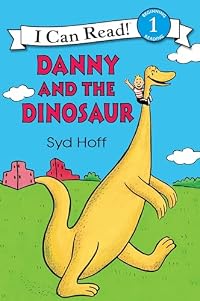
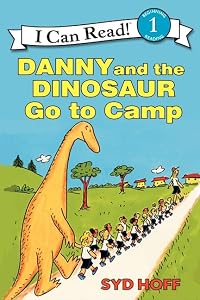
A little boy is surprised and pleased when one of the dinosaurs from the museum agrees to play with him.Tags
Recommendations




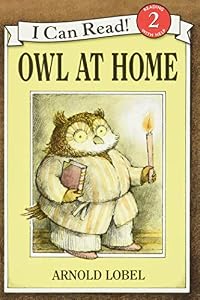
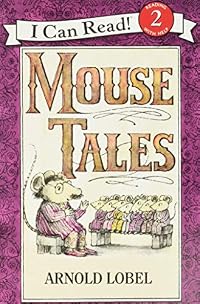
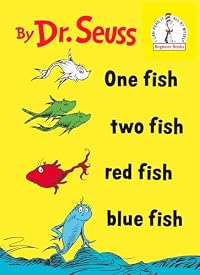
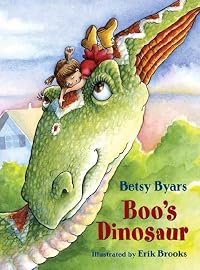


Member Recommendations

Member Reviews
I grew up reading Syd Hoff's Danny and the Dinosaur, a beginning reader originally published in 1958 as part of the prestigious I Can Read series, and have many fond memories of Danny's day of adventure with his prehistoric friend. Who hasn't fantasized about having a pet dinosaur, or wondered what those fossilized skeletons in the museum would look like, if they suddenly came alive?
Recently, a post on one of my favorite children's literature blogs, American Indians in Children's Literature, drew my attention to the problematic nature of the illustration in which Danny, at the museum for the day, is looking at a display containing an Indian, a bear, and an Eskimo. I was surprised, because although I had always found it odd and show more inappropriate that the achievements of non-European peoples - Native Americans, Pacific Islanders - would be collected in a museum devoted to "natural" history, while similar artifacts from European peoples are labeled "art," and find their way to a different sort of museum, I had no recollection of this illustration, from my childhood reading. Needless to say, I decided to track down a copy and reread, especially when - by sheer coincidence - we chose Danny and the Dinosaur as one of our July dinosaur-themed reads over in the Picture-Book Club to which I belong.
So... does this single illustration - which unquestionably hearkens back to outdated notions of racial hierarchy (some of them still with us, unfortunately) in which Europeans are somehow more fully "human," while non-Europeans are in the same category as animals - ruin the story? Will it harm the young reader? Is Professor Debbie Reese right? Should Danny and the Dinosaur be pulled from shelves? My answers are, respectively: Yes and No, Yes, Yes, and No.
To wit: I don't know that it's fair to say that the illustration "ruins" the story, since I can only speak for myself, but I do know that I will never be entirely comfortable with this title again. I will always be thinking of that illustration, what it means, and what harm it might do. Which brings me to: yes, I think images like this, for all their seeming innocence - perhaps because of them? - can do harm. Perhaps not lasting, terrible harm, all on their own, but if combined with enough similar material, not insignificant harm either. Meaning, of course, that yes, Professor Reese is right. She's right to point out this illustration, and she's right to question it. But finally, no, no I don't think, as she does, that it should be pulled from the library shelves. Leaving aside my passionate belief that the library should be a repository for the printed word, not some revolving-door collection based on popularity (or even morality), I also think that titles such as this fade away when they have no more significance, and it's worse than useless trying to forbid them. Worse, because we give things immense power by forbidding them...
I gave this three stars, because it would be untruthful, in light of my childhood love of it, to give it less. But although I wouldn't support its removal from the library, I also wouldn't go out of my way to promote it. show less
Recently, a post on one of my favorite children's literature blogs, American Indians in Children's Literature, drew my attention to the problematic nature of the illustration in which Danny, at the museum for the day, is looking at a display containing an Indian, a bear, and an Eskimo. I was surprised, because although I had always found it odd and show more inappropriate that the achievements of non-European peoples - Native Americans, Pacific Islanders - would be collected in a museum devoted to "natural" history, while similar artifacts from European peoples are labeled "art," and find their way to a different sort of museum, I had no recollection of this illustration, from my childhood reading. Needless to say, I decided to track down a copy and reread, especially when - by sheer coincidence - we chose Danny and the Dinosaur as one of our July dinosaur-themed reads over in the Picture-Book Club to which I belong.
So... does this single illustration - which unquestionably hearkens back to outdated notions of racial hierarchy (some of them still with us, unfortunately) in which Europeans are somehow more fully "human," while non-Europeans are in the same category as animals - ruin the story? Will it harm the young reader? Is Professor Debbie Reese right? Should Danny and the Dinosaur be pulled from shelves? My answers are, respectively: Yes and No, Yes, Yes, and No.
To wit: I don't know that it's fair to say that the illustration "ruins" the story, since I can only speak for myself, but I do know that I will never be entirely comfortable with this title again. I will always be thinking of that illustration, what it means, and what harm it might do. Which brings me to: yes, I think images like this, for all their seeming innocence - perhaps because of them? - can do harm. Perhaps not lasting, terrible harm, all on their own, but if combined with enough similar material, not insignificant harm either. Meaning, of course, that yes, Professor Reese is right. She's right to point out this illustration, and she's right to question it. But finally, no, no I don't think, as she does, that it should be pulled from the library shelves. Leaving aside my passionate belief that the library should be a repository for the printed word, not some revolving-door collection based on popularity (or even morality), I also think that titles such as this fade away when they have no more significance, and it's worse than useless trying to forbid them. Worse, because we give things immense power by forbidding them...
I gave this three stars, because it would be untruthful, in light of my childhood love of it, to give it less. But although I wouldn't support its removal from the library, I also wouldn't go out of my way to promote it. show less
I don't remember reading this as a child. It was a fun story and I see why it is still around. It is rather long for an easy reader, but it flows well.
Danny and the Dinosaur is a book about a little boy who has an exciting day after a visit to a museum. Danny really loves dinosaurs. While at the museum Danny wishes that he had a dinosaur and his wish comes true. Danny and the dinosaur spend the whole day together. They went all over town and had lots of fun. At the end of the day, Danny was sad to see the dinosaur go back to the museum but he knew that his house did not have room for a pet that big.
This was a fun book to read. At some point in or lives, every kid longs to have a special pet. The kind of pet that is too big for our house.
This book should be read before a field trip to a museum. The students could discuss what they hope to see at the museum. It could also be used when show more teaching young children a lesson on real vs. not real. You could tell them that dinosaurs are real and that you can see them in a museum, but it is not real for a dinosaur at the museum to come alive and go to town with you. show less
This was a fun book to read. At some point in or lives, every kid longs to have a special pet. The kind of pet that is too big for our house.
This book should be read before a field trip to a museum. The students could discuss what they hope to see at the museum. It could also be used when show more teaching young children a lesson on real vs. not real. You could tell them that dinosaurs are real and that you can see them in a museum, but it is not real for a dinosaur at the museum to come alive and go to town with you. show less
Danny and the Dinosaur, by Syd Hoff was one of my favorite books as a child. My mother used to read this book to me all the time, but now that I am older I read the book and really I was kind of disappointed. I searched and searched for a main idea, and really the book didn’t really seem to have any purpose other than to entertain, so I don’t think this book has a big idea. I will say I very much enjoyed the pictures in this book, mostly because they brought back memories, but also because they are well done and very vibrant in color. The images also work very well with the store, allowing me to flip the pages, not read, and still understand what is going on in the book. One thing I did not like were the characters, not that the show more main character is bad, but that fact that there is no diversity. Books from this time are full of different kinds of children, from handicap, to Hispanic, to white, or black children's books are full of different characters. This one of the other hand has no cultural diversity, and every character is a white boy or white girl of the same height and size, none of which are handicap. This doesn’t make the book bad in my eyes, just means that it is really out of date and maybe they should change the images up to catch up with the times. Another part of this story I didn’t really like was the lack of plot. Not much happens in this story, and what does happen has no ups or downs. The story likes a climax and in turn lacks a resolution, which also makes the story really have no meaning. Even with all of this being said I still love the book and in some years will read it to my child. show less
I found this to be a very nice read. I thought it was a very cute book because its about a person becoming best friends with a dinosaur. This book can be used for a teacher showing their students what it takes to be a good friend and a good person. It sets many examples for young kids on how to treat friends and people they care about.
While at the museum, Danny wishes he could play with the dinosaur. The dinosaur hears his request, comes to life, and the two have lots of adventure and fun in the city for a day. I like this book because of its emphasis on imagination, which is great for children to possess. This book would be suitable for a K-2 classroom to differentiate between fantasy and real life, but also to show students that imagination is a gateway between the two worlds.
Danny spends a day with a dinosaur and the two become best friends until the dinosaur has to go back to the museum where Danny saw him. This book is an enjoyable read in the fact that it is very simple and the message is that no matter how different you and someone else are it does not matter. Anybody can be friends with anybody.
Members
- Recently Added By
Lists

Favorite Childhood Books
1,646 works; 513 members

Bennett's 30 Great Books Every Preschooler Should Meet
30 works; 3 members

Recommended Reading List
219 works; 1 member

Favorite Picture Books
479 works; 160 members

Fiction with Men's Given Names in the Title
302 works; 11 members
Honey For a Child's Heart
1,152 works; 25 members

Brightly Beaming Curriculum Books
281 works; 8 members
Author Information

145+ Works 31,229 Members
Sydney Hoff, a well-known cartoonist, author, and illustrator of books for children and young adults, was born in 1912 New York City and raised in the Bronx. His young adult novel, Irving and Me, was named one of the 10 best books for children by the New York Times. Hoff first became interested in drawing as a child. Although he dropped out of show more public school, he later attended the National Academy of Design in New York City, where he studied to become a serious painter. However, at the age of 18 he sold his first cartoon to The New Yorker; this launched his career as a cartoonist. Hoff has also drawn cartoon advertisements for CBS and has written short mysteries for popular mystery magazines. One of his earliest and most enduringly popular works is Danny and the Dinosaur, published in 1958. He wrote this book to entertain one of his daughters who was sick. Hoff's audience is, for the most part, the young child who likes clear illustrations, friendly animals, and a limited text. Hoff died of pneumonia on May 12, 2004 in Miami, Florida. He and his wife, Dora, had two children. (Bowker Author Biography) show less
Series

Belongs to Publisher Series
Weekly Reader Books (Harper and Row Publishers, Inc.)
I Can Read! (Level 1)
Work Relationships
Common Knowledge
- Canonical title
- Danny and the Dinosaur
- Original publication date
- 1958
- People/Characters
- Danny
- Related movies
- Danny and the Dinosaur (1990 | IMDb)
- Dedication
- For Bonny
For Sally - First words
- One day Danny went to the museum.
- Last words
- (Click to show. Warning: May contain spoilers.)"Good night," Danny said.
Classifications
Statistics
- Members
- 7,361
- Popularity
- 1,561
- Reviews
- 54
- Rating
- (3.71)
- Languages
- English, Spanish
- Media
- Paper, Audiobook, Ebook
- ISBNs
- 77
- UPCs
- 1
- ASINs
- 29