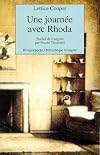
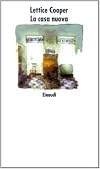
The New House
by Lettice Cooper
On This Page
Description
Rhoda Powell knows that her mother's selfish and repining ways will impede their removal from Stone Hall to a new, smaller home. She feels tethered to her mother's whims as when she was a child. Brother Maurice seems similarly trapped by his boyhood role. Only younger sister Delia has moved south, leaving Swarfdale and its memories behind.Tags
Recommendations










































Member Reviews
Natalie Powell's daughter Rhoda has sacrificed her life to take care of her aging parents in the family home. After Natalie's husband dies, it becomes financially necessary for her to sell the house and move to a smaller place. The story is about the big moving day, and although the novel covers pretty much just that one day, the characters' thoughts and conversations explore their shared history, the choices they've made, the lives that are the result of those choices, and the choices that are now available to them.
Rhoda realizes that she gave up a life of her own to take care of her folks, and she wonders now whether this move to a new house is the ideal time to make a change. Or is it too late? Would it be selfish of her to leave now show more to pursue a life for herself, just when her mother needs her most? There is a deeper question, too -- does Rhoda like her life of being needed?
Delia understands that she escaped the life that Rhoda is in, and she would like Rhoda to finally have a shot at an independent life, too. Delia tells Rhoda that she will leave her job in London soon when she gets married, and that she could probably get her boss to hire Rhoda when Delia leaves.
Rhoda's and Delia's brother Maurice lives nearby with his society-minded wife, Ellen, and their adored daughter. He's dissatisfied with the way his married life has turned out, but there's no way he's going to become their mother's main caretaker.
Lots of meaty life questions here, and because of the way Lettice Cooper writes about the characters, I wanted everyone to have a happy ending. It isn't clear whether they do.
Some good passages:
Life was never closed to you as long as you went down any avenue that was open.
If you don't fight for yourself you die, and if you do, you are always liable to damage other people.
A tyranny is not all the tyrant's fault; it is the fault of those who submit to be slaves.
And, because I have a dear sister, I especially liked this: If your sister was also your great friend, there was nothing else like it, and you had one piece of luck whatever else you missed. show less
Rhoda realizes that she gave up a life of her own to take care of her folks, and she wonders now whether this move to a new house is the ideal time to make a change. Or is it too late? Would it be selfish of her to leave now show more to pursue a life for herself, just when her mother needs her most? There is a deeper question, too -- does Rhoda like her life of being needed?
Delia understands that she escaped the life that Rhoda is in, and she would like Rhoda to finally have a shot at an independent life, too. Delia tells Rhoda that she will leave her job in London soon when she gets married, and that she could probably get her boss to hire Rhoda when Delia leaves.
Rhoda's and Delia's brother Maurice lives nearby with his society-minded wife, Ellen, and their adored daughter. He's dissatisfied with the way his married life has turned out, but there's no way he's going to become their mother's main caretaker.
Lots of meaty life questions here, and because of the way Lettice Cooper writes about the characters, I wanted everyone to have a happy ending. It isn't clear whether they do.
Some good passages:
Life was never closed to you as long as you went down any avenue that was open.
If you don't fight for yourself you die, and if you do, you are always liable to damage other people.
A tyranny is not all the tyrant's fault; it is the fault of those who submit to be slaves.
And, because I have a dear sister, I especially liked this: If your sister was also your great friend, there was nothing else like it, and you had one piece of luck whatever else you missed. show less
25 Dec 2008 - from Audrey
A book in which ostensibly nothing much happens - a woman and her daughter move from a large, family house to a smaller one because of money issues. The extended family pitches in to help, and that is where the glory of the book comes from - they are all so well observed, with their petty thoughts shown in a stream of consciousness style, undercutting spoken words and performed actions. Patterns that have occurred through the generations are examined, socialist principles are mulled over but never quite acted upon, and we wait to see if Rhoda makes up her mind.
My only worry with the book was the presence of a lovely cat and kitten - we all know why animals are often put in books - but no, they are OK. So I will show more be reassured about that when I re-read this lovely, gentle but perceptive book. show less
A book in which ostensibly nothing much happens - a woman and her daughter move from a large, family house to a smaller one because of money issues. The extended family pitches in to help, and that is where the glory of the book comes from - they are all so well observed, with their petty thoughts shown in a stream of consciousness style, undercutting spoken words and performed actions. Patterns that have occurred through the generations are examined, socialist principles are mulled over but never quite acted upon, and we wait to see if Rhoda makes up her mind.
My only worry with the book was the presence of a lovely cat and kitten - we all know why animals are often put in books - but no, they are OK. So I will show more be reassured about that when I re-read this lovely, gentle but perceptive book. show less
The New House takes place over one very long day that sees the “removal” of Natalie Powell and her adult daughter Rhoda from their large family home to a much smaller house on the other side of the town. The old house is to be demolished to make way for newer more modest housing for working class families. Rhoda’s sister Delia has arrived from London to help, and with her she brings the wind of change. The social order is a central theme to this wonderful novel. Natalie Powell has been a spoiled and petted woman her whole life, given to childlike rages when she doesn’t get her own way, she generally did, and she has become a selfish woman. Natalie and her sister Ellen – who also comes to help on moving day - are still living show more in their shared past, they were brought up in a certain way, the duties that they believed were due to their parents, they believe are due to Natalie. Natalie still recovering from her husband’s death, relies on Rhoda to help run the home, Rhoda in her early thirties, has become trapped. Aunt Ellen the dutiful sister and daughter who never married and now lives in a kind of hotel for ladies like herself is delighted to be back helping and organising and busy, and in her Rhoda recognises the woman she too could so easily become if she doesn’t break free. Delia planning soon to marry her fiancé Jim is eager to help Rhoda get away and suggests she takes her job in London when she leaves to get married in a few months. Rhoda is shaken by the suggestion, but keeps thinking about it throughout the day.
“Today, she thought, is like a crack in my life. Things are coming up through the crack, and, if I don’t look at them, perhaps I shall never see them again. Ordinary life in the new house will begin tomorrow and grow over the crack and seal it up.”
Maurice the son of the family, is also now living away from home, he is married to the fairly dreadful Evelyn, a young women not dissimilar to her mother-in-law. Although Evelyn is uncomfortable with Maurice’s family, and is quite disliked by Maurice’s two sisters. She is more concerned with lovely things, clothes and her social position than with her husband and his family.
“Evelyn got off her bus in the centre of the town, strolled along, looking at the shop windows, and finally turned in at the big doors of Varleys. It was like coming back into her familiar world. The warm air, scented with cosmetics, lapped her round. The bright lights shone on counters of expensive oddments, fantastic gloves, fragile stockings, handkerchiefs like bright flowers, handsome heavy bags. There were a lot of well-dressed people about, shopping or looking. The women behind the counters served them with skill and deference. Once you got inside those big doors, you were in a world which, provided that you had money to spend, existed for your convenience.”
Maurice although adoring of his little girl Tattie, is unhappy and dissatisfied with his life. The upheaval of the move from the family home throws everything up in to the air – releasing feelings in the members of the Powell family they are hardly aware of. He is still attached to the large family home that he moved out of five years earlier – and seeing his mother and sister leaving it is painful for him, forcing him, along with other members of his family, to take stock and look at his life.
The New House was first published in 1936 and re-issued by Persephone books in 2003 with a wonderful preface written by Jilly Cooper the wife of Lettice Cooper’s nephew Leo Cooper. It is that wonderful thing, a beautiful quiet novel, where nothing much happens, but through it you see the whole of the society which existed at the time it was written. I loved it and as I had a busy couple of days with family, I was forced to read it more slowly than I might have done otherwise. show less
“Today, she thought, is like a crack in my life. Things are coming up through the crack, and, if I don’t look at them, perhaps I shall never see them again. Ordinary life in the new house will begin tomorrow and grow over the crack and seal it up.”
Maurice the son of the family, is also now living away from home, he is married to the fairly dreadful Evelyn, a young women not dissimilar to her mother-in-law. Although Evelyn is uncomfortable with Maurice’s family, and is quite disliked by Maurice’s two sisters. She is more concerned with lovely things, clothes and her social position than with her husband and his family.
“Evelyn got off her bus in the centre of the town, strolled along, looking at the shop windows, and finally turned in at the big doors of Varleys. It was like coming back into her familiar world. The warm air, scented with cosmetics, lapped her round. The bright lights shone on counters of expensive oddments, fantastic gloves, fragile stockings, handkerchiefs like bright flowers, handsome heavy bags. There were a lot of well-dressed people about, shopping or looking. The women behind the counters served them with skill and deference. Once you got inside those big doors, you were in a world which, provided that you had money to spend, existed for your convenience.”
Maurice although adoring of his little girl Tattie, is unhappy and dissatisfied with his life. The upheaval of the move from the family home throws everything up in to the air – releasing feelings in the members of the Powell family they are hardly aware of. He is still attached to the large family home that he moved out of five years earlier – and seeing his mother and sister leaving it is painful for him, forcing him, along with other members of his family, to take stock and look at his life.
The New House was first published in 1936 and re-issued by Persephone books in 2003 with a wonderful preface written by Jilly Cooper the wife of Lettice Cooper’s nephew Leo Cooper. It is that wonderful thing, a beautiful quiet novel, where nothing much happens, but through it you see the whole of the society which existed at the time it was written. I loved it and as I had a busy couple of days with family, I was forced to read it more slowly than I might have done otherwise. show less
The whole story of this book takes place on a single day in the 1930’s, as Rhoda, a single woman in her thirties, and her mother, Natalie, move out of their old family home, following the death of Tom, Natalie’s husband. The house is being torn down to make way for a new housing estate, and the two women are moving, with their maid, Ivy, to a smaller house on the other side of town, as they can no longer afford a big house.
The theme of the book is change – social change and individual change, and how people feel about it and react to it. A wide range of thoughts and feelings are triggered by the move, not only for the two women, but for Rhoda’s brother and sister and their partners, and her maiden aunt as well. Different show more chapters reveal different characters’ feelings and thoughts as they go about their daily business – organizing the moving, going to work, having dinner, taking a child to a birthday party, buying a hat, etc. Some love change, some just accept it, and some actively hate it.
Each character has some regrets – things they didn’t do, or did do and wish they hadn’t, and each thinks back to their youth, when the world seemed a simpler place. Their regrets relate mainly to marriages rejected or accepted, to chances not taken to move away from home, and to problems caused by not getting the right balance between selfishness and selflessness. Most of them feel somewhat constrained by the choices they have made.
I felt I understood every one of these characters. Each is portrayed clearly, in their own thoughts and also by other characters’ thoughts and conversations about them. Each is capable of understanding his or her own flaws and others’ points of view, even though each believes their own ways to be best. This makes them much more interesting than if they had only thought and talked about themselves. Some are portrayed as very selfish – expecting relatives to cater to their every whim, or actively stopping others pursuing their own dreams. Others are extremely selfless, to the point where it embarrasses and upsets their relatives (and makes readers want to give them a really hard shake). The genius of the book is that even the most selfish characters have regrets and uncertainties, and they don’t always act entirely selfishly. This makes them seem very real.
The introduction to the book makes clear that the characters are based on Cooper’s own family and experiences – she is Rhoda, and she didn’t make her own decision about whether to leave home until after this book was written, almost as if she was testing out her own ambivalent feelings. This makes me feel that although I really liked this book, I don’t want to read any of her others, as it could be that this was her one big story. show less
The theme of the book is change – social change and individual change, and how people feel about it and react to it. A wide range of thoughts and feelings are triggered by the move, not only for the two women, but for Rhoda’s brother and sister and their partners, and her maiden aunt as well. Different show more chapters reveal different characters’ feelings and thoughts as they go about their daily business – organizing the moving, going to work, having dinner, taking a child to a birthday party, buying a hat, etc. Some love change, some just accept it, and some actively hate it.
Each character has some regrets – things they didn’t do, or did do and wish they hadn’t, and each thinks back to their youth, when the world seemed a simpler place. Their regrets relate mainly to marriages rejected or accepted, to chances not taken to move away from home, and to problems caused by not getting the right balance between selfishness and selflessness. Most of them feel somewhat constrained by the choices they have made.
I felt I understood every one of these characters. Each is portrayed clearly, in their own thoughts and also by other characters’ thoughts and conversations about them. Each is capable of understanding his or her own flaws and others’ points of view, even though each believes their own ways to be best. This makes them much more interesting than if they had only thought and talked about themselves. Some are portrayed as very selfish – expecting relatives to cater to their every whim, or actively stopping others pursuing their own dreams. Others are extremely selfless, to the point where it embarrasses and upsets their relatives (and makes readers want to give them a really hard shake). The genius of the book is that even the most selfish characters have regrets and uncertainties, and they don’t always act entirely selfishly. This makes them seem very real.
The introduction to the book makes clear that the characters are based on Cooper’s own family and experiences – she is Rhoda, and she didn’t make her own decision about whether to leave home until after this book was written, almost as if she was testing out her own ambivalent feelings. This makes me feel that although I really liked this book, I don’t want to read any of her others, as it could be that this was her one big story. show less
An excellent read! All about "removing" from old family home day of move. Sectioned by day - Morning, Afternoon, Evening. Wonderful personalities - Rhoda needs to get out from under mother's thumb; sister, Delia, encouraging her; brother, Maurice married to Evelyn, very much like their mother. Well written, good read.
Publié en 1936. Rhoda vit avec sa mère depuis le départ de ses frères et sœurs et s’occupe d’elle avec dévouement. Ce jour-là, elles déménagent et le bouleversement de ses habitudes amène la jeune femme à s’interroger sur ses aspirations. Un roman psychologique d’une extrême finesse qui pose la question de la liberté individuelle face aux exigences sociales, du désir d’autonomie face au carcan des conventions, du chantage affectif et de la culpabilité, du désir et de la peur de la nouveauté.
”Déceler ses propres contradictions ne suffit pas à restaurer son intégrité, mais les circonscrire permet parfois de se comporter comme si on était en accord avec soi-même. Ne plus se leurrer procure en tout cas show more une certaine paix et un sentiment de dignité, et c’est sur cette seule base que peuvent naître un peu plus de courage, un peu plus de vie, un peu plus d’expérience.” show less
”Déceler ses propres contradictions ne suffit pas à restaurer son intégrité, mais les circonscrire permet parfois de se comporter comme si on était en accord avec soi-même. Ne plus se leurrer procure en tout cas show more une certaine paix et un sentiment de dignité, et c’est sur cette seule base que peuvent naître un peu plus de courage, un peu plus de vie, un peu plus d’expérience.” show less
Jan 28, 2019French
Members
- Recently Added By
Lists

Favourite Virago Modern Classics
183 works; 38 members

Novels set over the course of a single day (or less)
72 works; 8 members

My Virago Modern Classics wish list
23 works; 3 members

Books referenced in A Very Great Profession: The Woman's Novel 1914-39
199 works; 6 members

Persephone
148 works; 3 members
Author Information

29+ Works 603 Members
Some Editions
Series
Belongs to Publisher Series
Persephone (47)
Virago Modern Classics (263)
Common Knowledge
- Canonical title
- The New House
- Original publication date
- 1936
- People/Characters
- Natalie Powell; Maurice Powell; Evelyn Powell; Rhoda Powell; Delia Powell
- First words
- The window, bare of blind or curtain, was reflected in the long mirror of the wardrobe on the opposite side of the room, so that the bed lay between two barred oblongs of light, pale grey at first, then pinkish, deepening at ... (show all)last to the triumphant gold of the September morning.
- Last words
- (Click to show. Warning: May contain spoilers.)A delicious drowsiness relaxed her mind and body, and, turning over on her side, she fell asleep.
Classifications
Statistics
- Members
- 214
- Popularity
- 151,856
- Reviews
- 7
- Rating
- (4.08)
- Languages
- English, French, Italian
- Media
- Paper
- ISBNs
- 7
- ASINs
- 3