
Maureen Duffy (1933–2026)
Author of That's How It Was
About the Author
Works by Maureen Duffy
Associated Works
Love-Letters Between a Nobleman and His Sister (1684) — Introduction, some editions — 214 copies, 1 review
Poems Between Women: Four Centuries of Love, Romantic Friendship, and Desire (1997) — Contributor — 97 copies, 1 review
Tagged
Common Knowledge
- Canonical name
- Duffy, Maureen
- Birthdate
- 1933-10-21
- Date of death
- 2026-05
- Gender
- female
- Education
- King's College, London
- Occupations
- teacher
novelist
poet
playwright - Organizations
- Writers' Action Group (co-founder)
European Writers' Congress
Royal Society of Literature
British Humanist Association - Awards and honors
- Benson Medal
Royal Society of Literature (Fellow, 1985) - Agent
- Jonathan Clowes Ltd.
- Nationality
- UK
- Birthplace
- Worthing, Sussex, England, UK
- Places of residence
- Worthing, West Sussex, England, UK
- Associated Place (for map)
- England, UK
Members
Reviews

An engrossing read about a tubercular single mother's love for her daughter and commitment to her child's escape from poverty through education. Some idiomatic use of English and cultural references as well as occasionally fuzzy writing made a few early parts of the novel challenging. However, once I was a third of the way into the book, I found it hard to put down. Worthwhile.

Novelist Duffy (That's How It Was) brings a formidable amount of scholarship, as well as a very welcome inclination to dramatise wherever possible, to this life of England's most famous pre-19th-century composer, probably the best that Britain has produced. But the fact is that an extraordinarily limited amount is known about Purcell, other than that he was vastly celebrated in his lifetime, steered adroitly clear of the partisan royalist and religious struggles of his era (the late 17th show more century) and died in his 30s, as pathetically early as Mozart; reputedly he was locked out of the house by his wife on returning late from an evening of drinking, and succumbed to what was probably a virulent form of influenza. Even this colorful tale cannot be confirmed, but like much of what appears in Duffy's book, has to be pieced together from the personal diaries, publications and scanty public records of the time. There is therefore vast supposition at work here; and though Duffy manages it as gracefully as possible, a great deal of extraneous detail has to be sifted to get at the bones of Purcell's short life. The music, fortunately, can still be heard, and Duffy's evocations of his greatest works are sufficient to send any music lover back to his immortal legacy.
Duffy was led to Purcell by her previous biography of his contemporary, Aphra Behn (Passionate Shepardess, Heinemann, 1989). Now she has written a dense, richly detailed account of the life and times of England's greatest composer of the 17th century. Duffy's great strength is her intimate knowledge and understanding of politics and mores in Britain's Restoration era. She has researched this material thoroughly and has a novelist's flair for dramatic narrative. show less
Duffy was led to Purcell by her previous biography of his contemporary, Aphra Behn (Passionate Shepardess, Heinemann, 1989). Now she has written a dense, richly detailed account of the life and times of England's greatest composer of the 17th century. Duffy's great strength is her intimate knowledge and understanding of politics and mores in Britain's Restoration era. She has researched this material thoroughly and has a novelist's flair for dramatic narrative. show less

Bought for a buck from the library's discarded books shelf, formerly property of the British Council. With a title like this, it would have to be either very good or very bad and it was very good - sort of Ocean's Eleven meets Twelve Monkeys with a thick layer of thieves' cant and country house intrigue. Gave it to my brother.
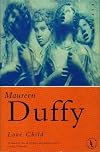
All the way through this book, I kept wondering why Alison Hennegan's introduction made such a fuss about insisting that it's a difficult book. Perhaps I just missed all the subtleties? I don't know. It's a story narrated by Kit, still a child (I don't think we find out how old Kit is) but an intelligent, precocious child who seems older than their years, focusing on Kit's limitless curiosity about her/his mother, and the mother's lover whom Kit names Ajax when Ajax joins the family circle show more has Kit's father's secretary.
We never find out the gender of either Kit or Ajax in the novel—which makes talking about the book rather tricky—but I don't think it really matters, because the characters in the story don't seem to care. show less
We never find out the gender of either Kit or Ajax in the novel—which makes talking about the book rather tricky—but I don't think it really matters, because the characters in the story don't seem to care. show less
Lists
Awards


You May Also Like


Associated Authors
Statistics
- Works
- 45
- Also by
- 8
- Members
- 904
- Popularity
- #28,379
- Rating
- 3.6
- Reviews
- 6
- ISBNs
- 103
- Languages
- 2