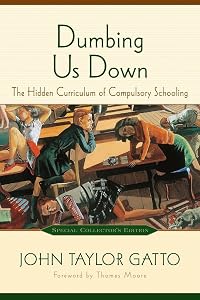
Dumbing Us Down: The Hidden Curriculum of Compulsory Schooling
by John Taylor Gatto
On This Page
Description
"John Taylor Gatto's radical treatise on public education, a New Society Publishers bestseller for 25 years, continues to advocate for the unshackling of children and learning from formal schooling. Now, in an ever-more-rapidly changing world with an explosion of alternative routes to learning, it's poised to continue to shake the world of institutional education for many more years."--Tags
Recommendations
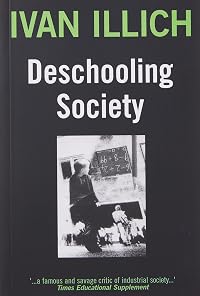
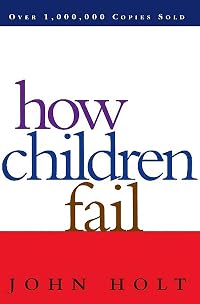

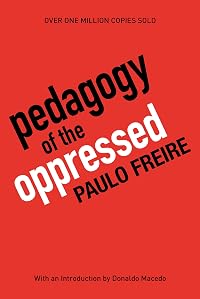
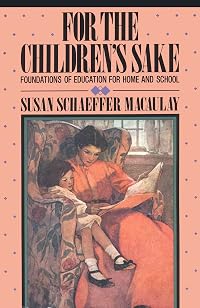

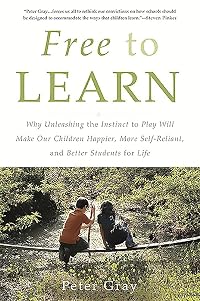
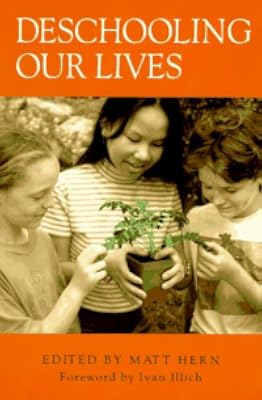
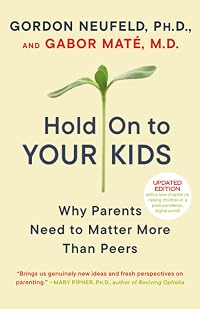
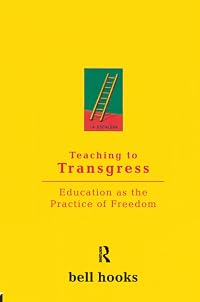
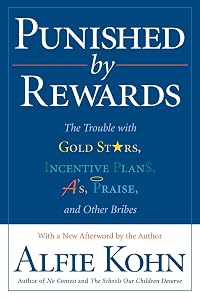
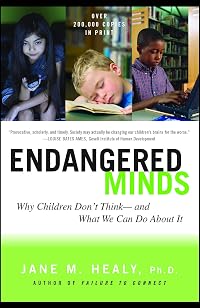
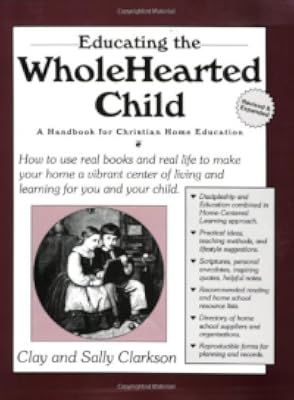
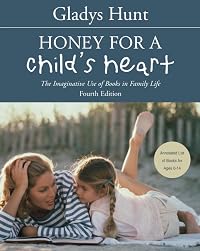
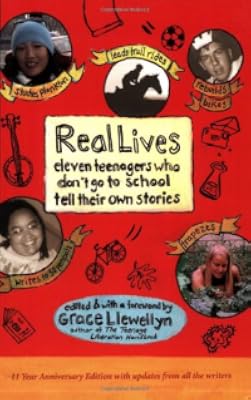
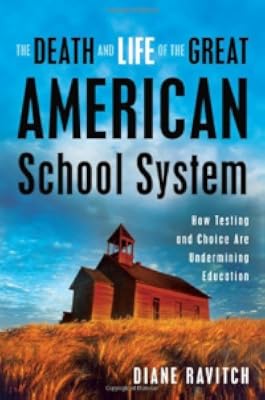

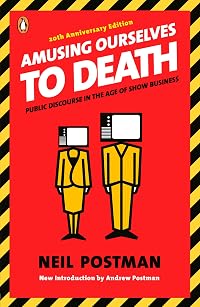

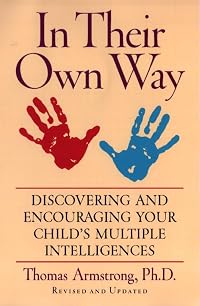
Member Recommendations
Member Reviews
The only weak spot in this otherwise excellent treatise is the loooong chapter discussing the distinctions between networks and communities. It's a solid critique, but belabored. It drags down the momentum in the middle of the book.
Outside of that section, I found this immensely readable and inspiring. A classic in radical education for a reason. Prepare to question your allegiance to traditional schooling-- not just where it shows up in the public system but also where it shows up in your own thinking and priorities.
Outside of that section, I found this immensely readable and inspiring. A classic in radical education for a reason. Prepare to question your allegiance to traditional schooling-- not just where it shows up in the public system but also where it shows up in your own thinking and priorities.
John Taylor Gatto is an award winning teacher that isn’t afraid to buck the trend.
Dumbing Us Down – The Hidden Curriculum Of Compulsory Schooling by John Taylor Gatto is a masterly an in-depth view into how public schooling really works.
Sampling many of his best personal essays, Dumbing Us Down features the true reasons why education in our modern day system is failing: because it’s meant to be that way.
Gatto reinforces his main premise with a thorough examination of public schooling in America. He carries this out rather incisively given his no holds barred approach to the matter, and this is very refreshing.
While many others have tippy toed their way around the issue, Gatto harpoons the heart of the matter with statements such show more as:
“…schools and schooling are increasingly irrelevant to the great enterprises of the planet. No one believes anymore that scientists are trained in science classes or politicians in civics classes or poets in English classes. The truth is that schools don’t really teach anything except how to obey orders.”[1][Bold Emphasis Added]
“Schools are intended to produce, through the application of formulas, formulaic human beings whose behavior can be predicted and controlled.”[2][Bold Emphasis Added]
“It is absurd and anti-life to be part of the system that compels you to sit in confinement with people of exactly the same age and social class. That system effectively cuts you off from the immense diversity of life and the synergy of variety; indeed it cuts you off from your own past and future, sealing you in a continuous present much the same way television does.”[3][Bold Emphasis Added]
Such scathing statements leave no question to Gatto’s courageous stance, and helps the reader understand the plight we face rather cogently.
Another component of this ongoing public schooling issue is how vital the community is, and more importantly, the family unit, in helping foster a healthier, more independent, more curious, and ultimately more self-sufficient individuals through proper education. While this might seem obvious in hindsight, it isn’t being employed that much at all in our modern environs.
Throughout the length of the book, Gatto fiercely touches upon the many different factors that have helped cause this growing dilemma. Some of these include the overwhelming amount of television being watched by society in general, and more specifically by children, while other components have to deal with the inherent designs of schooling such as the fragmentation of education, the removal of the family from an individual’s education, the poor life tenets individuals are taught, and much more.
One of the best parts of the book is what Gatto calls ‘The 7-Lesson School Teacher’, where the author shows what teachers are truly expected to inculcate into students. Once read, this particular lesson to the reader might seem facetious, but it’s really not. When one views what Gatto is stating with an open mind – while keeping cognizance of the fact that he worked decades for the system – then one completely gets to be aware of why failure in schooling isn’t the exception, but the rule.
In fact, more specifically, Gatto gets at the heart of why public schooling is destined to fail:
“Mass education cannot work to produce a fair society because its daily practice is practice in rigged competition, suppression and intimidation. The schools we’ve allowed to develop can’t work to teach nonmaterial values, the values which give meaning to everyone’s life, rich or poor, because the structure of schooling is held together by a Byzantine tapestry of reward and threat, of carrots and sticks. Official favor, grades, and other trinkets of subordination have no connection with education; they are the paraphernalia of servitude, not of freedom.”[69][Bold Emphasis Added]
Gatto has unbounded a phenomenal book in the field of public schooling and more importantly, what true education should encompass. Please keep in mind, schooling and education are not the same thing. Particularly, this differentiation and what each means is one of the main gems of this book.
To finalize, this book is a veritable fountain of information that is intense in precision and thought-provoking in its implications given that they filter into all aspects of our lives, and ultimately seep into the future. This is why it’s vitally important for individuals to become autodidacts, and help others become so through our interactions with our families and communities. Self-teaching is more important now than ever, especially with the deteriorating effects of public schooling.
Because of all the reasons mentioned above, and myriad more, this book is definitely a must read for everyone.
As the author saliently notes:
“Aristotle saw, a long time ago, that fully participating in a complex range of human affairs was the only way to become fully human…”[47][Bold Emphasis Added]
____________________________________________________
Sources & References:
[1] John Taylor Gatto, Dumbing Us Down – The Hidden Curriculum Of Compulsory Schooling, pg. 21.
[2] Ibid., pg. 23.
[3] Ibid., pg. 24.
[4] Ibid., pg. 69.
[5] Ibid., pg. 47. show less
Dumbing Us Down – The Hidden Curriculum Of Compulsory Schooling by John Taylor Gatto is a masterly an in-depth view into how public schooling really works.
Sampling many of his best personal essays, Dumbing Us Down features the true reasons why education in our modern day system is failing: because it’s meant to be that way.
Gatto reinforces his main premise with a thorough examination of public schooling in America. He carries this out rather incisively given his no holds barred approach to the matter, and this is very refreshing.
While many others have tippy toed their way around the issue, Gatto harpoons the heart of the matter with statements such show more as:
“…schools and schooling are increasingly irrelevant to the great enterprises of the planet. No one believes anymore that scientists are trained in science classes or politicians in civics classes or poets in English classes. The truth is that schools don’t really teach anything except how to obey orders.”[1][Bold Emphasis Added]
“Schools are intended to produce, through the application of formulas, formulaic human beings whose behavior can be predicted and controlled.”[2][Bold Emphasis Added]
“It is absurd and anti-life to be part of the system that compels you to sit in confinement with people of exactly the same age and social class. That system effectively cuts you off from the immense diversity of life and the synergy of variety; indeed it cuts you off from your own past and future, sealing you in a continuous present much the same way television does.”[3][Bold Emphasis Added]
Such scathing statements leave no question to Gatto’s courageous stance, and helps the reader understand the plight we face rather cogently.
Another component of this ongoing public schooling issue is how vital the community is, and more importantly, the family unit, in helping foster a healthier, more independent, more curious, and ultimately more self-sufficient individuals through proper education. While this might seem obvious in hindsight, it isn’t being employed that much at all in our modern environs.
Throughout the length of the book, Gatto fiercely touches upon the many different factors that have helped cause this growing dilemma. Some of these include the overwhelming amount of television being watched by society in general, and more specifically by children, while other components have to deal with the inherent designs of schooling such as the fragmentation of education, the removal of the family from an individual’s education, the poor life tenets individuals are taught, and much more.
One of the best parts of the book is what Gatto calls ‘The 7-Lesson School Teacher’, where the author shows what teachers are truly expected to inculcate into students. Once read, this particular lesson to the reader might seem facetious, but it’s really not. When one views what Gatto is stating with an open mind – while keeping cognizance of the fact that he worked decades for the system – then one completely gets to be aware of why failure in schooling isn’t the exception, but the rule.
In fact, more specifically, Gatto gets at the heart of why public schooling is destined to fail:
“Mass education cannot work to produce a fair society because its daily practice is practice in rigged competition, suppression and intimidation. The schools we’ve allowed to develop can’t work to teach nonmaterial values, the values which give meaning to everyone’s life, rich or poor, because the structure of schooling is held together by a Byzantine tapestry of reward and threat, of carrots and sticks. Official favor, grades, and other trinkets of subordination have no connection with education; they are the paraphernalia of servitude, not of freedom.”[69][Bold Emphasis Added]
Gatto has unbounded a phenomenal book in the field of public schooling and more importantly, what true education should encompass. Please keep in mind, schooling and education are not the same thing. Particularly, this differentiation and what each means is one of the main gems of this book.
To finalize, this book is a veritable fountain of information that is intense in precision and thought-provoking in its implications given that they filter into all aspects of our lives, and ultimately seep into the future. This is why it’s vitally important for individuals to become autodidacts, and help others become so through our interactions with our families and communities. Self-teaching is more important now than ever, especially with the deteriorating effects of public schooling.
Because of all the reasons mentioned above, and myriad more, this book is definitely a must read for everyone.
As the author saliently notes:
“Aristotle saw, a long time ago, that fully participating in a complex range of human affairs was the only way to become fully human…”[47][Bold Emphasis Added]
____________________________________________________
Sources & References:
[1] John Taylor Gatto, Dumbing Us Down – The Hidden Curriculum Of Compulsory Schooling, pg. 21.
[2] Ibid., pg. 23.
[3] Ibid., pg. 24.
[4] Ibid., pg. 69.
[5] Ibid., pg. 47. show less
John Taylor Gatto eventually realized that "the bells and the confinement, the crazy sequences, the age-segregation, the lack of privacy, the constant surveillance, and all the rest of the national curriculum of schooling were designed exactly as if someone had set out to prevent children from learning how to think and act." In this book, he quickly makes very convincing points. Among those that resonated most with me: that the grading and IQ scores held so important by schools don't matter much after that, that the institutional networks dominating our society are far less meaningful and supportive than actual community and family, and that learning was more effective before the era of compulsory, factory schooling. He closes with a show more section on the history of early Massachusetts and the dynamics which led very tight communities to learn and change. show less
Mr. Gatto describes teaching as follows:
And from that we infer a teacher's job is to magnify a child's inherent genius and diminish its inherent shortcomings.
To be such a sculptor of personality, bringing forth the beauty within a plain-looking child, a teacher needs freedom; he needs the licence to act according to a child's personal needs. But the education show more system doesn't allow that to happen.
Mr. Gatto makes a great observation when he says that children have no time to discover themselves:
In such circumstances children are even afraid of intimacy:
Another theme which Gatto explores is the separation of children and old people from the mainstream. He thinks you learn more when you are in harmony with differently-aged people than when you are with equals.
What is the solution?
This book explains extremely well what's wrong with the system but I'm not satisfied with the solutions and so I have given this book 4-stars. show less
In theoretical, metaphorical terms, the idea I began to explore was this one: that teaching is nothing like the art of painting, where, by the addition of material to a surface, an image is synthetically produced, but more like the art of sculpture, where, by the subtraction of material, an image already locked in the stone is enabled to emerge. It is a crucial distinction.
And from that we infer a teacher's job is to magnify a child's inherent genius and diminish its inherent shortcomings.
To be such a sculptor of personality, bringing forth the beauty within a plain-looking child, a teacher needs freedom; he needs the licence to act according to a child's personal needs. But the education show more system doesn't allow that to happen.
Mr. Gatto makes a great observation when he says that children have no time to discover themselves:
My children attend school 30 hours a week, use about eight hours getting ready for and traveling to and from school, and spend an average of seven hours a week in homework — a total of 45 hours. During that time they are under constant surveillance. They have no pri-
vate time or private space and are disciplined if they try to assert individuality in the use of time or space. That leaves them 12 hours a week out of which to create a unique consciousness. Of course my kids eat, too, and that takes some time — not much because they’ve lost
the tradition of family dining — but if we allot three hours a week to evening meals, we arrive at a net amount of private time for each child of nine hours per week.
In such circumstances children are even afraid of intimacy:
The children I teach are uneasy with intimacy or candor. They cannot deal with genuine intimacy because of a lifelong habit of preserving a secret inner self inside a larger outer personality made up of artificial bits and pieces of behavior borrowed from television or acquired to manipulate teachers. Because they are not who they represent themselves to be, the disguise wears thin in the presence
of intimacy; so intimate relationships have to be avoided.
Another theme which Gatto explores is the separation of children and old people from the mainstream. He thinks you learn more when you are in harmony with differently-aged people than when you are with equals.
Children and old people are penned up and locked away from the business of the world to a degree without precedent: nobody talks to them anymore, and without children and old people mixing in daily life, a community has no future and no past, only a continuous present. In fact, the term “community” hardly applies to the way we interact with each other. We live in networks, not communities, and everyone I know is lonely because of that.
What is the solution?
Independent study, community service, adventures and experience, large doses of privacy and solitude, a thousand different apprenticeships — the one-day variety or longer — these are all powerful, cheap, and effective ways to start a real reform of schooling. But no largescale reform is ever going to work to repair our damaged children and our damaged society until we force open the idea of “school” to include family as the main engine of education.
This book explains extremely well what's wrong with the system but I'm not satisfied with the solutions and so I have given this book 4-stars. show less
Written by a man that taught in the monopoly called public school system, won awards for it, and lists what he taught;
confusion, class position, indifference, emotional dependency, intellectual dependency, and provisional self-esteem.
The national curriculum is a joke. And what is different from this book compared to others, he doesn't just list the things that are wrong with the system or bash the system. Mr. Gatto gives suggestions of tearing the institution apart and rebuilding it. Something I've yet to read anyone else do.
There's interesting historical information about children in Massachusetts in 1850 being forced to go to public school at gun point. Not a good start and it hasn't improved much.
confusion, class position, indifference, emotional dependency, intellectual dependency, and provisional self-esteem.
The national curriculum is a joke. And what is different from this book compared to others, he doesn't just list the things that are wrong with the system or bash the system. Mr. Gatto gives suggestions of tearing the institution apart and rebuilding it. Something I've yet to read anyone else do.
There's interesting historical information about children in Massachusetts in 1850 being forced to go to public school at gun point. Not a good start and it hasn't improved much.
‘Dumbing us down’ is subtitled, ‘The hidden curriculum of compulsory schooling’, and consists of the text of five speeches that the author has made. One of them, was somewhat ironically his acceptance speech after being given an award by his state for being ‘teacher of the year’. Thsi book is considered a classic in home educating circles.
The first chapter, ‘The seven-lesson school teacher’, outlines what the author perceives as the ‘lessons’ taught across the United States, no matter what the subject. The first lesson he mentions is ‘confusion’ - the non-connectedness of everything, something which often seems to be the case in standard schooling.
On the other hand, the second lesson, ‘Class position’, is show more something I didn’t relate to. Until secondary school, I don’t remember having grades at all; perhaps the UK has not yet gone so far down the 'dumbing' path as the US. Still, there's plenty to think about. Gatto argues that there are serious problems with the lack of privacy in schools and the need to learn what teachers decide rather than according to the student’s interests.
This book isn’t to attack education or classrooms as such; Gatto is, after all, a teacher himself. He merely wants to demonstrate the difficulties that can arise with the principle of classroom schooling as we know it, where the student has little say in what he learns. Obviously some schools are a great deal better than others.
Much of the book ties in with other books I’ve been reading on different topics, and issues in everyday life. I found myself several times seeing schooling as a metaphor for other aspects of human existence.
Highly recommended to anyone interested in education, whether at school or at home, and indeed to anyone interested in seeing how government restrictions can cause us to accept something that makes no sense at all when we think about it rationally. show less
The first chapter, ‘The seven-lesson school teacher’, outlines what the author perceives as the ‘lessons’ taught across the United States, no matter what the subject. The first lesson he mentions is ‘confusion’ - the non-connectedness of everything, something which often seems to be the case in standard schooling.
On the other hand, the second lesson, ‘Class position’, is show more something I didn’t relate to. Until secondary school, I don’t remember having grades at all; perhaps the UK has not yet gone so far down the 'dumbing' path as the US. Still, there's plenty to think about. Gatto argues that there are serious problems with the lack of privacy in schools and the need to learn what teachers decide rather than according to the student’s interests.
This book isn’t to attack education or classrooms as such; Gatto is, after all, a teacher himself. He merely wants to demonstrate the difficulties that can arise with the principle of classroom schooling as we know it, where the student has little say in what he learns. Obviously some schools are a great deal better than others.
Much of the book ties in with other books I’ve been reading on different topics, and issues in everyday life. I found myself several times seeing schooling as a metaphor for other aspects of human existence.
Highly recommended to anyone interested in education, whether at school or at home, and indeed to anyone interested in seeing how government restrictions can cause us to accept something that makes no sense at all when we think about it rationally. show less
Gatto's Dumbing Us Down is an interesting combination of state-schooling critique and school-choice advocacy. What makes it something special is Gatto's penchant for taking off the gloves and ranting about the outright evils of bad schools, and the social/cultural attitudes they produce.
Gatto owes a lot to Ivan Illich, and his notion of 'deschooling', but he's not as willing as Illich to cop to how sheerly radical the things he's saying really are. He also isn't much on alternatives: his forays into pre-revolutionary New England congregationalism as a model for community and schooling aren't at all convincing, leaving his overall vision hollow. Gatto's therefore an odd duck: he criticizes the overbearing State like a paleoconservative, show more but wants desperately to believe in the inherent goodness of human nature, which is leftism/liberalism's signature.
Recommended, to get you thinking if nothing else. show less
Gatto owes a lot to Ivan Illich, and his notion of 'deschooling', but he's not as willing as Illich to cop to how sheerly radical the things he's saying really are. He also isn't much on alternatives: his forays into pre-revolutionary New England congregationalism as a model for community and schooling aren't at all convincing, leaving his overall vision hollow. Gatto's therefore an odd duck: he criticizes the overbearing State like a paleoconservative, show more but wants desperately to believe in the inherent goodness of human nature, which is leftism/liberalism's signature.
Recommended, to get you thinking if nothing else. show less
Members
- Recently Added By
Lists

Bret Victor's Five-Star List
46 works; 5 members

Ambleside Books
459 works; 18 members

Shaykh Hamza's Book Recommendations
439 works; 3 members

Homeschooling Vibe-Books to Vet
5 works; 1 member
Author Information

32+ Works 3,261 Members
John Taylor Gatto is a renowned speaker who lectures widely all over the world on school reform. He taught for 30 years in public schools before resigning on the op-ed pages of the Wall Street Journal during the year he was named New York State's official Teacher of the Year. His previous book, Dumbing Us Down has sold over 100,000 copies.
Some Editions
Awards and Honors
Notable Lists
Common Knowledge
- Original publication date
- 1992
Classifications
Statistics
- Members
- 1,833
- Popularity
- 11,849
- Reviews
- 27
- Rating
- (4.09)
- Languages
- English, German
- Media
- Paper, Audiobook, Ebook
- ISBNs
- 15
- ASINs
- 8