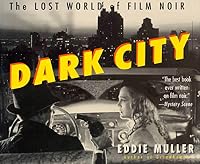
Dark city : the lost world of film noir
by Eddie Muller
On This Page
Description
This revised and expanded edition of Eddie Muller's Dark City is a film noir lover's bible, taking readers on a tour of the urban landscape of the grim and gritty genre in a definitive, highly illustrated volume.Dark City expands with new chapters and a fresh collection of restored photos that illustrate the mythic landscape of the imagination. It's a place where the men and women who created film noir often find themselves dangling from the same sinister heights as the silver-screen show more avatars to whom they gave life. Eddie Muller, host of Turner Classic Movies' Noir Alley, takes readers on a spellbinding trip through treacherous terrain: Hollywood in the post-World War II years, where art, politics, scandal, style — and brilliant craftsmanship — produced a new approach to moviemaking, and a new type of cultural mythology. show less
Tags
Recommendations









Member Reviews
Welcome to Dark City, urban landscape of the imagination. A place where the men and women who created film noir often find themselves dangling from the same sinister heights as the silver-screen avatars to whom they gave life. Eddie Muller, who led readers on a guided tour of the seamier side of motion pictures in Grindhouse: The Forbidden World of 'Adults Only' Cinema, now takes us on a spellbinding trip through treacherous terrain: Hollywood in the post-World War II years, when art, politics, scandal, style--and brilliant craftsmanship--produced a new approach to moviemaking, and a new type of cultural mythology.Dark City is a 1999 Edgar Award Nominee for Best Critical / Biographical Work.
Eddie Muller is more a character than an author. I don’t mean that in a bad way at all. He writes this book the same way he introduces and wraps up movies on TCM’s Noir Alley, as a character within the world of noir. If you’ve seen Noir Alley, you know the character, and you’ll be on familiar ground here.
The book is a guided tour of noir, represented as “Dark City.” Each chapter is a neighborhood of Dark City or a slice of its residents. Each is titled in genre-speak: Shamus Flats, Vixenville, Losers’ Lane, . . . It could be hokey, but to me anyway it was more atmospheric and a little campy.
The same can be said of Muller’s vocabulary and writing style — he walks the line between campy genre-speak and overdone. show more That’s his character, so he’s pretty skilled with it.
It’s also a beautiful book. Stills, posters, and other paraphernalia are well placed throughout the tour. Some are drawn from Muller’s own collection. The print versions capture the distinctive lighting, shadows, silvery tones, and overall unsettling style of noir.
If you’re like me, you’ll be making a list of movies to watch or re-watch. I’ve seen most of the better known movies, but not some of the more obscure ones, and Muller, I suspect especially in his role in film restoration and archivist, has an encyclopedic knowledge of the era. As he goes at a relatively fast pace from movie to movie, he gives context, both from the development of the genre and from the enveloping dramas of the Hollywood that birthed them.
I’ve got an extensive list. Many of the movies on my list are ones that I have seen, but missed nuances and such that Muller does not miss. And often he just reminds me of a movie I saw long ago and am overdue to revisit.
Beyond the tour, Muller does want to make a point about noir and where it comes from. He pulls the curtain at the end to reveal that “Dark City” is really Hollywood itself. The last stop on the tour is Hollywood, setting for Sunset Boulevard and In a Lonely Place.
Muller’s point is that noir itself was a product of the Hollywood studio system of its time — the economics, the factory-like production system, the studio-owned actors and directors. Add in the broader environment — the experiences of the Depression and Prohibition, followed by the horror and the forced glory of World War II, and the rise of a goal of middle class life achievable by many and not all — and you get noir .
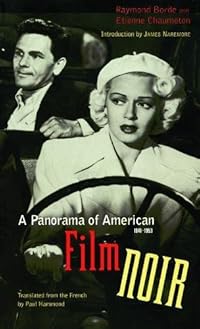
There’s certainly something right in Muller’s claim, and other studies (e.g., the classic A Panorama of American Film Noir by Borde and Chaumeton) make similar claims about the historical background of noir. But Muller’s suggestion, and it really is more suggestion than argument, that noir is also born of the Hollywood studio system is provocative and fresh, to me at least. Something to think about.
If there’s one thing missing from Muller’s tour, it’s a tour stop with the audience itself. How do we experience noir? Why are we drawn to it? What does it “mean”? For that I would recommend Geoffrey O’Brien’s The Phantom Empire, also cited by Muller.
Muller actually drops out of character in the Afterward. It’s a little startling to read his words as a “normal” person recounting his own story, how he came to film noir and to the leading role he has in it now. It’s jarring to realize that he isn’t always “inside” the noir world. show less
The book is a guided tour of noir, represented as “Dark City.” Each chapter is a neighborhood of Dark City or a slice of its residents. Each is titled in genre-speak: Shamus Flats, Vixenville, Losers’ Lane, . . . It could be hokey, but to me anyway it was more atmospheric and a little campy.
The same can be said of Muller’s vocabulary and writing style — he walks the line between campy genre-speak and overdone. show more That’s his character, so he’s pretty skilled with it.
It’s also a beautiful book. Stills, posters, and other paraphernalia are well placed throughout the tour. Some are drawn from Muller’s own collection. The print versions capture the distinctive lighting, shadows, silvery tones, and overall unsettling style of noir.
If you’re like me, you’ll be making a list of movies to watch or re-watch. I’ve seen most of the better known movies, but not some of the more obscure ones, and Muller, I suspect especially in his role in film restoration and archivist, has an encyclopedic knowledge of the era. As he goes at a relatively fast pace from movie to movie, he gives context, both from the development of the genre and from the enveloping dramas of the Hollywood that birthed them.
I’ve got an extensive list. Many of the movies on my list are ones that I have seen, but missed nuances and such that Muller does not miss. And often he just reminds me of a movie I saw long ago and am overdue to revisit.
Beyond the tour, Muller does want to make a point about noir and where it comes from. He pulls the curtain at the end to reveal that “Dark City” is really Hollywood itself. The last stop on the tour is Hollywood, setting for Sunset Boulevard and In a Lonely Place.
Muller’s point is that noir itself was a product of the Hollywood studio system of its time — the economics, the factory-like production system, the studio-owned actors and directors. Add in the broader environment — the experiences of the Depression and Prohibition, followed by the horror and the forced glory of World War II, and the rise of a goal of middle class life achievable by many and not all — and you get noir .
There’s certainly something right in Muller’s claim, and other studies (e.g., the classic A Panorama of American Film Noir by Borde and Chaumeton) make similar claims about the historical background of noir. But Muller’s suggestion, and it really is more suggestion than argument, that noir is also born of the Hollywood studio system is provocative and fresh, to me at least. Something to think about.
If there’s one thing missing from Muller’s tour, it’s a tour stop with the audience itself. How do we experience noir? Why are we drawn to it? What does it “mean”? For that I would recommend Geoffrey O’Brien’s The Phantom Empire, also cited by Muller.
Muller actually drops out of character in the Afterward. It’s a little startling to read his words as a “normal” person recounting his own story, how he came to film noir and to the leading role he has in it now. It’s jarring to realize that he isn’t always “inside” the noir world. show less
An outstanding history of Film Noir, DARK CITY is a book I would recommend to all film fans. The whole book is written in a noirish style that compliments the subject. Chapter headings include Sinister Heights, The Precinct, Vixenville, Blind Alley, The Psych Ward and more. The book is printed on sturdy paper and there are photos on every single page. Stills, movie posters, promo shots – tons of photos!
Picking my favorite film descriptions for movies such as DEAD RECKONING and THE ASPHALT JUNGLE, I was able to add at least 20 titles to my Netflix queue. Some movies are not available through that means so I will be hunting them down at other venues.
It was interesting to read the background of the movies, the directors, the studios, and show more the actors themselves. Not only are the films engrossing, some of the actors’ ironic lives could be made into movies. Take Bobby Driscoll. The 12-yr-old starred in THE WINDOW in 1949 as a boy with a penchant for lying. When he sees a murder no-one believes him. During the movie his character survives a fall in a vacant tenement in Greenwich Village. In real life, Driscoll had a washed out career when, in 1968, he died of a drug overdose – in a vacant tenement in Greenwich Village.
You couldn’t ask for a better, more comprehensive book on Film Noir than this. show less
Picking my favorite film descriptions for movies such as DEAD RECKONING and THE ASPHALT JUNGLE, I was able to add at least 20 titles to my Netflix queue. Some movies are not available through that means so I will be hunting them down at other venues.
It was interesting to read the background of the movies, the directors, the studios, and show more the actors themselves. Not only are the films engrossing, some of the actors’ ironic lives could be made into movies. Take Bobby Driscoll. The 12-yr-old starred in THE WINDOW in 1949 as a boy with a penchant for lying. When he sees a murder no-one believes him. During the movie his character survives a fall in a vacant tenement in Greenwich Village. In real life, Driscoll had a washed out career when, in 1968, he died of a drug overdose – in a vacant tenement in Greenwich Village.
You couldn’t ask for a better, more comprehensive book on Film Noir than this. show less
An outstanding history of Film Noir, DARK CITY is a book I would recommend to all film fans. The whole book is written in a noirish style that compliments the subject. Chapter headings include Sinister Heights, The Precinct, Vixenville, Blind Alley, The Psych Ward and more. The book is printed on sturdy paper and there are photos on every single page. Stills, movie posters, promo shots – tons of photos!
Picking my favorite film descriptions for movies such as DEAD RECKONING and THE ASPHALT JUNGLE, I was able to add at least 20 titles to my Netflix queue. Some movies are not available through that means so I will be hunting them down at other venues.
It was interesting to read the background of the movies, the directors, the studios, and show more the actors themselves. Not only are the films engrossing, some of the actors’ ironic lives could be made into movies. Take Bobby Driscoll. The 12-yr-old starred in THE WINDOW in 1949 as a boy with a penchant for lying. When he sees a murder no-one believes him. During the movie his character survives a fall in a vacant tenement in Greenwich Village. In real life, Driscoll had a washed out career when, in 1968, he died of a drug overdose – in a vacant tenement in Greenwich Village.
You couldn’t ask for a better, more comprehensive book on Film Noir than this. show less
Picking my favorite film descriptions for movies such as DEAD RECKONING and THE ASPHALT JUNGLE, I was able to add at least 20 titles to my Netflix queue. Some movies are not available through that means so I will be hunting them down at other venues.
It was interesting to read the background of the movies, the directors, the studios, and show more the actors themselves. Not only are the films engrossing, some of the actors’ ironic lives could be made into movies. Take Bobby Driscoll. The 12-yr-old starred in THE WINDOW in 1949 as a boy with a penchant for lying. When he sees a murder no-one believes him. During the movie his character survives a fall in a vacant tenement in Greenwich Village. In real life, Driscoll had a washed out career when, in 1968, he died of a drug overdose – in a vacant tenement in Greenwich Village.
You couldn’t ask for a better, more comprehensive book on Film Noir than this. show less
Ratings
Members
- Recently Added By
Author Information

51+ Works 1,373 Members
Awards and Honors
Series
Belongs to Publisher Series
Work Relationships
Common Knowledge
- Canonical title
- Dark city : the lost world of film noir
- Canonical DDC/MDS
- 791.43655
- Canonical LCC
- PN1995.9.F54
Classifications
- Genres
- Nonfiction, Art & Design
- DDC/MDS
- 791.43655 — Arts & recreation Recreation, sports, and performing arts Movies, TV, Video Motion pictures, radio, television, podcasting Motion pictures Special aspects of films; film adaptations, film genres {class specific films in 791.437} Films dealing with humanity Social themes
- LCC
- PN1995.9 .F54 — Language and Literature Literature (General) Literature (General) Drama Motion pictures
- BISAC
Statistics
- Members
- 223
- Popularity
- 145,712
- Reviews
- 4
- Rating
- (4.27)
- Languages
- English, French
- Media
- Paper, Ebook
- ISBNs
- 8