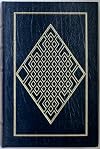
The Shadow of Blooming Grove: Warren G. Harding in His Times
by Francis Russell
On This Page
Tags
Recommendations





















Member Reviews
In drama, tragedy is defined as the fall of a great man through deliberate or inadvertent mechanizations of his own creation, with an emphasis on the adjective "great." In this sense, Warren G. Harding's story is not a tragedy, as he was never a great man. Nonetheless, "tragic" is a word I will always associate with him after reading this splendid biography by Francis Russell. Harding spent most of his life mildly ambitious but content to go along to get along, to stand for election without standing for concrete principles. He didn't mind mild (extremely mild) abuses of electoral privilege (the equivalent of a cop accepting free coffee every day), and he was not under sharp control of his libidinal urges. But he seems to have been a show more generally good man, and when he was elected president, he eventually tried to grow into the job, a job for which he was notably unsuited. His loyalty caused him to give positions of power and authority to friends and supporters without due regard to their abilities or scruples, and as his term in office neared its end, he found himself and the country betrayed by several of them. His last days before dying in office were apparently agonizing ones, as he clearly was becoming aware of the perfidy of his closest advisers, several of whom had enriched themselves through illegal means. In addition, several extra-marital affairs caused him fear and anguish when it seemed they might be exposed. In some ways, Harding was fortunate to die when he did, as the enormous scandals that forever tarred his administration did not, for the most part, come to light until he had been eulogized as a fine and decent president. While he may not have been a fine president, he appears to have been, but for a few peccadilloes, a basically decent one, and his legacy as one of the worst presidents is due not to his own evil deeds but to his inability to believe in the crimes of his friends, and to his self-admitted insufficiency to the task of leading the country. Francis Russell, author of the wonderful TRAGEDY AT DEDHAM, about the Sacco and Vanzetti case, creates a vivid portrait of the ill-fated Harding and also leaves the reader slavering for material Russell was forced to leave out -- letters between Harding and one of his mistresses, letters read by Russell but suppressed from publication by Harding's heirs. THE SHADOW OF BLOOMING GROVE is a really good book about a not very good president. show less
An incredibly exhaustive biography of Warren Harding, that is perhaps, at times, a little too exhaustive, going into detail when it’s not always needed. That being said, it is the most complete picture of Harding that I have ever had and I think is more fair to him than many sources. Like anyone, Harding was a human being, and can not be painted in easy shades of black or white. Given more time (and a better judge of character) he may have been much better remembered by historians.
Perhaps Warren G. Harding wasn’t such a bad president after all. The Shadow of Blooming Grove , written several years ago, is a wonderful biography of the man who added the word “normalcy” to the English language and fathered a child in a closet of the White House. Harding has traditionally been considered one of the worst presidents. The “Teapot Dome Scandal,” “smoke-filled rooms” where deals were cut, and the “Ohio Gang” of politicians that placed personal gain over the country’s welfare have long been associated with this very popular man who died mysteriously in 1923.
Harding himself was an honest, likable, former newspaper publisher who embodied small-town virtues but few of the small-town vices. His show more administration also made some significant contributions including the creation of the Bureau of the Budget, reduction of the national debt and a 1922 Naval Disarmament Conference that became the first arms reduction talks in history. He was applauded by civil libertarians when he pardoned Eugene Debs, he appointed more blacks to office than most of his predecessors, and his speech on race and opposing lynching was hailed by black nationalist Marcus Garvey as “one of the greatest statements of the present day.”
Harding died before he could defend his reputation against charges stemming from the leasing of federal oil reserves by the secretary of the interior who made a personal fortune. Coolidge won the 1924 election by attacking Harding and many of the charges were repeated by historians who labeled him a symbol of greed in a self-indulgent era. show less
Harding himself was an honest, likable, former newspaper publisher who embodied small-town virtues but few of the small-town vices. His show more administration also made some significant contributions including the creation of the Bureau of the Budget, reduction of the national debt and a 1922 Naval Disarmament Conference that became the first arms reduction talks in history. He was applauded by civil libertarians when he pardoned Eugene Debs, he appointed more blacks to office than most of his predecessors, and his speech on race and opposing lynching was hailed by black nationalist Marcus Garvey as “one of the greatest statements of the present day.”
Harding died before he could defend his reputation against charges stemming from the leasing of federal oil reserves by the secretary of the interior who made a personal fortune. Coolidge won the 1924 election by attacking Harding and many of the charges were repeated by historians who labeled him a symbol of greed in a self-indulgent era. show less
Very thorough biography. Harding's early life came off as fairly tedious (probably because it was), but once the elections began, the story picked up. I prefer biographies with pictures, so I can visualize the characters better, so that was my only complaint about this book.
A shame that Francis Russell was unable to use the love letters sent by Harding to Carrie Fulton Phillips. Still, a very useful work for those interested in Warren G. Harding and his administration.
This was really well done. There was a lot of potentially boring information presented in a very readable style. I may go out and look for another book by Mr. Russell. Had I met Mr. Harding, I may not have liked him much but, if we believe Mr. Russell, he was not a bad man. He was nothing much more or less than he told everyone himself; nice enough but with limitations.
1012 The Shadow of Blooming Grove: Warren G. Harding in His Times, by Francis Russell (read 4 Jul 1969) I found this biography of Harding extremely interesting--damning enough so that it was devourable.
Members
- Recently Added By
Author Information
26+ Works 1,453 Members
Common Knowledge
- People/Characters
- Warren G. Harding
- Important places
- Marion, Ohio, USA; USA; Ohio, USA
Classifications
- Genres
- Nonfiction, Biography & Memoir, History, General Nonfiction
- DDC/MDS
- 973.91 — History & geography History of North America United States 1901- World Wars and Depression Era (1901-1953)
- LCC
- E786 .R95 — History of the United States United States Twentieth century 1919-1933. Harding-Coolidge-Hoover era. "The Harding's administration, 1921-August 2, 1923
Statistics
- Members
- 341
- Popularity
- 92,450
- Reviews
- 7
- Rating
- (3.67)
- Languages
- English
- Media
- Paper
- ISBNs
- 2
- UPCs
- 1
- ASINs
- 16