On This Page
Description
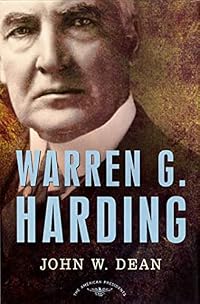
President Nixon's former counsel illuminates another presidency marked by scandal. Warren G. Harding may be best known as America's worst president. Scandals plagued him: the Teapot Dome affair, corruption in the Veterans Bureau and the Justice Department, and the posthumous revelation of an extramarital affair. Raised in Marion, Ohio, Harding took hold of the small town's newspaper and turned it into a success. Showing a talent for local politics, he rose quickly to the U.S. Senate. His show more presidential campaign slogan, "America's present need is not heroics but healing, not nostrums but normalcy," gave voice to a public exhausted by the intense politics following World War I. Once elected, he pushed for legislation limiting the number of immigrants; set high tariffs to relieve the farm crisis after the war; persuaded Congress to adopt unified federal budget creation; and reduced income taxes and the national debt, before dying unexpectedly in 1923. In this wise and compelling biography, John W. Dean-no stranger to controversy himself-recovers the truths and explodes the myths surrounding our twenty-ninth president's tarnished legacy. show lessTags
Recommendations

Member Reviews
Arthur Schlesinger chose John Dean, President Nixon's White House counsel during the Watergate scandal, to write the biography of Warren Harding for the American Presidents series. An account of one of the most infamous, scandal-ridden administrations by one of the group caught up in the more recent scandal-ridden administrations. Really? Surprisingly enough, though, this is a good book! Dean has done the research - he's gone beyond the gossip and the overblown histories that have been published to source material released early in this decade - to put together a more accurate picture of a man known more for his tarred reputation than for his actual self.
Warren Harding was a second tier politician in the Ohio machine who was known for show more not making enemies of anybody. He traded on his good looks, inoffensive spirit and connections through his newspaper into first an Ohio legislature seat, then into the US Senate. In the Senate, he didn't really do much, but had a great reputation with other Senators. Then after Woodrow Wilson realized that he wasn't going to be able to run for a third term in 1920, Harding managed to use the same tactics to jump into the Republican nomination as a deadlock breaker, then into the Presidency itself. Harding loved to "bloviate" - flowery speeches in formal sounding language were his specialty - and actually brought the term into general use in the English language. He also liked his poker and his liquor, but not nearly as much as the House on K Street stories would later lead folks to believe.
Harding didn't accomplish much in the way of legislative agenda while in office. But he did pick some very good Cabinet members - Charles Evans Hughes and Herbert Hoover, for instance. These were able to get the country back on track economically after the war, and attempted to lead the world in naval disarmament. Unfortunately, he also selected Albert Fall at Interior and Harry Daugherty for Attorney General, leading to the Teapot Dome oil reserve scandal, and others. Just as multiple scandals were starting to come out, Harding died of a heart attack while on a trip to Alaska and the West Coast. The timing was perfect to allow the consequences of the scandals and investigations to completely color later historical evaluation of Harding.
If we can believe Dean, Harding was neither the corrupt politician he's often portrayed nor the clueless puppet that loved poker and women in smoked-filled back rooms. Yes, he had a long-term affair in his younger days. Yes, he made dome bad choices of friends. But he's also not the poster child for political corruption he was later made out to be. Dean's account is very good and is worth a look for those who want a more true picture of the man Warren Harding. show less
Warren Harding was a second tier politician in the Ohio machine who was known for show more not making enemies of anybody. He traded on his good looks, inoffensive spirit and connections through his newspaper into first an Ohio legislature seat, then into the US Senate. In the Senate, he didn't really do much, but had a great reputation with other Senators. Then after Woodrow Wilson realized that he wasn't going to be able to run for a third term in 1920, Harding managed to use the same tactics to jump into the Republican nomination as a deadlock breaker, then into the Presidency itself. Harding loved to "bloviate" - flowery speeches in formal sounding language were his specialty - and actually brought the term into general use in the English language. He also liked his poker and his liquor, but not nearly as much as the House on K Street stories would later lead folks to believe.
Harding didn't accomplish much in the way of legislative agenda while in office. But he did pick some very good Cabinet members - Charles Evans Hughes and Herbert Hoover, for instance. These were able to get the country back on track economically after the war, and attempted to lead the world in naval disarmament. Unfortunately, he also selected Albert Fall at Interior and Harry Daugherty for Attorney General, leading to the Teapot Dome oil reserve scandal, and others. Just as multiple scandals were starting to come out, Harding died of a heart attack while on a trip to Alaska and the West Coast. The timing was perfect to allow the consequences of the scandals and investigations to completely color later historical evaluation of Harding.
If we can believe Dean, Harding was neither the corrupt politician he's often portrayed nor the clueless puppet that loved poker and women in smoked-filled back rooms. Yes, he had a long-term affair in his younger days. Yes, he made dome bad choices of friends. But he's also not the poster child for political corruption he was later made out to be. Dean's account is very good and is worth a look for those who want a more true picture of the man Warren Harding. show less
When I was a lad, perched on the wall there was a chart of the ratings of Presidential greatness. The two failures were Presidents Grant and Harding; their administrations were plagued by scandal. I've noticed latterly that the historians' scorn has this century tended more toward policy failures (e.g., Andrew Johnson, Buchanan, Pierce) than those beset by scandal, though I don't know whether Grant and Harding have actually escaped the category. I had assumed that the series' editors assigned John Dean to the Harding project because of his association with Watergate, which, along with Harding's Teapot Dome, ranks as the twentieth century's great political scandal, but it transpires that Dean hails from Harding's hometown and is a show more Harding hobbyist.
Dean has drawn a fascinating subject; Harding, both in life and death, has attracted an impressive vapor trail of calumny, some true, some dubious, some extremely dubious. He has managed to be credited with, inter alia, Afro-American ancestry, fathering an illegitimate child, having carnal relations with his mistress in a White House closet, and being poisoned by his wife. Dean gives us a full-throated apologia for the man. He credits almost none of the tittle-tattle and sets out a case that Harding was, if not quite great in his conduct of office, at the least a well-meaning, hard-working man who wanted to do well and often succeeded. To his credit, Dean does document Harding's fall from grace in the years after his death in great detail in a longish coda which takes up about an eighth of the book. He makes his case pretty well, and it's a voice which deserves to be heard. The problem is that this is, at bottom, a hagiography.. Some of the villains he excoriates were doubtless malevolent fast-buck artists, but their ranks also include many extremely reputable writers and thinkers. I ended up convinced that Harding meant well and to take most of the folklore surrounding him with a grain of salt. I'm not so sure that he had greatness within him, far less that he achieved it in the presidency. show less
Dean has drawn a fascinating subject; Harding, both in life and death, has attracted an impressive vapor trail of calumny, some true, some dubious, some extremely dubious. He has managed to be credited with, inter alia, Afro-American ancestry, fathering an illegitimate child, having carnal relations with his mistress in a White House closet, and being poisoned by his wife. Dean gives us a full-throated apologia for the man. He credits almost none of the tittle-tattle and sets out a case that Harding was, if not quite great in his conduct of office, at the least a well-meaning, hard-working man who wanted to do well and often succeeded. To his credit, Dean does document Harding's fall from grace in the years after his death in great detail in a longish coda which takes up about an eighth of the book. He makes his case pretty well, and it's a voice which deserves to be heard. The problem is that this is, at bottom, a hagiography.. Some of the villains he excoriates were doubtless malevolent fast-buck artists, but their ranks also include many extremely reputable writers and thinkers. I ended up convinced that Harding meant well and to take most of the folklore surrounding him with a grain of salt. I'm not so sure that he had greatness within him, far less that he achieved it in the presidency. show less
In this book John Dean has come not to bury Warren G. Harding but to praise him as an underrated president unfairly judged by posterity. To that end, he marshals the available evidence to depict Harding as a canny businessman and conscientious president who does not deserve to be judged by the criminality of his subordinates. Dean makes some good points, but his argument is weaker for his unwillingness to treat the corruption that plagued Harding's administration as reflective of failings on Harding's part. In the end, it's a well-argued case but not quite the balanced assessment that Harding needs to shake off completely the ignominy from which he suffers.
An engaging and needed corrective look into Warren Harding. I do not have much overwise to add to the comments of the previous reviewers other than to say that it is ironic that Dean is so charitable to Harding when he has been so much less so to GW Bush who has many similarities to Harding in how he is portrayed. Perhaps some future John W Dean will write that corrective book on W.
Dean, who survived Nixon's scandalous presidency, attempts to rehab another President who was afflicted by scandal. Harding and Buchanan usually are considered are worse two presidents. Dean does not uncover anything new about Harding. He does note Harding attempted to reverse Wilson's bad record on Black federal appointments. He exaggerates in claiming Harding appointed history's best cabinet. Perhaps, because Harding's complete papers have not been released, Dean has to rely upon secondary sources and other biographers. Harding's most lasting achievement appears to have been the Bureau of the Budget. Dean fails to analyze why Harding appointed the Ohio Gang to such positions of influence. Also, Dean fails in showing why Harding didn't show more do something more quickly about the scandals. I don't think this biography will move Harding off of the bottom rung. show less
Ratings
Members
- Recently Added By
Lists

The Presidents
42 works; 2 members

Best Biographies of U.S. Presidents
61 works; 6 members
Author Information

12+ Works 3,069 Members
John W. Dean was born in Akron, Ohio on October 14, 1938. He received a B.A. from The College of Wooster in 1961 and a J.D. from the Georgetown University Law Center in 1965. He served as the White House legal counsel to President Nixon for a thousand days. He also served as chief minority counsel for the House Judiciary Committee and as an show more associate deputy attorney general in the U.S. Department of Justice. He has written numerous non-fiction books including Blind Ambition, Lost Honor, Conservatives Without Conscience, The Rehnquist Choice, Worse than Watergate, Broken Government: How Republican Rule Destroyed the Legislative, Executive and Judicial Branches, and The Nixon Defense: What He Knew and When He Knew It. (Bowker Author Biography) show less
Series

Common Knowledge
- Canonical title
- Warren G. Harding
- Original publication date
- 2004
- People/Characters
- Warren G. Harding; Harry M. Daugherty; Florence Harding; Charles Evans Hughes; Henry Cabot Lodge
- Important places
- Marion, Ohio, USA
- Important events
- Teapot Dome Scandal; Election of 1920
- Dedication
- For
Howard (1899-1981), Dan (1940-1993),
and Madge Guthery - First words
- Introduction
Warren G. Harding is best known as America's worst president.
Classifications
- Genres
- History, Nonfiction, Biography & Memoir, General Nonfiction
- DDC/MDS
- 973.91 — History & geography History of North America United States 1901- 1901-1953
- LCC
- E786 .D4 — History of the United States United States Twentieth century 1919-1933. Harding-Coolidge-Hoover era. "The Harding's administration, 1921-August 2, 1923
- BISAC
Statistics
- Members
- 269
- Popularity
- 119,519
- Reviews
- 5
- Rating
- (3.57)
- Languages
- English, French
- Media
- Paper, Ebook
- ISBNs
- 4
- ASINs
- 1