
On This Page
Description
Like Rip Van Winkle returning to his hometown to find that all has changed, Nathan Zuckerman comes back to New York, the city he left eleven years before. Alone on his New England mountain, Zuckerman has been nothing but a writer: no voices, no media, no terrorist threats, no women, no news, no tasks other than his work and the enduring of old age.Walking the streets like a revenant, he quickly makes three connections that explode his carefully protected solitude. One is with a young couple show more with whom, in a rash moment, he offers to swap homes. They will flee post-9/11 Manhattan for his country refuge, and he will return to city life. But from the time he meets them, Zuckerman also wants to swap his solitude for the erotic challenge of the young woman, Jamie, whose allure draws him back to all that he thought he had left behind: intimacy, the vibrant play of heart and body.
The second connection is with a figure from Zuckerman's youth, Amy Bellette, companion and muse to Zuckerman's first literary hero, E. I. Lonoff. The once irresistible Amy is now an old woman depleted by illness, guarding the memory of that grandly austere American writer who showed Nathan the solitary path to a writing vocation.
The third connection is with Lonoff's would-be biographer, a young literary hound who will do and say nearly anything to get to Lonoff's “great secret." Suddenly involved, as he never wanted or intended to be involved again, with love, mourning, desire, and animosity, Zuckerman plays out an interior drama of vivid and poignant possibilities.
Haunted by Roth's earlier work The Ghost Writer, Exit Ghost is an amazing leap into yet another phase in this great writer's insatiable commitment to fiction.
. show less
Tags
Recommendations










Member Recommendations
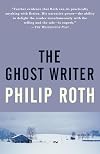
GabrielF Exit Ghost takes place 50 years after The Ghost Writer, but it revisits the events and characters of the earlier book.
Member Reviews
Credo che non esista scrittore più capace di Roth nel descrivere il decadimento del corpo e della mente, senza che questo decadimento corrisponda a un qualsivoglia affievolirsi del desiderio sessuale e della indisponente capacità tacchinesca del maschio umano di cercare sempre di primeggiare per farsi bello davanti alla femmina appetibile di turno.
Libro come sempre divertente e godibilissimo, che mette sotto una luce cruda il rapporto tra lo scrittore e i suoi biografi, tra il lettore e la letteratura, tra l'uomo e la donna, tra il passato e il presente, e tra l'essere umano e il suo cellulare.
Libro come sempre divertente e godibilissimo, che mette sotto una luce cruda il rapporto tra lo scrittore e i suoi biografi, tra il lettore e la letteratura, tra l'uomo e la donna, tra il passato e il presente, e tra l'essere umano e il suo cellulare.
I've been reading Philip Roth since college, way back in the previous century. GOODBYE, COLUMBUS; PORTNOY'S COMPLAINT; and, a particular favorite, LETTING GO, which I have read a few times now. So, upfront admission, I'm a fan, although probably not a very good one, since there are many Roth books I still have not read.
EXIT GHOST is purportedly the last of Roth's Zuckerman books, which began with THE GHOST WRITER, back in 1979. This is the ninth of the Z books, but I've only read a couple others: AMERICAN PASTORAL and THE HUMAN STAIN, both of them outstanding. In EXIT GHOST, we find Nathan Zuckerman at 71, at a low ebb in his eventful life as a writer. Impotent and incontinent after a prostatectomy a decade earlier, Nathan comes back show more from his twelve year sojourn in the Berkshire mountains to NYC to undergo a medical procedure that might correct his incontinence. While he is there he is drawn simultaneously back into his past and into an unwelcome present through some chance encounters with the former lover of E.I. Lonoff (both major players in the first book), and three young wannabe writers. Nathan falls hare, is enchanted by, one of these young people, thirty year-old Jamie Logan. Obviously, given his sexual dysfunction, he knows this can only end in heartbreak and frustration, but he is, nevertheless, drawn to this beautiful young woman of privilege, raised in Texas, where her parents are in the same social circles as the Bushes.
Because this last book is not just about love or sex. It's about the awful state of politics in America today, which Roth attacks through his characters. Set during the presidential campaign of 2004, Dubya gets it with both barrels. Here's a sample from Jamie -
"... this country is a haven of ignorance. I know - I come from the fountainhead. Bush talks right to the ignorant core. This is a very backward country, and the people are so easily bamboozled, and he's exactly like a snake-oil salesman."
Or this, from Richard Kliman, an ambitious young man who wants to write an expose biography of Lonoff -
"That a right-wing administration motivated by insatiable greed and sustained by murderous lies and led by a privileged dope should answer America's infantile idea of morality - how do we live with something so grotesque? How do you manage to insulate yourself from stupidity so bottomless?"
So yes, one begins to get an idea of how amply disgusted Philip Roth has become with our badly broken political system - and this is from a book published NINE years ago. I can't even imagine what he must think of what's happening right now with the circus that is the Trump-Clinton contest. Roth is also clearly unimpressed with the age of the ubiquitous cell phone, as evidenced in Nathan's observations about this phenomenon -
"I did not see how anyone could believe he was continuing to live a human existence by walking about talking into a phone for half his waking life. No, those gadgets did not promise to be a boon to promoting reflection among the general public."
But EXIT GHOST is also very much about aging and what comes with it. We see Lonoff's former lover, Amy, as an old woman with a disfiguring scar on her head from recent surgery for a brain tumor, and now the cancer has come back. And, more than anything, we are privy to Nathan's most private thoughts and humiliations and he deals with the daily problems of incontinence, forced to wear plastic underpants with absorbent pads, to be changed often. So, when the procedure fails to work, he is plunged into a deep depression, yet one more problem that so often afflicts the aged. Discouraged, he thinks -
"What you do not have, you live without - you're seventy-one, and that's the deal."
Nathan also feels his memory and mental faculties slipping, an unthinkable horror for a writer. And yet, judging from the "He and She" mini-plays he sprinkles throughout his narrative, he needn't worry just yet. They are brilliant - sometimes funny, and often ineffably sad. In sum, EXIT GHOST is a beautiful book, often heartbreakingly so.
Philip Roth announced his retirement a couple years ago. One doesn't think of writers retiring, but hey, he's earned it. Be well, Philip, and enjoy. Loved this book. Very highly recommended.
- Tim Bazzett, author of the memoir, BOOKLOVER show less
EXIT GHOST is purportedly the last of Roth's Zuckerman books, which began with THE GHOST WRITER, back in 1979. This is the ninth of the Z books, but I've only read a couple others: AMERICAN PASTORAL and THE HUMAN STAIN, both of them outstanding. In EXIT GHOST, we find Nathan Zuckerman at 71, at a low ebb in his eventful life as a writer. Impotent and incontinent after a prostatectomy a decade earlier, Nathan comes back show more from his twelve year sojourn in the Berkshire mountains to NYC to undergo a medical procedure that might correct his incontinence. While he is there he is drawn simultaneously back into his past and into an unwelcome present through some chance encounters with the former lover of E.I. Lonoff (both major players in the first book), and three young wannabe writers. Nathan falls hare, is enchanted by, one of these young people, thirty year-old Jamie Logan. Obviously, given his sexual dysfunction, he knows this can only end in heartbreak and frustration, but he is, nevertheless, drawn to this beautiful young woman of privilege, raised in Texas, where her parents are in the same social circles as the Bushes.
Because this last book is not just about love or sex. It's about the awful state of politics in America today, which Roth attacks through his characters. Set during the presidential campaign of 2004, Dubya gets it with both barrels. Here's a sample from Jamie -
"... this country is a haven of ignorance. I know - I come from the fountainhead. Bush talks right to the ignorant core. This is a very backward country, and the people are so easily bamboozled, and he's exactly like a snake-oil salesman."
Or this, from Richard Kliman, an ambitious young man who wants to write an expose biography of Lonoff -
"That a right-wing administration motivated by insatiable greed and sustained by murderous lies and led by a privileged dope should answer America's infantile idea of morality - how do we live with something so grotesque? How do you manage to insulate yourself from stupidity so bottomless?"
So yes, one begins to get an idea of how amply disgusted Philip Roth has become with our badly broken political system - and this is from a book published NINE years ago. I can't even imagine what he must think of what's happening right now with the circus that is the Trump-Clinton contest. Roth is also clearly unimpressed with the age of the ubiquitous cell phone, as evidenced in Nathan's observations about this phenomenon -
"I did not see how anyone could believe he was continuing to live a human existence by walking about talking into a phone for half his waking life. No, those gadgets did not promise to be a boon to promoting reflection among the general public."
But EXIT GHOST is also very much about aging and what comes with it. We see Lonoff's former lover, Amy, as an old woman with a disfiguring scar on her head from recent surgery for a brain tumor, and now the cancer has come back. And, more than anything, we are privy to Nathan's most private thoughts and humiliations and he deals with the daily problems of incontinence, forced to wear plastic underpants with absorbent pads, to be changed often. So, when the procedure fails to work, he is plunged into a deep depression, yet one more problem that so often afflicts the aged. Discouraged, he thinks -
"What you do not have, you live without - you're seventy-one, and that's the deal."
Nathan also feels his memory and mental faculties slipping, an unthinkable horror for a writer. And yet, judging from the "He and She" mini-plays he sprinkles throughout his narrative, he needn't worry just yet. They are brilliant - sometimes funny, and often ineffably sad. In sum, EXIT GHOST is a beautiful book, often heartbreakingly so.
Philip Roth announced his retirement a couple years ago. One doesn't think of writers retiring, but hey, he's earned it. Be well, Philip, and enjoy. Loved this book. Very highly recommended.
- Tim Bazzett, author of the memoir, BOOKLOVER show less
I finally decided to pick up "Exit Ghost" after re-reading "Portnoy's Complaint" for the first time in perhaps fifteen years. Alexander Portnoy, and, really, Phillip Roth himself, is a ball of fire in that one, and while I haven't read all of the other Zuckerman books, I wondered how a personality like Alexander Portnoy's might age. "Exit Ghost" does provide a few possible answers to that question. When we meet Nathan Zuckerman, he's more or less withdrawn from the world, from sexual life, and is living more or less as a hermit, relying entirely on his past to give his writing the sustenance it needs. Though the book is, unsurprisingly, full of self-laceration and self-doubt, Zuckerman has, at the very least, the self-knowledge to show more recognize more-or-less what he was and what he is becoming. An unexpected trip to New York and a couple of chance encounters rock Nathan's boat, sure, but this is hardly surprising: you can count on self-reflection to be the strong suit of most of Roth's characters.
As a book, "Exit Ghost" feels a lot like Roth on autopilot, which is still a pretty good thing. The sentences flow beautifully and the novel is generally well-constructed. Despite the fact that its main character "re-discovers" New York after having been away for about a decade, the book is largely inward-focused. Readers shouldn't turn here to find novel critiques on modern living, and the jabs that Roth aims at modern readers and critics who care more for a writer's biography than for his work feel well aimed, but also out of place in a book that's narrated by a character who's essentially a lightly fictionalized version of its author. In the end, the best reasons for reading "Exit Ghost," besides, of course, its prose, are its characters and its depiction of aging. Roth presents us with the story of two couples: Amy and Manny -- he was a perhaps great writer who was dropped from reading lists long ago, she was his student and his last romance -- and Jamie and Billy, two aspiring writers who are facing challenges that are both different from and similar to those that the younger Zuckerman once faced. While it's clear that Zuckerman's brain is failing him, he still manages, using his sharp eye and deep understanding of human motivation, to pay homage to each of these relationships, which seem both familiar and maddeningly unique, as are most relationships, if you observe them long enough. Each of these characters comes alive, inspiring, by turns, interest, sexual intrigue, affection and, particularly in the case of Amy, a deep sense of pathos. As for Roth's portrait of aging, it's pretty spare: Zuckerman omits all the usual aches and pains to describe only how age has robbed him of his bladder control, his sexual potency and, increasingly, his memory. But it's enough. The sense of loss imparted to the reader as a yet undiagnosed affliction robs him of his short-term memory seems very real indeed. I'm not sure I'd call "Exit Ghost" an important novel: it feels more like an epilogue, a sad, necessary denouement to a long-running series. But it's recommended to Roth's fans, and there are still lots of those out there. show less
As a book, "Exit Ghost" feels a lot like Roth on autopilot, which is still a pretty good thing. The sentences flow beautifully and the novel is generally well-constructed. Despite the fact that its main character "re-discovers" New York after having been away for about a decade, the book is largely inward-focused. Readers shouldn't turn here to find novel critiques on modern living, and the jabs that Roth aims at modern readers and critics who care more for a writer's biography than for his work feel well aimed, but also out of place in a book that's narrated by a character who's essentially a lightly fictionalized version of its author. In the end, the best reasons for reading "Exit Ghost," besides, of course, its prose, are its characters and its depiction of aging. Roth presents us with the story of two couples: Amy and Manny -- he was a perhaps great writer who was dropped from reading lists long ago, she was his student and his last romance -- and Jamie and Billy, two aspiring writers who are facing challenges that are both different from and similar to those that the younger Zuckerman once faced. While it's clear that Zuckerman's brain is failing him, he still manages, using his sharp eye and deep understanding of human motivation, to pay homage to each of these relationships, which seem both familiar and maddeningly unique, as are most relationships, if you observe them long enough. Each of these characters comes alive, inspiring, by turns, interest, sexual intrigue, affection and, particularly in the case of Amy, a deep sense of pathos. As for Roth's portrait of aging, it's pretty spare: Zuckerman omits all the usual aches and pains to describe only how age has robbed him of his bladder control, his sexual potency and, increasingly, his memory. But it's enough. The sense of loss imparted to the reader as a yet undiagnosed affliction robs him of his short-term memory seems very real indeed. I'm not sure I'd call "Exit Ghost" an important novel: it feels more like an epilogue, a sad, necessary denouement to a long-running series. But it's recommended to Roth's fans, and there are still lots of those out there. show less
In his latest installment of Nathan Zuckerman stories, Philip Roth created a story of an aging literary genius who was battling several demons: incontinence, impotence, a failing memory and worries about his legacy. This is my first Zuckerman book where he narrated (he did appear in The Human Stain but more as a minor character), and I found his storytelling to be intelligent, desperate and enthralling.
Zuckerman lived in near-isolation in the Berkshires but traveled to his old stomping ground, New York City, for an experimental procedure to help with his incontinence (a result of prostate cancer). While there, he becomes intrigued by an ad where a young couple wanted to swap homes for a year. Jamie and Billy were looking for a country show more refuge to escape the scares of terrorism in post-09/11 New York City. On a whim, Zuckerman agreed to meet the couple and became mesmerized by the beguiling Jamie (frustrating for an impotent Zuckerman).
Through Jamie, an ambitious young writer, Richard Kliman, contacted Zuckerman. Kliman was writing a biography on a long-forgotten American author, E.I. Lonoff, (one of Zuckerman’s heroes). However, Kliman wanted to add a scandal to Lonoff’s story. Outraged, Zuckerman realized that he’s an old man – no match for the young energy produced by Kliman – and wondered: After Zuckerman died, who was to stop a young author from writing his biography full of scandal and secrets?
This story documented the journey of a genius, dealing with the physical limitations of an aging body and the slow mental decline of his brain. You felt Zuckerman’s desperation, frustration and determination to remain the man he once was. More than that, though, you shared Zuckerman’s concern for his legacy, literary canon and lack of control over both once he was gone.
I thought Exit Ghost was brilliant. Filled with witty prose, political satire and ageism, I look forward to reading Zuckerman’s stories set during his prime. You have to wonder if Zuckerman’s creator, Philip Roth, shared his character’s frustrations as an aging writer. If what I’ve read is any indication, Roth is secure in his legacy as one of American’s greatest writers. show less
Zuckerman lived in near-isolation in the Berkshires but traveled to his old stomping ground, New York City, for an experimental procedure to help with his incontinence (a result of prostate cancer). While there, he becomes intrigued by an ad where a young couple wanted to swap homes for a year. Jamie and Billy were looking for a country show more refuge to escape the scares of terrorism in post-09/11 New York City. On a whim, Zuckerman agreed to meet the couple and became mesmerized by the beguiling Jamie (frustrating for an impotent Zuckerman).
Through Jamie, an ambitious young writer, Richard Kliman, contacted Zuckerman. Kliman was writing a biography on a long-forgotten American author, E.I. Lonoff, (one of Zuckerman’s heroes). However, Kliman wanted to add a scandal to Lonoff’s story. Outraged, Zuckerman realized that he’s an old man – no match for the young energy produced by Kliman – and wondered: After Zuckerman died, who was to stop a young author from writing his biography full of scandal and secrets?
This story documented the journey of a genius, dealing with the physical limitations of an aging body and the slow mental decline of his brain. You felt Zuckerman’s desperation, frustration and determination to remain the man he once was. More than that, though, you shared Zuckerman’s concern for his legacy, literary canon and lack of control over both once he was gone.
I thought Exit Ghost was brilliant. Filled with witty prose, political satire and ageism, I look forward to reading Zuckerman’s stories set during his prime. You have to wonder if Zuckerman’s creator, Philip Roth, shared his character’s frustrations as an aging writer. If what I’ve read is any indication, Roth is secure in his legacy as one of American’s greatest writers. show less
Lock up your daughters, ladies. Nathan Zuckerman is back - 71, impotent and incontinant, and he still fancies himself a mover with the young ladies. If he could just transfer some of his great genius from his brain into his heart and his pecker, I would worship him and his work.
I don't think I've read a work of fiction that is such an unflinchingly scathing criticism of George W. Bush's presidency. I Really enjoyed Roth attacking Bush. And I also really enjoyed Roth's character Zuckerman writing down his imaginary conversations with a woman he becomes infatuated with. Zuckerman is an aging reclusive writer who has done his best to avoid people for over a decade. He comes to N.Y. City to for medical reasons and finds himself fantasying about a much younger woman he barely knows. Having these kind of imaginary conversations is quite common but poor Zuckerman fighting the onset of Alzheimer's writes them down so he won't forget them. I just found that so endearing.
Philip Roth may be the greatest living American novelist. One reason for my esteem is his fecundity. This is an odd word choice for such an assertively male author, but it seems appropriate in the way his works are often connected like siblings. One of his most recent books, Exit Ghost (2007) is part of the “Zuckerman series” that go back nearly thirty years. On the surface Exit Ghost displays the logical extension of Nathan Zuckerman’s growing list of physical ailments plaguing the protagonist author over the years. Nor is Zuckerman the only Roth “child” to suffer humiliating markers of age. In the last Kepesh novel, The Dying Animal (2001), David Kepesh is terrified of his potential sexual impotence; in The Humbling (2009) show more actor Simon Axler has lost his ability to perform in the other meaning of the word.
It is not Zuckerman’s failed prostate and subsequent incontinence in Exit Ghost that provides the character and the reader with the most suspense. That comes from a threatened biography of Zuckerman’s long-ago mentor by a crass young man who is also Nathan’s rival for the attention of one of the lovely young muses who populate Roth’s novels. It is not only the mishandling of a revered teacher’s aesthetic that repulses Zuckerman; it is the revelation of a supposed secret of a sexual nature about the intensely private man that convinces the equally private Zuckerman to block the young man’s efforts. One of the ways he will do this is to propound his own theory that the dead author was writing in his unpublished last work about a hushed-up scandal about an earlier American author, Nathaniel Hawthorne. Is this wheel-within-a-wheel Roth’s clever commentary on the intellectual incest that poses for true cultural exploration?
I, a confessed occasionally prurient reader, was struck by the similarity of Exit Ghost to an earlier Zuckerman novel, I Married a Communist (1998) based on just the kind of gossip-oriented reading Zuckerman and Roth so obviously detest. I can take refuge in the fact that I Married a Communist was perhaps the only roman a clef Roth is guilty of writing. It is clearly a rebuttal to Roth’s ex-wife the actress Claire Bloom’s bitter memoir about their marriage, Leaving a Doll’s House (1996). There are enough sound examinations of issues such as creativity, solitude, Judaism, and political persecution to redeem I Married a Communist, but Exit Ghost shows how many of the same topics can be more satisfyingly dissected with a feather than a sledgehammer.
I give Exit Ghost a 4 out of 5 in comparison with other Roth novels such as The Counterlife (1986), American Pastoral (1997), The Human Stain (2000), When She Was Good (1967), Portnoy's Complaint (1969), and Everyman (2006). Compared to literature as a whole, I would give Exit Ghost a 5. show less
It is not Zuckerman’s failed prostate and subsequent incontinence in Exit Ghost that provides the character and the reader with the most suspense. That comes from a threatened biography of Zuckerman’s long-ago mentor by a crass young man who is also Nathan’s rival for the attention of one of the lovely young muses who populate Roth’s novels. It is not only the mishandling of a revered teacher’s aesthetic that repulses Zuckerman; it is the revelation of a supposed secret of a sexual nature about the intensely private man that convinces the equally private Zuckerman to block the young man’s efforts. One of the ways he will do this is to propound his own theory that the dead author was writing in his unpublished last work about a hushed-up scandal about an earlier American author, Nathaniel Hawthorne. Is this wheel-within-a-wheel Roth’s clever commentary on the intellectual incest that poses for true cultural exploration?
I, a confessed occasionally prurient reader, was struck by the similarity of Exit Ghost to an earlier Zuckerman novel, I Married a Communist (1998) based on just the kind of gossip-oriented reading Zuckerman and Roth so obviously detest. I can take refuge in the fact that I Married a Communist was perhaps the only roman a clef Roth is guilty of writing. It is clearly a rebuttal to Roth’s ex-wife the actress Claire Bloom’s bitter memoir about their marriage, Leaving a Doll’s House (1996). There are enough sound examinations of issues such as creativity, solitude, Judaism, and political persecution to redeem I Married a Communist, but Exit Ghost shows how many of the same topics can be more satisfyingly dissected with a feather than a sledgehammer.
I give Exit Ghost a 4 out of 5 in comparison with other Roth novels such as The Counterlife (1986), American Pastoral (1997), The Human Stain (2000), When She Was Good (1967), Portnoy's Complaint (1969), and Everyman (2006). Compared to literature as a whole, I would give Exit Ghost a 5. show less
Members
- Recently Added By
Lists

Top Five Books of 2013
1,562 works; 721 members

Llibres que he llegit el 2008
33 works; 1 member

Connecticut Book Awards 2002-2011 and 2017+
71 works; 1 member
Author Information

123+ Works 74,952 Members
Philip Milton Roth was born in Newark, New Jersey on March 19, 1933. He attended Rutgers University for one year before transferring to Bucknell University where he completed a B.A. in English with highest honors in 1954. He received an M.A. from the University of Chicago in 1955. His first book, Goodbye, Columbus, received the National Book Award show more in 1960. His other books include Letting Go, When She Was Good, Portnoy's Complaint, My Life as a Man, The Ghostwriter, Zuckerman Unbound, I Married a Communist, The Plot Against America, The Facts, The Anatomy Lesson, Exit Ghost, Deception, Nemesis, Everyman, Indignation, and The Humbling. He won the National Book Critic Circle Awards in 1987 for his novel The Counterlife and in 1992 for his memoir Patrimony: A True Story. He won the PEN/Faulkner Award for Fiction in 1993 for Operation Shylock: A Confession and in 2001 for The Human Stain, the National Book Award in 1995 for Sabbath's Theater, and the Pulitzer Prize in 1998 for American Pastoral. He stopped writing in 2010. He died from congestive heart failure on May 22, 2018 at the age of 85. (Bowker Author Biography) show less
Some Editions
Awards and Honors
Awards
Series

Belongs to Publisher Series
Work Relationships
Common Knowledge
- Canonical title*
- Exit geest
- Original title
- Exit Ghost
- Original publication date
- 2007 (Engels) (Engels); 2007 (Nederlands) (Nederlands)
- People/Characters
- Nathan Zuckerman; Amy Bellette; E. I. Lonoff; Jamie Logan; Richard Kliman; Billy Davidoff
- Important places
- New York, New York, USA
- Important events
- September 11 Attacks
- Epigraph
- Before death takes you, O take back this.
-Dylan Thomas, "Find Meat on Bones" - Dedication
- For B.T.
- First words
- I hadn't been in New York in eleven years. Other than for surgery in Boston to remove a cancerous prostate, I'd hardly been off my rural mountain road in the Berkshires in those eleven years and, what's more, had rarely looke... (show all)d at a newspaper or listened to the news since 9/11, three years back; with no sense of loss--merely, at the outset, a kind of drought within me--I had ceased to inhabit not just the great world but the present moment. The impulse to be in it and of it I had long since killed.
- Original language
- English US
*Some information comes from Common Knowledge in other languages. Click "Edit" for more information.
Classifications
Statistics
- Members
- 1,785
- Popularity
- 12,345
- Reviews
- 50
- Rating
- (3.52)
- Languages
- 15 — Catalan, Czech, Danish, Dutch, English, Finnish, French, German, Italian, Norwegian (Bokmål), Polish, Portuguese, Spanish, Swedish, Turkish
- Media
- Paper, Audiobook, Ebook
- ISBNs
- 60
- ASINs
- 18