
On This Page
Description
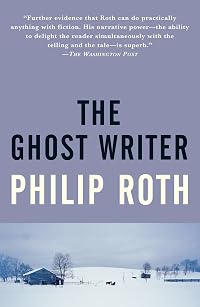
The Ghost Writer introduces Nathan Zuckerman in the 1950s, a budding writer infatuated with the Great Books, discovering the contradictory claims of literature and experience while an overnight guest in the secluded New England farmhouse of his idol, E.I. Lonoff. At Lonoff's, Zuckerman meets Amy Bellette, a haunting young woman of indeterminate foreign background who turns out to be a former student of Lonoff's and who may also have been his mistress. Zuckerman, with his active, youthful show more imagination, wonders if she could be the paradigmatic victim of Nazi persecution. If she were, it might change his life. --From publisher description. show lessTags
Recommendations













Member Reviews
Last week, my GR friend (and reading soulmate) Derek read The Ghost Writer, and it sparked in me a profound desire to read some Roth. I am next up on Libby for a fairly long book, so I did not want to fall into anything long. This novella fit the bill, and as I had not read it in 30 or so years, it seemed like time. And it was. It has been too long since I visited Philip. What a brilliant book, a 4.5, marked down just because I need to have the best Roth books set apart from those that display only his everyday divinity.
How to describe this book? It is funny, heartbreaking, honest, and confronting. Young Nathan Zuckerman meets his idol. He rubs up against the ultimate 20th-century Jewish icon, venerated by so many who hate live Jews, show more and imbues her with a daddy kink. He wrestles with the tension between art and humanity. He masturbates in guest rooms. He is Philip Roth. show less
How to describe this book? It is funny, heartbreaking, honest, and confronting. Young Nathan Zuckerman meets his idol. He rubs up against the ultimate 20th-century Jewish icon, venerated by so many who hate live Jews, show more and imbues her with a daddy kink. He wrestles with the tension between art and humanity. He masturbates in guest rooms. He is Philip Roth. show less
Like many writers, Philip Roth relies heavily on his own experiences. With Roth it is much more transparent than most. He often uses the same alter ego, Nathan Zuckerman, in his books. Nathan, like Roth once was, is a Jewish kid from working class Newark, New Jersey with lots of aspirations. He, like Roth, attends The University of Chicago. Nathan is front and center here and the most likely candidate to become someone's ghostwriter. Nathan here is obsessed with a successful, senior, writer who is a recluse in rural New England, also Jewish. E.I. Lonoff reads like a cross between J.D. Salinger and a mature Philip Roth. Becoming a ghost writer for Lonoff seems a no brainer. But Roth is much too good a writer to take the easy route.
There show more are at least two other ways to think of someone being a ghost writer. One would be a writer who is dead and is now a ghost. Another is a writer who writes about ghosts. Fascinating. Who would have gone in either of those directions. Who else but Roth. Roth never even mentions the normal meaning of ghost writer. He leaves that to the readers imagination. Ghost writing would be perfect for Nathan. He's still young and not yet widely recognized. And Lonoff's name alone sells books. And Lonoff struggles to get things down in final form. Lonoff loves to take a sentence and rework it over and over. Great final results but an excruciating process for both him and those around him, especially his long suffering wife with the wonderful name, Hope. Is it too much to think that Roth is actually telling us this is how he writes, and rewrites, and rewrites. Looking at the sentences in Roth's books it's easy to see other ways those same thoughts could have been expressed.
Nathan is deep in the process of gaining Lonoff's attention and enjoying how Lonoff appears to be doing exactly what Nathan had hoped for. And then she appears. Not Lonoff's wife who seems to barely tolerate him. But a young woman who has already won over Lonoff. She's a former student who is working at Harvard as a college librarian, and trying to collect every draft that Lonoff ever abandoned. She's a curator but also so much more. She seems to have a slight accent and since this is post World War II Nathan imagines she is a refugee from that conflict. She already has a place in the Lonoff household. She's not Lonoff's daughter but likely the same age as Lonoff's children who are long gone. Her name is Amy Bellette. It's easy to see her as Lonoff's mistress but we never know that for certain.
The story really gets interesting when Nathan spents a sleepless night, in Lonoff's house. Amy is also staying over with them and this is where Nathan's imagination really gets into high gear. He tries to unravel the mystery of Amy. He can't make up his mind between two possible back stories, both of which sees her as less than stable, mentally. In one scenario she's a writer totally obsessed with Anne Frank. Her likely European background fits as she might be one of those children who were separated from their families in a desperate attempt to escape the Nazis. The second possibility is that she's actually Anne Frank who miraculously survived the concentration camps and wrestles with how to unite with her father and not destroy the myth he and the world have created. Nathan decides he's in love with Amy. He wants to marry her so he can finally stop his family's criticism of his stories as antisemitic. How could they attack the husband of a Jewish saint?
To see how this resolves you'll have to read for yourself. It's a short book. I highly recommend i show less
There show more are at least two other ways to think of someone being a ghost writer. One would be a writer who is dead and is now a ghost. Another is a writer who writes about ghosts. Fascinating. Who would have gone in either of those directions. Who else but Roth. Roth never even mentions the normal meaning of ghost writer. He leaves that to the readers imagination. Ghost writing would be perfect for Nathan. He's still young and not yet widely recognized. And Lonoff's name alone sells books. And Lonoff struggles to get things down in final form. Lonoff loves to take a sentence and rework it over and over. Great final results but an excruciating process for both him and those around him, especially his long suffering wife with the wonderful name, Hope. Is it too much to think that Roth is actually telling us this is how he writes, and rewrites, and rewrites. Looking at the sentences in Roth's books it's easy to see other ways those same thoughts could have been expressed.
Nathan is deep in the process of gaining Lonoff's attention and enjoying how Lonoff appears to be doing exactly what Nathan had hoped for. And then she appears. Not Lonoff's wife who seems to barely tolerate him. But a young woman who has already won over Lonoff. She's a former student who is working at Harvard as a college librarian, and trying to collect every draft that Lonoff ever abandoned. She's a curator but also so much more. She seems to have a slight accent and since this is post World War II Nathan imagines she is a refugee from that conflict. She already has a place in the Lonoff household. She's not Lonoff's daughter but likely the same age as Lonoff's children who are long gone. Her name is Amy Bellette. It's easy to see her as Lonoff's mistress but we never know that for certain.
The story really gets interesting when Nathan spents a sleepless night, in Lonoff's house. Amy is also staying over with them and this is where Nathan's imagination really gets into high gear. He tries to unravel the mystery of Amy. He can't make up his mind between two possible back stories, both of which sees her as less than stable, mentally. In one scenario she's a writer totally obsessed with Anne Frank. Her likely European background fits as she might be one of those children who were separated from their families in a desperate attempt to escape the Nazis. The second possibility is that she's actually Anne Frank who miraculously survived the concentration camps and wrestles with how to unite with her father and not destroy the myth he and the world have created. Nathan decides he's in love with Amy. He wants to marry her so he can finally stop his family's criticism of his stories as antisemitic. How could they attack the husband of a Jewish saint?
To see how this resolves you'll have to read for yourself. It's a short book. I highly recommend i show less
I love Roth, and the Zuckerman Bound series this novel opens in particular. In 1956, young author Nathan Zuckerman goes to meet his hero EI Lonoff, after falling out with his parents about a story he wrote depicting his Jewish family arguing over an inheritance. Amongst other things, he finds a student living with Lonoff who looks like Anne Frank grown older, could even be her...
Not as manic or outlandishly funny as some of the later episodes, but it's all bubbling under the surface here. Smart and extremely readable, and remarkably sympathetic to all characters involved without being worthy, when the topics under discussion could have made for a terribly dry and sentimental, or even arrogant novel in the hands of someone else. show more Fantastic, even better than I remembered. show less
Not as manic or outlandishly funny as some of the later episodes, but it's all bubbling under the surface here. Smart and extremely readable, and remarkably sympathetic to all characters involved without being worthy, when the topics under discussion could have made for a terribly dry and sentimental, or even arrogant novel in the hands of someone else. show more Fantastic, even better than I remembered. show less
Published in 1979 and set in New England in the 1950s, this book is the first in Philip Roth’s Nathan Zuckerman series. Protagonist and narrator Zuckerman is a Jewish writer who has published a story that his own father believes is anti-Semitic. Seeking validation from a father figure, Zuckerman pursues a meeting with one of his literary heroes, the successful reclusive Jewish writer, E.I. Lonoff. The novel takes place over an evening and the following morning at the home of Lonoff and his wife. Zuckerman has arrived at an inopportune time during which Lonoff’s marriage is unraveling. Zuckerman becomes intrigued by a young Holocaust refugee and aspiring writer, Amy Bellette, who is staying with the couple and may be involved with show more Lonoff.
This is an extremely clever novel. It blends humor and serious subject matter related to the Holocaust. The highlight is a metafictional chapter (told in third person) connected to Anne Frank’s Diary,which appears to be written by Zuckerman during the night, and makes a point about life and art. It all works in concert to call attention to the limitations placed on authorial voice when it is seen by society to represent a group’s identity. I also enjoyed the many literary references. It packs many ideas into a fairly short novel (180 pages). It is an impressive work written with Roth’s signature flair and artistry. show less
This is an extremely clever novel. It blends humor and serious subject matter related to the Holocaust. The highlight is a metafictional chapter (told in third person) connected to Anne Frank’s Diary,
Philip Roth's The Ghost Writer is narrated by Nathan Zuckerman, a 23-year-old writer who has published a few well-received short stories. He sends an adulatory letter to literary lion E.I. Lonoff, and is invited to visit the author and his wife at their secluded estate. Lonoff writes stories featuring Jews, and is methodically dedicated to his craft. “I turn sentences around. That's my life. I write a sentence and then I turn it around. Then I look at it and turn it around again. Then I have lunch.” He is surprisingly humble about his craft and his life, believing (it appears, justifiably) that he does little other than write. In fact, if his wife wants to have him do anything else, he resists. "I'm haunted by the loss of all that show more good time. " He is intrigued by Zuckerman's door-to-door experiences in his young life, and believes, based on his short stories, that Zuckerman has a strong voice and will be a formidable author.
Zuckerman, just starting out and unsure of himself, treasures and endlessly revisits every word of praise. They spend the afternoon discussing other Jewish writers, and literature and art. It becomes apparent that Lonoff's wife is frustrated by their life, and is threatened by a young woman writer who is staying with them. Zuckerman, in turn, is enchanted by the young woman, Amy Bellette. She has a bizarre twist in her background, and creates a triangle, and quadrangle, of tension that only Lonoff, with his writing as his lodestar, navigates with equanimity. I found the bizarre twist somewhat off-putting, taking me out of the story I was wrapped up in. But others might react differently. It has a connection to one of Zuckerman's in-process stories we learn about, which he has based on actual events in his family. His family (after he shows the story to his father) has denounced it as anti-Jewish and as confirming stereotypes about Jews. A family acquaintance sends him a sadly funny questionnaire intended to help him realize how awful to Jews the story is. Should he publish it or not is one of the thought-provoking questions raised in this spare novel.
Having put himself on a high wire in writing about writers, Roth's own writing is clean and at times breath-taking. "There was still more wind than snow, but in Lonoff’s orchard the light had all but seeped away, and the sound of what was on its way was menacing. Two dozen wild old apple trees stood as first barrier between the bleak unpaved road and the farmhouse. Next came a thick green growth of rhododendron, then a wide stone wall fallen in like a worn molar at the center, then some fifty feet of snow-crusted lawn, and finally, drawn up close to the house and protectively overhanging the shingles, three maples that looked from their size to be as old as New England. In back, the house gave way to unprotected fields, drifted over since the first December blizzards. From there the wooded hills began their impressive rise, undulating forest swells that just kept climbing into the next state." I'm glad I read this very short novel for the American Author Challenge, and it might be a good entry read for those who haven't read this author but are curious. Four stars. show less
Zuckerman, just starting out and unsure of himself, treasures and endlessly revisits every word of praise. They spend the afternoon discussing other Jewish writers, and literature and art. It becomes apparent that Lonoff's wife is frustrated by their life, and is threatened by a young woman writer who is staying with them. Zuckerman, in turn, is enchanted by the young woman, Amy Bellette. She has a bizarre twist in her background, and creates a triangle, and quadrangle, of tension that only Lonoff, with his writing as his lodestar, navigates with equanimity. I found the bizarre twist somewhat off-putting, taking me out of the story I was wrapped up in. But others might react differently. It has a connection to one of Zuckerman's in-process stories we learn about, which he has based on actual events in his family. His family (after he shows the story to his father) has denounced it as anti-Jewish and as confirming stereotypes about Jews. A family acquaintance sends him a sadly funny questionnaire intended to help him realize how awful to Jews the story is. Should he publish it or not is one of the thought-provoking questions raised in this spare novel.
Having put himself on a high wire in writing about writers, Roth's own writing is clean and at times breath-taking. "There was still more wind than snow, but in Lonoff’s orchard the light had all but seeped away, and the sound of what was on its way was menacing. Two dozen wild old apple trees stood as first barrier between the bleak unpaved road and the farmhouse. Next came a thick green growth of rhododendron, then a wide stone wall fallen in like a worn molar at the center, then some fifty feet of snow-crusted lawn, and finally, drawn up close to the house and protectively overhanging the shingles, three maples that looked from their size to be as old as New England. In back, the house gave way to unprotected fields, drifted over since the first December blizzards. From there the wooded hills began their impressive rise, undulating forest swells that just kept climbing into the next state." I'm glad I read this very short novel for the American Author Challenge, and it might be a good entry read for those who haven't read this author but are curious. Four stars. show less
„Egy decemberi délután, a naplementét megelőző utolsó órában történt, több mint húsz esztendővel ezelőtt – huszonhárom éves voltam, első novelláimat írtam és publikáltam akkoriban, és mint előttem már nem egy fejlődésregény hősét, a saját vaskos fejlődésregényem gondolata foglalkoztatott –, ekkor történt tehát, hogy megérkeztem a nagy ember tanyájára, látogatóba.” Nos, ez pont egy olyan első mondat, amiért egyes írók akár ölni is képesek.
Roth kisregénye a Zuckerman-univerzum fénypontja: tömör, mégis sokrétű, kerek egész, mégis nyitott szöveg. Az ifjú Zuckerman megérkezik példaképéhez, Lonoff-hoz, a nagy íróhoz, azzal a szent céllal, hogy tanítványául show more szegődjön. Csakhogy az írók nem Yodák – nem igazán illenek be ebbe a mester-padavan viszonyrendszerbe. Például nem annyira érdeklik őket a tanítványok (pláne a hímneműek), sokkal inkább saját problémáik (köztük a nőnemű tanítványok), amelyeket megpróbálnak művészetté absztrahálni. De ne higgyük, hogy a reménybeli tanítványok jobbak lennének: valójában ők se mestert keresnek, hanem élményt – olyan eseményeket, amelyek jól mutatnak saját fejlődésregényükben. Igazi kis paraziták, még ha nem is tudnak róla – csak azért törleszkednek, hátha lepottyan a Nagy Író asztaláról egy morzsa, amin saját múzsájuk dagadtra hízhat. Roth tökéletes kis kamaradrámája szűk 24 órába sűrítve tálalja a nagy kérdéseket az írók feladatáról, az alkotás születéséről, emberi kapcsolatokról és zsidóságról – a roth-i önirónia talán legsziporkázóbb megnyilvánulása.
(Második olvasás, a nagy Zuckerman-könyvben már találkoztam vele vagy tíz éve, de kezembe hullott tegnap, és kellőképpen rövid és kellőképpen jó ahhoz, hogy most újraolvassam.) show less
Roth kisregénye a Zuckerman-univerzum fénypontja: tömör, mégis sokrétű, kerek egész, mégis nyitott szöveg. Az ifjú Zuckerman megérkezik példaképéhez, Lonoff-hoz, a nagy íróhoz, azzal a szent céllal, hogy tanítványául show more szegődjön. Csakhogy az írók nem Yodák – nem igazán illenek be ebbe a mester-padavan viszonyrendszerbe. Például nem annyira érdeklik őket a tanítványok (pláne a hímneműek), sokkal inkább saját problémáik (köztük a nőnemű tanítványok), amelyeket megpróbálnak művészetté absztrahálni. De ne higgyük, hogy a reménybeli tanítványok jobbak lennének: valójában ők se mestert keresnek, hanem élményt – olyan eseményeket, amelyek jól mutatnak saját fejlődésregényükben. Igazi kis paraziták, még ha nem is tudnak róla – csak azért törleszkednek, hátha lepottyan a Nagy Író asztaláról egy morzsa, amin saját múzsájuk dagadtra hízhat. Roth tökéletes kis kamaradrámája szűk 24 órába sűrítve tálalja a nagy kérdéseket az írók feladatáról, az alkotás születéséről, emberi kapcsolatokról és zsidóságról – a roth-i önirónia talán legsziporkázóbb megnyilvánulása.
(Második olvasás, a nagy Zuckerman-könyvben már találkoztam vele vagy tíz éve, de kezembe hullott tegnap, és kellőképpen rövid és kellőképpen jó ahhoz, hogy most újraolvassam.) show less
Unfairly or not, I've always avoided Philip Roth because he's seemed to me to be one of those professional American writer types who were big between the 1950s and the 1990s, the sort who write thinly-veiled literary narratives about their parents, their angst, their vices and the women who adore them. The subject of the writer is naturally something that the reader tires of long before the writer does. I'm not familiar enough with Roth's work to know whether this is a fair approximation, but it is the prejudice I hold and one I've never been given much incentive to try to shake off.
The Ghost Writer was one minor incentive to try, because it had a really interesting concept that grabbed me when I stumbled across the book in a charity show more shop. For the most part, it fits to a tee that writerly practice I am prejudiced against: a young writer goes to visit an older writer he admires, where he expounds on the value of art and leers over the pretty young woman in attendance. The one point of interest, the thing that grabbed me, is that The Ghost Writer claims this pretty young woman is Anne Frank, who survived the camps and, in the fog of war, retreated into anonymity so everyone believes she is dead.
It's an interesting concept, but nothing is done with it. Roth's Anne Frank, now in her twenties, is poorly constructed; bitter, sullen and desperate to be sexually used by the older writer our narrator is visiting. Apparently, she decides to stay anonymous, not even contacting her father (the only one of the family to survive, and the publisher of her diary), because she thinks her Diary works better as a piece of art in conveying the Jewish experience of the Holocaust if its author is seen to have died. This sort of writerly conceit might sound good to Roth on the page but is completely unrealistic and unconvincing not only for her but for any real person. Questions of how or why Anne came to live with this older writer, or rely on him or fall for him, are left unaddressed entirely. The ending quite literally spills out onto the street, resolving nothing.
Roth writes well; a little overbearing for my own taste, but The Ghost Writer has craft and humour and flows easily, so it is fun to read. But most of it isn't even about this concept of a surviving Anne Frank, and when it is it's a disappointment. All that's left is Roth's Jewish angst and writerly self-indulgence, the sort of thing that I am averse to and which I would have avoided entirely if not for Anne. show less
The Ghost Writer was one minor incentive to try, because it had a really interesting concept that grabbed me when I stumbled across the book in a charity show more shop. For the most part, it fits to a tee that writerly practice I am prejudiced against: a young writer goes to visit an older writer he admires, where he expounds on the value of art and leers over the pretty young woman in attendance. The one point of interest, the thing that grabbed me, is that The Ghost Writer claims this pretty young woman is Anne Frank, who survived the camps and, in the fog of war, retreated into anonymity so everyone believes she is dead.
It's an interesting concept, but nothing is done with it. Roth's Anne Frank, now in her twenties, is poorly constructed; bitter, sullen and desperate to be sexually used by the older writer our narrator is visiting. Apparently, she decides to stay anonymous, not even contacting her father (the only one of the family to survive, and the publisher of her diary), because she thinks her Diary works better as a piece of art in conveying the Jewish experience of the Holocaust if its author is seen to have died. This sort of writerly conceit might sound good to Roth on the page but is completely unrealistic and unconvincing not only for her but for any real person. Questions of how or why Anne came to live with this older writer, or rely on him or fall for him, are left unaddressed entirely. The ending quite literally spills out onto the street, resolving nothing.
Roth writes well; a little overbearing for my own taste, but The Ghost Writer has craft and humour and flows easily, so it is fun to read. But most of it isn't even about this concept of a surviving Anne Frank, and when it is it's a disappointment. All that's left is Roth's Jewish angst and writerly self-indulgence, the sort of thing that I am averse to and which I would have avoided entirely if not for Anne. show less
Members
- Recently Added By
Lists

20th Century Literature
1,161 works; 55 members

National Book Award Finalists - Fiction
377 works; 12 members

1970s
657 works; 23 members

The American novels that should have won the Booker prize
16 works; 3 members

Books worth rereading
21 works; 1 member

Books Read in 2018
4,360 works; 110 members

Pulitzer Prize for Fiction - Finalists
88 works; 9 members

Mustich's 1000 Books to Read Before You Die: A Life Changing List
1,001 works; 19 members
Great Short Books: A Year of Reading-Briefly
59 works; 4 members
Author Information

115+ Works 74,680 Members
Philip Milton Roth was born in Newark, New Jersey on March 19, 1933. He attended Rutgers University for one year before transferring to Bucknell University where he completed a B.A. in English with highest honors in 1954. He received an M.A. from the University of Chicago in 1955. His first book, Goodbye, Columbus, received the National Book Award show more in 1960. His other books include Letting Go, When She Was Good, Portnoy's Complaint, My Life as a Man, The Ghostwriter, Zuckerman Unbound, I Married a Communist, The Plot Against America, The Facts, The Anatomy Lesson, Exit Ghost, Deception, Nemesis, Everyman, Indignation, and The Humbling. He won the National Book Critic Circle Awards in 1987 for his novel The Counterlife and in 1992 for his memoir Patrimony: A True Story. He won the PEN/Faulkner Award for Fiction in 1993 for Operation Shylock: A Confession and in 2001 for The Human Stain, the National Book Award in 1995 for Sabbath's Theater, and the Pulitzer Prize in 1998 for American Pastoral. He stopped writing in 2010. He died from congestive heart failure on May 22, 2018 at the age of 85. (Bowker Author Biography) show less
Some Editions
Awards and Honors
Awards
Distinctions
Series

Belongs to Publisher Series
Work Relationships
Is contained in
Common Knowledge
- Canonical title*
- Lo scrittore fantasma
- Original title
- The Ghost Writer
- Alternate titles*
- De ghostwriter : roman
- Original publication date
- 1979
- People/Characters
- Nathan Zuckerman; Amy Bellette; E. I. Lonoff
- Important places
- Berkshire, Massachusetts, USA
- Related movies
- American Playhouse: The Ghost Writer (1984 | IMDb)
- Dedication
- For Milan Kundera
- First words
- It was the last daylight hour of a December afternoon more than twenty years ago - I was twenty-three, writing and publishing my first short stories, and like many a Bildungsroman hero before me, already contemplating ... (show all)my own massive Bildungsroman - when I arrived at his hideaway to meet the great man.
- Last words
- (Click to show. Warning: May contain spoilers.)"It's like being married to Tolstoy," he said, and left me to make my feverish notes while he started off after the runaway spouse, some five minutes now into her doomed journey in search of a less noble calling.
- Original language
- English US
*Some information comes from Common Knowledge in other languages. Click "Edit" for more information.
Classifications
Statistics
- Members
- 2,090
- Popularity
- 9,845
- Reviews
- 40
- Rating
- (3.69)
- Languages
- 15 — Danish, Dutch, English, Finnish, French, German, Hungarian, Italian, Norwegian (Bokmål), Portuguese, Serbian, Croatian, Spanish, Swedish, Turkish
- Media
- Paper, Audiobook, Ebook
- ISBNs
- 47
- ASINs
- 21