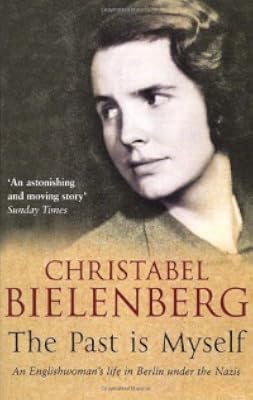
The Past Is Myself
by Christabel Bielenberg
On This Page
Description
On 29 September 1934, at the German Embassy office in London, Christabel Bielenberg officially became a German citizen. Having met her German husband Peter two years prior, Christabel decided to renounce her British citizenship, planning to start married life with Peter in Berlin. Though Adolf Hitler had risen to power in 1933, Christabel and Peter were convinced the German people would see through the newly elected chancellor. But soon Christabel found herself living under the horrors of show more Nazi rule and Allied bombings as the war progressed. Closely associated with resistance circles, her husband was arrested after the failure of the plot against Hitler's life on 20 July 1944, and she herself was interrogated by the Gestapo. Though she lived in constant fear for her and her family's safety, Christabel survived the war with the help of other like-minded Germans who were against Hitler and the Third Reich. With various memorable encounters - from a simple-minded Nazi official who was also her odd-job gardener to the good-hearted Black Forest villagers who sheltered her till the liberation - Christabel shares not only the hardships and worry but also the humour and humanity she found during these dark days. The human dimension of her writing brings about an unforgettable portrait of an evil time. show lessTags
Recommendations





















Member Reviews
This captivating memoir was written by Christabel Bielenberg, an Englishwoman who married a German lawyer and lived in Germany during World War II. The book offers a unique perspective on life in the Third Reich from the viewpoint of a civilian just trying to survive, not a Nazi or a victim of a concentration camp. It is often praised for its depiction of the "other Germany" and how ordinary citizens, such as Bielenberg and her family, coped with an increasingly difficult and paranoid world.
The memoir is noteworthy because it provides a close-up look at German society during the war, highlighting the struggles endured by both regular citizens and anti-Nazis who opposed the government. Bielenberg shows that not all Germans supported show more Hitler by describing the subtle and not-so-subtle ways people resisted.
The book is a first-person survival story that focuses on daily life under the Nazi government and during the Allied bombings. It portrays the brief moments of humanity and hope that allowed people to endure the horrors of war. This entails learning to laugh, building relationships with neighbors, and valuing the little pleasures that were "blown out of all proportion" during a time of scarcity. show less
The memoir is noteworthy because it provides a close-up look at German society during the war, highlighting the struggles endured by both regular citizens and anti-Nazis who opposed the government. Bielenberg shows that not all Germans supported show more Hitler by describing the subtle and not-so-subtle ways people resisted.
The book is a first-person survival story that focuses on daily life under the Nazi government and during the Allied bombings. It portrays the brief moments of humanity and hope that allowed people to endure the horrors of war. This entails learning to laugh, building relationships with neighbors, and valuing the little pleasures that were "blown out of all proportion" during a time of scarcity. show less
A few years back I went through a period of reading a fair bit of fictional and non-fictional accounts of WWII. These were told from many perspectives - the Jew who survived the Holocaust and concentration camps, the Brits living in Nazi-occupied Jersey, the post-war German adult struggling with her unrepentant ex-SS mother, the resistance operatives who risked everything to deal a significant blow to the Nazi leadership, stories of lovers caught on opposite sides of the political spectrum.
This autobiography is told from another unique, yet no less interesting, perspective. Chris Bielenberg was a privileged British woman who married a young dashing German lawyer in the early 1930s, becoming a German citizen a few years before the show more outbreak of WWII. Her husband Peter, an Oxford graduate, quickly leaves the law after witnessing first-hand the complete disregard which Hitler's regime had for fair justice. He and his friends are all heavily against the Nazi regime, and with high connections in both Germany and Britain they use their influence to avoid becoming soldiers, instead taking up senior civilian roles in industry whilst trying to spread the message to the Allies of support within Germany for an uprising against Hitler.
Christabel spends most of her wartime in Berlin and the Black Forest. Her own first-hand account of living in wartime Germany is fascinating, particularly the delicate dances that must be played in every day social interactions when trying to evaluate where the political sympathies of new faces lie. She provides interesting insight into why many everyday Germans became Nazi sympathisers; for many, the high inflation after WW1 caused previously comfortably off Germans to become poor overnight, whilst many of their Jewish neighbours saw their wealth grow in the same period. While many of her neighbours didn't fully agree with all the Nazi ideals, they saw the new regime as the first real opportunity to improve their situation, and there was little sympathy for the Jews who they felt had profited from their own misfortune.
The wide variance of political feeling amongst Bielenberg's friends and neighbours was incredibly interesting. It would be easy for us to look back so many decades later and tar all Germans of that era with the same brush of being at best Nazi sympathisers and at worst Nazi activists. Bielenberg paints another picture - that of a wide group of everyday Germans who despised what Hitler and the Nazis were doing to Germany, to the Allies, to their own people. Their every day normality was of tapped home telephone lines, of unplugging the telephones to have anti-Nazi political conversations at home and with friends, of avoiding Nazi sympathising colleagues and neighbours who would be quick to whistleblow, of taking months to ascertain the political sympathies of the new neighbours next door, of following the party line when speaking with strangers in train carriages.
Those who sympathised with the Nazi regime could also not be straightforwardly pigeon-holed. Whilst many carried out despicable acts, many others were kind to Bielenberg and her family during the war, particularly when she was placed under house arrest in the Black Forest.
As a British woman living in Germany, hers was a precarious situation. She was at risk not only of becoming a victim of yet another Allied raid, but of being turned over to the Gestapo as an enemy within. Highly intelligent, it's clear she used both her guile, charm and social position on many an occasion to survive the war. Similarly, it's clear her husband had been able to use his social influence to avoid the German military, but near the end of the war his life was put at great risk when a number of his close friends fail in an attempt to assassinate Hitler and he is arrested and sent to Ravensbrück.
I thoroughly enjoyed this book, if "enjoyed" is the right word. Perhaps a better word is that I now feel a little more educated on the complexities of German feelings and sympathies during WWII having read it. There is often not much that is black and white in this world, and this book goes some way to explain the shades of grey that existed in Germany during this period. Like all autobiographies, we only have the perspective of the author and the light that he or she wants to portray on actions they have taken. I sense that the Bielenbergs were incredibly privileged and fortunate compared to others, yet theirs was also a hard and long war.
4 stars - a fascinating social and political WWII commentary from an unusual perspective. show less
This autobiography is told from another unique, yet no less interesting, perspective. Chris Bielenberg was a privileged British woman who married a young dashing German lawyer in the early 1930s, becoming a German citizen a few years before the show more outbreak of WWII. Her husband Peter, an Oxford graduate, quickly leaves the law after witnessing first-hand the complete disregard which Hitler's regime had for fair justice. He and his friends are all heavily against the Nazi regime, and with high connections in both Germany and Britain they use their influence to avoid becoming soldiers, instead taking up senior civilian roles in industry whilst trying to spread the message to the Allies of support within Germany for an uprising against Hitler.
Christabel spends most of her wartime in Berlin and the Black Forest. Her own first-hand account of living in wartime Germany is fascinating, particularly the delicate dances that must be played in every day social interactions when trying to evaluate where the political sympathies of new faces lie. She provides interesting insight into why many everyday Germans became Nazi sympathisers; for many, the high inflation after WW1 caused previously comfortably off Germans to become poor overnight, whilst many of their Jewish neighbours saw their wealth grow in the same period. While many of her neighbours didn't fully agree with all the Nazi ideals, they saw the new regime as the first real opportunity to improve their situation, and there was little sympathy for the Jews who they felt had profited from their own misfortune.
The wide variance of political feeling amongst Bielenberg's friends and neighbours was incredibly interesting. It would be easy for us to look back so many decades later and tar all Germans of that era with the same brush of being at best Nazi sympathisers and at worst Nazi activists. Bielenberg paints another picture - that of a wide group of everyday Germans who despised what Hitler and the Nazis were doing to Germany, to the Allies, to their own people. Their every day normality was of tapped home telephone lines, of unplugging the telephones to have anti-Nazi political conversations at home and with friends, of avoiding Nazi sympathising colleagues and neighbours who would be quick to whistleblow, of taking months to ascertain the political sympathies of the new neighbours next door, of following the party line when speaking with strangers in train carriages.
Those who sympathised with the Nazi regime could also not be straightforwardly pigeon-holed. Whilst many carried out despicable acts, many others were kind to Bielenberg and her family during the war, particularly when she was placed under house arrest in the Black Forest.
As a British woman living in Germany, hers was a precarious situation. She was at risk not only of becoming a victim of yet another Allied raid, but of being turned over to the Gestapo as an enemy within. Highly intelligent, it's clear she used both her guile, charm and social position on many an occasion to survive the war. Similarly, it's clear her husband had been able to use his social influence to avoid the German military, but near the end of the war his life was put at great risk when a number of his close friends fail in an attempt to assassinate Hitler and he is arrested and sent to Ravensbrück.
I thoroughly enjoyed this book, if "enjoyed" is the right word. Perhaps a better word is that I now feel a little more educated on the complexities of German feelings and sympathies during WWII having read it. There is often not much that is black and white in this world, and this book goes some way to explain the shades of grey that existed in Germany during this period. Like all autobiographies, we only have the perspective of the author and the light that he or she wants to portray on actions they have taken. I sense that the Bielenbergs were incredibly privileged and fortunate compared to others, yet theirs was also a hard and long war.
4 stars - a fascinating social and political WWII commentary from an unusual perspective. show less
Christabel, an English woman, married a German lawyer in 1934. She lived in Germany during the rise of the Nazis and during the war. In this memoir, she chronicles the experiences of herself, her neighbours and friends. Her husband was implicated in the July 20, 1944 bombing of Hitler but survived with the help of friends and Christabel.
From past readings of life in Germany during the war, I knew the there were shortages of food and consumer goods even before the war but to read her experiences of trying to feed and cloth her family brought the difficulties faced by German citizens clearly to the forefront. She also experienced the dissatisfaction of German citizens with Hitler's regime and only the fear of his security forces kept show more people from protesting although many people fought the system in minor ways.
When she left Berlin to escape the bombing, she settled in the Black Forest among rural peasants where life was improved in that they were able to eat better and live a healthier life but still had to watch out for the snitch. show less
From past readings of life in Germany during the war, I knew the there were shortages of food and consumer goods even before the war but to read her experiences of trying to feed and cloth her family brought the difficulties faced by German citizens clearly to the forefront. She also experienced the dissatisfaction of German citizens with Hitler's regime and only the fear of his security forces kept show more people from protesting although many people fought the system in minor ways.
When she left Berlin to escape the bombing, she settled in the Black Forest among rural peasants where life was improved in that they were able to eat better and live a healthier life but still had to watch out for the snitch. show less
4984. When I Was A German, 1934-1945 An Englishwoman in Nazi Germany, by Christabel Bielenberg (read 17 Dec 2012) This is a stunningly well-told account of the author's time in Germany from 1934 to 1945. Her husband is a German lawyer who opposed the Nazis, but escapes being executed after the attempt on Hitler's life on July 20, 1944. The author lived in the Berlin area and there are vivid accounts of the bombing which Berlin underwent. When the Gestapo arrests her husband in 1944 she visits him in the concentration camp and subjects herself to interrogation by the SS. I found the book consistently interesting and exciting right up to the glorious day, May 2,1945, when the Black Forest town in which they were living is finally show more liberated. I also found the account of life in Germany in a rural community made me realize how much my mother, born in the USA to German-born rural parents, still owed to the way life was lived in rural Germany in the 1940's--an unexpected bonus derived from reading this excellent book show less
This autobiography deals with Christabel Bieleberg's life in Nazi Germany. Christabel, the privileged niece of Lord Northcliff, fell in love with a liberal German and married him in 1934. The couple settled in Berlin where he studied law and she studied music until her children were born. They were in a set of 20- something professionals who were anti-Nazi and, at first, were quite vocal in their disdain of Hitler. As the Nazis began their suppressive tactics against opponents, Christabel and her friends because more cautious, but no less active. Part One of the books is basically background on all the characters.
Part Two deals with the war years. The young opponents made many appeals to the Allies, mainly Britain, for help with their show more underground opposition to Hitler. Unfortunately, little if any help was forthcoming, Even a secret trip by Carl Langbehn (later implicated in the Generals' Plot to murder Hitler and hanged for his effort) could not persuade the foreign office to give any help to the anti-Nazi underground movement.When Berlin becomes too dangerous Christabel and her family move to a tiny village in the Black Forest where the local farmers seem almost untouched by the war because they must maintain the rhythm of the farming year. No matter who ranted on the wireless, the cows still have to be milked. If much sentiment is expressed, even by the mayor, it is that "that man" in Berlin won't be in power forever. Most of the horrors of the war are second-hand: food and petrol shortages, the odd bomb dumped by a plane. Christabel's Englishness is not questioned and her family is accepted with no reservations.
The first 2/3's of the book is fascinating, if a bit slow-moving. Christabel's husband Peter manages to keep getting reserve occupations and when he is forced to join the service it is the air force and even then he is given desk positions. Their interactions with their Nazi neighbors in Berlin, the simple and honest residents of the Black Forest village, and their underground colleagues is described clearly and not sensationally.
But after the plot against Hitler's life, their world collapses. Peter is arrested for his association with the plotters, although he had no direct part in the attempt. Their friends are being arrested, tortured, and executed and Christabel desperately tries to find out if her husband is still alive. The final act is terriflying.
This unique perspective of life in Hitler's Germany is a very worthwhile and informative read. Highly recommended. show less
Part Two deals with the war years. The young opponents made many appeals to the Allies, mainly Britain, for help with their show more underground opposition to Hitler. Unfortunately, little if any help was forthcoming, Even a secret trip by Carl Langbehn (later implicated in the Generals' Plot to murder Hitler and hanged for his effort) could not persuade the foreign office to give any help to the anti-Nazi underground movement.When Berlin becomes too dangerous Christabel and her family move to a tiny village in the Black Forest where the local farmers seem almost untouched by the war because they must maintain the rhythm of the farming year. No matter who ranted on the wireless, the cows still have to be milked. If much sentiment is expressed, even by the mayor, it is that "that man" in Berlin won't be in power forever. Most of the horrors of the war are second-hand: food and petrol shortages, the odd bomb dumped by a plane. Christabel's Englishness is not questioned and her family is accepted with no reservations.
The first 2/3's of the book is fascinating, if a bit slow-moving. Christabel's husband Peter manages to keep getting reserve occupations and when he is forced to join the service it is the air force and even then he is given desk positions. Their interactions with their Nazi neighbors in Berlin, the simple and honest residents of the Black Forest village, and their underground colleagues is described clearly and not sensationally.
But after the plot against Hitler's life, their world collapses. Peter is arrested for his association with the plotters, although he had no direct part in the attempt. Their friends are being arrested, tortured, and executed and Christabel desperately tries to find out if her husband is still alive. The final act is terriflying.
This unique perspective of life in Hitler's Germany is a very worthwhile and informative read. Highly recommended. show less
Worth reading just for the part where she visits the SS (in darned gloves, the SS really appreciate thriftiness) to create an alibi for her husband.
The first two thirds of the book are a little slow, but the final third more than makes up for it. The final chapters and thrilling and chilling.
Members
- Recently Added By
Lists

Books About World War II
102 works; 29 members

Women in War
148 works; 30 members
Author Information
5+ Works 608 Members
Awards and Honors
Notable Lists
Series
Belongs to Publisher Series
Work Relationships
Common Knowledge
- Canonical title
- The Past Is Myself
- Original title
- The Past is Myself
- Alternate titles
- When I Was a German, 1934-1945: An Englishwoman in Nazi Germany
- Original publication date
- 1968
- People/Characters
- Christabel Bielenberg; Peter Bielenberg; Adam von Trott zu Solz
- Related movies
- Christabel (1988 | IMDb)
- Original language
- English
Classifications
- Genres
- Biography & Memoir, History, Nonfiction, General Nonfiction
- DDC/MDS
- 943.086 — History & geography History of Europe Central Europe: Germany, Austria, Switzerland, Czech, Poland, Hungary Historical periods of Germany Germany 1866- Third Reich 1933-1945
- LCC
- D811.5 .B477 — History of Europe, Asia, Africa and Oceania History (General) World War II (1939-1945)
- BISAC
Statistics
- Members
- 494
- Popularity
- 61,471
- Reviews
- 9
- Rating
- (3.88)
- Languages
- 5 — Danish, Dutch, English, German, Swedish
- Media
- Paper, Audiobook, Ebook
- ISBNs
- 23
- ASINs
- 7