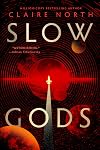
Slow Gods
by Claire North
On This Page
Description
My name is Mawukana na-Vdnaze, and I am a very poor copy of myself. In telling my story, there are certain things I should perhaps lie about. I should make myself a hero. Pretend I was not used by strangers and gods, did not leave people behind. Here is one truth: out there in deep-space, in the pilot's chair, I died. And then, I was reborn. I became something not quite human, something that could speak to the infinite dark. And I vowed to become the scourge of the world that wronged me. show more This is the story of the supernova event that burned planets and felled civilizations. This is also the story of the many lives I've lived since I died for the first time. Are you listening? show lessTags
Recommendations



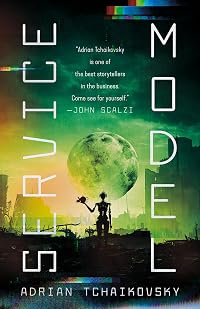
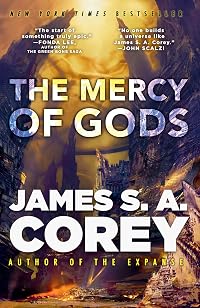
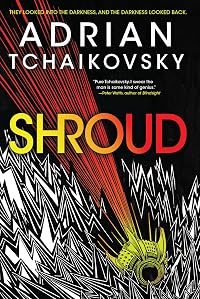
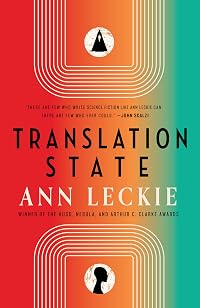







Member Recommendations
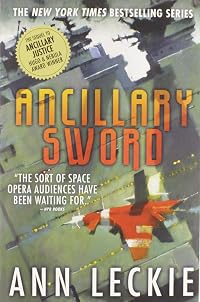
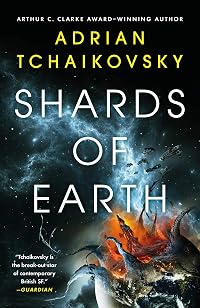
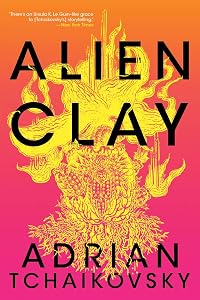
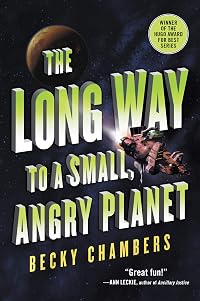
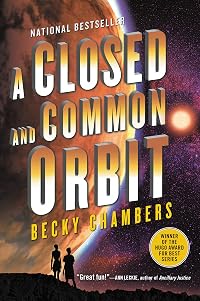
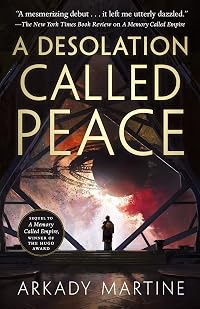
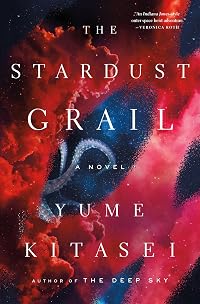
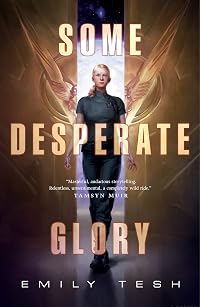
reading_fox Both feature unusual narrators with wide reaching social commentary science fiction space opera, over long time scales.
20
Member Reviews
Mawukana na-Vdnaze has the misfortune of being born into debt on the Shine planet of Tu-mdo. Things get worse. At some point he is swept up in a cull of undesirables and his punishment is to made a “pilot” — a sort of human/machine integration — of a ship that will fly through the dark, which is the dark beyond dark when one travels faster than light speed. Most pilots go mad after just one journey. After two journeys they are retired as “unsafe.” Maw somehow is reborn in his engagement with the dark and thereafter he cannot die. Or rather, he can die again and agin, but returns in the dark when he is not thought of. Thereafter he is the perfect pilot. His presence quiets the dark and his skills are without equal. But there show more are dangers as well, if the dark within him gets too curious.
A binary star system is collapsing. It will explode into itself and the shock waves of radiation and later an ion wave will eradicate life on planets within 100 light years distance. The planets of the Shine are in its path, but so too are planets of the Accord and the first of these is Adjumir. Evacuation efforts are begun on Adjumir but the Executorium of the Shine have decided not to inform their “citizens” of their impending demise.
Adventures ensue.
As ever with a Claire North novel, no matter how extreme the scenario, she guides the reader through with aplomb. The tension gets ratcheted up to eleven, but you’ll be thinking throughout, “I wish this novel was a 1000 pages longer.” Or at least I did. I haven’t even explained why the book is called Slow Gods. I’ll just leave that for the reader to gather as they enjoy this very intense but pleasurable novel.
Recommended. show less
A binary star system is collapsing. It will explode into itself and the shock waves of radiation and later an ion wave will eradicate life on planets within 100 light years distance. The planets of the Shine are in its path, but so too are planets of the Accord and the first of these is Adjumir. Evacuation efforts are begun on Adjumir but the Executorium of the Shine have decided not to inform their “citizens” of their impending demise.
Adventures ensue.
As ever with a Claire North novel, no matter how extreme the scenario, she guides the reader through with aplomb. The tension gets ratcheted up to eleven, but you’ll be thinking throughout, “I wish this novel was a 1000 pages longer.” Or at least I did. I haven’t even explained why the book is called Slow Gods. I’ll just leave that for the reader to gather as they enjoy this very intense but pleasurable novel.
Recommended. show less
I’ve been following the career of Claire North, a pseudonym of Catherine Webb, since her debut under that name, The Fifteen Lives of Harry August. I thought it good-ish, but things started picking up with The Sudden Appearance of Hope – which, if I remember correctly, managed an impressively accurate description of Dubai – and by The Pursuit of William Abbey she was on my must-buy list.
Which brings me to her latest, Slow Gods Which is, well, a Banksian space opera. Iain M Banks’s space opera novels have been copied a lot over the past thirty five years, but Slow Gods comes closer than many. Which is not to say there’s nothing original in Slow Gods, because there’s plenty.
Interstellar travel in the universe of Slow Gods is show more accomplished via arcspace, but journeys through it are extremely unsettling to humans (there were definite vibes of the movie Event Horizon here). Ships require a human Pilot, who is plugged into the ship, but they can only Pilot for two or three trips before suffering a psychotic break. Or worse.
The Shine, properly the United Social Venture, is the complete antithesis of Banks’s Culture. A rich and powerful elite enjoy lives of untrammelled luxury supported by the labour of an indentured population kept permanently in debt. The Shine “Management” are cruel, sadistic and sociopathic. Any resemblance to twenty-first century USA is undoubtedly intended.
The Shine uses criminals and debtors as Pilots, and surgically destroys their higher brain functions so they last longer. It gives the Shine an advantage in interstellar travel. Mawukana na-Vdnaze was arrested during a Corpsec sweep, and promptly condemned to be a Pilot, but the surgery did not happen. Maw’s ship was then lost in arcspace, but somehow he managed to bring it home – but he was changed in the process. He is now effectively immortal, and he can Pilot through arcspace without being affected and with pinpoint accuracy.
The Slow, a huge and enigmatic AI with a very successful record of predicting the future, declares a binary star system will go nova, and the resulting wavefront will wipe out all worlds within an eighty light year radius. Which includes the Shine. But Management declares this “fake news” and does nothing to protect their worlds from the resulting wavefront.
Maw escapes the Shine, and goes to work for the Accord, a loose alliance of other interstellar polities. He runs various errands, including helping rescue historical artefacts from a world among the first to be destroyed by the wavefront. The Shine continues to refuse to evacuate its worlds, and instead seems bent on conquering other planets for Management to rule. The Accord can do nothing because the Shine has blackships, stealth warships with planet-killing weaponry, hidden in the systems of the Shine’s enemies. It’s the ultimate deterrent.
All this takes place over decades. The Shine are really horrible – although, to be honest, they’re not much worse than some of the polities in other twenty-first century sf novels, although here the novelty is they’re the villains. Maw is a curiously passive protagonist, someone who is so afraid of his abilities he rarely uses them. The Accord keeps him on a small island, since other people find him just as unsettling as arcspace. There’s even a hint of Special Circumstances to Maw’s role and the missions he undertakes. The world-building is also especially good.
I don’t think the comparison with Banks is unfair, although Slow Gods is very much a twenty-first century take on the material, with thoroughly modern sensibilities (something many writers forget to do when aping Banks). I’ll be disappointed if Slow Gods does not appear on a few award shortlists this year. show less
Which brings me to her latest, Slow Gods Which is, well, a Banksian space opera. Iain M Banks’s space opera novels have been copied a lot over the past thirty five years, but Slow Gods comes closer than many. Which is not to say there’s nothing original in Slow Gods, because there’s plenty.
Interstellar travel in the universe of Slow Gods is show more accomplished via arcspace, but journeys through it are extremely unsettling to humans (there were definite vibes of the movie Event Horizon here). Ships require a human Pilot, who is plugged into the ship, but they can only Pilot for two or three trips before suffering a psychotic break. Or worse.
The Shine, properly the United Social Venture, is the complete antithesis of Banks’s Culture. A rich and powerful elite enjoy lives of untrammelled luxury supported by the labour of an indentured population kept permanently in debt. The Shine “Management” are cruel, sadistic and sociopathic. Any resemblance to twenty-first century USA is undoubtedly intended.
The Shine uses criminals and debtors as Pilots, and surgically destroys their higher brain functions so they last longer. It gives the Shine an advantage in interstellar travel. Mawukana na-Vdnaze was arrested during a Corpsec sweep, and promptly condemned to be a Pilot, but the surgery did not happen. Maw’s ship was then lost in arcspace, but somehow he managed to bring it home – but he was changed in the process. He is now effectively immortal, and he can Pilot through arcspace without being affected and with pinpoint accuracy.
The Slow, a huge and enigmatic AI with a very successful record of predicting the future, declares a binary star system will go nova, and the resulting wavefront will wipe out all worlds within an eighty light year radius. Which includes the Shine. But Management declares this “fake news” and does nothing to protect their worlds from the resulting wavefront.
Maw escapes the Shine, and goes to work for the Accord, a loose alliance of other interstellar polities. He runs various errands, including helping rescue historical artefacts from a world among the first to be destroyed by the wavefront. The Shine continues to refuse to evacuate its worlds, and instead seems bent on conquering other planets for Management to rule. The Accord can do nothing because the Shine has blackships, stealth warships with planet-killing weaponry, hidden in the systems of the Shine’s enemies. It’s the ultimate deterrent.
All this takes place over decades. The Shine are really horrible – although, to be honest, they’re not much worse than some of the polities in other twenty-first century sf novels, although here the novelty is they’re the villains. Maw is a curiously passive protagonist, someone who is so afraid of his abilities he rarely uses them. The Accord keeps him on a small island, since other people find him just as unsettling as arcspace. There’s even a hint of Special Circumstances to Maw’s role and the missions he undertakes. The world-building is also especially good.
I don’t think the comparison with Banks is unfair, although Slow Gods is very much a twenty-first century take on the material, with thoroughly modern sensibilities (something many writers forget to do when aping Banks). I’ll be disappointed if Slow Gods does not appear on a few award shortlists this year. show less
I have been a huge fan of Claire North for a number of years, and I’ve yet to read a bad book in their genre-crossing repertoire. When I first read some of the reviews of Slow Gods, I was a little worried: the jury was clearly split, with a number of people saying they couldn’t finish it because it was “boring”.
How wrong they were.
This is an excellent addition to the space opera canon. North’s writing is, at times, spare—encouraging the reader to fill in the gaps—and at others rich, convoluted and deep, forcing you to slow down, reread, and appreciate the cadence and phrasing.
In Slow Gods we follow Maw, an inhabitant of one of the worlds of the harsh and exploitative Shine. After being injured in an accident on a prison show more moon, he is forced to become a Pilot—one of the beings required to guide ships through arcspace, permitting faster-than-light travel between the stars. Pilots have a short lifespan, destroyed by the unseen things that lurk in the Dark and unravel the minds of those unfortunate enough to navigate it.
On his first mission, Maw is killed and the passengers on his ship are dismembered—but he returns to life, apparently as a copy of the original. Researchers discover that Maw can be killed, but never for long. Because he has been in the Dark, he is capable of darkness with near-godlike power, and so must be kept under constant surveillance by lethal machines. Maw begins a career as a Pilot who can make unlimited journeys, drawing him into the evacuation of worlds facing destruction by an impending supernova. His life is a lonely one: he is seen as other, kept apart from normal human contact, until he meets Gebre, whose world will be the first to die.
(And I say “he” guardedly, for on Adjumir there are eight genders. As Gebre says, why make judgements about a person based solely on their genitalia?)
Slow Gods is littered with little asides and musings that form part of Maw’s interior monologue. I can see how these might frustrate readers who want the plot to drive forward as inexorably as the shockwave from the exploding star, but to me they were fascinating, charming, and delightful—so very North. An extended reflection on the pointlessness, yet essentiality, of small talk has stayed with me. Or how about this one on conspiracy theories:
“The real conspiracies-the actual plots and plans that will shape whole worlds-are often far too vast and too impersonal to really grasp, and when the are grasped they are not called ‘conspiracies’ at all but rather ‘policies’ or ‘business plans’.”
I think that’s great-as true in today’s world as it might be in a galaxy far, far away in an unimaginable future.
Despite the genre shift, this is still the voice of the author of The Songs of Penelope, and yet it is also unmistakably the voice of Maw. To call this boring is unreasonable and is a failure to recognise that the book is Maw’s memoir. He can tell the story any way he wants.
The world-building is intriguing throughout. Slow Gods is full of brilliant ideas and beautiful concepts, and it rewards a patient reader willing to take their time and absorb them fully.
This is a galaxy populated by different human factions and sentient artificial minds, living mostly in harmony—but armed to the teeth, just in case. If you enjoy the work of authors such as Arkady Martine, Ann Leckie, or Iain M. Banks, this will likely appeal. This isn’t wham-bam, all-flash, action-driven science fiction; it’s a thoughtful, character-led exploration of morality, humanity, and how we treat those who are not like us. It considers what it means to be a speck in the vastness of the universe—and how, even so, we can still make a difference to the people around us. show less
How wrong they were.
This is an excellent addition to the space opera canon. North’s writing is, at times, spare—encouraging the reader to fill in the gaps—and at others rich, convoluted and deep, forcing you to slow down, reread, and appreciate the cadence and phrasing.
In Slow Gods we follow Maw, an inhabitant of one of the worlds of the harsh and exploitative Shine. After being injured in an accident on a prison show more moon, he is forced to become a Pilot—one of the beings required to guide ships through arcspace, permitting faster-than-light travel between the stars. Pilots have a short lifespan, destroyed by the unseen things that lurk in the Dark and unravel the minds of those unfortunate enough to navigate it.
On his first mission, Maw is killed and the passengers on his ship are dismembered—but he returns to life, apparently as a copy of the original. Researchers discover that Maw can be killed, but never for long. Because he has been in the Dark, he is capable of darkness with near-godlike power, and so must be kept under constant surveillance by lethal machines. Maw begins a career as a Pilot who can make unlimited journeys, drawing him into the evacuation of worlds facing destruction by an impending supernova. His life is a lonely one: he is seen as other, kept apart from normal human contact, until he meets Gebre, whose world will be the first to die.
(And I say “he” guardedly, for on Adjumir there are eight genders. As Gebre says, why make judgements about a person based solely on their genitalia?)
Slow Gods is littered with little asides and musings that form part of Maw’s interior monologue. I can see how these might frustrate readers who want the plot to drive forward as inexorably as the shockwave from the exploding star, but to me they were fascinating, charming, and delightful—so very North. An extended reflection on the pointlessness, yet essentiality, of small talk has stayed with me. Or how about this one on conspiracy theories:
“The real conspiracies-the actual plots and plans that will shape whole worlds-are often far too vast and too impersonal to really grasp, and when the are grasped they are not called ‘conspiracies’ at all but rather ‘policies’ or ‘business plans’.”
I think that’s great-as true in today’s world as it might be in a galaxy far, far away in an unimaginable future.
Despite the genre shift, this is still the voice of the author of The Songs of Penelope, and yet it is also unmistakably the voice of Maw. To call this boring is unreasonable and is a failure to recognise that the book is Maw’s memoir. He can tell the story any way he wants.
The world-building is intriguing throughout. Slow Gods is full of brilliant ideas and beautiful concepts, and it rewards a patient reader willing to take their time and absorb them fully.
This is a galaxy populated by different human factions and sentient artificial minds, living mostly in harmony—but armed to the teeth, just in case. If you enjoy the work of authors such as Arkady Martine, Ann Leckie, or Iain M. Banks, this will likely appeal. This isn’t wham-bam, all-flash, action-driven science fiction; it’s a thoughtful, character-led exploration of morality, humanity, and how we treat those who are not like us. It considers what it means to be a speck in the vastness of the universe—and how, even so, we can still make a difference to the people around us. show less
Slow Gods by Claire North is a novel that leans heavily into world-building, and I was lucky enough to have the Starbright edition from Illumicrate with its bonus world-building essay.
The novel follows Maw, the “ghost of Hasha-to”, after the Slow arrives in the local solar system and predicts the impending collapse of the nearby binary star into a supernova that will destroy the closest populated planets. Maw is unnaturally long lived, for reasons that become clear, and witnesses events before and after the supernova.
This is a novel with so much to say that reflects on contemporary society. The Adjumiri and the Shine are two human cultures put into stark contrast with each other. The Adjumiri have an intricate culture, full of show more ritual and history, with deep nuance in their language. They have clear phrasing to signal comfort, structuring intimacy and allowing a wide range of gender identities to be expressed. It is a wonderful queer norm world, echoed on Xihanna where Maw lives. This acceptance and respect contrasts with the Shine, a far more capitalist society with binary genders, where babies start accruing debt to the Venture from the moment they are born. An ethos exists that anyone can work their way out of that debt and improve their station, reputations are built on dramatic rule bending, and the truth is kept from the populace.
What makes that contrast land is Maw. Maw is drawn to the Adjumiri, learning their languages and falling into their culture, holding onto it long after the planet’s loss because of a deep love for it and for Gebre. By comparison, Maw’s treatment by the Shine during their first life as a “he” leaves no real tenderness toward any sense of home. The systems are not just described, they are lived, and remembered.
The contradictory behaviours that result from each culture’s response to the crisis drive the story. One comes together and creates a lottery to escape, the other struggles to collaborate, sacrificing many and waging war.
The role of the Consensus, and the idea of how people might be stirred to action if they could truly feel what those persecuted are enduring, also really appealed to me, especially coupled with the response to events with Nitashi that feel starkly relevant. The use of the Spindle as another microcosm of megacity life, with its required rituals to create boundaries, adds even more nuance.
Alongside the human cultures, the depiction of advanced robotics is fascinating. Maw’s assigned companions, the Quans, and how they have learned to make themselves more acceptable to humans by giving themselves humanoid or animal features, is telling. Their strengths and limitations, guided by size and processing capability, add real texture. That the Slow is seen as a god, because qis calculating capacity is so advanced as to create predictions with near certainty, feels like a mirror to how people come to trust systems they cannot fully understand.
All of this takes place in a world with strong internal logic. Even Maw’s unique pseudo-magic abilities are given rules and made to fit. I loved the use of timings around the impact on different planets in different years, based on how long the blast would take to travel. Details like this, from the Quans’ computing limits to the economics of the Shine and the years required for evacuation, build a world that holds together in a deeply thought provoking set of “what if” scenarios.
Unsurprisingly, with all this, it is a deeply philosophical book. Maw’s relationships: with Gebre, with Quan Rencki, and with more passing connections, form the emotional heart of the story. They bring it back to love and friendship, and to the tension between what is strategically right and what is personal, and how difficult those choices can be. The final chapters landed powerfully with me.
The only reason this is not a full 5/5 is that it is a heavier read, and so it feels less propulsive despite the stakes. Because of this, I also noticed a couple of moments in the final stretch where the phrasing pulled me out slightly.
Overall, I am so glad to have read this and am sure I'll be recommending it constantly. If you love a thought provoking read with a rich queer norm world that also gently unsettles you and makes you want to discuss it for hours, this is very much worth your time. show less
The novel follows Maw, the “ghost of Hasha-to”, after the Slow arrives in the local solar system and predicts the impending collapse of the nearby binary star into a supernova that will destroy the closest populated planets. Maw is unnaturally long lived, for reasons that become clear, and witnesses events before and after the supernova.
This is a novel with so much to say that reflects on contemporary society. The Adjumiri and the Shine are two human cultures put into stark contrast with each other. The Adjumiri have an intricate culture, full of show more ritual and history, with deep nuance in their language. They have clear phrasing to signal comfort, structuring intimacy and allowing a wide range of gender identities to be expressed. It is a wonderful queer norm world, echoed on Xihanna where Maw lives. This acceptance and respect contrasts with the Shine, a far more capitalist society with binary genders, where babies start accruing debt to the Venture from the moment they are born. An ethos exists that anyone can work their way out of that debt and improve their station, reputations are built on dramatic rule bending, and the truth is kept from the populace.
What makes that contrast land is Maw. Maw is drawn to the Adjumiri, learning their languages and falling into their culture, holding onto it long after the planet’s loss because of a deep love for it and for Gebre. By comparison, Maw’s treatment by the Shine during their first life as a “he” leaves no real tenderness toward any sense of home. The systems are not just described, they are lived, and remembered.
The contradictory behaviours that result from each culture’s response to the crisis drive the story. One comes together and creates a lottery to escape, the other struggles to collaborate, sacrificing many and waging war.
The role of the Consensus, and the idea of how people might be stirred to action if they could truly feel what those persecuted are enduring, also really appealed to me, especially coupled with the response to events with Nitashi that feel starkly relevant. The use of the Spindle as another microcosm of megacity life, with its required rituals to create boundaries, adds even more nuance.
Alongside the human cultures, the depiction of advanced robotics is fascinating. Maw’s assigned companions, the Quans, and how they have learned to make themselves more acceptable to humans by giving themselves humanoid or animal features, is telling. Their strengths and limitations, guided by size and processing capability, add real texture. That the Slow is seen as a god, because qis calculating capacity is so advanced as to create predictions with near certainty, feels like a mirror to how people come to trust systems they cannot fully understand.
All of this takes place in a world with strong internal logic. Even Maw’s unique pseudo-magic abilities are given rules and made to fit. I loved the use of timings around the impact on different planets in different years, based on how long the blast would take to travel. Details like this, from the Quans’ computing limits to the economics of the Shine and the years required for evacuation, build a world that holds together in a deeply thought provoking set of “what if” scenarios.
Unsurprisingly, with all this, it is a deeply philosophical book. Maw’s relationships: with Gebre, with Quan Rencki, and with more passing connections, form the emotional heart of the story. They bring it back to love and friendship, and to the tension between what is strategically right and what is personal, and how difficult those choices can be. The final chapters landed powerfully with me.
The only reason this is not a full 5/5 is that it is a heavier read, and so it feels less propulsive despite the stakes. Because of this, I also noticed a couple of moments in the final stretch where the phrasing pulled me out slightly.
Overall, I am so glad to have read this and am sure I'll be recommending it constantly. If you love a thought provoking read with a rich queer norm world that also gently unsettles you and makes you want to discuss it for hours, this is very much worth your time. show less
Really very clever. Thoroughly enjoyed this insightful innovative novel. A neurodivergent hero (Maw, gender unspecified see exposition on this theme within the novel) is the only person to survive an FTL event, and it leaves them altered, effectively immortal. They can die, but the universe 'remembers' them alive, and so as long as nobody is actively enforcing it, they resurrect.
It's a powerful and unsettling ability, and whichever worlds they settle on are careful to keep Maw interested in their world. They been learning to garden when news from an AI, one of the oldest and strangest, comes that a star will supernova in 100 years time. Many planets within the local galactic area will be effected. Maw watches and learns different ways show more of coping with this, and comes to grips with different cultures and cultural practises. Their original society is easily recognisable as a mirror to our own capitalist market driven one, and doesn't reflect well compared to some alternatives.
Their is a lot of exposition, sometimes explicitly as Interludes, but also just of Maw working things out at their own pace. It doesn't grate, it is perfectly paced and what science fiction should be - a future mirror to our current situation. I'm sure some readers will find it slow and heavy going. show less
It's a powerful and unsettling ability, and whichever worlds they settle on are careful to keep Maw interested in their world. They been learning to garden when news from an AI, one of the oldest and strangest, comes that a star will supernova in 100 years time. Many planets within the local galactic area will be effected. Maw watches and learns different ways show more of coping with this, and comes to grips with different cultures and cultural practises. Their original society is easily recognisable as a mirror to our own capitalist market driven one, and doesn't reflect well compared to some alternatives.
Their is a lot of exposition, sometimes explicitly as Interludes, but also just of Maw working things out at their own pace. It doesn't grate, it is perfectly paced and what science fiction should be - a future mirror to our current situation. I'm sure some readers will find it slow and heavy going. show less
This is space opera. a galaxy-scale story of politics, war, technology, and mysteries. It checks all the space opera boxes — a galaxy-scale story of politics, war, faster-than-light technology, machine intelligences, and cosmic-level unknowns.
It follows the story of the Shine and its conflict with the Slow, a mysterious intelligence that kicks off the plot with a warning that the binary system, Lhonoja, will merge into a black hole, producing a devastating explosion destroying the lives and worlds within its radiation and shock-wave radius.
Some of those worlds are controlled and exploited by the Shine. The Shine is an authoritarian, ruthless empire that, among other tyrannies, creates a class of “Debtors,” indentured servants show more sent out to do the dirty work of mining and other life-shortening, mind-destroying jobs.
One of the Debtors, though, is Mawukana na-Vdnaze (Maw for short), destined to survive death and returns in altered form, “a very poor copy of myself.” Maw becomes an uncannily precise and skilled pilot of “Arcspace”, the dimension through which faster-than-light travel is possible. Maw is at home, even apparently empowered, by the darkness of Arcspace, which makes him a central figure in the conflict to come between the Shine and the Slow.
As the Shine react to the Slow’s warning, their own worlds and the worlds outside their empire become chips in a cosmic conflict. Maw, born to the Shine, becomes a pivotal player, someone who really belongs to no world and with allegiance to no empire or civilization but whose talents and abilities give him enormous weight in the game.
Claire North is an excellent story-teller. She propels us through the plot with Maw and his machine-life companions against the background of the Shine, the Slow, and the looming disaster of Lhonoja. It is a hero-journey in the classic sense.
Although I read the story as entertainment, it’s not empty entertainment. In particular, it raises the question, what is the morality of a god? The morality of an agent virtually without constraints on its power. What are the boundaries of its actions and interventions in the lives of others? Does it exercise power for its own sake, or does it find meaning to direct its actions?
She also raises questions about curiosity, its power, its potential destructiveness and its obsessiveness.
I read space opera for a sense of wonder. My landmarks are The Expanse, The Foundation, and 2001: A Space Odyssey. North’s story doesn’t quite reach those heights, but it’s an entertaining read, it puts you out there into a galactic adventure, and, like I said, it raises some big questions. show less
It follows the story of the Shine and its conflict with the Slow, a mysterious intelligence that kicks off the plot with a warning that the binary system, Lhonoja, will merge into a black hole, producing a devastating explosion destroying the lives and worlds within its radiation and shock-wave radius.
Some of those worlds are controlled and exploited by the Shine. The Shine is an authoritarian, ruthless empire that, among other tyrannies, creates a class of “Debtors,” indentured servants show more sent out to do the dirty work of mining and other life-shortening, mind-destroying jobs.
One of the Debtors, though, is Mawukana na-Vdnaze (Maw for short), destined to survive death and returns in altered form, “a very poor copy of myself.” Maw becomes an uncannily precise and skilled pilot of “Arcspace”, the dimension through which faster-than-light travel is possible. Maw is at home, even apparently empowered, by the darkness of Arcspace, which makes him a central figure in the conflict to come between the Shine and the Slow.
As the Shine react to the Slow’s warning, their own worlds and the worlds outside their empire become chips in a cosmic conflict. Maw, born to the Shine, becomes a pivotal player, someone who really belongs to no world and with allegiance to no empire or civilization but whose talents and abilities give him enormous weight in the game.
Claire North is an excellent story-teller. She propels us through the plot with Maw and his machine-life companions against the background of the Shine, the Slow, and the looming disaster of Lhonoja. It is a hero-journey in the classic sense.
Although I read the story as entertainment, it’s not empty entertainment. In particular, it raises the question, what is the morality of a god? The morality of an agent virtually without constraints on its power. What are the boundaries of its actions and interventions in the lives of others? Does it exercise power for its own sake, or does it find meaning to direct its actions?
She also raises questions about curiosity, its power, its potential destructiveness and its obsessiveness.
I read space opera for a sense of wonder. My landmarks are The Expanse, The Foundation, and 2001: A Space Odyssey. North’s story doesn’t quite reach those heights, but it’s an entertaining read, it puts you out there into a galactic adventure, and, like I said, it raises some big questions. show less
File under: Respect more than like.
While I believe that this is a very good novel, it's also the case that the main character, one Mawukana na-Vdnaze (aka Maw), is something of a cold fish and sometimes gets tedious to spend time with. Much of this work boils down to Maw processing the events of their life (or is that lives), until they reach the point of personal equanimity that allows them to move past bitterness and the urge for revenge. That makes it something of a literary novel.
On the other hand, North has also done a fine job of world-building, and the reader who sticks to genre SF will be satisfied in that respect.
In the end, North provided a resolution that I found satisfying, as the corporate criminals of North's setting get show more their just desserts; though the wheels of justice grind very slow. It will take a certain level of patience to take the trip that North is putting you through as a reader.
It will be interesting to see whether this novel makes the cut for the assorted genre awards out there. I can see it doing well, or not finding the right readership. show less
While I believe that this is a very good novel, it's also the case that the main character, one Mawukana na-Vdnaze (aka Maw), is something of a cold fish and sometimes gets tedious to spend time with. Much of this work boils down to Maw processing the events of their life (or is that lives), until they reach the point of personal equanimity that allows them to move past bitterness and the urge for revenge. That makes it something of a literary novel.
On the other hand, North has also done a fine job of world-building, and the reader who sticks to genre SF will be satisfied in that respect.
In the end, North provided a resolution that I found satisfying, as the corporate criminals of North's setting get show more their just desserts; though the wheels of justice grind very slow. It will take a certain level of patience to take the trip that North is putting you through as a reader.
It will be interesting to see whether this novel makes the cut for the assorted genre awards out there. I can see it doing well, or not finding the right readership. show less
Members
- Recently Added By
Lists

Books Read in 2025
4,128 works; 98 members
Author Information

37+ Works 12,570 Members
Awards and Honors
Awards
Distinctions
Classifications
Statistics
- Members
- 297
- Popularity
- 114,217
- Reviews
- 10
- Rating
- (3.99)
- Languages
- English
- Media
- Paper, Audiobook, Ebook
- ISBNs
- 8
- ASINs
- 3