I am David
by Anne Holm
On This Page
Description
After escaping from an Eastern European concentration camp where he has spent most of his life, a twelve-year-old boy struggles to cope with an entirely strange world as he flees northward to freedom in Denmark.Tags
Recommendations
















Member Recommendations




Member Reviews
TRIGGER WARNINGS: References cruelty, violence, and neglect. Holocaust: references concentration camps. Animal death. Grief. Suicidal thoughts.
I Am David tells the story of a young boy named David who escapes from a concentration camp during World War II. He is assisted in his escape by one of the guards and the story follows his journey as he strives to follow the guard’s instruction to make his way to Denmark. We are never told where the concentration camp is located, and the identity of David’s captors is never mentioned. By backtracking his journey, we can guess that it is somewhere in Eastern Europe, possibly Bulgaria, or Yugoslavia but it is never explicitly stated. I felt this was a positive move. It emphasises the human show more aspects of the story over historical details and serves as a symbolic representation of the dehumanising and anonymous nature of the camps during the Holocaust. The anonymity reinforces the idea that the experiences of those in concentration camps were tragically common and not limited to a single geographical location.
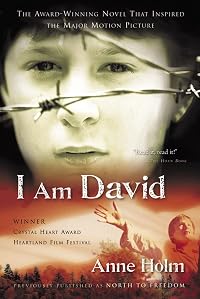
Don’t let the subject matter put you off, though. For such a depressing topic, the book is engaging in every other aspect. I was captivated by the beautiful painted image that adorns the cover of my edition, setting the stage for what turned out to be a profoundly moving literary experience. The prose is simple and straightforward yet possesses a unique beauty which enhances the emotional depth of the novel, instilling a sense of haunting sadness that lingers throughout the narrative. From the outset, I found myself immersed in the poignant and thought-provoking story that unfolded. One aspect that resonated deeply with me was David's personal name for God, a small but impactful detail that adds a layer of individuality to his character.
The believability of the narrative is striking; never once did I feel jarred out of the story. The author skilfully portrays the emotional struggles and growth of the protagonist, David. His thought processes are presented with a compelling authenticity, which broke my heart on more than one occasion.
The author skilfully weaves universal themes of freedom, self-discovery, and the importance of individuality into David's personal journey, making the story relatable to a broad audience. Some reviewers said that they found the pacing of the novel slow at times. I personally did not encounter this issue. Some parts of the story are predictable, but this does not detract from the overall impact of the narrative.
I Am David is marketed as children’s literature (middle grade), but it’s a book which will appeal to all ages. Themes of resilience, hope, and the search for identity prevail, leaving me with a lasting impression of a beautifully written and emotionally resonant story, as appealing to adults as to the tweens for which it was written. Indeed, the narrative is likely to resonate more profoundly with adults, given their broader understanding of the historical and psychological nuances woven into the story.
I am not ashamed to say that this book hurt my soul. I cannot recommend it highly enough. If you read just one book this year, make it this one. show less
I Am David tells the story of a young boy named David who escapes from a concentration camp during World War II. He is assisted in his escape by one of the guards and the story follows his journey as he strives to follow the guard’s instruction to make his way to Denmark. We are never told where the concentration camp is located, and the identity of David’s captors is never mentioned. By backtracking his journey, we can guess that it is somewhere in Eastern Europe, possibly Bulgaria, or Yugoslavia but it is never explicitly stated. I felt this was a positive move. It emphasises the human show more aspects of the story over historical details and serves as a symbolic representation of the dehumanising and anonymous nature of the camps during the Holocaust. The anonymity reinforces the idea that the experiences of those in concentration camps were tragically common and not limited to a single geographical location.
Don’t let the subject matter put you off, though. For such a depressing topic, the book is engaging in every other aspect. I was captivated by the beautiful painted image that adorns the cover of my edition, setting the stage for what turned out to be a profoundly moving literary experience. The prose is simple and straightforward yet possesses a unique beauty which enhances the emotional depth of the novel, instilling a sense of haunting sadness that lingers throughout the narrative. From the outset, I found myself immersed in the poignant and thought-provoking story that unfolded. One aspect that resonated deeply with me was David's personal name for God, a small but impactful detail that adds a layer of individuality to his character.
The believability of the narrative is striking; never once did I feel jarred out of the story. The author skilfully portrays the emotional struggles and growth of the protagonist, David. His thought processes are presented with a compelling authenticity, which broke my heart on more than one occasion.
The author skilfully weaves universal themes of freedom, self-discovery, and the importance of individuality into David's personal journey, making the story relatable to a broad audience. Some reviewers said that they found the pacing of the novel slow at times. I personally did not encounter this issue. Some parts of the story are predictable, but this does not detract from the overall impact of the narrative.
I Am David is marketed as children’s literature (middle grade), but it’s a book which will appeal to all ages. Themes of resilience, hope, and the search for identity prevail, leaving me with a lasting impression of a beautifully written and emotionally resonant story, as appealing to adults as to the tweens for which it was written. Indeed, the narrative is likely to resonate more profoundly with adults, given their broader understanding of the historical and psychological nuances woven into the story.
I am not ashamed to say that this book hurt my soul. I cannot recommend it highly enough. If you read just one book this year, make it this one. show less
TRIGGER WARNINGS: References cruelty, violence, and neglect. Holocaust: references concentration camps. Animal death. Grief. Suicidal thoughts.
I Am David tells the story of a young boy named David who escapes from a concentration camp during World War II. He is assisted in his escape by one of the guards and the story follows his journey as he strives to follow the guard’s instruction to make his way to Denmark. We are never told where the concentration camp is located, and the identity of David’s captors is never mentioned. By backtracking his journey, we can guess that it is somewhere in Eastern Europe, possibly Bulgaria, or Yugoslavia but it is never explicitly stated. I felt this was a positive move. It emphasises the human show more aspects of the story over historical details and serves as a symbolic representation of the dehumanising and anonymous nature of the camps during the Holocaust. The anonymity reinforces the idea that the experiences of those in concentration camps were tragically common and not limited to a single geographical location.
Don’t let the subject matter put you off, though. For such a depressing topic, the book is engaging in every other aspect. I was captivated by the beautiful painted image that adorns the cover of my edition, setting the stage for what turned out to be a profoundly moving literary experience. The prose is simple and straightforward yet possesses a unique beauty which enhances the emotional depth of the novel, instilling a sense of haunting sadness that lingers throughout the narrative. From the outset, I found myself immersed in the poignant and thought-provoking story that unfolded. One aspect that resonated deeply with me was David's personal name for God, a small but impactful detail that adds a layer of individuality to his character.
The believability of the narrative is striking; never once did I feel jarred out of the story. The author skilfully portrays the emotional struggles and growth of the protagonist, David. His thought processes are presented with a compelling authenticity, which broke my heart on more than one occasion.
The author skilfully weaves universal themes of freedom, self-discovery, and the importance of individuality into David's personal journey, making the story relatable to a broad audience. Some reviewers said that they found the pacing of the novel slow at times. I personally did not encounter this issue. Some parts of the story are predictable, but this does not detract from the overall impact of the narrative.
I Am David is marketed as children’s literature (middle grade), but it’s a book which will appeal to all ages. Themes of resilience, hope, and the search for identity prevail, leaving me with a lasting impression of a beautifully written and emotionally resonant story, as appealing to adults as to the tweens for which it was written. Indeed, the narrative is likely to resonate more profoundly with adults, given their broader understanding of the historical and psychological nuances woven into the story.
I am not ashamed to say that this book hurt my soul. I cannot recommend it highly enough. If you read just one book this year, make it this one. show less
I Am David tells the story of a young boy named David who escapes from a concentration camp during World War II. He is assisted in his escape by one of the guards and the story follows his journey as he strives to follow the guard’s instruction to make his way to Denmark. We are never told where the concentration camp is located, and the identity of David’s captors is never mentioned. By backtracking his journey, we can guess that it is somewhere in Eastern Europe, possibly Bulgaria, or Yugoslavia but it is never explicitly stated. I felt this was a positive move. It emphasises the human show more aspects of the story over historical details and serves as a symbolic representation of the dehumanising and anonymous nature of the camps during the Holocaust. The anonymity reinforces the idea that the experiences of those in concentration camps were tragically common and not limited to a single geographical location.
Don’t let the subject matter put you off, though. For such a depressing topic, the book is engaging in every other aspect. I was captivated by the beautiful painted image that adorns the cover of my edition, setting the stage for what turned out to be a profoundly moving literary experience. The prose is simple and straightforward yet possesses a unique beauty which enhances the emotional depth of the novel, instilling a sense of haunting sadness that lingers throughout the narrative. From the outset, I found myself immersed in the poignant and thought-provoking story that unfolded. One aspect that resonated deeply with me was David's personal name for God, a small but impactful detail that adds a layer of individuality to his character.
The believability of the narrative is striking; never once did I feel jarred out of the story. The author skilfully portrays the emotional struggles and growth of the protagonist, David. His thought processes are presented with a compelling authenticity, which broke my heart on more than one occasion.
The author skilfully weaves universal themes of freedom, self-discovery, and the importance of individuality into David's personal journey, making the story relatable to a broad audience. Some reviewers said that they found the pacing of the novel slow at times. I personally did not encounter this issue. Some parts of the story are predictable, but this does not detract from the overall impact of the narrative.
I Am David is marketed as children’s literature (middle grade), but it’s a book which will appeal to all ages. Themes of resilience, hope, and the search for identity prevail, leaving me with a lasting impression of a beautifully written and emotionally resonant story, as appealing to adults as to the tweens for which it was written. Indeed, the narrative is likely to resonate more profoundly with adults, given their broader understanding of the historical and psychological nuances woven into the story.
I am not ashamed to say that this book hurt my soul. I cannot recommend it highly enough. If you read just one book this year, make it this one. show less
A good book but one that is hard to rate. I did like the idea of the book and I agree with the age range of 9 - 13. It's a tough topic to cover for kids in a book and I think this one is a pretty good example of it.
but, because I'm an adult reading it, I found most of the middle kind of boring and I thought everything was a little convenient ~ but I think that is the PERFECT kind of kids book. The topic is so hard, it's nice when it's all wrapped up for you in the end and all (or most) questions are answered for you (unlike most adult books).
but, because I'm an adult reading it, I found most of the middle kind of boring and I thought everything was a little convenient ~ but I think that is the PERFECT kind of kids book. The topic is so hard, it's nice when it's all wrapped up for you in the end and all (or most) questions are answered for you (unlike most adult books).
A very interesting but exceptionally far fetched adventure of a boy escaping from an unnamed Eastern European Concentration Camp in the middle of the Cold War (almost certainly meant to be Bulgaria) and making his way to Denmark.
It is a triumph of good over evil and imagination over rationality. Would make a great mini series
It is a triumph of good over evil and imagination over rationality. Would make a great mini series
I first read this book as a teenager, and now think it must be one of the books you read as a child that shapes your view of the world. David, 12, can remember nothing before the camp where he has always lived. The Commandant gives him a chance to escape when he turns twelve - for reasons the boy does not understand. David knows only two things when he manages to stow aboard a ship and get to Italy. THEY - the commandant and others like him - are not to be trusted, and he must somehow get to Denmark. All he has is his innate intelligence, strength and courage, and a small bundle containing a little money, bread, a compass, matches, a knife, and a bar of soap.
In a way, it's a simple story. What's remarkable is living through his show more experiences in David's head and observing how his travels among free people change him. When David really discovers what love means, towards the end of the book, I still cry, even after all these years.
Not for everyone, to be sure - but I recommended this book, some years ago, to a mother who was looking for books for her son. She called me back and said, "He loves it! He's reading bits of it to me, saying, 'Listen to this, Mom!'"
This is a book that will raise many questions in the right young reader, and stay with them for a long time. show less
In a way, it's a simple story. What's remarkable is living through his show more experiences in David's head and observing how his travels among free people change him. When David really discovers what love means, towards the end of the book, I still cry, even after all these years.
Not for everyone, to be sure - but I recommended this book, some years ago, to a mother who was looking for books for her son. She called me back and said, "He loves it! He's reading bits of it to me, saying, 'Listen to this, Mom!'"
This is a book that will raise many questions in the right young reader, and stay with them for a long time. show less
Simultaneously a heart-rending and uplifting story about a twelve-year-old boy helped to escape from a concentration camp, with the barest of instructions on how to make his solitary way through several countries to get to Denmark. His trials and triumphs, his appreciation for the beauty around him, his longing for freedom and love, all make this a very poignant story. Anne Holm writes with such heart.
Wishlist | Blog | Facebook | Twitter | Instagram | Pinterest
"You can't change others, but you can do something about a fault in yourself."
I Am David by Anne Holm is a very interesting and emotionally powerful story about a young boy. David was born and raised in a prison when one day, he is given a backpack and a few instructions to escape and find his way to Denmark.
During this time, we follow David's adventure and his thoughts. He is programmed to not trust anyone and to escape as soon as he smells any danger coming his way. Throughout his journey, we can see that David goes through a lot of hardship and he meets many people, even though he fails to connect with them or entrust them with anything. Good people are somehow always show more there to help him, and I have to be honest and mention that I found this to be incredibly convenient to the story and in no way believable.
Besides this fact, we get to see David be his true self at all times, which is something I enjoyed about this book. There are instances where he has to make choices that require him to pretend and be something he is not, and he chooses to stay true to himself. Some times, these choices mean he has to give up the comforts of his new-found life, a bed to sleep in and food that is always on the table.
"And if you never allow other people to influence what you're really like, then you've something no one can take from you - not even they."
David's adventure will teach him many things.
Some of these traits he already knew of by seeing them in others, but now he will learn to possess them himself. Honesty, bravery, kindness. But there is one thing David never knew before: true happiness.
"Joy passed, but happiness never completely disappeared: a touch of it remain to remind one it had been there."
Even though I loved this book for all the right reasons, I couldn't help but notice the red flags. The parents in this book seemed to believe David's ridiculous story about the circus. They also invited him into his home without any doubts. And the most important part - David was a manipulator. Getting close to the little girl, as well as he showed open hatred towards one of the boys. And the parents were aware of all this, and still didn't seem that concerned. I understand where David came from - the way he behaved was all he's ever known. What I cannot understand was how the parents were portrayed in the book.
The ending seemed quite fast paced, even rushed. The outcome was predictable. I still manage to find the whole story unbelievable though. I recommend it to children, for the lesson of being yourself. However, I don't think that as an adult you would enjoy it. show less
"You can't change others, but you can do something about a fault in yourself."
I Am David by Anne Holm is a very interesting and emotionally powerful story about a young boy. David was born and raised in a prison when one day, he is given a backpack and a few instructions to escape and find his way to Denmark.
During this time, we follow David's adventure and his thoughts. He is programmed to not trust anyone and to escape as soon as he smells any danger coming his way. Throughout his journey, we can see that David goes through a lot of hardship and he meets many people, even though he fails to connect with them or entrust them with anything. Good people are somehow always show more there to help him, and I have to be honest and mention that I found this to be incredibly convenient to the story and in no way believable.
Besides this fact, we get to see David be his true self at all times, which is something I enjoyed about this book. There are instances where he has to make choices that require him to pretend and be something he is not, and he chooses to stay true to himself. Some times, these choices mean he has to give up the comforts of his new-found life, a bed to sleep in and food that is always on the table.
"And if you never allow other people to influence what you're really like, then you've something no one can take from you - not even they."
David's adventure will teach him many things.
Some of these traits he already knew of by seeing them in others, but now he will learn to possess them himself. Honesty, bravery, kindness. But there is one thing David never knew before: true happiness.
"Joy passed, but happiness never completely disappeared: a touch of it remain to remind one it had been there."
Even though I loved this book for all the right reasons, I couldn't help but notice the red flags. The parents in this book seemed to believe David's ridiculous story about the circus. They also invited him into his home without any doubts. And the most important part - David was a manipulator. Getting close to the little girl, as well as he showed open hatred towards one of the boys. And the parents were aware of all this, and still didn't seem that concerned. I understand where David came from - the way he behaved was all he's ever known. What I cannot understand was how the parents were portrayed in the book.
The ending seemed quite fast paced, even rushed. The outcome was predictable. I still manage to find the whole story unbelievable though. I recommend it to children, for the lesson of being yourself. However, I don't think that as an adult you would enjoy it. show less
Members
- Recently Added By
Lists

1001 Children's Books You Must Read Before You Grow Up
774 works; 101 members

Children's Books about World War II (1939-1945)
143 works; 12 members

Sonlight Books
1,487 works; 25 members

Historical fiction -- children's/young adult fiction
39 works; 3 members

Books You Read During High School (For School)
301 works; 52 members

Dogs -- children's/young adult fiction
1,317 works; 9 members

A Novel Cure
742 works; 23 members

Books I Own But Haven't Read
144 works; 2 members

Books Bought & Received as Gifts in 2014
81 works; 1 member

Books Read in 2016
4,666 works; 199 members

Fiction with Men's Given Names in the Title
302 works; 11 members

German shepherd dogs -- children's/young adult fiction
102 works; 1 member

𓐩hought Daughter ♱♰✟✞✝︎☨†˚₊‧꒰ა ♱ ໒꒱ ‧
38 works; 1 member
Author Information

4+ Works 2,633 Members
Some Editions
Awards and Honors
Awards
Notable Lists
Series
Belongs to Publisher Series
Puffin Story Books (420)
Work Relationships
Has the adaptation
Has as a supplement
Has as a student's study guide
Common Knowledge
- Canonical title
- I am David
- Original title
- David
- Alternate titles
- North to Freedom
- Original publication date
- 1963
- People/Characters
- David; Johannes; The Man; Maria; Giovanni di Levana del 'Varchi; Elsa (show all 12); Carlo; Andrea; Sophia Bang; Hans; King [sheepdog]; Edith Hjort Fengel
- Important places
- Belene labour camp, Belene Island, Pleven, Bulgaria; Thessaloniki, Greece (Salonica); Italy; Perugia, Umbria, Italy; Mendrisio, Ticino, Switzerland; Gotthard Pass, Switzerland (show all 9); Switzerland; Germany; Copenhagen, Denmark
- Important events
- Forced-labour camps in Communist Bulgaria
- Related movies
- I Am David (2003 | IMDb)
- First words
- David lay quite still in the darkness, listening to the men's low muttering.
- Quotations
- He was David. Everything else was washed away, the camp, its smell, its touch – and now he was David, his own master, free…
From now on he would think for himself and make his own decisions, and his feet and hands and body would be his servants to do his bidding.
Freedom was precious, and he had nothing to defend it with.
Sorrow has its life just like people. Sorrow is born and lives and dies. And when it's dead and gone, someone's left behind to remember it. Exactly like people. - Last words
- (Click to show. Warning: May contain spoilers.)"David... my son... David..."
- Original language
- Danish
Classifications
- Genres
- Fiction and Literature, Children's Books
- DDC/MDS
- 839.81374 — Literature & rhetoric German & related literatures Other Germanic literatures Danish and Norwegian literatures Danish Danish fiction 1900–2000 Late 20th century 1945–2000
- LCC
- PZ7 .H7322 .I — Language and Literature Fiction and juvenile belles lettres Fiction and juvenile belles lettres Juvenile belles lettres
- BISAC
Statistics
- Members
- 2,586
- Popularity
- 7,382
- Reviews
- 32
- Rating
- (4.05)
- Languages
- 6 — Danish, Dutch, English, French, German, Swedish
- Media
- Paper, Audiobook, Ebook
- ISBNs
- 52
- ASINs
- 22