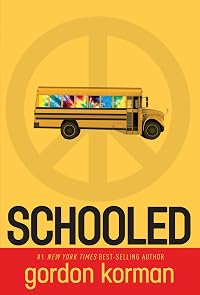
Schooled
by Gordon Korman
On This Page
Description
Homeschooled by his hippie grandmother, Capricorn (Cap) Anderson has never watched television, tasted a pizza, or even heard of a wedgie. But when his grandmother lands in the hospital, Cap is forced to move in with a guidance counselor and attend the local middle school. While Cap knows a lot about tie-dyeing and Zen Buddhism, no education could prepare him for the politics of public school.Tags
Recommendations
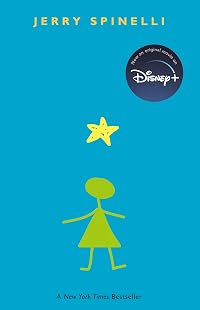











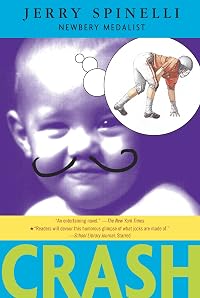
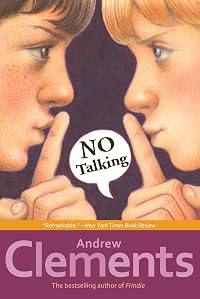


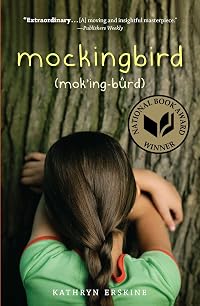

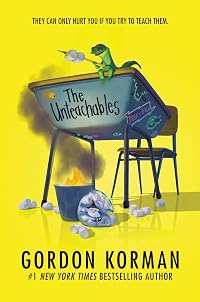




Member Recommendations
Member Reviews
Capricorn Anderson has lived his whole life on a commune called Garland with his grandmother, Rain, who has home-schooled him. Yet their utopia of two is shattered when Rain breaks her hip and Cap is sent to live with a foster family - except it's the social worker herself who takes him in, as she was raised in Garland until she was twelve and understands that Cap's entry into the real world is going to be bumpy. (Her teenage daughter Sophie, on the other hand, is furious about their new, hippie housemate and his backyard tai chi.)
At Claverage (a.k.a. "C Average") middle school school, Cap is quickly elected eighth grade president - not because he's popular, but because there is a longstanding tradition of electing the biggest show more dweeb/nerd/dork to the position and laughing as they fail. Cap, however, doesn't fail: he earnestly sets about learning the names of his 1,100 new schoolmates, and begins planning the Halloween dance, despite having zero idea what a dance is or what planning entails.
Third person narration rotates between Cap, his classmates (Zach, Naomi, and Hugh), social worker Mrs. Donnelly, Sophie Donnelly, and the vice principal. Throughout, Cap remains calm and adheres to his principles of nonviolence, despite the often violent behavior he sees around him. Seeing his innocence, some students stop bullying him and begin to appreciate his worldview and '60s style. When Rain recovers and takes Cap back to Garland, it's partly a relief...but he also misses some of his classmates. Rain, realizing she isn't going to be around forever and Cap will need to learn to live in the real world, moves them to town so Cap can continue to go to school. The ending is a bit abrupt.
See also: All's Faire in Middle School by Victoria Jamieson, The Miscalculations of Lightning Girl by Stacy McAnulty, The Lotterys Plus One by Emma Donoghue
Quotes
"True, information isn't the same as experience." (Rain to Cap, 21)
"When you're unkind to others, it's usually because you don't believe that you, yourself, deserve kindness." (Cap to Mrs. Donnelly, 48)
Cap was weird, but there was more to it than that. There was something inside him that nobody else understood, something mysterious and strong. (Naomi, 66)
"Rain says you always know what you're doing when you're doing the right thing." (Cap, 75)
"I used to think change was a choice. That you could avoid it if you stuck with your convictions. Now I just don't know." (Rain to Cap, 203) show less
At Claverage (a.k.a. "C Average") middle school school, Cap is quickly elected eighth grade president - not because he's popular, but because there is a longstanding tradition of electing the biggest show more dweeb/nerd/dork to the position and laughing as they fail. Cap, however, doesn't fail: he earnestly sets about learning the names of his 1,100 new schoolmates, and begins planning the Halloween dance, despite having zero idea what a dance is or what planning entails.
Third person narration rotates between Cap, his classmates (Zach, Naomi, and Hugh), social worker Mrs. Donnelly, Sophie Donnelly, and the vice principal. Throughout, Cap remains calm and adheres to his principles of nonviolence, despite the often violent behavior he sees around him. Seeing his innocence, some students stop bullying him and begin to appreciate his worldview and '60s style. When Rain recovers and takes Cap back to Garland, it's partly a relief...but he also misses some of his classmates. Rain, realizing she isn't going to be around forever and Cap will need to learn to live in the real world, moves them to town so Cap can continue to go to school. The ending is a bit abrupt.
See also: All's Faire in Middle School by Victoria Jamieson, The Miscalculations of Lightning Girl by Stacy McAnulty, The Lotterys Plus One by Emma Donoghue
Quotes
"True, information isn't the same as experience." (Rain to Cap, 21)
"When you're unkind to others, it's usually because you don't believe that you, yourself, deserve kindness." (Cap to Mrs. Donnelly, 48)
Cap was weird, but there was more to it than that. There was something inside him that nobody else understood, something mysterious and strong. (Naomi, 66)
"Rain says you always know what you're doing when you're doing the right thing." (Cap, 75)
"I used to think change was a choice. That you could avoid it if you stuck with your convictions. Now I just don't know." (Rain to Cap, 203) show less
First off, definite points for originality to Gordon Korman for this book. It was a fun read all-around, nothing spectacular, just fun.
Capricorn Anderson is a hippie, in pretty much every sense of the word. He was raised exclusively at Garland Farm, a settlement with a population of exactly two; he and his grandmother Rain. But when Rain breaks her hip and needs several weeks of recovery, Cap is entered into middle school...which may as well be a whole different planet in his eyes.
Bearing with him no knowledge of technology, teenage social rituals, or anything else modern, Cap is a walking target for the bullies at school. Soon he's been nominated for class president; a position that's more of a joke than an honor. Only he has no show more idea.
With each chapter narrated by one of the many characters in this short novel, Cap takes the ridicule of his peers and slowly changes the school itself into something better. With almost laughable innocence and naivety, Cap will bring the best of the hippie ideals to life again, showing that the past and the present can coexist if we have the right attitude about it. show less
Capricorn Anderson is a hippie, in pretty much every sense of the word. He was raised exclusively at Garland Farm, a settlement with a population of exactly two; he and his grandmother Rain. But when Rain breaks her hip and needs several weeks of recovery, Cap is entered into middle school...which may as well be a whole different planet in his eyes.
Bearing with him no knowledge of technology, teenage social rituals, or anything else modern, Cap is a walking target for the bullies at school. Soon he's been nominated for class president; a position that's more of a joke than an honor. Only he has no show more idea.
With each chapter narrated by one of the many characters in this short novel, Cap takes the ridicule of his peers and slowly changes the school itself into something better. With almost laughable innocence and naivety, Cap will bring the best of the hippie ideals to life again, showing that the past and the present can coexist if we have the right attitude about it. show less
Cap(ricorn) Anderson has been homeschooled his whole life--in fact, his whole life has been lived with only his grandmother, Rain, for company. So when Rain is hospitalized with a broken hip and Cap has to attend the local middle school for two months, it's a whole new world. Cap--with his long hair, hippie clothes, and peace & harmony ideals--is exactly what the 8th grade wanted: a new target to elect Class President, the dubious honor bestowed upon the least-popular classmate. While the student body plots against him, guileless Cap attempts to be the best class president he can be, innocently going along with the daily press conferences and attempting to learn the names of all 1100 students. Slowly the poles reverse, as should-be show more Outcast Cap rises to the top and lead bully Zach Powers slides to the bottom.
The ensemble cast really holds this book together--entirely from Cap's perspective and it would have been overly twee; the bully's perspective would have made it unsympathetic and irritating. Even blending just the two would have made it unbelievable, but including those two plus other students, faculty members, and adults rounded out the story. The anti-bullying message isn't a heavy-handed BULLYING IS WRONG, but the point about accepting others--even when they seem a little crazy--is a pretty strong theme. More important is the lesson that even the bullies can fall from grace. This isn't super-realistic (I don't see a Cap Anderson-type leading peaceful revolution in a middle school) but it's well-written and engaging with likable characters and a good message. This is going on my Recommended list as the middle school searches for a new book for summer reading. show less
The ensemble cast really holds this book together--entirely from Cap's perspective and it would have been overly twee; the bully's perspective would have made it unsympathetic and irritating. Even blending just the two would have made it unbelievable, but including those two plus other students, faculty members, and adults rounded out the story. The anti-bullying message isn't a heavy-handed BULLYING IS WRONG, but the point about accepting others--even when they seem a little crazy--is a pretty strong theme. More important is the lesson that even the bullies can fall from grace. This isn't super-realistic (I don't see a Cap Anderson-type leading peaceful revolution in a middle school) but it's well-written and engaging with likable characters and a good message. This is going on my Recommended list as the middle school searches for a new book for summer reading. show less
Gordon Korman has a great way of setting his young characters in unusual but humorous situations and leading his readers on a fun journey discovering the twists and turns of what happens next.
Capricorn Anderson has been raised and homeschooled on a two-person commune by his grandmother, Rain. He's been brought up on the values of 1960s hippies, so when Rain breaks her hip and he is thrust into a foster care situation, the contemporary world clashes with his commune upbringing. The biggest conflict is at the middle school he attends while Rain is in rehabilitation: Cap effectively becomes the school nerd du jour and in a class prank, is voted 8th grade president. Cap's complete naivete about how things work is amusing entertainment for show more the rest of the school, but his purity of heart begins to touch student after student, until he develops a cult-like status, much to the dismay of Zach Powers, the presumed king of the 8th grade. show less
Capricorn Anderson has been raised and homeschooled on a two-person commune by his grandmother, Rain. He's been brought up on the values of 1960s hippies, so when Rain breaks her hip and he is thrust into a foster care situation, the contemporary world clashes with his commune upbringing. The biggest conflict is at the middle school he attends while Rain is in rehabilitation: Cap effectively becomes the school nerd du jour and in a class prank, is voted 8th grade president. Cap's complete naivete about how things work is amusing entertainment for show more the rest of the school, but his purity of heart begins to touch student after student, until he develops a cult-like status, much to the dismay of Zach Powers, the presumed king of the 8th grade. show less
I loved this so much! It's a warm, feel-good novel somewhat in the vein of Spinelli's Stargirl, or the movie "Blast From the Past."
Eighth-grader Capricorn Anderson has lived his entire life on an isolated hippie farm commune, and that's all he knows. But he's only lived there with his grandmother... the commune's founder... because everyone else left the commune by the mid 1970s. Since the book is set in the first decade of the 21st century, Cap, as he becomes known, doesn't know how the real world even functions.
When his grandmother falls out of a tree and has to go tot he hospital and recover in a rehab facility for two months, Cap is thrown into the chaos of middle school. And this particular middle school has a dreadful tradition: show more the most nerdy, dweeby, outcast kid in the 8th grade is unanimously elected class president, and then the students, led by the popular bullies, make that kid's life miserable.
But no matter what anyone tries to do to Cap, he doesn't take it the way they expect him to, and soon, kids start to actually like this weird kid who seems to have time traveled from the 1960s.
Each chapter is told in first person from multiple narrators, and it's easy to follow. I think there were eight different narrators, but the reader never forgets who is telling this portion of the story. There are many little plot twists, a lot of humor, and it's just a fun, sweet, feel-good tale. show less
Eighth-grader Capricorn Anderson has lived his entire life on an isolated hippie farm commune, and that's all he knows. But he's only lived there with his grandmother... the commune's founder... because everyone else left the commune by the mid 1970s. Since the book is set in the first decade of the 21st century, Cap, as he becomes known, doesn't know how the real world even functions.
When his grandmother falls out of a tree and has to go tot he hospital and recover in a rehab facility for two months, Cap is thrown into the chaos of middle school. And this particular middle school has a dreadful tradition: show more the most nerdy, dweeby, outcast kid in the 8th grade is unanimously elected class president, and then the students, led by the popular bullies, make that kid's life miserable.
But no matter what anyone tries to do to Cap, he doesn't take it the way they expect him to, and soon, kids start to actually like this weird kid who seems to have time traveled from the 1960s.
Each chapter is told in first person from multiple narrators, and it's easy to follow. I think there were eight different narrators, but the reader never forgets who is telling this portion of the story. There are many little plot twists, a lot of humor, and it's just a fun, sweet, feel-good tale. show less
Capricorn Anderson had never lived outside the commune where his Grandma Rain had raised him. When Rain is hurt and Cap goes to foster care, he has no idea how to function in the world of middle school. As is the practice at "C Average Middle School" the geekiest 8th grader is president of the student council. Since Cap looks and acts like he is from another planet, he wins the election. There are lots of funny and sweet moments in the book as Cap finds his way at the school and changes people in the process. At moments he reminded me of Stargirl in his individual approach to doing things.
Summary
Capricorn Anderson has lived with and been homeschooled by his grandmother his entire life. When his grandmother is injured and must be hospitalized for a couple months, Capricorn is shoved into a foreign world called middle school. Unbeknownst to him, he quickly becomes a target of the school’s most popular student and #1 bully, Zach Powers. Cap is constantly met with new challenges and experiences, all the while wishing he was back on the farm with his grandma.
Personal Response
Korman works early to paint a picture of how out of place Capricorn is in his new environment. He adds a humorous twist in the way Cap takes everything literally and is unphased by attempts to make him look bad. By switching narrators with each new show more chapter, we get multiple views of the story’s progression.
Curriculum Connection
This story would serve as a great lead-in to a lesson on tolerance. Students could also do a writing piece on what it would be like to live in a commune like the one Capricorn grew up in, imagining life without many of our modern conveniences. show less
Capricorn Anderson has lived with and been homeschooled by his grandmother his entire life. When his grandmother is injured and must be hospitalized for a couple months, Capricorn is shoved into a foreign world called middle school. Unbeknownst to him, he quickly becomes a target of the school’s most popular student and #1 bully, Zach Powers. Cap is constantly met with new challenges and experiences, all the while wishing he was back on the farm with his grandma.
Personal Response
Korman works early to paint a picture of how out of place Capricorn is in his new environment. He adds a humorous twist in the way Cap takes everything literally and is unphased by attempts to make him look bad. By switching narrators with each new show more chapter, we get multiple views of the story’s progression.
Curriculum Connection
This story would serve as a great lead-in to a lesson on tolerance. Students could also do a writing piece on what it would be like to live in a commune like the one Capricorn grew up in, imagining life without many of our modern conveniences. show less
Members
- Recently Added By
Lists

Unshelved Book Clubs
579 works; 5 members
Author Information

166+ Works 76,493 Members
Gordon Korman was born in Montreal, Canada on October 23, 1963. When his 7th-grade English teacher told the class they could have 45 minutes a day for four months to work on a story of their choice, Korman began This Can't Be Happening at Macdonald Hall. He was also the class monitor for the Scholastic TAB Book Club, so he sent his novel to the show more address on the TAB flyer, and a few days after his 14th birthday, he had a book contract with Scholastic. By the time he graduated from high school, he had published five other novels and several articles for Canadian newspapers. He received a BFA degree from New York University with a major in Dramatic Writing and a minor in Film and TV. He has written over 75 books for children and young adults including the Swindle series, The Juvie Three, and two books of poetry written by the fictional character Jeremy Bloom. (Bowker Author Biography) show less
Awards and Honors
Awards
Distinctions
Common Knowledge
- Original publication date
- 2007-07
- People/Characters
- Capricorn Anderson
- Important places
- Claverage Middle School
- Dedication
- For my Aunt Shirley
- First words
- I was thirteen the first time I saw a police officer up close.
- Last words
- (Click to show. Warning: May contain spoilers.)And I already knew all their names.
Classifications
- Genres
- Tween, Kids, Fiction and Literature, Children's Books
- DDC/MDS
- 813.54 — Literature & rhetoric American literature in English American fiction in English 1900-1999 1945-1999
- LCC
- PZ7 .K8369 .S — Language and Literature Fiction and juvenile belles lettres Fiction and juvenile belles lettres Juvenile belles lettres
- BISAC
Statistics
- Members
- 3,248
- Popularity
- 5,277
- Reviews
- 104
- Rating
- (3.91)
- Languages
- English
- Media
- Paper, Audiobook, Ebook
- ISBNs
- 29
- ASINs
- 10