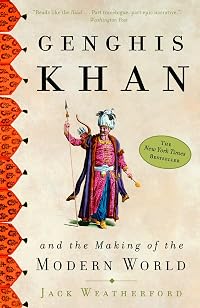
Genghis Khan and the Making of the Modern World
by Jack Weatherford
On This Page
Description
NEW YORK TIMES BESTSELLER • The startling true history of how one extraordinary man from a remote corner of the world created an empire that led the world into the modern age—by the author featured in Echoes of the Empire: Beyond Genghis Khan.The Mongol army led by Genghis Khan subjugated more lands and people in twenty-five years than the Romans did in four hundred. In nearly every country the Mongols conquered, they brought an unprecedented rise in cultural communication, expanded show more trade, and a blossoming of civilization. Vastly more progressive than his European or Asian counterparts, Genghis Khan abolished torture, granted universal religious freedom, and smashed feudal systems of aristocratic privilege.
From the story of his rise through the tribal culture to the explosion of civilization that the Mongol Empire unleashed, this brilliant work of revisionist history is nothing less than the epic story of how the modern world was made. show less
Tags
Recommendations






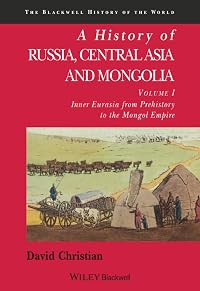
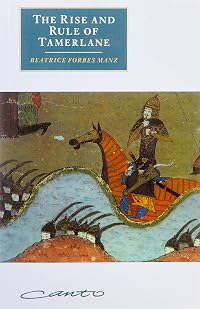
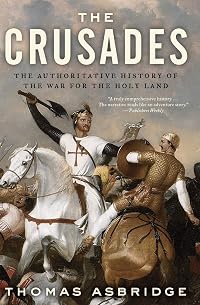
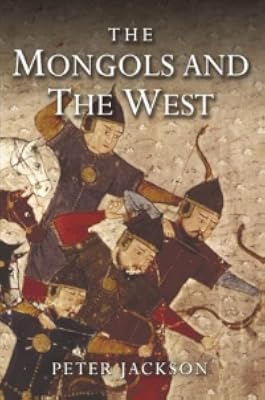








Member Recommendations

Member Reviews
A lot of the negative reviews for this book take issue with its true historicity and its revisionist and somewhat unapologetic agenda. I admit that I got into the book expecting it to be an account of Genghis Khan's conquests with an addendum expounding his legacy, but it was rather the other way around. However, I think it was also quite clear from the outset that Jack Weatherford's aim in this book was not to recount historical facts, but rather to approach the entire perception of the Mongol Empire from a different angle.
I thought the book was well-written and easy to read, and was only after I finished reading it that I realised it's actually almost 15 years old. Although undeniably biased towards the Mongols, it certainly does the show more job of shedding light on elements of the Mongol story that aren't often the focus of historical accounts, and raises some thought provoking points regarding the some more subtle impacts that Genghis Khan had on the world.
Ultimately, to quote Mr Ollivander, I think Genghis Khan has to be considered 'Terrible, but great'. This book may sway slightly too far in favour of the 'great', but it's good to reminded about that perspective of history in a well articulated read. show less
I thought the book was well-written and easy to read, and was only after I finished reading it that I realised it's actually almost 15 years old. Although undeniably biased towards the Mongols, it certainly does the show more job of shedding light on elements of the Mongol story that aren't often the focus of historical accounts, and raises some thought provoking points regarding the some more subtle impacts that Genghis Khan had on the world.
Ultimately, to quote Mr Ollivander, I think Genghis Khan has to be considered 'Terrible, but great'. This book may sway slightly too far in favour of the 'great', but it's good to reminded about that perspective of history in a well articulated read. show less
This was an Audible audiobook with Jonathan Davis reading Jack Weatherford's "Genghis Khan and the Making of the Modern World".
A somewhat hagiographic biography/history on Genghis Khan and the Mongolian empire, Jonathan Davis begins at the start, the birth of Genghis Khan, covers his rise through his tribe, the important relationships he made and where, when, and who they attacked, invaded, overwhelmed, and absorbed into their tribe and eventually his empire. It covers his death, his family, who they were what they did and where and when they did it. The grandchildren were covered with a focus on Kublai Khan and his takeover of the dynastic empire.
It ends somewhat abruptly, but this is not a complete, in-depth title and covers all show more topics with less specificity, though he does a good job hitting all the high notes and more importantly, the right notes, to piece together a difficult bio/history that came out of the closed off, difficult world to access from the former Soviet Union.
Weatherford does try to show how progressive the Khan's world was comparatively speaking to Europe with their abolishing torture (for a time), the granted universal religious freedom, the importance of women in the Genghis court, and their rejection of the feudal systems of aristocratic privilege, again for a time as Kublai seemed to think otherwise about their privileges.
I have read this is considered "revisionist history" but I argue that this is fresh history. Weatherford used newly accessible, forgotten, lost and secret histories that were freshly released, translated and found. How could a researcher and writer whose is worth their salt not write something using that information that rewrites what was written about previously.
The author clarified what sources were used when he used them which makes his writing crystal clear on how he came to his conclusions.
While it does get a bit much at times as their are bits of minutiae that can make things a bit boring for some, the author seems to do a good job bringing things back around to the interesting. Weatherford also seems to gloss over the brutal history of the armies of the Mongols and what they inflicted on those that opposed them, though he does touch on it at times when the story requires it.
Jonathan Davis does a great job reading this title that I give four stars to. It is great book of history that I recommend to anyone who likes bio/histories, Empire making, Asian history. While it has its bumps, this was a pretty interesting book on a topic that is was only passingly familiar with. show less
A somewhat hagiographic biography/history on Genghis Khan and the Mongolian empire, Jonathan Davis begins at the start, the birth of Genghis Khan, covers his rise through his tribe, the important relationships he made and where, when, and who they attacked, invaded, overwhelmed, and absorbed into their tribe and eventually his empire. It covers his death, his family, who they were what they did and where and when they did it. The grandchildren were covered with a focus on Kublai Khan and his takeover of the dynastic empire.
It ends somewhat abruptly, but this is not a complete, in-depth title and covers all show more topics with less specificity, though he does a good job hitting all the high notes and more importantly, the right notes, to piece together a difficult bio/history that came out of the closed off, difficult world to access from the former Soviet Union.
Weatherford does try to show how progressive the Khan's world was comparatively speaking to Europe with their abolishing torture (for a time), the granted universal religious freedom, the importance of women in the Genghis court, and their rejection of the feudal systems of aristocratic privilege, again for a time as Kublai seemed to think otherwise about their privileges.
I have read this is considered "revisionist history" but I argue that this is fresh history. Weatherford used newly accessible, forgotten, lost and secret histories that were freshly released, translated and found. How could a researcher and writer whose is worth their salt not write something using that information that rewrites what was written about previously.
The author clarified what sources were used when he used them which makes his writing crystal clear on how he came to his conclusions.
While it does get a bit much at times as their are bits of minutiae that can make things a bit boring for some, the author seems to do a good job bringing things back around to the interesting. Weatherford also seems to gloss over the brutal history of the armies of the Mongols and what they inflicted on those that opposed them, though he does touch on it at times when the story requires it.
Jonathan Davis does a great job reading this title that I give four stars to. It is great book of history that I recommend to anyone who likes bio/histories, Empire making, Asian history. While it has its bumps, this was a pretty interesting book on a topic that is was only passingly familiar with. show less
Saying “The Mongols” tends to call to mind hordes of screaming barbarians intent on ravaging the land, looting cities, and destroying everything in their path. Weatherford shows that this depiction is completely unfair as they were actually a very forward-thinking people in many ways.
The book starts with Genghis Khan but it’s not just about him. It covers his rise to power down to his grandson Kublai Khan and a bit further than that. It turns out the Mongol Empire did lay a lot of the groundwork for the modern world. Granted their methods of doing the actual conquering were terrifying and effective (they were designed to be), but once the fighting stopped they operated very differently than any other empire before (or since). show more They didn’t try to impose Mongolian values on everyone. “In probably the first law of its kind anywhere in the world, Genghis Khan decreed complete and total religious freedom for everyone.” Funny to think that it took a ‘mindless barbarian’ to come up with that. No, they were much more interested in learning from each culture they encountered the best way of doing what needed doing. They were always on the lookout for scientists, scholars, doctors, artists, and the like. They also realized that the rich and powerful usually can’t be trusted to serve anything but their own interests, so Genghis Khan instituted a policy of executing the aristocrats right off the bat when he took a city just to avoid trouble later on — and it worked. They laid the foundations for international exchange and trade that are still relevant today.
Now I’m not completely stupid, and I actually stayed awake through most of my schooling, but even so, my education about that part of the world in that period of history was extremely vague. This book fills in a lot of those gaps and addresses why there were gaps in the first place. In Renaissance times, the Mongols were regarded as an exotic people who had the best of everything available to them (which, thanks to their diligent fostering of trade and commerce was largely true). They got fawning mentions by everyone from Giotto to Chaucer. It was during the Age of So-Called Enlightenment that Europeans at least started souring on them, eventually concocting all kinds of pseudo-science classifying them as inferior human beings. That old BS routine, you know.
The writing is clean and smart. The author covers a lot of material without ever getting too bogged down in dates and times and blah blah blah, keeping the narrative moving at an enjoyable pace. He even makes the description of how he did all his research into a sort of adventure story, because it kinda was. So it was a fun read, and I now know stuff I didn’t know before. Win-win. show less
The book starts with Genghis Khan but it’s not just about him. It covers his rise to power down to his grandson Kublai Khan and a bit further than that. It turns out the Mongol Empire did lay a lot of the groundwork for the modern world. Granted their methods of doing the actual conquering were terrifying and effective (they were designed to be), but once the fighting stopped they operated very differently than any other empire before (or since). show more They didn’t try to impose Mongolian values on everyone. “In probably the first law of its kind anywhere in the world, Genghis Khan decreed complete and total religious freedom for everyone.” Funny to think that it took a ‘mindless barbarian’ to come up with that. No, they were much more interested in learning from each culture they encountered the best way of doing what needed doing. They were always on the lookout for scientists, scholars, doctors, artists, and the like. They also realized that the rich and powerful usually can’t be trusted to serve anything but their own interests, so Genghis Khan instituted a policy of executing the aristocrats right off the bat when he took a city just to avoid trouble later on — and it worked. They laid the foundations for international exchange and trade that are still relevant today.
Now I’m not completely stupid, and I actually stayed awake through most of my schooling, but even so, my education about that part of the world in that period of history was extremely vague. This book fills in a lot of those gaps and addresses why there were gaps in the first place. In Renaissance times, the Mongols were regarded as an exotic people who had the best of everything available to them (which, thanks to their diligent fostering of trade and commerce was largely true). They got fawning mentions by everyone from Giotto to Chaucer. It was during the Age of So-Called Enlightenment that Europeans at least started souring on them, eventually concocting all kinds of pseudo-science classifying them as inferior human beings. That old BS routine, you know.
The writing is clean and smart. The author covers a lot of material without ever getting too bogged down in dates and times and blah blah blah, keeping the narrative moving at an enjoyable pace. He even makes the description of how he did all his research into a sort of adventure story, because it kinda was. So it was a fun read, and I now know stuff I didn’t know before. Win-win. show less
After reading this book I realized how much I didn't know about world history. I also realized that much of what I learned about European and Russian history was in fact propaganda. Of course by now we shoud expect this, but I have to admit to being surprised.
This book, drawing on long-lost primary source documents, as well as on other documents that have been underutilized, draws a fascinating picture of the empire of the Mongols, one that belies the images of barbarity, mindless violence and atrocities. In fact, Weatherford does a good job showing that in many ways the Mongols were well ahead of their time when it came to ruling.
Did the Mongols commit atrocities? Well, yes, but no more than European leaders and armies of that time show more period. And unlike the Europeans, the Mongols didn't impose their religion onto the populations they conquered.
Fascinating as well is Weatherford's description of the Mongol attempts to establish ties with Europe, at a time the Europeans were ignorant of the great empire to their east. Also interesting was the key role of the Mongols in the establishment of a united Chinese state. Finally, I remember the maps of what's now Russia and Central Asia with the words "Golden Horde" superimposed on large areas. Turns out the "Golden Horde" was the name of one branch of Genghis Khan's family (the "Golden" family"), and horde means order.
This book contains countless and fascinating examples of debunking what we learned about history. It's also a great read. Highly recommended! show less
This book, drawing on long-lost primary source documents, as well as on other documents that have been underutilized, draws a fascinating picture of the empire of the Mongols, one that belies the images of barbarity, mindless violence and atrocities. In fact, Weatherford does a good job showing that in many ways the Mongols were well ahead of their time when it came to ruling.
Did the Mongols commit atrocities? Well, yes, but no more than European leaders and armies of that time show more period. And unlike the Europeans, the Mongols didn't impose their religion onto the populations they conquered.
Fascinating as well is Weatherford's description of the Mongol attempts to establish ties with Europe, at a time the Europeans were ignorant of the great empire to their east. Also interesting was the key role of the Mongols in the establishment of a united Chinese state. Finally, I remember the maps of what's now Russia and Central Asia with the words "Golden Horde" superimposed on large areas. Turns out the "Golden Horde" was the name of one branch of Genghis Khan's family (the "Golden" family"), and horde means order.
This book contains countless and fascinating examples of debunking what we learned about history. It's also a great read. Highly recommended! show less
This is a revisionist history (isn't it all?) of a truly remarkable figure, who created an empire greater even than the Romans, and he did it from scratch in just a few decades. He was a law-giver who essentially outlawed the culture he came from--transforming it from a Scots-like clan of cattle rustlers and raiders, to a monolithic, highly disciplined cavalry of conquerers. He devised entirely new military tactics that were as successful against the cities of the Chinese as against the armored knights of the West. And they started out as a people, he claims, who did not even know how to weave cloth!
Weatherford here takes up the challenge of accenting the positive impact of his brutal conquests. Among other things he makes the case for show more his setting the West up for the Renaissance, the introduction of paper money, the postal system, Religious tolerance, and new vegetables. He bases much of this on new scholarship, rather than the hysterical propaganda of the aristocrats whom he threatened. Partly based on the mysterious "Secret History of the Mongols," the author's own travels in Mongolia, and contacts with Mongolian revivalists, he makes this bit of history accessible even to the most prejudiced reader.
Strangely omitted, though, is the fascinating tale that the geneticists have discovered about his Y chromosome, which appears to show that he might just have been the most prolific lover in the last couple of millennia! Too recent, maybe.
One of the remarkable features of his style was that he hated the elite and the aristocrats, and slaughtered as many as he could. He loved the professional men, the teachers and doctors, and especially the craftsmen and engineers, and did not even tax them. My kinda guy!
Weatherford's style of writing is lively and easy to read. The maps are just detailed enough to be informative without overburdening the reader in detail. This is not an exhaustive account of every battle, every city destroyed, which would be mind-numbing history as usually written, but rather a wide survey of events and their impact on the world to come. And I especially enjoyed his description of the military tactics employed by the cavalry, and his use of siege engines and gunpowder, which would be new to most readers.
Perhaps one of his greatest inventions, though, is that of diplomatic immunity. Any city, and there were several, who murdered or mutilated his envoys as a method of rejecting his terms of surrender, would be ruthlessly razed and the inhabitants slaughtered. Even in those days, the word got around...
This is quite a tale, well told. show less
Weatherford here takes up the challenge of accenting the positive impact of his brutal conquests. Among other things he makes the case for show more his setting the West up for the Renaissance, the introduction of paper money, the postal system, Religious tolerance, and new vegetables. He bases much of this on new scholarship, rather than the hysterical propaganda of the aristocrats whom he threatened. Partly based on the mysterious "Secret History of the Mongols," the author's own travels in Mongolia, and contacts with Mongolian revivalists, he makes this bit of history accessible even to the most prejudiced reader.
Strangely omitted, though, is the fascinating tale that the geneticists have discovered about his Y chromosome, which appears to show that he might just have been the most prolific lover in the last couple of millennia! Too recent, maybe.
One of the remarkable features of his style was that he hated the elite and the aristocrats, and slaughtered as many as he could. He loved the professional men, the teachers and doctors, and especially the craftsmen and engineers, and did not even tax them. My kinda guy!
Weatherford's style of writing is lively and easy to read. The maps are just detailed enough to be informative without overburdening the reader in detail. This is not an exhaustive account of every battle, every city destroyed, which would be mind-numbing history as usually written, but rather a wide survey of events and their impact on the world to come. And I especially enjoyed his description of the military tactics employed by the cavalry, and his use of siege engines and gunpowder, which would be new to most readers.
Perhaps one of his greatest inventions, though, is that of diplomatic immunity. Any city, and there were several, who murdered or mutilated his envoys as a method of rejecting his terms of surrender, would be ruthlessly razed and the inhabitants slaughtered. Even in those days, the word got around...
This is quite a tale, well told. show less
Much of the story Weatherford unfolds here was news to me. Here in the West, which only briefly felt the wild wrath of the Mongol army at its height, it is hard to understand the extent of Asian awe and fear of what this one man accomplished in a lifetime. If nothing else will convince you--for eight hundred years a huge piece of land in Mongolia, the heart of Genghis Khan's home territory, has been closed to any incursion. First by the Mongol tribes themselves and then by the communists, to ensure that no one went in, so that no scholarship could give rise to any writings that might enflame the Mongolian tribal soul to rebellion. The legend of Genghis is that powerful. It was only after the fall of communism and the withdrawal of the show more Russians (who left a shameful mess of weapons and garbage and pollution around the perimeter of this sacred area, but curiously and significantly never despoiled it) scholarship and exploration almost immediately picked up in the 1990's. A document commissioned by the royal family not long after Genghis death, known as The Secret History, had surfaced now and again over the centuries but was written in such a way that it was tremendously difficult to decipher without intimate knowledge of Genghis' homeland. Weatherford and several other scholars of different kinds, from linguists to archaeologists, explored the area in depth and together were able to 'read' the secrets of the Secret History. And what a story! As unbelievable as it sounds, all Genghis may have ever wanted was peace. At the time of his youth the tribes all fought incessantly. Banished for refusing to submit to another tribal leader in the rigid hereditary hierarchy, he went out on his own. And gradually began to build a new kind of tribe, one depending on merit and earned trust. He acquired followers and they began to conquer more territory so as to feed their horses and families . . . but the further out from his homeland he conquered, the more it became apparent, that he needed to keep going until he had unified everyone into one gigantic entity in order to have real peace. The only reason, really, he stopped where he did in Hungary and the Balkans, is that Europe was too poor and did not have the big grassy plains for his soldier's horses. And the 'after story' - in particular the way nations twisted and abused the story of Genghis Khan to suit their own end made my hair stand on end. Weatherford explains the origins of the vocabulary of Downs Syndrome and the use of the word 'mongoloid'. During the shameful interlude of very bad genetic science in the late 19 and early 20th centuries Downs (!!!!) came up with the completely bizarre idea that these children were throwbacks to the Mongols, from women raped during the invasions 700 centuries earlier!!!!! I mean, REALLY!! It boggles the mind. And people believed this less than a hundred years ago! After their downfall, the Mongols were painted as sub-human, wild and hopelessly violent. But the reality is the opposite. The Mongols with their military inventiveness put an end to the use of heavy armor and feudal walled cities, achieved miracles of fast communication, trade, education, currency.... built bridges and roads everywhere.... the list goes on and on. A great introduction to a fascinating subject. ****
The narration was slightly better than adequate but not fantastic -- and at the end there is an interesting afterword read by Weatherford himself, which leads me to wish he would write another book about his years of traveling around the area with the other scholars and guides. Okay, so just read the book, review over. show less
The narration was slightly better than adequate but not fantastic -- and at the end there is an interesting afterword read by Weatherford himself, which leads me to wish he would write another book about his years of traveling around the area with the other scholars and guides. Okay, so just read the book, review over. show less
One of the very few books I've purchased from Costco, author Jack Weatherford takes on a Herculean task in describing the man, the myth, the legend that is Genghis Khan who created one of the geographically largest, most connected, and arguably most innovative empires that this world has ever seen.
Weatherford begins this book with the birth of Genghis Khan, using the name given to him prior to reaching khan status, Temujin. The first half or so of the book relies heavily on a document called 'The Secret History of the Mongols', purportedly a detailed description of Genghis Khan's life by a closely-associated Mongol, apparently translated later by some Chinese, and eventually fully translated to its current state. Those with a show more preference for multiple works-cited for a given event or timeline will be disappointed as Weatherford goes through the first few decades of Temujin's life, since the 'Secret History' is about as much as we know, period, about his upbringing and early adulthood. I suggest keeping these concerns at bay while reading, as the story is worth reading.
As Temujin grows increasingly powerful, the author makes more use of other sources and broader knowledge surrounding the Mongol military tactics, observed expanses of their empire and known interactions with city-states, popes, and other sovereigns. The remainder of the book follows Genghis Khan through his death, but then pleasantly covers the balance of the Mongol Empire, before its disintegration some centuries after Genghis Khan's death. This is both a biography of Genghis and a biography of the broader Mongolian empire, with select descendants of Genghis (especially Kublai Khan) discussed.
I found this to be a really fascinating book. Growing up with an American public school education, I came under the idea that the Mongols were barbarians who more or less got lucky in their conquests and managed to storm across Eurasia by sheer speed and force. Weatherford's book illustrated that the Mongols, and particularly Genghis Khan, were methodical, observant, and innovative, with numerous inventions during their time that can be traced to modern-day weapons and military tactics (the Nazi Blitzkrieg found a source in Mongol combat). An emphasis is placed on the Mongol postal system, which proved invaluable for communications as the empire expanded.
But above all, this book showed that the Mongols were not barbarians, were not exotic and strange creatures, but were highly innovative, disciplined, and guided by a true master strategist in Genghis Khan. Western interpretations of the Mongols as filthy creatures were borne from anti-Mongol rhetoric traced back multiple centuries, as the end of this book describes, and it has unfortunately persisted in modern Western education. Nothing could be further from the truth, and the Mongol Empire deserves a spot amongst history's greatest empires. If only the West (originally in Europe, but now across the hemisphere) had not spawned such vitriol towards the Eastern Hemisphere, this incorrect notion of the Mongols could have been avoided.
Four stars for a book that made me think hard, pause frequently to ponder further, and makes me continue to think and elaborate well after the final page. show less
Weatherford begins this book with the birth of Genghis Khan, using the name given to him prior to reaching khan status, Temujin. The first half or so of the book relies heavily on a document called 'The Secret History of the Mongols', purportedly a detailed description of Genghis Khan's life by a closely-associated Mongol, apparently translated later by some Chinese, and eventually fully translated to its current state. Those with a show more preference for multiple works-cited for a given event or timeline will be disappointed as Weatherford goes through the first few decades of Temujin's life, since the 'Secret History' is about as much as we know, period, about his upbringing and early adulthood. I suggest keeping these concerns at bay while reading, as the story is worth reading.
As Temujin grows increasingly powerful, the author makes more use of other sources and broader knowledge surrounding the Mongol military tactics, observed expanses of their empire and known interactions with city-states, popes, and other sovereigns. The remainder of the book follows Genghis Khan through his death, but then pleasantly covers the balance of the Mongol Empire, before its disintegration some centuries after Genghis Khan's death. This is both a biography of Genghis and a biography of the broader Mongolian empire, with select descendants of Genghis (especially Kublai Khan) discussed.
I found this to be a really fascinating book. Growing up with an American public school education, I came under the idea that the Mongols were barbarians who more or less got lucky in their conquests and managed to storm across Eurasia by sheer speed and force. Weatherford's book illustrated that the Mongols, and particularly Genghis Khan, were methodical, observant, and innovative, with numerous inventions during their time that can be traced to modern-day weapons and military tactics (the Nazi Blitzkrieg found a source in Mongol combat). An emphasis is placed on the Mongol postal system, which proved invaluable for communications as the empire expanded.
But above all, this book showed that the Mongols were not barbarians, were not exotic and strange creatures, but were highly innovative, disciplined, and guided by a true master strategist in Genghis Khan. Western interpretations of the Mongols as filthy creatures were borne from anti-Mongol rhetoric traced back multiple centuries, as the end of this book describes, and it has unfortunately persisted in modern Western education. Nothing could be further from the truth, and the Mongol Empire deserves a spot amongst history's greatest empires. If only the West (originally in Europe, but now across the hemisphere) had not spawned such vitriol towards the Eastern Hemisphere, this incorrect notion of the Mongols could have been avoided.
Four stars for a book that made me think hard, pause frequently to ponder further, and makes me continue to think and elaborate well after the final page. show less
Members
- Recently Added By
Lists

Best General History Books
50 works; 22 members

Read This Next
120 works; 3 members

Books Read in 2018
4,360 works; 110 members

r/AskHistorians' Recommended Books
1,068 works; 17 members

2024 Reading List
49 works; 1 member

Elon Musk Recommended Audio Books (2024 July 1)
12 works; 1 member

Books recommended in the history category on FiveBooks.com
329 works; 4 members

School Made Us Read It
380 works; 196 members

el
1,139 works; 1 member

Mongolia
2 works; 1 member

TBR Insta
81 works; 1 member
Author Information

17 Works 6,893 Members
Jack Weatherford holds the DeWitt Wallace Chair of Anthropology at Macalester College in Minnesota and an honorary position at Chinggis Khaan University in Mongolia. In 2007 he received the Order of the Polar Star, the highest award for service to the Mongol Nation of Genghis Khan.
Some Editions
Awards and Honors
Awards
Distinctions
Common Knowledge
- Canonical title
- Genghis Khan and the Making of the Modern World
- Original publication date
- 2004
- People/Characters
- Genghis Khan; Khubilai Khan; Güyük Khan
- Important places
- Mongolia; Mongol Empire
- Important events
- Mongol Empire
- First words
- Of the thousands of cities conquered by the Mongols, history only mentions one that Geghis Khan deigned to enter.
- Last words
- (Click to show. Warning: May contain spoilers.)After all, they are still the children of the Golden Light, the offspring of a wolf and a doe, and in the wispy clouds of the Eternal Blue Sky of Mongolia, the Spirit Banner of Genghis Khan still waves in the wind.
- Original language
- English
Classifications
Statistics
- Members
- 3,923
- Popularity
- 4,011
- Reviews
- 105
- Rating
- (4.03)
- Languages
- 6 — Chinese, English, Finnish, Portuguese, Spanish, Swedish
- Media
- Paper, Audiobook, Ebook
- ISBNs
- 21
- ASINs
- 15