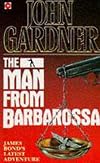
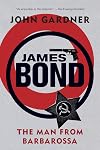
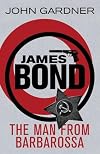
The Man from Barbarossa
by John Gardner
John Gardner's Bond (book 11), James Bond Novels: Continuation Series (28), James Bond Novels (28)
On This Page
Description
Official, original James Bond from a writer described by Len Deighton as a 'master storyteller'. James Bond has been partnered with an Israeli Mossad agent, Pete Natkowitz, and assigned to work with the KGB to infiltrate a terrorist group. The group, The Scales of Justice, are demanding the trial of a suspected Nazi war criminal and each day of delay brings another death. Posing as a TV crew, Bond and the other agents attempt to discover the group's real motive. When Bond realises that the show more real aim is to supply Iraq with nuclear weapons just before the United Nations-led coalition invades he faces the most crucial mission of his life. show lessTags
Recommendations



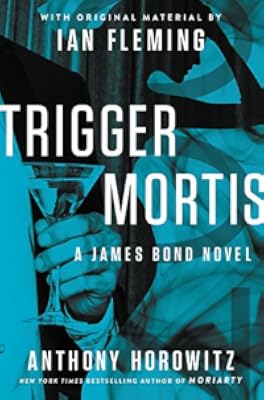


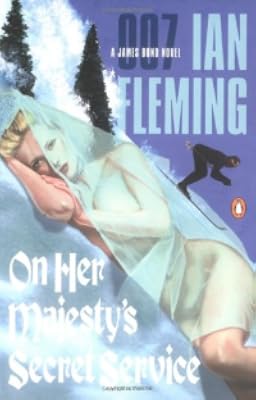

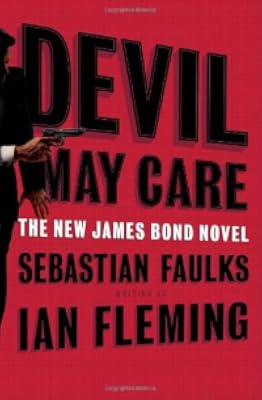

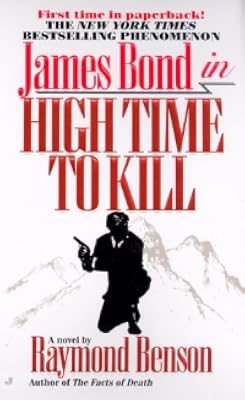
















Member Reviews
For more reviews and bookish posts visit: https://www.ManOfLaBook.com
The Man from Barbarossa by John Gardner is the 1999 entry in the James Gardner James Bond series. This book is more of a return to traditional spy craft than a fantastic supervillain story.
A mysterious terrorist group called Scales of Justice kidnaps an elderly man from his home in New Jersey, claiming he is Josif Voronstov, a Nazi war criminal responsible for the Babi Yar massacre. A KGB agent, Boris Stepakov, informs M that he needs two British agents to infiltrate the group who has a hand in every terrorist event worldwide.
James Bond joined by Mossad’s Pete Natkowitz get assigned the mission, believing that the captured man, Joel Penderek, is not the war criminal. show more They are joined by two French secret agents and head to Russia.
So far, this is the best book I have read in the John Gardner James Bond series. It’s an excellent political thriller which weaves real events into a cohesive fictional story.
The Man from Barbarossa by John Gardner captures the era, 1908s-90s, to a tee. It was a gritty world, filled with uncertainties and tensions between those who want to keep the status quo, and those who insist we must move forward.
This is a legitimate, enjoyable spy novel dealing with historical and personal traumas, peppered with realpolitik. James Bond must realize that his old world is gone, past enemies are now allies in a high-stakes game where everyone has something to lose.
Agent 007 must navigate a world which is changing and is changing fast at that. He doesn’t like the new technology M16 introduces, or anything modern for that matter. Mr. Gardner has softened up Ma bit. He can still “out crank” Bond any day of the week, but at least he’s not trying to actively get him called.
Take the small victories, I guess.
The villain of the book, while not as colorful as others, is still dangerous and somehow, we go along with his dastardly scheme. It is, however, a throwback to the 1960s which doesn’t really fit in the context of Bond, being “a sexist, misogynist dinosaur. A relic of the Cold War” living in a fast-changing world, politics, and alliances.
Even though some of the tropes are familiar (a mysterious organization, Bond working with Israelis and Soviets, and more), in this book they work quite well. While the beginning for the Gulf War and glasnost is in the background, Bond does not get involved with them directly. show less
The Man from Barbarossa by John Gardner is the 1999 entry in the James Gardner James Bond series. This book is more of a return to traditional spy craft than a fantastic supervillain story.
A mysterious terrorist group called Scales of Justice kidnaps an elderly man from his home in New Jersey, claiming he is Josif Voronstov, a Nazi war criminal responsible for the Babi Yar massacre. A KGB agent, Boris Stepakov, informs M that he needs two British agents to infiltrate the group who has a hand in every terrorist event worldwide.
James Bond joined by Mossad’s Pete Natkowitz get assigned the mission, believing that the captured man, Joel Penderek, is not the war criminal. show more They are joined by two French secret agents and head to Russia.
So far, this is the best book I have read in the John Gardner James Bond series. It’s an excellent political thriller which weaves real events into a cohesive fictional story.
The Man from Barbarossa by John Gardner captures the era, 1908s-90s, to a tee. It was a gritty world, filled with uncertainties and tensions between those who want to keep the status quo, and those who insist we must move forward.
This is a legitimate, enjoyable spy novel dealing with historical and personal traumas, peppered with realpolitik. James Bond must realize that his old world is gone, past enemies are now allies in a high-stakes game where everyone has something to lose.
Agent 007 must navigate a world which is changing and is changing fast at that. He doesn’t like the new technology M16 introduces, or anything modern for that matter. Mr. Gardner has softened up Ma bit. He can still “out crank” Bond any day of the week, but at least he’s not trying to actively get him called.
Take the small victories, I guess.
The villain of the book, while not as colorful as others, is still dangerous and somehow, we go along with his dastardly scheme. It is, however, a throwback to the 1960s which doesn’t really fit in the context of Bond, being “a sexist, misogynist dinosaur. A relic of the Cold War” living in a fast-changing world, politics, and alliances.
Even though some of the tropes are familiar (a mysterious organization, Bond working with Israelis and Soviets, and more), in this book they work quite well. While the beginning for the Gulf War and glasnost is in the background, Bond does not get involved with them directly. show less
"Here lies the body of a gallant British officer, thought to be Captain James Bond, Royal Navy, died for his own cause, January 9, 1991."
The Man From Barbarossa has long been a very divisive novel amongst Bond fandom. It takes a very different approach to the typical 007 novel, shifting the focus between a number of other characters and dealing with some 'real world' issues that were a growing concern at the time, namely the impending conclusion to the Cold War and the upcoming Gulf War. Some fans were taken aback by the lack of fantastical elements and the manner in which Gardner abandoned the 'Bond formula', while others have heaped praise upon this novel for trying new things. Though it's little surprise to me that John Gardner show more considered it to be his best 007 book; the man often gave off the impression in his letters that he was growing weary of Bond after a certain period of time, and that the later half of his books in the series were only done to pay the rent. I think the author clearly wanted to insert some of his own creativity into the stories instead of constantly trying to emulate Fleming.
The plot sees Bond sent on loan to the KGB to deal with a Russian terrorist group known as the Scales of Injustice, who have so many talons dug into their country's government and military that the only hope for dealing with them is to enlist the aid of outsiders. Bond is teamed with a couple of French intelligence agents and a very capable man from the Mossad, Pete Natkowitz, who acts as 007's right hand man throughout the story. The Scales have abducted an elderly man from New Jersey, believed to be Josif Voronstov, the number two to real-life war criminal Paul Blobel at the massacre in Babi Yar during World War II. The terrorists want the Soviet government to put Voronstov on trial for war crimes, and will kill one government or military official each day until their demands are met. Eventually, the Scales put Voronstov on trial themselves, hoping to release the video of the trial and subsequent execution to the media around the globe. The catch? The 'real' Voronstov was living in Florida, and is now in the safe custody of the French government. Bond and his team are sent in to pose as the television news crew recording the faux trial, in an effort to discover just what the Scales are up to with all their grandstanding. Typically, nothing is what it seems at first glance.
Personally, I'm in the middle ground regarding The Man From Barbarossa. I think it's refreshing to see some new things in this long running series, which has more of a Robert Ludlum espionage feel to it than an Ian Fleming adventure story. There are a few rather interesting characters that Gardner introduces us to in this novel, including Bond's charismatic handler at the KGB, Bory Stepakov, a ruthless commander plagued with overly boyish looks his entire adult life, and the rather glamorous looking French agent Stephanie Adoré, a woman so concerned with the frivolities in life such as fashion and appearance that Bond is actually turned off by her. A foxy lady 007 has zero interest in? Gardner really was trying new things!
Unfortunately, not all of the new ideas pan out that well. I can tell the author was attempting to get a bit more down to earth with this novel, but having Bond undercover as a mundane cameraman is fairly uninspiring stuff. No matter how gritty or sci-fi your 007 yarn gets, I still think the main man should have a bit more je ne sais quoi about him. He never really does anything remarkable or 'Bondian' throughout the novel. There's also an incredibly lame and telegraphed plot twist involving Bond which even an idiot can see coming from a mile away. The reader will not be fooled for one second. Without spoiling too much, Bond essentially disguises himself in a way that's about as weak as George Lazenby putting on nothing more than a pair of glasses in the film version of On Her Majesty’s Secret Service and hoping Blofeld won't be able to figure out who he is. And although there's no villain hiding out in a volcano or stuck with some extreme deformity about him, there is the stereotypical mad Russian General causing havoc. His scheme is slightly reminiscent of Orlov's in Octopussy, which makes me think Gardner fibbed about his vow to stop watching the Bond films after he took over the literary series.
Overall, it's a nice cloak and dagger style story worth tracking down if you're already into Bond in print, but certainly not recommended for newcomers to either Bond or John Gardner novels. show less
The Man From Barbarossa has long been a very divisive novel amongst Bond fandom. It takes a very different approach to the typical 007 novel, shifting the focus between a number of other characters and dealing with some 'real world' issues that were a growing concern at the time, namely the impending conclusion to the Cold War and the upcoming Gulf War. Some fans were taken aback by the lack of fantastical elements and the manner in which Gardner abandoned the 'Bond formula', while others have heaped praise upon this novel for trying new things. Though it's little surprise to me that John Gardner show more considered it to be his best 007 book; the man often gave off the impression in his letters that he was growing weary of Bond after a certain period of time, and that the later half of his books in the series were only done to pay the rent. I think the author clearly wanted to insert some of his own creativity into the stories instead of constantly trying to emulate Fleming.
The plot sees Bond sent on loan to the KGB to deal with a Russian terrorist group known as the Scales of Injustice, who have so many talons dug into their country's government and military that the only hope for dealing with them is to enlist the aid of outsiders. Bond is teamed with a couple of French intelligence agents and a very capable man from the Mossad, Pete Natkowitz, who acts as 007's right hand man throughout the story. The Scales have abducted an elderly man from New Jersey, believed to be Josif Voronstov, the number two to real-life war criminal Paul Blobel at the massacre in Babi Yar during World War II. The terrorists want the Soviet government to put Voronstov on trial for war crimes, and will kill one government or military official each day until their demands are met. Eventually, the Scales put Voronstov on trial themselves, hoping to release the video of the trial and subsequent execution to the media around the globe. The catch? The 'real' Voronstov was living in Florida, and is now in the safe custody of the French government. Bond and his team are sent in to pose as the television news crew recording the faux trial, in an effort to discover just what the Scales are up to with all their grandstanding. Typically, nothing is what it seems at first glance.
Personally, I'm in the middle ground regarding The Man From Barbarossa. I think it's refreshing to see some new things in this long running series, which has more of a Robert Ludlum espionage feel to it than an Ian Fleming adventure story. There are a few rather interesting characters that Gardner introduces us to in this novel, including Bond's charismatic handler at the KGB, Bory Stepakov, a ruthless commander plagued with overly boyish looks his entire adult life, and the rather glamorous looking French agent Stephanie Adoré, a woman so concerned with the frivolities in life such as fashion and appearance that Bond is actually turned off by her. A foxy lady 007 has zero interest in? Gardner really was trying new things!
Unfortunately, not all of the new ideas pan out that well. I can tell the author was attempting to get a bit more down to earth with this novel, but having Bond undercover as a mundane cameraman is fairly uninspiring stuff. No matter how gritty or sci-fi your 007 yarn gets, I still think the main man should have a bit more je ne sais quoi about him. He never really does anything remarkable or 'Bondian' throughout the novel. There's also an incredibly lame and telegraphed plot twist involving Bond which even an idiot can see coming from a mile away. The reader will not be fooled for one second. Without spoiling too much, Bond essentially disguises himself in a way that's about as weak as George Lazenby putting on nothing more than a pair of glasses in the film version of On Her Majesty’s Secret Service and hoping Blofeld won't be able to figure out who he is. And although there's no villain hiding out in a volcano or stuck with some extreme deformity about him, there is the stereotypical mad Russian General causing havoc. His scheme is slightly reminiscent of Orlov's in Octopussy, which makes me think Gardner fibbed about his vow to stop watching the Bond films after he took over the literary series.
Overall, it's a nice cloak and dagger style story worth tracking down if you're already into Bond in print, but certainly not recommended for newcomers to either Bond or John Gardner novels. show less
I was pretty disappointed in this entry in Gardner's Bond run. It feels like Gardener wrote a generic espionage story (which the man is damned good at) and plugged in the name James Bond for the hero. This is a decent spy story, just not a Bond story.
I read that this was John Gardner's favorite Bond book. I had a hard time trying to figure out what was going on in this one. It seemed to be that more time was needed for character development and the overall story.
This would have made a really dull Bond movie. Almost no action until the last 20 pages.
Ratings
Members
- Recently Added By
Author Information

68+ Works 9,147 Members
Series


Common Knowledge
- Canonical title
- The Man from Barbarossa
- Original title
- The man from Barbarossa
- Original publication date
- 1992
- People/Characters
- James Bond
- First words
- They came in an orderly fashion, the Jews of Kiev.
- Last words
- (Click to show. Warning: May contain spoilers.)One of the highest decorations the Soviets could award: The Order of Lenin.
Classifications
Statistics
- Members
- 317
- Popularity
- 100,857
- Reviews
- 5
- Rating
- (3.08)
- Languages
- 5 — Dutch, English, Finnish, French, German
- Media
- Paper, Audiobook, Ebook
- ISBNs
- 22
- ASINs
- 5