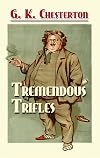
Tremendous Trifles
by G. K. Chesterton
On This Page
Description
British author G.K. Chesterton was a prolific writer and daringly original thinker who made his mark in virtually every literary genre. The collection Tremendous Trifles highlights a compelling cross-section of Chesterton's body of work, including sketches, essays, and newspaper columns. It's a perfect compendium for new readers and long-time Chesterton buffs alike..
Tags
Recommendations








Member Reviews
This book, which I downloaded free for my Kindle, is a collection of some of GK Chesterton’s journalistic essays, published originally as part of a column.
Each is complete in itself. Most are thought-provoking, some are whimsical, some are downright bizarre.
The overall theme is of ordinariness. Chesterton claims, in the introduction, that he is encouraging his readers to look at everyday objects - ceilings, and pens, and fences - and ponder their significance. This is what he does in the essays which result. Some, I assume, are true anecdotes, others entirely imaginative.
It's not a book to read in one sitting. I found that if I picked it up when I was tired, or if I read an essay that required knowledge of specific places or show more politicians, I often took in very little. However, other stories appealed strongly; from time to time I came across a sentence or two that struck quite a chord.
As works of social history - this is the nearest the author got to journalling, he claims - these pieces have value, and there are nicely ironic touches that I appreciated. But inevitably it’s very dated, and unlikely to appeal to those of a less reflective, faster-paced generation. I doubt if I'll read it again, but for Chesterton fans it's worth perusing at least once. show less
Each is complete in itself. Most are thought-provoking, some are whimsical, some are downright bizarre.
The overall theme is of ordinariness. Chesterton claims, in the introduction, that he is encouraging his readers to look at everyday objects - ceilings, and pens, and fences - and ponder their significance. This is what he does in the essays which result. Some, I assume, are true anecdotes, others entirely imaginative.
It's not a book to read in one sitting. I found that if I picked it up when I was tired, or if I read an essay that required knowledge of specific places or show more politicians, I often took in very little. However, other stories appealed strongly; from time to time I came across a sentence or two that struck quite a chord.
As works of social history - this is the nearest the author got to journalling, he claims - these pieces have value, and there are nicely ironic touches that I appreciated. But inevitably it’s very dated, and unlikely to appeal to those of a less reflective, faster-paced generation. I doubt if I'll read it again, but for Chesterton fans it's worth perusing at least once. show less
A beginning of the 20th century equivalent of today's blogs (as GKC himself says at the very start, "These fleeting sketches [...] amount to no more than a sort of sporadic diary—a diary recording one day in twenty which happened to stick in the fancy"), with some quite good articles, some mediocre ones, and most somewhere in between. Should be read as a blog as well: one chapter at a time, enjoying the particular topic (and envying the author his mastery of language).
When G K Chesterton's writing shines, it really dazzles. There were lots of delightful bon mots in this collection of essays, but there were wayyy more topics and musings that I just didn't find very interesting.
A mighty fine collection of Chesteton's essays. Even his trifles are tremendous. Chesterton will atonish, delight, and bamboozle you throughout this collection.
If you find Chesterton find himself in a strange place, something magical is about to happen!
If you find Chesterton find himself in a strange place, something magical is about to happen!
Kniha britského novinára a spisovateľa Gilberta Keitha Chestertona vychádza v slovenčine po prvý raz. Ide o zbierku 39 krátkych esejí, ktoré vznikli pozorovaním obyčajných vecí vo svete na prelome 19. a 20. storočia.
Chesterton v nej ponúka svieže, zdanlivo nepodstatné, niekedy priam bizarné príhody, ktoré zažil v rodnom Londýne, ale aj na cestách Francúzskom, Belgickom či Nemeckom.
Ohromné maličkosti čitateľovi sprostredkujú zážitok neobyčajného pozorovacieho talentu, sympatický prejav pokojnej inteligencie, ľahký úsmev bonvivánskeho štýlu, ale aj hlboký, nefalšovaný zmysel autora pre filozofiu, teológiu a náboženstvo.
Chesterton v nej ponúka svieže, zdanlivo nepodstatné, niekedy priam bizarné príhody, ktoré zažil v rodnom Londýne, ale aj na cestách Francúzskom, Belgickom či Nemeckom.
Ohromné maličkosti čitateľovi sprostredkujú zážitok neobyčajného pozorovacieho talentu, sympatický prejav pokojnej inteligencie, ľahký úsmev bonvivánskeho štýlu, ale aj hlboký, nefalšovaný zmysel autora pre filozofiu, teológiu a náboženstvo.
Feb 11, 2022Slovak
Esta obra recoge artículos aparecidos con anterioridad en el Daily News, donde Chesterton colaboró durante muchos años, y que están milagrosamente escritos sobre casi nada y sobre casi todo, del modo más chestertoniano. recopila treinta y nueve artículos que Chesterton publicó en el Daily News desde 1901. Entre ellos están algunos de sus ensayos más conocidos y de ahí que una selección de textos extensa
Jun 6, 2025Spanish
Ratings
Members
- Recently Added By
Author Information

798+ Works 60,047 Members
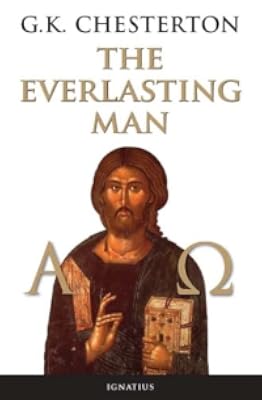
Gilbert Keith Chesterton was born in London, England, in 1874. He began his education at St Paul's School, and later went on to study art at the Slade School, and literature at University College in London. Chesterton wrote a great deal of poetry, as well as works of social and literary criticism. Among his most notable books are The Man Who Was show more Thursday, a metaphysical thriller, and The Everlasting Man, a history of humankind's spiritual progress. After Chesterton converted to Catholicism in 1922, he wrote mainly on religious topics. Chesterton is most known for creating the famous priest-detective character Father Brown, who first appeared in "The Innocence of Father Brown." Chesterton died in 1936 at the age of 62. (Bowker Author Biography) show less
Series
Belongs to Publisher Series
Work Relationships
Is contained in
Is abridged in
Common Knowledge
- Canonical title
- Tremendous Trifles
- Original title
- Tremendous Trifles; Enormes minucias
- Alternate titles
- Tremendous Trifles: Essays
- Original publication date
- 1909
- Quotations
- The world will never starve for want of wonders, but only for want of wonder.
I believe in preaching to the converted; for I have generally found that the converted do not understand their own religion.
The man who represents all thought as an accident of environment is simply smashing and discrediting all his own thoughts - including that one.
At the four corners of a child's bed stand Perseus and Roland, Sigurd and St. George. If you withdraw the guard of heroes you are not making him rational; you are only leaving him to fight the devils alone.
There is no subtle spiritual evil in the fact that people always brag about their vices; it is when they begin to brag about their virtues that they become insufferable.
To hurry through one's leisure is the most unbusinesslike of actions.
Classifications
Statistics
- Members
- 390
- Popularity
- 80,511
- Reviews
- 6
- Rating
- (4.02)
- Languages
- 6 — Czech, English, German, Italian, Portuguese, Spanish
- Media
- Paper, Ebook
- ISBNs
- 71
- UPCs
- 1
- ASINs
- 22