
Michael Coren
Author of J.R.R. Tolkien: The Man Who Created the Lord of the Rings
About the Author
Michael Coren is the bestselling author of fifteen books, including biographies of G.K. Chesterton, H.G. Wells, Arthur Conan Doyle, J.R.R. Tolkien, and C.S. Lewis. He is the host of the talk show "The Arena" on the SUN News Network and also writes a syndicated column for ten daily newspapers. He show more lives in Toronto. show less
Image credit: Michael Coren
Works by Michael Coren
Tagged
Common Knowledge
- Birthdate
- 1959-01-15
- Gender
- male
- Occupations
- TV personality
columnist
Anglican priest - Nationality
- Canada
- Birthplace
- London, England, UK
- Places of residence
- Toronto, Ontario, Canada
- Associated Place (for map)
- Canada
Members
Reviews

Michael Coren's "The Invisible Man: The Life and Liberties of H. G. Wells" offers a provocative and often critical look at the complex life of the renowned author. Unlike many earlier biographies that tended to gloss over Wells's less admirable traits, Coren aims to present a "warts and all" portrait, challenging the perception of Wells as an unblemished utopian visionary.
Coren brings an intention to provide a more balanced, if not overtly critical, account of Wells. He aims to expose show more aspects of Wells's life and views that previous biographers might have omitted or downplayed. In doing so the book delves into Wells's personal life, including his numerous affairs and his often difficult relationships with women, portraying him as a "misogynistic womanizer." More significantly, Coren brings to light Wells's disturbing views on social engineering, eugenics, and, most notably, his alleged anti-Semitism, which Wells apparently defended even into the 1930s. This is a point of considerable debate and interest for many readers, as it often contradicts the commonly held image of Wells as a champion of liberal tolerance.
Coren emphasizes the paradoxes within Wells's character: a brilliant mind who could envision incredible futures and advocate for social progress (like women's suffrage), yet simultaneously held deeply problematic and intolerant personal views. I found the book to be well-researched, informative, and engaging, providing a concise yet thorough biography. It offers a fresh perspective by focusing on areas often overlooked. This is not a hagiography. It's a biography that seeks to unmask the "invisible" darker sides of H. G. Wells, prompting readers to confront the complexities and contradictions of a truly influential, yet deeply flawed, literary and social figure. I recommend it for those who want a more critical and nuanced understanding of Wells's life beyond his celebrated literary achievements. show less
Coren brings an intention to provide a more balanced, if not overtly critical, account of Wells. He aims to expose show more aspects of Wells's life and views that previous biographers might have omitted or downplayed. In doing so the book delves into Wells's personal life, including his numerous affairs and his often difficult relationships with women, portraying him as a "misogynistic womanizer." More significantly, Coren brings to light Wells's disturbing views on social engineering, eugenics, and, most notably, his alleged anti-Semitism, which Wells apparently defended even into the 1930s. This is a point of considerable debate and interest for many readers, as it often contradicts the commonly held image of Wells as a champion of liberal tolerance.
Coren emphasizes the paradoxes within Wells's character: a brilliant mind who could envision incredible futures and advocate for social progress (like women's suffrage), yet simultaneously held deeply problematic and intolerant personal views. I found the book to be well-researched, informative, and engaging, providing a concise yet thorough biography. It offers a fresh perspective by focusing on areas often overlooked. This is not a hagiography. It's a biography that seeks to unmask the "invisible" darker sides of H. G. Wells, prompting readers to confront the complexities and contradictions of a truly influential, yet deeply flawed, literary and social figure. I recommend it for those who want a more critical and nuanced understanding of Wells's life beyond his celebrated literary achievements. show less

A harsh book and a direct one, which spares no time in letting you know precisely where it stands. Although I prefer a biography with a strong sense of narrative voice, this one comes dangerously close to being something else entirely. Coren dislikes Wells, although he suggests this only happened as a result of his research, and the book is very much geared toward Wells' human faults, which are many. The first half of the book (loosely) focuses on his use and abuse of an entire cavalcade of show more young women, among them two wives and a steady stream of mistresses, who were meant to support Wells' every high-minded belief and self-absorbed tendency. The second half throws into sharper focus his fascination with eugenics and the concept of a "higher order" beneficently but militantly controlling a lower one, with some final spirals into the specifics of his anti-Catholic and anti-Semitic polemics. Heavy stuff.
Wells' own works and letters are quoted to such an extent that it's very hard to deny Coren his thesis that Wells has, out of popular sentimentality, been afforded a rose-tinted tolerance the man didn't actually deserve. What Coren doesn't consider (and probably never meant to) is why a tiny, three-year patch of writing early in Wells' career - the years that gave us The Time Machine, The War of the Worlds, The Invisible Man, and The Island of Dr. Moreau - so infused the public imagination with iconography that his memory has been kept alive through those same icons for the past seventy-five years. Those books take up a handful of pages, and as other reviewers have commented, some of his more gentle but lesser works have been ignored entirely to favor the controversial ones.
I have no real problem with taking down Wells the man, particularly as he seems to have repeated his social and ideological transgressions over and over again, fully aware of the pain he caused. But there are many authors, writers, and other creative people who are quite, quite brilliant in their own areas without being particularly nice human beings. For whatever reason, the work that they leave behind can have a positive, lasting legacy even though they are frail, flawed, even disturbing individuals. Coren's biography barely touches on that positive legacy, and so while his is an interesting book, it is hardly a definitive examination of wells. If nothing else, it needs to be read in tandem with other analyses, and without knowing what those should be, I think any reader will feel that the book is frustratingly incomplete. show less
Wells' own works and letters are quoted to such an extent that it's very hard to deny Coren his thesis that Wells has, out of popular sentimentality, been afforded a rose-tinted tolerance the man didn't actually deserve. What Coren doesn't consider (and probably never meant to) is why a tiny, three-year patch of writing early in Wells' career - the years that gave us The Time Machine, The War of the Worlds, The Invisible Man, and The Island of Dr. Moreau - so infused the public imagination with iconography that his memory has been kept alive through those same icons for the past seventy-five years. Those books take up a handful of pages, and as other reviewers have commented, some of his more gentle but lesser works have been ignored entirely to favor the controversial ones.
I have no real problem with taking down Wells the man, particularly as he seems to have repeated his social and ideological transgressions over and over again, fully aware of the pain he caused. But there are many authors, writers, and other creative people who are quite, quite brilliant in their own areas without being particularly nice human beings. For whatever reason, the work that they leave behind can have a positive, lasting legacy even though they are frail, flawed, even disturbing individuals. Coren's biography barely touches on that positive legacy, and so while his is an interesting book, it is hardly a definitive examination of wells. If nothing else, it needs to be read in tandem with other analyses, and without knowing what those should be, I think any reader will feel that the book is frustratingly incomplete. show less
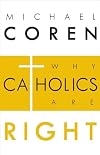
Coren sets out to clear up popular misconceptions about the Catholic church in a clear and unashamed manner. He sees both the Catholic church and its adherents as being derided, almost as part of a popular sport - 'let's diss the Catholics!'. Many of the fallacies surrounding the Church - the abuse scandals, the Inquisition - have been hyped out of control and it is refreshing to see that someone who is from that camp make a stand.
I agree with his premise - recently, in many parts of the show more world, it has become acceptable to levy insults and derrisive comments against Catholics (and other people of the Judeo-Christian faiths), more to show one's own 'superiority' than anything else.
However, that said, I don't think he made his arguments well at all. He is his own worst enemy in that nearly every one of the cases he argues falls down because he does not follow through and thus leaves enough holes in his arguments for ten dissenters to run through. I don't have to agree with his argument to take it as a valid, if opposing, opinion - but the arguments have to be solid. And they are not.
He switches focus frequently, thus making it look as if he's evading a point because he doesn't know how to counter it. His history is attrocious - he relies heavily on pro-Catholic sources, yet still manages to get serious facts wrong. He doesn't address certain aspects - in the case of abortion, he never mentions the negative aspects of an unwanted pregnancy forced on a woman who feels she has no other recourse; in the case of the abuse scandals, he doesn't mention the very delayed reaction of apology by the Pope to the victims; when mentioning the aid the Church supplies to third world countries, he doesn't mention the very specific agenda they have against birth control; and so on.
He uses very emotive language and examples which, again, make it look as if he's manipulating his audience instead of making his case. The section of euthanasia in particular was horrendous in its blatant manipulative nature - it did not address the very basic aspects of the pro-euthanasia faction, instead setting out to demonise it wholesale. This is weak and cheap - by denigrating your opponents opinion you show your own insecurity and lack of argument more than anything else.
I'm not Catholic or anti-Catholic - I don't define myself by religious or non-religious beliefs (contrary to atheists and people of faith, both who do). I agree that if you identify as a Roman Catholic, you have to follow all the rules. If you join a soccer club, you have to follow all the rules: it's the nature of playing for a team, sporting or religious. Yet I do wish Coren had taken the time and effort to construct a really tight and believable argument, instead of handing the more rampant and vocal atheists yet another bag of rotten eggs to throw at the Roman Catholic Church. show less
I agree with his premise - recently, in many parts of the show more world, it has become acceptable to levy insults and derrisive comments against Catholics (and other people of the Judeo-Christian faiths), more to show one's own 'superiority' than anything else.
However, that said, I don't think he made his arguments well at all. He is his own worst enemy in that nearly every one of the cases he argues falls down because he does not follow through and thus leaves enough holes in his arguments for ten dissenters to run through. I don't have to agree with his argument to take it as a valid, if opposing, opinion - but the arguments have to be solid. And they are not.
He switches focus frequently, thus making it look as if he's evading a point because he doesn't know how to counter it. His history is attrocious - he relies heavily on pro-Catholic sources, yet still manages to get serious facts wrong. He doesn't address certain aspects - in the case of abortion, he never mentions the negative aspects of an unwanted pregnancy forced on a woman who feels she has no other recourse; in the case of the abuse scandals, he doesn't mention the very delayed reaction of apology by the Pope to the victims; when mentioning the aid the Church supplies to third world countries, he doesn't mention the very specific agenda they have against birth control; and so on.
He uses very emotive language and examples which, again, make it look as if he's manipulating his audience instead of making his case. The section of euthanasia in particular was horrendous in its blatant manipulative nature - it did not address the very basic aspects of the pro-euthanasia faction, instead setting out to demonise it wholesale. This is weak and cheap - by denigrating your opponents opinion you show your own insecurity and lack of argument more than anything else.
I'm not Catholic or anti-Catholic - I don't define myself by religious or non-religious beliefs (contrary to atheists and people of faith, both who do). I agree that if you identify as a Roman Catholic, you have to follow all the rules. If you join a soccer club, you have to follow all the rules: it's the nature of playing for a team, sporting or religious. Yet I do wish Coren had taken the time and effort to construct a really tight and believable argument, instead of handing the more rampant and vocal atheists yet another bag of rotten eggs to throw at the Roman Catholic Church. show less
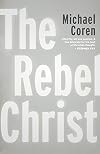
Christianity today, particularly in the US, is so often identified with cultural and political conservatism, and opposition to what should be universal, basic, human rights. Here Michael Coren tells of how he came to know the rebel Christ, and how, by all but the most biased of readings, the biblical message is one of love and acceptance, not hate and exclusion. Coren has been subject to plenty of hate himself for this book - it should be read by both Christians and non-Christians alike.
Awards

You May Also Like


Associated Authors
Statistics
- Works
- 21
- Members
- 1,081
- Popularity
- #23,777
- Rating
- 3.5
- Reviews
- 24
- ISBNs
- 82
- Languages
- 8
- Favorited
- 1